
Introduction
The press and media sector in Africa has been directly influenced by changing political, economic, and technological conditions throughout its historical process. Colonial activities, missionary efforts, independence movements, the attainment of independence by African countries, the establishment of national or international corporations across the continent, the increase in wealth of capital holders in Africa, the gaining of strength by political, social, and religious movements, and the opportunities brought about by the internet age and the development of technology have facilitated the transformation and proliferation of press and media in the continent.1
During the 2000s, with political and technological transformations over time, the internet, like in other continents, has become part of the lives of Africans, significantly impacting both societies and individuals. Although internet usage rates in Africa are lower compared to other continents, in 2011, 13.5 percent of the African population had access to the internet, a figure that rose to 40 percent by 2022.2 The number of internet users in Africa increased to nearly 645 million in 2023, around 3.5 times more than in 2014.3 The widespread adoption of smartphone technology in Africa dates back to the late 2000s, and the use of smartphones has contributed to the increase in access to information through the internet. Currently, there are far more mobile phone users than access to electricity in Africa, and millions of Africans connect to the world through these phones.4 In parallel with the advancement of technology and the widespread use of the internet, the proliferation of satellite systems has strengthened the communication network across the continent.
The emergence of digital media alongside mobile phones and internet technology has fundamentally changed the press and media world. Platforms such as X (formerly known as Twitter), blogs, YouTube content, and citizen journalism have diversified and increased the volume of content in this field. Today, numerous press and media organizations operate at national, regional, and international levels across the African continent. Indeed, in many places where electricity infrastructure and transportation negatively affect life in Africa, the use of the internet and smartphones has facilitated easy, cheap, and fast communication with the world.5
In addition to Western-based media organizations, many media outlets funded by China, Qatar, Saudi Arabia, and Russia operate in Africa. While media outlets from Western countries and China started operations earlier in Africa, media organizations from Russia, the Arab world, Iran, and Türkiye have begun their activities more recently. For instance, the France-based Agence France-Presse (AFP) was founded in 1944, while the U.S.-based Voice of America (VOA) Africa Service began its operations in 1963.6 The Chinese news agency Xinhua started its operations in Africa in the 1950s,7 and in the 1980s, Xinhua opened 12 offices in Africa.8
Purpose and Methodology of the Research
Africa has notably become a prominent region in Türkiye’s foreign policy, particularly since 2005. Relations with African countries encompass political, economic, security, and cultural dimensions, where the media plays a significant role. While short-term assignments of journalists to Africa were common in the past, Turkish journalists have increasingly undertaken long-term missions in Africa since 2013. Moreover, efforts such as training programs for African media professionals, media summits, technical equipment support in the media field, and publications have further deepened media-related ties. This article examines the steps taken by Türkiye in the media sector concerning its relations with Africa. It aims to highlight the significance of these media-related initiatives and provide recommendations for the future.
Today, numerous press and media organizations operate at national, regional, and international levels across the African continent
In the article, the transformation of the media in Africa is examined by dividing it into two periods: the colonial era and the post-independence period. Türkiye’s initiatives in the media sector are then presented to the reader under specific headings. To prepare this article, conferences on African media in Türkiye were closely followed, press releases from institutions such as the Turkish Cooperation and Coordination Agency (TİKA) and the Presidency were reviewed, and news coverage related to the topic by agencies like Anadolu Agency (AA) and Turkish Radio and Television (TRT) were studied. Additionally, academic works on the transformation of media in Africa were explored to present a comprehensive view, and publications on African media printed in Türkiye were analyzed.
Colonial Era
It is possible to trace the history of the press in Africa back to the colonial period. Colonial activities in Africa were carried out by countries such as England, Portugal, Belgium, and France, and the colonial policies of these countries influenced the development of the press sector in their colonial territories. Parallel to colonialism, missionary efforts also contributed to the spread of press activities on the continent. Additionally, through Arab merchants and scholars, literacy increased in the East, West, and North of Africa.
When we look at the history of the press in Africa, the Annonces, Affiches et Avis Divers pour les Colonies des Isles de France et de Bourbon, published in Mauritius in 1773 in French, the Cape Town Gazette and African Advertiser, published in South Africa in English in 1880, and the Iwe Irohin, published in Nigeria in 1859, were among the first newspapers in Africa.9 An example of newspapers first published by black Africans is the Liberia Herald of Charles Force, which was published monthly in Liberia in 1826.10
While the development of the press was slow in Belgian Congo and Portuguese colonies, its presence was more pronounced in British colonies in West Africa such as Nigeria, Ghana, and Sierra Leone. Indeed, when British colonial rule ended in West Africa, there were 52 newspapers in Sierra Leone, 70 in Ghana, and 100 in Nigeria. In these countries, the involvement of many journalists in politics and the ability of these politicians to maintain their journalism careers even after independence contributed to the development of the press.11 For instance, during British colonial rule in Nigeria, the first president, Nnamdi Azikiwe, controlled 10 newspapers, while his rival, Obafemi Awolowo, owned 14 newspapers.12
Similar to the situation in Portuguese colonies, the development of the press sector under French colonial rule appears to be less than that under British colonial rule. In many French colonies such as Chad, Benin, and Mauritania, the number of daily newspapers before independence was very limited. In fact, in countries like Togo and Mali, daily newspapers only began to be published after independence. In this region, the newspaper sector is mostly controlled by French entrepreneurs, and despite efforts in Senegal and Côte d’Ivoire in the 1930s, local publishing initiatives remained inadequate.13
In the pre-independence period, the lack of interest in African issues and the lack of space for independence discourses in the press controlled by white settlers or based outside the continent led to the rise of the African-language press. An example of this is the Kikuyu-language magazine Muigwithania (The Reconciler), published by Jomo Kenyatta in 1928 in colonial Kenya. Indeed, this magazine acted as the mouthpiece of the Kikuyu Central Association and adopted a nationalist discourse. In Tanzania, the local-language press, together with Mfanyakazi (The Worker), which was the voice of the workers and published in Swahili, and Munno in Uganda, was in fact the center of nationalist discourses before independence. On the other hand, Radio Cairo in Egypt and Radio Tanzania Dar es Salaam in Tanzania, which began broadcasting in the 1950s, opened up a space for independence movements in Africa and contributed to the struggle against anti-colonial and anti-imperialist movements not only in the countries where they were established but also in other African countries with their broadcasts.14
In the pre-independence period, the lack of interest in African issues and the lack of space for independence discourses in the press controlled by white settlers or based outside the continent led to the rise of the African-language press
Post-Independence
Some of the newspapers published by colonial administrations before independence or prominent in the struggle for independence in African countries began to be controlled by those who took over power after independence. In Ghana, the most popular newspaper at the time of independence, Daily Graphic (Sunday Graphic), was transformed into an official government gazette, while in Tanzania, the Tanganyika Standart suffered the same fate. In Zambia, the Central African Mail came under government control under the name Zambian Mail. Therefore, independence in some countries negatively affected the press sector. Like South Africa in East Africa, particularly, the press played a significant role in anti-colonial struggles, but post-independence in newly established African countries, it became one of the main tools of authoritarian regimes. The use of laws, especially to exert pressure on private radio, TV, and newspapers, hindered the emergence of free and independent media in many regions of the continent after independence. Nevertheless, the new process has paved the way for the emergence of large-scale media groups, such as The Nation Group based in Kenya, which operates not only in Kenya but also in countries like Uganda and Tanzania to this day.15
In the post-independence period, as seen in many examples in Sub-Saharan Africa, control over the press began under new governments or parties in North African countries as well. Press reforms, demands for democracy, and independence rhetoric faced more pressure. In response, the affected press sectors went underground to maintain their existence and continue their struggles. Algeria’s struggle for independence became a battleground for the press community, with figures like Franz Fanon and many African and Western writers leading their struggles through the media.
The economic crises of the 1970s and 1980s also affected newly independent African countries. The press sector is undoubtedly among the first sectors affected by economic crises. Economic crises led to a decrease in the budget allocated to education, which in turn hindered the increase in literacy rates. Despite the weakening of the private sector in the press field, state-centered press organizations gained strength. In fact, by 1974, more than 70 percent of all newspapers were published in Africa and almost all radio and television stations were owned by the state.16
In the 1980s, liberal processes in the economies of some African countries paved the way for the increase and diversification of private press and media organizations. Especially from the late 1980s onward, new media outlets began to emerge in Francophone countries such as Senegal, Mali, Cameroon, and Benin. Unlike today, very few people used mobile phones in Africa until the 1990s. Coupled with the inadequacy of technological capabilities, this situation meant that the press in most African countries was under the influence of either the ruling authorities or the elites.
Until the 1990s, it was possible to talk about radio, printed newspapers, and magazines across the continent, but in subsequent years, especially after the 2000s with the widespread adoption of the internet, communication opportunities increased, and the press and media sector entered a new phase
With the relatively widespread onset of democracy in the 1990s, mass communication tools multiplied and diversified. This diversification has provided opportunities for issues such as opposition to governance, the articulation of human rights violations, and the discussion of corruption to be raised in the African media. However, these dissenting voices in the African media have also brought along pressures from authorities. These pressures have sometimes manifested themselves in the form of cutting off financial support or imposing imprisonment sentences. An example of this is the case of Beninese journalist Edgar Kaho, who received a prison sentence after criticizing Benin President Nicephore Soglo for corruption.
In the post-Cold War era, as political and economic landscapes began to shift in Africa, transformations were also observed in the press and media sector. The 1990s were years when relatively authoritarian regimes gave way to liberalism. During this period, some steps were taken to foster the development of an independent and pluralistic press in the African continent. An example of these steps is the Windhoek Declaration. African journalists signed the declaration during a meeting titled “Promoting an Independent and Pluralistic African Press” organized by the United Nations Educational, Scientific and Cultural Organization (UNESCO) in Windhoek, the capital of Namibia, from April 29 to May 3, 1991. The declaration, signed in 1991, aimed to promote a free, independent, and pluralistic African press. It was not only significant for Africa but also for the global press. Indeed, the United Nations General Assembly declared May 3, the day the Windhoek Declaration was signed, as “World Press Freedom Day.”17
Following this process, an increase in the number of press organizations, new legal regulations related to the press law, and an increase in training related to the press sector have been observed in many African countries. Alongside developments in the press and media field on the continent, in countries where internal conflicts or tensions occur, the press and media have been used as a “weapon of war” or a tool for polarization. For example, the Hutu-owned Radio Télévision Libre des Mille Collines (RTLM) began broadcasting in 1993 and played a significant role in the 1994 Rwandan Genocide.18
Until the 1990s, it was possible to talk about radio, printed newspapers, and magazines across the continent, but in subsequent years, especially after the 2000s with the widespread adoption of the internet, communication opportunities increased, and the press and media sector entered a new phase. Printed newspapers, magazines, and radios have given way to digital content and applications such as The Continent or allAfrica. The important point to emphasize here is not the disappearance or cessation of activities of press and media organizations in Africa due to these developments, but rather their adaptation and transformation in response to these political and technological changes.
In parallel with technological advances and widespread internet use, the spread of satellite systems has strengthened the communication network on the continent. The use of Starlink satellites, a space-based system that SpaceX has been working on for years to facilitate internet access in underserved regions of the world, in schools in Rwanda as of 2023, shows that Africa is entering a different phase in the field of communication. Indeed, Elon Musk’s SpaceX Starlink satellites are known for providing high-speed and broadband internet to regions where the internet cannot reach. While the Starlink satellite internet system is being put into use in 50 schools in Rwanda, the step taken in the country, known as the technology center of Africa, will undoubtedly set an example for others.
International press organizations operating in the continent have also adapted to the internet and communication technologies and have begun broadcasting on these channels. Examples of these include the BBC based in the UK or VOA based in the U.S. Similarly, broadcasting organizations based in China, Qatar, and Türkiye have expanded their networks in Africa by taking advantage of these technologies.
Summits and forums hold a significant place in Türkiye’s relations with African countries in the field of press and media
Turkish Media in Africa
Türkiye, which has had a deep-rooted historical past with the African continent since the Ottoman Empire, has been re-strengthening its diplomatic relations with the African peoples while also attaching importance to its economic, cultural, and humanitarian relations. Türkiye carries out its diplomatic, commercial, and cultural activities with both its official and civil institutions through diplomatic missions abroad, official institutions, civil society organizations, and the business world.
Unlike other actors such as Spain, England, China, and Russia, Türkiye, which has historical ties with many regions of Africa, has declared that it aims to establish relations with the African peoples based on mutual respect and in line with the interests of the African peoples by trying to revive these ties. The country’s human-centered relations with African governments and peoples ensure that a positive image of Türkiye emerges in a significant part of the continent. Indeed, this positive perspective was also brought to the agenda by many African leaders at the Türkiye-Africa Summit held in Türkiye in December 2021.
The relationships Türkiye established with African countries in the first quarter of the 21st century hold significant importance in its foreign policy. It has been approximately 20 years since Türkiye became an observer member of the African Union (AU) in 2005. With the opening of 44 embassies, political and economic relations established with African countries have also been reflected in cultural and social spheres through activities of institutions such as TİKA, the Yunus Emre Foundation (YEE), the Turkish Maarif Foundation (TMV) and the Turkish Red Crescent Society in addition to governmental efforts. During this period, the dissemination of Türkiye’s initiatives in various fields with African countries, primarily through media, has played a crucial role in promoting Türkiye in Africa and vice versa.
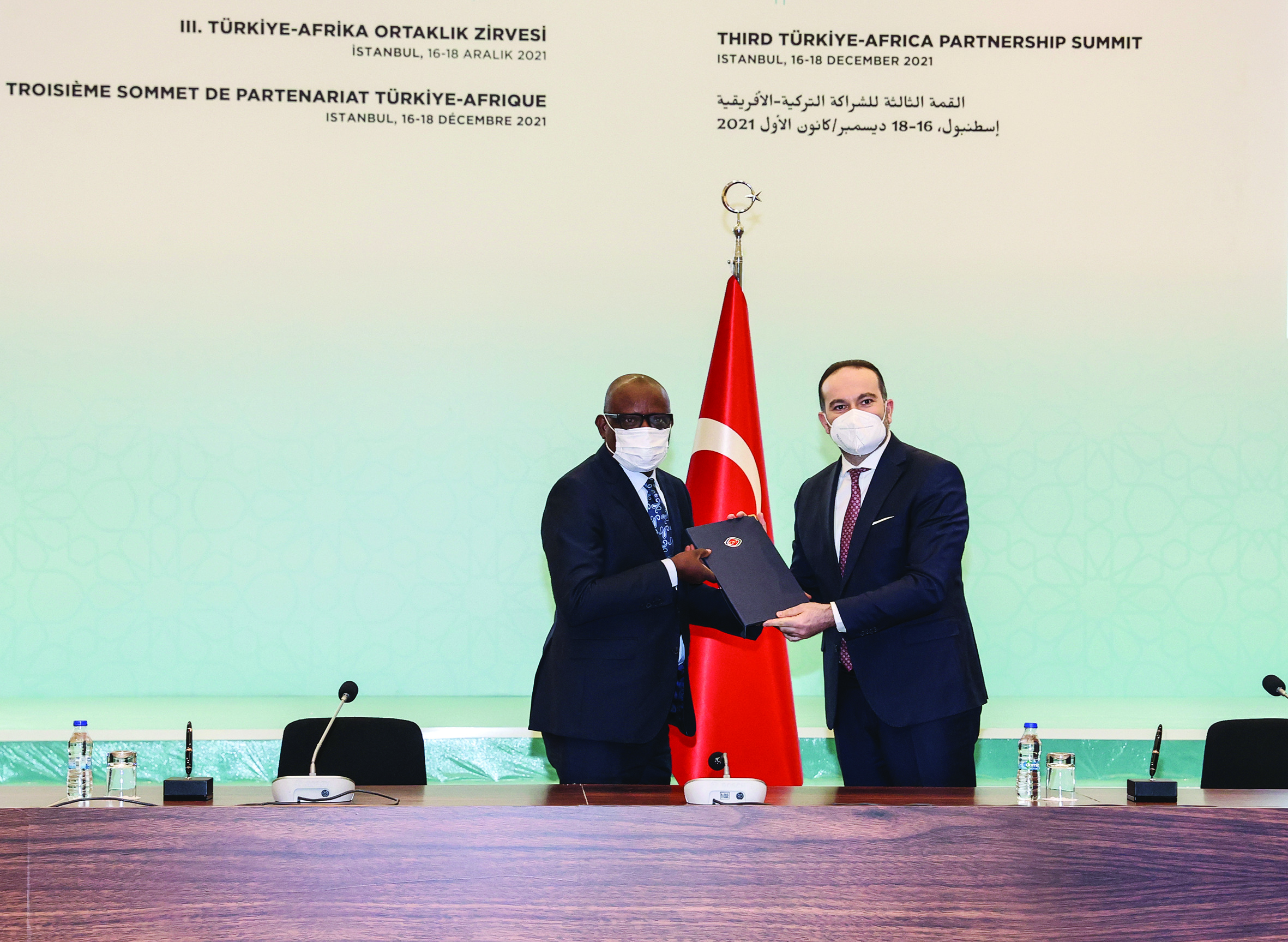
Zahid Sobacı (R), the director-general of TRT, and Gregoire Ndjaka (L) CEO of the AUB sign associate membership agreement between TRT and AUB during the 3rd Türkiye-Africa Partnership Summit in İstanbul, Türkiye on December 17, 2021. İSLAM YAKUT / AA
Summits and Forum
Summits and forums hold a significant place in Türkiye’s relations with African countries in the field of press and media. Through these initiatives, the country not only deepens its relations with African countries but also contributes to the development of the continent. There were three summits between Türkiye and African countries in the years 2008, 2014, and 2021, along with one media forum in 2012 and one media summit in 2022.
The first Türkiye-Africa Cooperation Summit was held in İstanbul on August 18-21, 2008. During this summit, documents titled the “Türkiye-Africa Cooperation İstanbul Declaration, Cooperation and Solidarity for a Common Future” and the “Cooperation Framework for Türkiye-Africa Partnership” were adopted. Within this framework, decisions were made to take joint actions in the fields of media, information, and communication technology alongside intergovernmental cooperation in various areas. Thus, the first official strategic step in the field of media with African countries was taken in 2008. As of 2008, the objectives in the media field included actively reaching out to African, Turkish, and international media; promoting the priorities and achievements of both Africa and Türkiye, as well as facilitating greater interaction and experience sharing among media personnel in Africa and Türkiye; creating awareness regarding the challenges faced by Africa and Türkiye and establishing a cooperation framework to assist in their resolution; and fostering collaboration in the use of new technologies to facilitate faster and more effective communication and dissemination of information, as well as enhancing capacity in the field of information technology.19 In pursuit of these objectives, efforts have been made, especially since 2015, through organized training sessions and equipment support provided to African media professionals.
Türkiye’s media opening in Africa not only contributes to the development of relations in this area but also contributes positively to Türkiye’s image in African countries and facilitates the announcement of domestic and foreign policy decisions abroad
With the Türkiye-Africa Summit held in 2008 and summits in 2014 and 2021, collaborations in various fields, including the media sector, have deepened. The Türkiye-Africa Summit held in 2014 aimed to encourage the production and broadcasting of programs, including films and dramas produced by Turkish and African producers; provide training to young African journalists and media professionals; organize the Türkiye-Africa Media Forum; and support African centers and institutions operating in the media field.
In addition to the Türkiye-Africa summits, the first media forum concerning Africa was organized by the Directorate General of Press and Information (BYEGM) on May 9-10, 2012. Nearly 300 African press and media members attended this forum held in Ankara. The speeches delivered at the forum were compiled into a book and made available to the public. The first day of the forum, which started with the screening of the BYEGM promotional film and opening speeches, covered the following topics: “Türkiye and Africa: Opportunities and Problems; Africa in Turkish Foreign Policy and Media;” “Africa Today: Politics, Economy and Foreign Policy;” “Media as an Effective Factor in Raising Awareness on Issues such as Development, Migration, Environment, Health, etc.;” “Media as a Mediator: Winning the War Against Conflicts and Terrorism;” “Social Media in Türkiye and African Countries, the Impact of Social Media in the Development of Democratic Culture;” “Civil Society Organizations as an Effective Actor in the Equation of Problems and Opportunities.” The forum also discussed the following topics: “Türkiye and Africa: Media, Communication and Technology; Framework for Cooperation between Turkish and African Media Organizations;” “Future of Trade and Economic Relations between Türkiye and Africa: Effective Participation of the Media in the Process;” “Culture, Sports and Arts as Common Values.”20
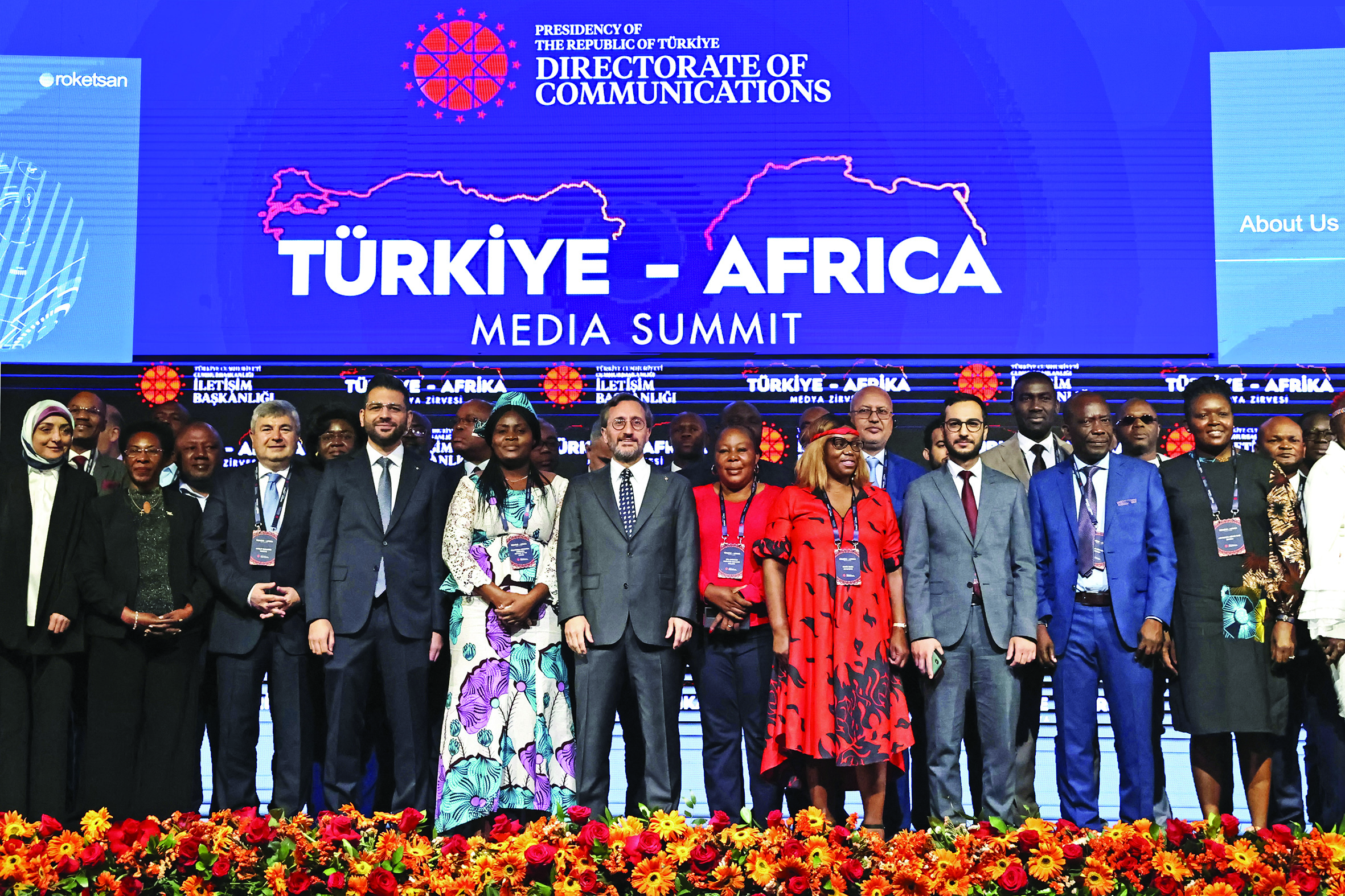
The Türkiye-Africa Media Summit was held in İstanbul on May 25, 2022, by the Presidency’s Directorate of Communications on the occasion of Africa Day. Topics discussed at this summit included “Africa in Turkish Foreign Policy and Media,” “Media as a Mediator,” “Türkiye and Africa: Cooperation between Media and Media Organizations of Türkiye and Africa,” and “The Future of Trade and Economic Relations between Africa.” Representatives from media, diplomats, government officials, academics, the private sector, and civil society organizations from 45 African countries participated in this forum. Discussions at the summit covered political and economic developments in Africa, as well as topics such as media education, conflict and terrorism in the media, social media, communication technologies, and enhancing cooperation between Turkish and African media. The summit also addressed the global media’s perspective on Africa, along with evaluations regarding the international order. Furthermore, the summits and forums provided an opportunity for information exchange and networking among not only Turkish and African press members but also among African press members themselves.
In the summit held in 2022, Directorate of Communications President Fahrettin Altun emphasized the importance of not only promoting Türkiye in Africa but also ensuring the recognition of African countries in Türkiye. Altun stated that they would implement journalist exchange programs between leading Turkish media institutions such as AA and TRT and their African counterparts. He also expressed the intention to strengthen partnerships with counterpart institutions in African countries.21
Türkiye’s media opening in Africa not only contributes to the development of relations in this area but also contributes positively to Türkiye’s image in African countries and facilitates the announcement of domestic and foreign policy decisions abroad. On the other hand, heads of state who come together at organized media summits have the opportunity to hold bilateral meetings and participating African academics, members of the press, or experts in different fields can develop their relations with their counterparts in Türkiye.
The Third Türkiye-Africa Partnership Summit was completed with intense participation and positive meetings. The summit in question was marked as an important step in Türkiye’s foreign policy due to both the statements made by the African guests and the fact that it coincided with a period when Africa was struggling with many problems. While six heads of state and government attended the Türkiye-Africa Partnership Summit held in İstanbul in 2008, seven heads of state and government attended the second Türkiye-Africa Partnership Summit in Malabo, 16 heads of state/government attended the Third Türkiye-Africa Partnership Summit held again in İstanbul in 2021. On the other hand, 102 African ministers, 26 of whom were foreign ministers, from 39 African countries were hosted at the summit. The first summit held in 2008 was defined as “getting to know each other again and discovering each other’s current potential”; the second summit in 2014 was defined as “deepening institutional relations, becoming multidimensional and becoming a tradition of summits,” while the third summit in 2021 was seen as a “vision and discourse summit.”22
The second summit was held when relations were developing and had matured not only in political and humanitarian terms but also in military terms, while the third summit included the process in which relations began to deepen. At the third summit, which was closely followed by the international and African press, the aim was to deliver 2.5 million additional doses of vaccine to African countries as the Organization of Turkic States in the fight against the COVID-19 pandemic. In addition to a joint declaration, action plans were announced in the fields of development, trade, industry, education, informatics, women, youth, infrastructure, agriculture, and health within the scope of the event. With the third summit, Türkiye reinforced the African initiative it started in 2005 on an institutional, sustainable, and multi-dimensional basis. At this event, African countries also pursued initiatives due to both their domestic and regional problems and have since aimed to deepen relations with Türkiye. Though the statements highlighted above remained ambiguous in the minds of Africans at the first summit in 2008 and occasionally led them to question if a new colonialist was interested in the continent, concerns were quelled by the third summit.
As a result, it should be noted that with the third summit, where the relations established between Türkiye and African countries deepened, certain aspects were considered both in the Africans’ view of Türkiye and in the relations established by Türkiye with the countries and peoples of the continent. The issues of “mutual trust and respect” and “human-based development” topped this list. African leaders and intellectuals see Türkiye differently from other non-continental actors in the light of these concepts and show it respect and affection. The third summit stands as a clear indication of a more sensitive process in the relations established between official and civil Turkish institutions and African governments and peoples.
TRT and Anadolu Agency Activities
In media relations between Türkiye and African countries, institutions such as TRT and AA have played a leading role. Indeed, over the past decade, both institutions have employed correspondents, signed bilateral agreements in this field, organized training programs for African journalists and enhanced collaborations through media forums.
Turkish media personnel employed in African countries hold a significant position in Türkiye’s media outreach in Africa. Alongside journalists working within the structures of AA and TRT, Turkish media personnel also operate as freelance correspondents in various countries. Until 2013, Turkish media personnel employed in Africa mainly undertook short visits. An example of this is Abdi İpekçi’s visits to countries like Nigeria, Kenya, and Ethiopia in 1959.23 However, starting in 2013, Turkish media personnel have been employed for longer periods in different countries across the continent.
Under the leadership of AA, the Presidency for Turks Abroad and Related Communities (YTB), and the Africa Coordination and Training Center (AKEM), training has been provided to African media personnel on various occasions
The first Turkish correspondent employed for an extended period under the state television network TRT in Africa was İbrahim Tığlı, who began his assignment in the Republic of South Africa in 2013. Additionally, within the network of AA, offices have been established since 2014 in countries such as Ethiopia, Nigeria, Cameroon, and Sudan, employing correspondents. The East Africa Regional Office, established in Ethiopia in 2014 under the auspices of the AA Middle East and Africa Directorate, became the first media office with all necessary permits granted by the Ethiopian government,24 marking the beginning of extensive Turkish media activities in Africa. However, the office that AA established in Ethiopia in 2014 ceased its operations as of 2021.
In 2024, AA now operates offices in Nigeria, Sudan, and Libya, with a broadcasting center in Tunisia. Furthermore, Turkish correspondents are employed in Somalia, the Republic of South Africa, Senegal, Libya, Morocco, and Algeria, as well as freelance correspondents in approximately 30 countries across the continent.25 TRT, however, does not have any Turkish correspondents on the continent.
Within its structure, TRT operates 7 digital channels, 12 websites, and over 100 social media accounts, broadcasting in 10 different languages. TRT, functioning as one of the international news platforms, launched its official broadcast on March 31, 2023, with TRT Africa. TRT Africa aims to present Africa’s untold stories as they are, viewing Africa as it is portrayed in the international mainstream media, claiming to be the only platform that does so.26 TRT Africa intends to empower its audience with an alternative narrative and include global stories that may attract the interest of African countries and peoples. Within TRT Africa, broadcasts are conducted in four languages: Hausa, Swahili, English, and French. The personnel profile reflects the uniqueness of every part of the African continent, based on the organization’s motto “As Africa Is.” TRT has produced numerous documentaries focusing on Africa, including “Goodness Will Save the World,” “Wedding Traditions in Africa-People and Beliefs,” and “Life in Niger.”27
In addition to its broadcasts related to Africa, TRT is also expanding its relations with media outlets on the continent. The African Broadcasting Union (AUB), established in 1962 to enhance all aspects of broadcasting in Africa and support African countries with quality programming, aims to present the true image of Africa to the world. In 2021, during the Third Türkiye-Africa Partnership Summit, TRT became a joint member of the AUB through a signing ceremony.28 Apart from AA and TRT, other Turkish media outlets such as Independent Turkish, Merhaba Africa, and NTR TV produce content with a focus on Africa.29
Training for African Media Personnel
Training activities for African media personnel hold a significant place in Türkiye’s initiatives in the media field in Africa. A consensus was reached during the Türkiye-Africa summits held in 2008, 2014, and 2021 regarding the provision of training for African media personnel, and the steps taken can be considered as outcomes of these summits.
Under the leadership of AA, the Presidency for Turks Abroad and Related Communities (YTB), and the Africa Coordination and Training Center (AKEM), training has been provided to African media personnel on various occasions. Among the most important of these is the African Media Representatives Training Program (AFMED).
These training programs, conducted face-to-face and online, aim to update the knowledge of African media personnel with theoretical and practical training in the press and media field, enabling them to acquire new experiences.30 Additionally, within the scope of these training programs, African media personnel visiting Türkiye for educational purposes have the opportunity to get to know Türkiye closely via social, economic, and political interactions.31
In the training programs conducted in 2019 and 2022, African journalists received training on various topics such as “Social Media and Internet Journalism,” “Agenda and Sources in Journalism,” “Data Journalism, Crisis Reporting,” “Media Economics Worldwide,” “Interview Techniques,” “Türkiye’s Image and the Effects of Media on Social Transformation,” and “Photo and Video Applications.”32
Dozens of African media personnel have participated in these training programs to date, not only receiving journalism training but also having the opportunity to exchange ideas and benefit from the experiences of representatives from other African countries.33 The evaluations of the media personnel who participated in the training programs are noteworthy, Fatma Daura, a Nigerian journalist who attended the program, stated: “This program taught us journalism both theoretically and practically. Türkiye has done a lot for Africa, and most Africans do not know about it. If a country does good work for Africa, I think it should be shown to people. Because Türkiye is not like other European countries; Turks are not coming to Africa to exploit us.” Another journalist, Linus Una, mentioned: “After visiting institutions like AA and TRT, I realized that telling stories requires significant investment. Quality work in journalism also requires investment in Africa. For example, there are many newspapers in Nigeria, but most of them cannot do quality work because there is not enough investment. Thanks to this program, journalists in Africa become informed about Türkiye’s economy, politics, and culture. After the program, we also return to our countries as ambassadors. When someone says something bad about Türkiye in our country, we defend Türkiye. I think Africa needs to learn a lot from Türkiye.”34
Apart from the YTB, TİKA has also conducted training activities for African media personnel. As an example, Mauritania can be cited. In 2013, with the support of TİKA, a five-day seminar was organized in Ankara for 12 journalists affiliated with the Mauritanian Journalists Union. The seminar focused on providing training on journalistic principles to be observed when publishing news on special circumstances such as war, violence, and disasters, as well as topics related to responsible journalism practices and the importance of public access to information in extraordinary situations.35
In 2015, TİKA organized a training program in İstanbul for 15 radio personnel from Côte d’Ivoire and Burkina Faso. As part of the International Vocational and Technical Training Program (TÜRKMEK), the radio workers participated in a computer operation and office applications training program. Additionally, they received a 48-hour radio broadcasting training, which included theoretical and practical applications, at radios operating in İstanbul. During the training program, expert trainers provided sessions on various topics related to radio broadcasting, including software training, program preparation and presentation techniques, news preparation and presentation techniques, preparation and presentation of cultural and current affairs programs, technical training on microphone and line cable preparation, maintenance and repair of antennas and transmitters, and expanding the broadcast network with radio links.36
The aim of the training provided to African press and media personnel in Türkiye is to strengthen the media infrastructure and human resources in Africa
One of the recent examples of training programs conducted by TİKA with a focus on Africa was the “Journalism for Youth” training held in collaboration with TRT in Addis Ababa, the capital of Ethiopia, in November 2023. The training targeted students from the Communication Faculty of Addis Ababa University, as well as personnel from the Ethiopia Broadcasting Corporation (EBC), Jeilu TV, OBN TV, and communication units of various civil society organizations. A total of 70 students and young journalists participated in two separate training programs, where they received instruction on content creation for social media, storytelling techniques, mobile journalism, video editing, and field production.37
The aim of the training provided to African press and media personnel in Türkiye is to strengthen the media infrastructure and human resources in Africa. Additionally, it aims to convey information about events such as the Peace Spring Operation, the July 15, 2016 coup attempt, and Türkiye’s foreign policy for its African counterparts. Furthermore, the goal is for African counterparts to obtain information about Türkiye not from Western or global media outlets, but directly from Turkish media, and to share this information with their audiences in African countries.38
Equipment Support for African Media Organizations
In addition to training for African press and media personnel, TİKA has provided technical equipment support to many African countries, including Ethiopia, Niger, Gambia, Kenya, and Namibia. The aim is to strengthen relations and support professionals in producing better news and visuals.
In 2013, TİKA provided technical equipment support to the African Media Initiative based in Kenya, including the installation of a telephone exchange and teleconferencing system.39 In 2017, TİKA provided equipment support to the Ethiopian News Agency (ENA), including cameras, editing stations, and recording devices.40
Examples of support in the field of media equipment include providing cameras, VTRs, character generators, editing sets, and laptops to the Tanzania Broadcasting Corporation in 2013;41 providing cameras, air conditioners, prompter devices, editing computers, wireless microphones, digital audio mixers, studio microphones, headphones, and workstations to the State Television, Radio, and News Agency of Sao Tome and Principe in 2014;42 and providing camera packages and editing systems to important public broadcasting institutions such as the Zambia National Broadcasting Cooperation and Zambia News and Information Services in 2015.43
In 2022, TİKA provided live broadcasting equipment support to the channel TELE SAHEL, operated under the Niger Radio-Television Office (ORTN), Niger’s national broadcasting entity. With this support, the channel gained the capability to broadcast various events live, including football matches, worldwide. It enabled the channel to conduct high-quality live broadcasts in rural areas of Niger and simultaneously present current developments to the Nigerian public.
The Gambia Media Union and its affiliated Media and Communication Academy renovated their television and education studio with TİKA’s support in 2023. The Media and Communication Academy, established in 2010, required technical equipment such as computers, video cameras, live broadcast video switchers, tripod systems, teleprompters, and microphones to provide practical training in its TV production module. Sang Mendy, the director of the Gambia Media and Communication Academy, expressed his thoughts on the assistance provided by TİKA, stating that the state-of-the-art equipment provided the broadcasting capacity in the television and education studio. He emphasized that graduates of the academy could easily find employment as media and communication experts in both public and private media organizations.
In addition to training for African press and media personnel, TİKA has provided technical equipment support to many African countries, including Ethiopia, Niger, Gambia, Kenya, and Namibia
Printed Publications on African Media
Articles and books have been produced to promote and document Türkiye’s initiatives in the media sector in African countries, as well as on the efforts in this field in Türkiye. In addition to academic articles and analyses in this field, among the works published in the last 20 years are the “Türkiye-Africa Media Forum: Designing a Common Future and Media” published by the Prime Ministry Press and Information Directorate in 2012, the book Yükselen Afrika published by AA, and the work titled Afrika Medyası and Basın Tarihi produced by Alelmas Publications.
The book Yükselen Afrika, published by AA, consists of news articles written by correspondents who have visited 10 countries on the continent. The aim of the book, which introduces the continent in historical, social, cultural, and economic terms, also includes the relations between Türkiye and African countries. With this work, it is emphasized that Africa, which has been the subject of negative developments such as hunger, drought, civil wars, tribal conflicts, and military interventions for years, has become the focus of the world’s attention in recent years due to developments in all areas. The goal is to look at the continent from a different perspective. At the same time, all news and visuals published in this work have also been presented to readers of AA.44
The work provides extensive information on the efforts of African countries such as Nigeria, Kenya, South Africa, Guinea, Mozambique, Rwanda, Namibia, Senegal, and Tanzania, which have struggled with political crises, civil wars, and societal changes after gaining independence from colonial powers. It discusses their efforts to achieve political and economic freedom, as well as their cultural and natural wealth, highlighting their rising importance in the world economy.45
On the other hand, the book Afrika Medyası ve Basın Tarihi examines the press and media history of African countries on a country-by-country basis. Contributed by academics, experts, and journalists researching Africa, the book aims to contribute to Turkish literature by thoroughly examining the press and media history of Africa.46
In addition to these works, YTB’s Memleketim Magazine dedicated its 6th issue to Africa.47 The YTB also initiated the publication of the Africa Yearbook, while Hece Magazine released a special Africa issue. Anemon Muş Alparslan University’s Journal of Social Sciences and Malatya University’s Africania have also been launched. In the past decade, many journals have published special issues on Africa, contributing to the increase in knowledge about Africa in Türkiye.
By utilizing new media and communication technologies, Türkiye can develop faster and more effective media relations with African countries
Conclusion
When we look at the history of African media, it’s evident that it has a long-standing legacy. Starting with printed newspapers and magazines, the historical trajectory transitioned into radio and television, and more recently, with the widespread adoption of technology and the internet since the 2000s, it has entered a new phase. This has facilitated the expansion of communication networks and the emergence of new media platforms across various parts of the continent. Many media outlets broadcasting over the internet have begun operating in languages such as English, French, Arabic, Swahili, and Hausa. Some of these outlets are state-supported, while others rely on civil society backing.
Türkiye operates in African countries through diplomatic missions, institutions and organizations like TİKA, the YEE, the TMV, companies, and NGOs. Communication efforts also play a significant role in conveying Türkiye’s relations with African countries or events transpiring in African countries accurately to the world.
The proliferation of communication networks alongside the internet across the continent has brought about rapid transformation and progress in the media field. However, it is important to remember that Türkiye’s relations with African countries in the media sphere are still relatively new compared to media outlets like BBC and Reuters.
In Türkiye’s relations with Africa since the 2000s, civil society-centered humanitarian aid efforts hold significant importance. However, portraying the continent in a one-sided manner, whether consciously or unconsciously, has led to an erroneous perception of Africa in Türkiye. The media plays a crucial role in correcting this one-sided narrative about Africa. While some media outlets produce content aimed at forming a correct perception of Africa, there has yet to be a common initiative in this regard. There needs to be a shared vision and planning to ensure that media coverage of Africa from Türkiye is grounded in accuracy.
Another significant aspect of media work in relation to Africa in Türkiye is the narrowing employment opportunities. Despite organizational expansion in Türkiye’s media infrastructure related to Africa, there has been a contraction in employment. For example, while AA employed Turkish correspondents in South Africa, Kenya, Ethiopia, Nigeria, Senegal, and Sudan in 2016, by 2024, there were only Turkish correspondents stationed in South Africa, Senegal, and Cameroon. TRT Africa employs African media professionals, but there are no Turkish media professionals. Notable employment opportunities are lacking in media centers like Independent Turkish, Hello Africa, or NTR TV.
The influence of spoken languages plays a significant role in Türkiye-based media not being as effective in African countries as news organizations like AFP, AP, VOA, BBC, or DW. In regions influenced by France or the UK, communication and collaboration with local reporters are facilitated by French and English. However, the same ease is not experienced by Turkish media. Nevertheless, it seems imperative to broadcast in local languages such as Hausa, Amharic, and Swahili, which are among the most spoken languages on the continent.
Türkiye’s media expansion in Africa aims to better explain Türkiye’s people-centered foreign policy to the people of the continent
Training programs for African media professionals and Türkiye-Africa media summits contribute significantly to media relations with African countries. Therefore, efforts in this field should continue to increase.
It should be noted that the third summit, which deepened relations between Türkiye and African countries, has brought to the fore certain concepts that must be taken into account both in the way Africans view Türkiye and in Türkiye’s relations with the countries and peoples of the continent. Foremost among these are concepts such as “mutual trust and respect” and “people-centered development.” African leaders and intellectuals see Türkiye differently from other non-continental actors in the light of these concepts and appreciate the approach. The Third Türkiye-Africa Partnership Summit is a clear sign that we have entered a more sensitive process in relations between our official and civil institutions and African governments and peoples.
Türkiye’s media expansion in Africa aims to better explain Türkiye’s people-centered foreign policy to the people of the continent. The steps taken in the media sector not only contribute to the development of relations with the countries of the continent but also contribute positively to Türkiye’s image in African countries. In addition, it acts as an intermediary for the steps taken by Türkiye in domestic and foreign policy to be correctly explained to the people of Africa.
Finally, it’s crucial to acknowledge that a significant portion of Africans follow news not from television or newspapers but from websites and social media. From this perspective, the internet age presents significant opportunities for Türkiye, which is trying to find its place in the African media landscape. By utilizing new media and communication technologies, Türkiye can develop faster and more effective media relations with African countries.
Endnotes
1. Ewumbue-Monono Churchill, “The Mass Media and Regional Integration in Africa,” Africa Media Review, 5, No. 1 (1991), pp. 17-35.
2. Ani Petrosyan, “Percentage of Individuals Using the Internet Worldwide as of 2022, by Region,” STATISTA, (2022), retrieved from https://www.statista.com/statistics/333879/individuals-using-the-internet-worldwide-region/.
3. Petrosyan, “Percentage of Individuals Using the Internet Wworldwide as of 2022, by Region.”
4. “In Much of Sub-Saharan Africa, Mobile Phones Are More Common Than Access to Electricity,” The Economist, retrieved from https://www.economist.com/graphic-detail/2017/11/08/in-much-of-sub-saharan-africa-mobile-phones-are-more-common-than-access-to-electricity#:~:text=In%202016%20two%2Dfifths%20of,less%20than%20a%20quarter%20does.
5. Guy Berger, “Media in Africa 20 Years on, Our Past, Present, and Future,” MISA, (2011), pp. 12-44.
6. Esther Githui-Ewart, “VOA’s English to Africa Service Celebrates 60 Years of Service,” VOA, (July 31, 2023), retrieved from https://www.voaafrica.com/a/voa-s-english-to-africa-service-celebrates-60-years-of-service/7205482.html.
7. Iginio Gagliardone and Sam Geall “China in Africa’s Media and Telecommunications: Cooperation, Connectivity and Control,” The Norwegian Peacebuilding Resource Centre, (April 2014), retrieved from https://www.files.ethz.ch/isn/179376/7880fd6b12b93bdd18eddcbd4f4e207f.pdf.
8. Yu-Shan Wu, “The Rise of China’s State-Led Media Dynasty in Africa,” The South African Institute of International Affairs, (June 2012), retrieved from https://www.files.ethz.ch/isn/146130/saia_sop_%20117_wu_20120618.pdf.
9. “The Oldest Newspapers Published in Africa,” World Atlas, retrieved from https://www.worldatlas.com/articles/which-were-the-oldest-newspapers-published-in-africa.html.
10. Julia Cage, “The Economics of the African Media,” in Celestin Monga and Justin Yifu Lin (eds.), The Oxford Handbook of Africa and Economics, (Oxford: Oxford University Press, 2014).
11. Jimmy Ocitti, “Media and Democracy in Africa,” Weatherhead Center for International Affairs, (July 1999).
12. Ocitti, “Media and Democracy in Africa”
13. Elizabeth Barratt and Guy Berger (eds.), 50 Years of Journalism, (Johannesburg: The African Editors’ Forum, 2007).
14. Michael Leslie, Media and Democracy in Africa, 1st, (London: Routledge, 2002)
15. “History”, The Nation, retrieved from https://www.nationmedia.com/who-we-are/history/.
16. Paul M. Musau, “The Liberalization of the Mass Media in Africa and Its Impact on Indigenous Languages: The Case of Kiswahili in Kenya,” Ufahamu, Vol. 26, No. 1 (January 1998), pp. 4-17.
17. “30th Anniversary of the Windhoek Declaration,” UNESCO, (February 18, 2021), retrieved from https://www.unesco.org/en/articles/30th-anniversary-windhoek-declaration.
18. “Radio Télévision Libre des Mille Collines (RTLM),” Genocide Archive of Rwanda, retrieved from https://genocidearchiverwanda.org.rw/index.php/Radio_T%C3%A9l%C3%A9vision_Libre_des_Mille_Collines.
19. “Afrika Birliği (AfB),” C. Dışişleri Bakanlığı, retrieved from https://www.mfa.gov.tr/afrika-birligi.tr.mfa
20. “Türkiye-Afrika Medya Forumu” Anadolu Agency, (May 8, 2012), retrieved from https://www.aa.com.tr/tr/turkiye/turkiye-afrika-medya-forumu/369410.
21. “İletişim Başkanı Altun, Türkiye-Afrika Medya Zirvesi’nde Konuştu,” C. Cumhurbaşkanlığı, İletişim Başkanlığı, (May 25, 2022), retrieved from https://www.iletisim.gov.tr/turkce/haberler/detay/iletisim-
baskani-altun-turkiye-afrika-medya-zirvesinde-konustu.
22. Gökhan Kavak, “Üçüncü Türkiye-Afrika Ortaklık Zirvesi,” ORSAM, (January 15, 2022) retrieved from https://www.orsam.org.tr/tr/ucuncu-turkiye-afrika-ortaklik-zirvesi/.
23. Abdi İpekçi, AFRİKA, (İstanbul: Milliyet Yayınları, 1959).
24. “AA Etiyopya Ofisi Açıldı,” Anadolu Ajansı, (May 12, 2014) retrieved from https://www.aa.com.tr/tr/dunya/aa-etiyopya-ofisi-acildi/160252#.
25. “Yurt Dışı Bürolar,” Anadolu Ajansı, retrieved from https://www.aa.com.tr/tr/p/yurt-disi-burolar.
26. “About TRT Afrika,” TRT, retrieved from https://trtafrika.com/about-us.
27. “Nijer’de Yaşam,” TRT, retrieved from https://www.youtube.com/watch?v=e2nOP-i1tms.
28. Semra Orkan, “TRT Afrika Yayın Birliğinin Ortak Üyesi Oldu,” Anadolu Ajansı, (December 17, 2021), retrieved from https://www.aa.com.tr/tr/gundem/trt-afrika-yayin-birliginin-ortak-uyesi-oldu/2450443.
29. “About Us,” NTR TV, retrieved from https://ntrtv.com.tr/about-us/.
30. “Afrika Medya Temsilcileri Eğitim Programı (AFMED),” Yurtdışı Türkler ve Akraba Topluluklar Başkanlığı (YTB), (October 31, 2022) retrieved from https://www.ytb.gov.tr/guncel/afrika-medya-
temsilcileri-egitim-programi-afmed.
31. Gökhan Kavak and Adam Abu Bashal, “Afrikalı Gazeteciler Türkiye’deki Medya Eğitiminden Övgüyle Bahsetti,” Anadolu Ajansı, (December 12, 2022), retrieved from https://www.aa.com.tr/tr/turkiye/afrikali-gazeteciler-turkiyedeki-medya-egitiminden-ovguyle-bahsetti/1671687.
32. “Afrika Medya Temsilcileri Eğitim Programı III (AFMED III),” YTB, retrieved from https://ytb.gov.tr/haberler/afrika-medya-temsilcileri-egitim-programi-iii-afmed-iii.
33. “Afrika Medya Temsilcileri Eğitim Programı (AFMED),” YTB.
34. Kavak and Bashal, “Afrikalı Gazeteciler Türkiye’deki Medya Eğitiminden Övgüyle Bahsetti.”
35. “Moritanyalı Gazetecilere Eğitim,” TİKA, (November 20, 2013) retrieved from https://www.tika.gov.tr/tr/haber/moritanyali_gazetecilere_egitim-5335.
36. “Fildişi Sahilleri ve Burkina Faso Radyo Personeline Eğitim,” TİKA, (March 24, 2015) retrieved from https://tika.gov.tr/detail-fildisi_sahilleri_ve_burkina_faso_radyo_personeline_egitim/.
37. “TİKA ve TRT, Etiyopya’da Geleceğin Gazetecilerine Eğitim Verdi,” Anadolu Ajansı, (November 28,
2023), retrieved from https://www.aa.com.tr/tr/gundem/tika-ve-trt-etiyopya-da-gelecegin-gazetecilerine-egitim-verdi-/3066678.
38. “AA Etiyopya Ofisi Açıldı,” Anadolu Ajansı.
39. “Kenya’da Medya Altyapısı ve İnsan Kapasitesinin Gelişmesine Destek,” TİKA, (December 16, 2013), retrieved from https://tika.gov.tr/detail-kenyada_medya_altyapisi_ve_insan_kapasitesinin_gelismesine_destek/.
40. “TİKA’dan Etiyopya Haber Ajansına Ekipman Desteği” Anadolu Ajansı, (July 4, 2017), retrieved from https://www.aa.com.tr/tr/dunya/tikadan-etiyopya-haber-ajansina-ekipman-destegi/854013.
41. “Tanzania Broadcasting Corporation Kuruluşuna Malzeme Desteği,” TİKA, (December 17, 2013), retrieved from https://tika.gov.tr/detail-tanzania_broadcasting_corporation_kurulusuna_malzeme_destegi/.
42. “Sao Tome ve Principe Demokratik Cumhuriyeti’nin Medya Alt Yapısı Güçlendirildi,” TİKA, retrieved from https://tika.gov.tr/detail-sao_tome_ve_principe_demokratik_cumhuriyetinin_medya_alt_yapisi_guclendirildi/.
43. “TİKA’nın Desteğiyle Zambiya Medya Organlarına Ekipman Desteği Sağlandı,” TİKA, (2018), retrieved from https://tika.gov.tr/detail-tika%27nin_destegiyle_zambiya_medya_organlarina_ekipman_destegi_saglandi/.
44. “AA Etiyopya Ofisi Açıldı,” Anadolu Ajansı.
45. “Yükselen Afrika,” Anadolu Ajansı, (September 11, 2014), retrieved from https://www.aa.com.tr/tr/aa-yayinlari/yukselen-afrika-/122984.
46. Ahmet Kavas, Aydın Özkan, and Oğuzhan Yılmaz Tuğrul, Afrika Medyası ve Basın Tarihi, (İstanbul: Alelmas Yayıncılık, 2022).
47. “Memleketim (Afrika Dosyası),” YTB, No. 6 (May 2022).