
Introduction
Since the end of the Cold War, Türkiye has pursued active diplomacy in the Balkans, establishing itself as a leading regional actor. During the 1990s, characterized by the uncertainties of transitioning to a new world order and ongoing conflicts, Türkiye’s Balkan policy placed a strong emphasis on security. However, from the early 2000s onwards, Türkiye began to deepen its economic and social relations with the Balkans by employing new instruments. While Türkiye continued its military and defense activities in the region, they did not dominate Türkiye’s Balkan policy as they did in the 1990s.
Recent developments indicate a revival of the military and defense aspects of Türkiye’s relations with the Balkans. Although this trend has not been extensively examined in academic literature, it has garnered some attention from the media and analysts. Recent media reports have highlighted Türkiye’s increased military engagements in the Balkans, especially through military exports, and commentators have interpreted this trend as indicative of Türkiye’s growing prominence as a dominant actor in the region.1
This article will focus on Türkiye’s presence in the Balkans in the defense and military fields since the end of the Cold War, with a particular emphasis on the rising activism since the late 2010s.2 It will first examine how Türkiye contributed to the Balkans with its military during the 1990s, characterized by conflicts and crises, and after 2001, when peace prevailed in the region. The article will then discuss Türkiye’s current military engagements, which include both the processes started in earlier periods and a new trend of intensified military and defense cooperation. Explanations regarding this new trend will also be offered.
Türkiye’s Military and Defense Engagements in the Balkans after the End of the Cold War
The dissolution of the Communist bloc and the emergence of new states brought about swift and radical changes in international and regional systems, creating a range of new opportunities and challenges for Türkiye.3 The Balkans, as a contiguous region located between Türkiye and Western Europe and hosting Turkish and Muslim communities, were Ankara’s center of attention. To both preempt emerging security threats and strengthen its international political position, Ankara adopted a more active foreign policy in the Balkans. By developing relations with Balkan countries and increasing its presence, Türkiye aimed to assert itself as an influential regional actor.4
Engagements during the 1990s
In the 1990s, due to the region’s conditions and needs, military and defense issues emerged as areas where Türkiye could make the most significant contributions. Seeking to bolster its presence, Ankara showed a willingness to contribute in these fields. This led to the development of military cooperation with regional countries and involvement in all regional and international mechanisms aimed at establishing and maintaining peace.
Bilateral Cooperation
During the Cold War, ideological differences and mutual suspicions prevented the development of relations between Türkiye and the Communist regimes in the Balkans. After regime changes, Türkiye sought to establish strong relations and contribute to the reform processes of Balkan countries, while its Balkan counterparts were also eager to cooperate with Türkiye. Military and defense cooperation were seen as mutually beneficial, leading to the rapid development of relations between Türkiye and Bulgaria, Romania, and Albania. Cooperation with newly independent countries also commenced in subsequent years.
The Balkans, as a contiguous region located between Türkiye and Western Europe and hosting Turkish and Muslim communities, were Ankara’s center of attention
With Bulgaria, the Sofia Document on Mutually Complementary Confidence and Security Building Measures and Military Contacts was signed on December 20, 1991, as an initial step toward building military confidence between the two neighbors.5 On March 31, 1992, a Military Training Cooperation Agreement was signed in Sofia.6 Subsequently, a Military Cooperation Agreement between the military institutions of both countries was signed on July 29, 1997.7
On February 20, 1992, Türkiye and Romania signed the Agreement on Education, Technical, and Scientific Cooperation in the Military Field in Bucharest.8 On February 20, 1992, Türkiye and Romania signed the Agreement on Education, Technical, and Scientific Cooperation in the Military Field in Bucharest. Under this agreement, a protocol on Cooperation in Technical, Logistical, and Defense Industry Fields, and another on the Exchange of Classified Information in Armament, Logistics, and Defense Industry were signed on July 9, 1992. On August 22, 1992, a Supplementary Agreement on Military Education Cooperation was signed with Romania.9
On July 29, 1992, a bilateral Defense Cooperation Agreement was concluded with Albania.10 A Technical and Defense Industry Agreement followed on November 19, 1992.11 On July 11, 1995, an agreement concerning the donation of military equipment, weapons, and supplies was signed with Albania.12
The deployment of Turkish military units in Kosovo granted Türkiye a tangible presence and influence in the region
As regards the newly-independent states, Türkiye signed a Military Training Cooperation Agreement with Macedonia on March 24, 1994.13 On August 10, 1995, Türkiye and Bosnia and Herzegovina signed an Agreement on Education, Technical, and Scientific Cooperation in the Military Field.14 This was followed by another Military Training Cooperation Agreement on January 22, 1996.15 On June 19, 1996, Türkiye and Croatia signed an Agreement on Education, Technical, and Scientific Cooperation in the Military Field.16 A Military Training Cooperation Agreement was signed on August 23, 1996, in Zagreb.17
Through these agreements, Türkiye conducted numerous exercises and joint activities with Balkan countries and provided military equipment and training support. Meanwhile, its membership in NATO provided Türkiye with an additional platform for military cooperation with Balkan countries. The Partnership for Peace (PfP) program, launched in 1994, facilitated increased military-to-military contact between Türkiye and the partner countries in the Balkans. Türkiye supported these nations in their defense reforms and the development of military capabilities through various NATO-led projects and activities. The PfP Training Center, established in Ankara in 1998, trained numerous personnel from the armed forces of Balkan countries, further enhancing military cooperation and interoperability.18
International Operations
Türkiye was initially averse to the idea of the dissolution of Yugoslavia, but when Slovenia and Croatia’s independence were recognized by European capitals, Ankara realized that the process was irreversible. When conflicts erupted, Türkiye was primarily concerned about the possibility of widespread violence against Muslim civilians. Additionally, Türkiye was wary of the strengthening of Serbia, which had close ties with Greece, a regional rival. Such an alignment could pose a threat to Türkiye’s strategic interests in the Balkans and potentially disrupt its connections to Europe.19 While Türkiye made substantial diplomatic efforts to mobilize the international community to stop the conflict, it initially offered its support to NATO operations with its naval and air forces. Following United Nations Security Council (UNSC) Resolution 757, NATO launched Operation Maritime Monitor in the Adriatic Sea in July 1992 to enforce the arms embargo and sanctions on the Federal Republic of Yugoslavia (Serbia and Montenegro).20 Türkiye joined this operation on July 13, 1992, and continued its participation after this operation was restructured under the names of Operation Maritime Guard in November 1992 and Operation Sharp Guard in June 1993. Türkiye contributed to Operation Sharp Guard with two frigates and six vessels until it was officially ended on October 6, 1996.
For air missions, Türkiye participated in NATO’s Operation Deny Flight, enforcing the UN- sanctioned no-fly zone over Yugoslavia. A fleet of ten Turkish F-16 jets, based in Italy, contributed to this operation at its commencement on April 12, 1993, which was increased to 18 jets in 1995. That year, the Turkish air fleet took part in Operation Deliberate Force, the air strikes against the Republika Srpska army, which played a key role in ending the war. The Turkish air fleet continued to contribute to the NATO-led peace enforcement mission Implementation Force (IFOR) and, from 1996 onwards, the NATO-led peacekeeping mission Stabilization Force (SFOR), with a reduced size until 2002.21
Türkiye’s ground involvement in Bosnia’s peace missions came later than its participation in naval and air operations. As a measure to contain hostilities in Yugoslavia, UNSC Resolution 743 established, on February 21, 1992, a peacekeeping force under the name of the United Nations Protection Force (UNPROFOR).22 After the outbreak of war in Bosnia in April, Turkish officials repeatedly called for forceful measures to prevent civilian casualties and expressed readiness to contribute to UNPROFOR.23 The invitation eventually came in March 1994, leading to the deployment of a Turkish mechanized battalion of about 1,500 troops in Zenica on August 4, 1994. After the Dayton Peace Agreement, a Turkish brigade participated in NATO-led IFOR and SFOR operations. In addition to monitoring and patrolling missions, Turkish troops undertook several civil-military cooperation tasks such as humanitarian assistance, medical support, education, and training.24
Right after the Cold War, Türkiye began to take proactive steps to establish bilateral military cooperation and build confidence with countries like Bulgaria, Albania, and Romania
In addition to the NATO-led operations, following the Bosnian war, Türkiye, alongside other Muslim countries, participated in the U.S.-led Train and Equip program, supplying the Muslim-Croat army with donations and training. Whereas European countries were against this program, Ankara eagerly cooperated with Washington to offer its support to the newly established Federation army.25
The collapse of pyramid bankers in Albania led to a potential civil war, prompting UNSC Resolution 1101 on March 28, 1997, to establish a multinational protection force that would facilitate the safe delivery of humanitarian assistance. Türkiye was one of the 11 countries that contributed to this force, known as Operation Alba. With 753 personnel, two frigates, and two other vessels, Türkiye took part in this operation from April 16 to August 1, 1997.26
Türkiye’s policy during the Kosovo war was somewhat cautious until NATO intervention. While Ankara expressed concern for the safety and well-being of Kosovo Albanians, it initially refrained from supporting Kosovo’s detachment from Yugoslavia due to apprehensions about potential secessionism in the Balkans.27 As the crisis escalated into violence, Türkiye invested significant diplomatic efforts to prevent war and facilitate dialogue.28 Meanwhile, as early as October 8, 1998, the Turkish parliament authorized the deployment of Turkish troops to a future multinational force in Kosovo.29 Following NATO’s decision to intervene in March 1999 with Operation Allied Force, Türkiye promptly contributed by deploying a fighter squadron comprising 10 F-16 aircraft. This was later reinforced by an additional squadron of eight F-16s and three tanker aircraft. Türkiye also allocated battleships and naval vessels to participate in the naval blockade in the Adriatic Sea.30
Upon the establishment of the NATO-led Kosovo Force (KFOR) through UNSC Resolution 1244 on June 12, 1999, Türkiye swiftly prepared to deploy troops for this multinational peacekeeping operation. Despite delays caused by Bulgaria’s objections to the passage of Turkish troops, a battalion of 973 military personnel joined KFOR on July 13. The Turkish contingent’s area of responsibility included regions with a significant Turkish population, such as Prizren, Dragash, and Mamusha. In addition to their military duties of protection and training, the Turkish battalion in KFOR undertook various humanitarian tasks, including aid distribution, education, medical care, and infrastructure construction and repair.31
In the Kosovo war, Türkiye’s participation in NATO operations and subsequent peace missions presented dual opportunities. First, providing bases and actively participating with combat aircraft and naval forces helped consolidate Türkiye’s position within NATO and bolster its role in European security.32 Second, as then-Prime Minister Bülent Ecevit explicitly stated, Türkiye aimed to have a say in the reconstruction and future of Kosovo, where a significant Turkish population resided.33 The deployment of Turkish military units in Kosovo granted Türkiye a tangible presence and influence in the region.
In January 2001, conflicts erupted in Macedonia between the ethnic Albanian armed group known as the National Liberation Army and the Macedonian armed forces. Under international pressure, the conflicting parties signed the Ohrid Framework Agreement on August 13 of the same year. Following this agreement, NATO decided to deploy a multinational task force in Macedonia, named Operation Essential Harvest, aimed at disarming the Albanian paramilitaries. Türkiye contributed a company of 150 men, participating alongside 14 other countries in this peace enforcement mission, which commenced on August 27, 2001, and lasted for one month.34
By participating in the operations above, Türkiye aimed not only at fostering interactions and strengthening its presence in the region but also at bolstering its position within the Euro- Atlantic alliance. At a time when Türkiye felt marginalized by the European Union and as NATO was redefining its role, Türkiye viewed its active participation in NATO operations and the PfP as crucial for shaping its future relations with Europe and the U.S.35 Through its active contribution, Türkiye sought to demonstrate that it was a key player in ensuring peace and stability in the Balkans.36
Türkiye’s eagerness to participate in regional operations was met with resistance from some European countries, particularly Greece. As Greece viewed Türkiye’s growing ties with Macedonia and Albania as a threat,37 it was concerned about the presence of Turkish troops in the region. Arguments were made that Türkiye, due to its cultural and religious affinity with Muslim communities in the Balkans, could not be impartial in crises and therefore should be excluded from certain operations. Consequently, Türkiye’s participation in some missions was either blocked or delayed. Despite these challenges, the alignment of Türkiye’s perspectives in the Balkans with those of the U.S., the leading superpower of the time, facilitated Türkiye’s military outreach. Cooperation with and support from Washington eased Türkiye’s involvement in international missions and deepened military relations with countries like Albania and Bosnia and Herzegovina.38
Nevertheless, Türkiye’s military relations in the region during the 1990s should not be viewed solely through the lens of the U.S. influence. Right after the Cold War, Türkiye began to take proactive steps to establish bilateral military cooperation and build confidence with countries like Bulgaria, Albania, and Romania. These efforts were part of Türkiye’s broader strategy to promote stability in this neighboring region within the new world order. Türkiye’s later contributions to conflict prevention, crisis management, and peacekeeping were further demonstrations of its stabilization efforts. Türkiye regarded international operations as an opportunity to bolster regional peace and stability and to assert its influence in the post-Cold War era.
Regional Cooperation Mechanisms
From the latter half of the 1990s onwards, mechanisms aiming at enhancing security and cooperation in the Balkans were initiated, thanks to encouragement from the West, notably the
U.S. Emphasizing the necessity of a comprehensive stabilization package to deter further conflicts, Türkiye actively supported these initiatives.39 The South-East Europe Defense Ministerial Process (SEDM) emerged as the most regular and extensive regional cooperation mechanism with a military focus, inaugurated in 1996 through a series of defense ministers’ meetings.40 Türkiye participated in this process from its inception.
Türkiye was among the 7 signatories to the Agreement on Multinational Peace Force South- Eastern Europe (MPFSEE), concluded in Skopje on September 26, 1998. Subsequently, Türkiye became a member of the South-Eastern Europe Brigade (SEEBRIG), a joint military force maintained in readiness for participation in peace operations, upon its establishment in 1999.41
The strengthening of peace and stability allowed Balkan governments to focus on domestic reform, economic liberalization, and institutional consolidation, all of which created a favorable environment for Türkiye to deepen its economic and social ties with the region
Engagements after 2001
Despite Ankara’s desire for a more active role, both politically and economically, the country faced limitations in available resources. Unstable coalition governments, separatist terrorism, and economic crises hindered Türkiye’s ability to fully realize its political, economic, and social potential in pursuing its ambitions. However, during the 2000s, while Türkiye’s core concerns and principles regarding the Balkans remained largely unchanged,42 its policy in the region witnessed a notable increase in activity.
The relative political stability, economic growth, and significant structural reforms under AK Party governments bolstered Türkiye’s resources and enhanced its confidence in foreign policy. Concurrently, factors such as rising per capita income, expansion of the business sector, and advancements in communication and transportation fostered deeper engagement between Turkish civil society, businesses, and the Balkans. Capitalizing on these developments, the Turkish government incentivized exporters and investors while establishing new agencies to support and facilitate NGO activities. The increased participation of Turkish companies and civil society further increased Türkiye’s visibility and capabilities in the region.
Apart from these domestic factors, the international context was also a crucial underlying factor facilitating Türkiye’s new dynamism. The limited civil conflict in Macedonia in 2001 marked the end of almost a decade of violence in the region. The international community’s commitment to preserving peace, along with changes in national-level political actors, particularly in Serbia, meant that conditions were no longer favorable for another large-scale conflict. Moreover, the EU’s enlargement perspective provided a powerful incentive for Balkan countries to prioritize EU membership, fostering a common Europeanization perspective. This shared goal led to steps towards reconciliation and the normalization of relations among Balkan states. The strengthening of peace and stability allowed Balkan governments to focus on domestic reform, economic liberalization, and institutional consolidation, all of which created a favorable environment for Türkiye to deepen its economic and social ties with the region. With its new agencies of public and cultural diplomacy, increased use of media, and cooperation with civil society, Türkiye became increasingly active in the Balkans. Its economic, cultural, and social presence in the region grew stronger, with soft power elements playing a more significant role in its policy.43
Türkiye did not abandon its military and defense engagements initiated in the 1990s, however. It continued to participate in international operations and regional and bilateral cooperation mechanisms. As NATO handed over peacekeeping and capacity-building missions to the EU, Türkiye maintained its contributions within these EU frameworks. The EU welcomed Türkiye’s cooperation, reinforcing its image as a “security provider” in the region.44
Bilateral Cooperation
Throughout the 2000s, Türkiye supported the Euro-Atlantic integration of Balkan countries by providing aid, donations, and expertise to help their militaries meet NATO standards.45 Bilateral agreements were signed to establish a legal framework for military collaboration
with countries in the region where such agreements had not existed before. On October 23, 2001, Türkiye signed a Military Cooperation Agreement with Slovenia.46 On July 23, 2004, an Agreement on Military-Scientific and Military-Technical Cooperation was signed with Serbia and Montenegro, coming into force in 2008.47 On December 24, 2009, a Framework Agreement on Military Training, Technical Cooperation, and Scientific Cooperation was signed with Kosovo.48
In recent years, Türkiye’s military and defense activities in the Balkans have accelerated independently of international operations and mechanisms
Among other major agreements signed with Balkan countries to advance military and defense cooperation were the Agreement with Serbia on the Mutual Protection of Classified Information and Materials Exchanged in the Field of Defense Industry Cooperation (May 12, 2009),49 the Military Training Cooperation Agreements with Serbia (April 8, 2010),50 Kosovo (February 25, 2011),51 Macedonia (March 24, 2012),52 and Montenegro (October 16, 2014), the Defense Industry Cooperation Agreements with Kosovo (October 27, 2011)53 and Romania (May 7, 2015),54 the Defense Industry Security Agreement with Bulgaria (March 20, 2012),55 the Framework Agreement on Military Training, Technical, and Scientific Cooperation with Montenegro (June 4, 2014),56 and the Military and Financial Cooperation Agreement with Bosnia and Herzegovina (December 24, 2014).57
International Operations
Following the conclusion of NATO’s Operation Essential Harvest in Macedonia, the alliance carried out two successive missions, Operation Amber Fox and Operation Allied Harmony, from September 2001 to March 2003. These missions were tasked with protecting international observers, monitoring the implementation of the Ohrid Framework Agreement, and stabilizing the Macedonian state. During these operations, three to five Turkish military personnel served at the headquarters. On March 31, 2003, the EU took over the mission under the name Operation Concordia, which lasted until December 15 of the same year. Türkiye contributed to this operation by providing eleven military officers. Subsequently, the mission transitioned to a two-year police mission named EUPOL Proxima, which included personnel from the Turkish gendarmerie as well as police.58
As the security situation in Bosnia and Herzegovina improved in the early 2000s, NATO’s Stabilization Force (SFOR) gradually reduced its forces, including the Turkish contingent, which was scaled down to a battalion level with annual reductions in troop numbers. With the establishment of military institutions at the state level, the scope and nature of the international peace mission changed. On December 2, 2004, the EU-led European Force (EUFOR) took over SFOR’s duties. Türkiye continued its peace support activities in Bosnia and Herzegovina under the EUFOR Althea operation, which initially deployed around 6,610 personnel, including a 350-strong Turkish contingent. Most of these Turkish troops were based in Zenica, with others assigned to EUFOR headquarters, 6 liaison teams, and the Integrated Police Unit. Türkiye reduced its contribution to a company level starting in 2012 as part of the mission’s gradual force reduction.59
In Kosovo, Türkiye maintained a presence within the NATO-led Kosovo Force (KFOR), but gradually reduced its personnel numbers from 2002 onwards in line with the force’s overall downsizing.
Regional Cooperation Mechanisms
The 2000s saw an increase in regional cooperation in the Balkans, with Türkiye actively participating in defense and military collaboration initiatives. Türkiye supported the Regional Arms Control Verification and Implementation Assistance Centre (RACVIAC) after its foundation by Germany and Croatia in 2001. Türkiye chaired the steering body, the
Multinational Advisory Group (MAG), between 2003 and 2004, and formally joined RACVIAC on July 8, 2004.60 Since then, Türkiye has actively participated in RACVIAC’s decisions and budget. On April 14, 2010, Türkiye was among the eight signatories to the Agreement on RACVIAC-Centre for Security Cooperation, transforming RACVIAC into a more comprehensive regional political and military organization.61
Türkiye also held the presidency of the South-Eastern Europe Defense Ministerial Process (SEDM) from 2003 to 2005 and hosted the rotating headquarters of the South-Eastern Europe Brigade (SEEBRIG) in İstanbul between 2007 and 2011. Besides the regionally owned mechanisms, numerous meetings, joint exercises, and training programs were conducted under NATO’s PfP program during this period, enhancing regional military cooperation.
Current Military Engagements
Since the late 2010s, there has been a noticeable increase in Türkiye’s defense and military engagements in the Balkans. Türkiye continues to maintain its previous engagements, including peacekeeping missions in Bosnia and Herzegovina and Kosovo, exercises and training activities within NATO, participation in regional platforms, and cooperation under bilateral agreements. Additionally, Türkiye is swiftly expanding its interaction and collaboration in the military and defense fields.
Ongoing Participation in International Missions and Platforms
International Peace Operations
Türkiye is currently one of the five non-EU countries contributing to the EUFOR Althea operation in Bosnia and Herzegovina, which comprises units from 23 countries. Of the 1,600 personnel in the mission, Türkiye contributes 220 military personnel. This contingent includes a motorized infantry platoon stationed in Sarajevo and 5 liaison and monitoring teams based in different cities.62
Türkiye has a military officer in the United Nations Mission in Kosovo (UNMIK), an ongoing peacekeeping mission in Kosovo, while in KFOR, it is represented by a motorized infantry battalion consisting of a total of 380 military personnel and 6 liaisons and monitoring teams.63 In recent years, Türkiye’s role in KFOR has visibly expanded as a result of increasing tensions in the Balkans. As the EU-led normalization dialogue between Belgrade and Pristina did not progress as expected and in the face of the possibility of external actors destabilizing the region, NATO requested member countries to maintain reserve forces for KFOR, and Türkiye allocated an Operational Reserve Battalion on September 1, 2020, to address potential incidents.64 After the Albin Kurti government came to power in Kosovo in 2021, tensions between the Kosovo government and the Serb population living in the northern municipalities escalated, and statements suggesting that Belgrade could intervene prompted NATO to take additional measures. Following the incidents between Serbian protesters and KFOR personnel in the municipalities in northern Kosovo on May 29, 2023, Türkiye sent its Operational Reserve Battalion to Kosovo in June 2023 at the request of NATO’s Joint Force Command. After serving for three months under KFOR, the unit returned home.65 Türkiye, which is among the most significant contributors to KFOR, took over the command of this force for one year in 2023.66 At a time when security and stability in the region are fragile, Türkiye’s increased role in KFOR demonstrates its continued commitment to preserving peace in Kosovo and the region, while also enhancing its presence and visibility in the field.
Regional Cooperation Mechanisms
Türkiye continues its active participation in institutionalized regional cooperation mechanisms. It remains a member of the SEEBRIG, participating in its meetings and
exercises. As a member of the SEDM, which includes all Balkan countries except Kosovo, Türkiye hosted the 2023 meeting of the SEDM Coordination Committee (SEDM-CC). In his speech, Defense Minister Yaşar Güler emphasized the importance of SEDM as an “excellent confidence-building mechanism” and expressed support for strengthening its role and visibility beyond Southeast Europe.67
Additionally, Türkiye is currently one of the nine official members68 of RACVIAC. Turkish Ambassador Haydar Berk served as the Director of RACVIAC from 2015 to 2018, and in October 2023, Türkiye assumed the chairmanship of RACVIAC’s Multinational Advisory Group (MAG) for one year. A Turkish colonel currently leads RACVIAC’s Cooperative Security Environment Pillar, which focuses on arms control.69
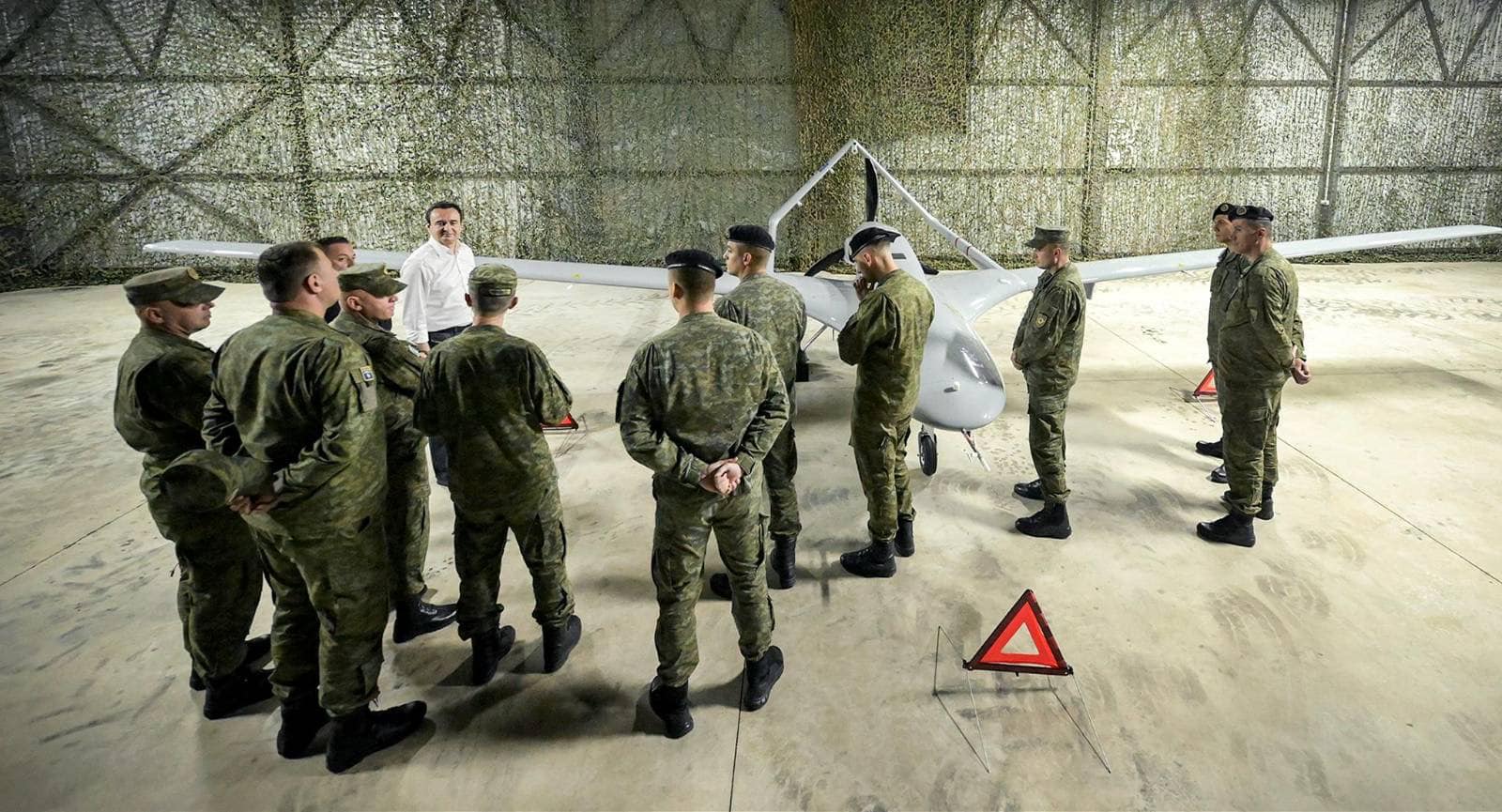
As of now, three Balkan countries have acquired Turkish UAVs. Kosovo and Albania purchased Bayraktar TB2 UAVs in 2022, with deliveries to the Kosovo Security Force in May 2023 and the Albanian Armed Forces in March 2024
Indicators of the New Activism
In recent years, Türkiye’s military and defense activities in the Balkans have accelerated independently of international operations and mechanisms. Türkiye has intensified its efforts to strengthen bilateral military and defense cooperation and increase its visibility in the region. These efforts have yielded concrete results, as Balkan countries have increasingly sought cooperation with Türkiye to meet their defense needs and interests.
Intensifying High-Level Contacts
In recent years, there has been a noticeable increase in visits at the level of defense ministers between Türkiye and Balkan countries.70 Among these visits were those made at critical times. For instance, in December 2021, when a political crisis was unfolding in Bosnia and Herzegovina, Minister of National Defense Hulusi Akar visited the country and met with members of the Tripartite Presidency, emphasizing Türkiye’s commitment to Bosnia and Herzegovina’s territorial integrity.71 Similarly, following the Banjska attack by Serbian militants on the Kosovo Police on September 24, 2023, Minister of National Defense Yaşar Güler conducted official visits to Kosovo and Serbia within a month.72 These visits highlight Türkiye’s keen interest not only through the Ministry of Foreign Affairs but also through the Ministry of National Defense in addressing escalating crises in the Balkans and its willingness to contribute to the preservation of peace in the region. Additionally, during reciprocal visits, discussions included assessments of regional and global risks, as well as cooperation in areas such as military training and the defense industry.
New Deals in Defense-Military Cooperation
Türkiye has been conducting military cooperation with Balkan countries within the framework of bilateral agreements since the 1990s, supporting the development of these countries’ military capacities through training, courses, donations, and grants. Additionally, it is noteworthy that Türkiye has signed numerous new military and defense cooperation agreements in recent years. Among these agreements are the Military Framework Agreements with Serbia (October 7, 2019),73 Romania (October 6, 2023),74 Kosovo (January 30, 2024),75 and Albania (February 21, 2024),76 and the Military Financial Cooperation Agreements with Kosovo (April 4, 2019),77 Montenegro (October 1, 2019),78 Bosnia and Herzegovina (March
3, 2021),79 and North Macedonia (August 17, 2021).80 A Defense Industry Cooperation Agreement was signed with Montenegro on November 17, 2017.81 The Defense Industry Cooperation Agreement signed with Kosovo in 2011 was renewed on December 16, 2019,82 and another agreement for the supply of defense industry materials was signed with the same country on May 17, 2022.83 Türkiye also signed an agreement with Bosnia and Herzegovina on September 6, 2022, regarding mutual protection and exchange of classified information in the defense industry.84
To respond collectively to the drifting mines that threaten navigation in the Black Sea, Türkiye proposed to Bulgaria and Romania the establishment of a tripartite mechanism. After a series of meetings among officials, the defense ministers of the three countries signed a protocol in İstanbul on January 11, 2024, establishing the Black Sea Mine Countermeasures Task Group (MCM Black Sea). Accordingly, the navy commanders of Türkiye, Bulgaria, and Romania will periodically convene to decide on the scope of mine countermeasure operations, which will be carried out by the vessels of the three countries in a synchronized manner.85
Türkiye’s longstanding constructive and balanced policy in the region makes it a reliable actor in security and defense matters for Balkan countries
Defense Industry Exports and “Drone Diplomacy”
Türkiye’s defense industry exports to the Balkans have increased significantly in recent years. The sale of weapons, ammunition, and related accessories to Balkan countries reached a historic high in 2019, and despite a decline in 2020 due to the global pandemic, it has set new records each year since (see Table 1).86
Table 1: Exports (USD), Arms and Ammunition, Parts Thereof, Balkan Countries

Source: Turkish Statistical Institute (TurkStat)
Among Türkiye’s most notable defense exports have been unmanned aerial vehicles (UAVs). As of now, three Balkan countries have acquired Turkish UAVs. Kosovo and Albania purchased Bayraktar TB2 UAVs in 2022, with deliveries to the Kosovo Security Force in May 2023 and the Albanian Armed Forces in March 2024.87 In 2023, Romania also signed a
$321 million contract to purchase 18 TB2 UAVs from Baykar.88 Türkiye’s export list to the region includes armored vehicles, hardware and software technologies, and ship systems.89 Turkish defense companies also assist Balkan countries in modernizing their armed forces to NATO standards and enhancing their capacities.90
Support to the Kosovo Security Force
Since Kosovo declared independence in 2008, Türkiye has been one of the first countries to recognize and support its state-building process, including the professionalization of its security forces. Türkiye regards Kosovo’s transformation of its security forces into a full- fledged national army as a legitimate step for an independent nation.91 To this end, Türkiye provides Kosovo with military training,92 equipment, and technology support.93 In 2023 alone, the Kosovo army received Bayraktar TB2 UAVs, OMTAS anti-tank missiles, ALKAR 120mm automatic mortar systems, Vuran tactical wheeled armored vehicles, and MKE PMT-76-57A machine guns from Türkiye.94
These defense industry exports and grants to Kosovo have been negatively received by Serbia. Serbian President Aleksandar Vučić has criticized Türkiye for supplying UAVs, mortars, armored vehicles, and howitzers to the Kosovo Security Force, asserting that this force should not exist according to the Kumanovo Agreement or UN resolutions.95 Defense Minister Miloš Vučević indicated that Serbia would respond appropriately to Türkiye’s military framework agreement with Kosovo.96 Some Serbian analysts argue that by supporting the Kosovo Security Force, Türkiye is manifestly siding with the Albanian factor in the Balkans against Serbs.97
In response to Serbia’s complaints, Turkish Defense Minister Güler emphasized that Türkiye approaches issues in the Balkans impartially, respects the territorial integrity of countries, and is open to military cooperation with Serbia.98 Türkiye claims that it supports Kosovo to enhance its defense capacity against destabilizing incidents. Furthermore, as observers point out, Serbia’s recent purchases of armaments are regarded as potentially shifting the balance in its favor and pressuring Kosovo towards acquiescence.99 Türkiye’s support for Kosovo’s defense capacity can help maintain the balance of power and deter the use or threat of force by Serbia. In this regard, Türkiye’s attitude is not revisionist but pro-status quo.
Determinants of the New Activism
Rising Security Risks in the Balkans
Since 2014, a series of crises and unexpected developments such as Russia’s annexation of Crimea, the war in Donbas, the rise of ISIS in Syria and Iraq, the refugee crisis, Brexit, the COVID-19 pandemic, and Russia’s occupation of Ukraine have significantly altered the security landscape for both Türkiye and the Balkans. While dealing with security challenges both internally and externally, Türkiye has consistently remained vigilant regarding the security situation in the Balkans, as maintaining peace and stability has always been a priority in Türkiye’s Balkan policy. Besides external crises, the region’s unresolved issues have increased fragility, compelling Türkiye to take more initiative and responsibility for Balkan security, thus increasing its military and defense engagements.100
The increasing global and regional insecurity has the potential to negatively impact regional stability, necessitating that Balkan countries be militarily prepared. Countries concerned about revisionism are seeking ways to enhance their defense capacities, often turning to international cooperation. Türkiye’s longstanding constructive and balanced policy in the region makes it a reliable actor in security and defense matters for Balkan countries. For instance, Türkiye’s approach of considering the sensitivities of both sides and encouraging dialogue during the crises between Kosovo and Serbia led to satisfaction from officials in both Kosovo and Serbia when Türkiye took over the KFOR command in 2023.101 During her visit to Ankara in January 2023, Bosnia and Herzegovina’s Foreign Minister, Bisera Turković, stated, “We are grateful for the exceptional efforts for progress and stability in the Balkans... With a strong Türkiye, the Western Balkans is safer and stronger. Without a strong Türkiye, it is questionable what would happen; surely the Western Balkans would not be peaceful.”102 Evidently, Türkiye’s role as a security provider for the region, which it assumed in the 1990s, is widely acknowledged across the region. This makes Balkan countries willing to develop defense and military cooperation with Türkiye.
Growth of Turkish Defense Industry
Although efforts to develop a domestic defense industry date back to the early years of the Republic, Türkiye’s policies for self-sufficiency intensified after the U.S. embargoes of the 1970s.103 Afterwards, Türkiye’s defense industry sector gradually strengthened with the founding of institutions and companies and increased investments. However, because of institutional weaknesses, a lack of civilian-military coordination, and the U.S. influence over decision-making, Türkiye’s defense autarky policy produced only partial results for some decades.104 During the 2010s, the Turkish government increasingly prioritized the nationalization of the defense industry due to various economic and political motivations, as well as the threat of terrorism, regional challenges, and deteriorating relations with its partners.105 Rapid expansion and competition within the sector consequently led to the development of new products and technologies for land, naval, air, and electronic warfare.106 This growth positively impacted Türkiye’s exports, especially from the late 2010s onwards (see Graph 1). Between 2019 and 2023, Türkiye’s share of the global arms export market increased from 0.7 percent to 1.6 percent, making it the 11th-largest arms exporter globally.107 In 2023, over 185 countries purchased military supplies from Türkiye.108
Graph 1: Türkiye’s Exports of Defense Industry Products and Services ($, 2010-2023)

Source: Turkish Defence and Aerospace Industry Manufacturers Association (SASAD), Secretariat of Defence Industries (SSB)
The effectiveness of technologies produced by the Turkish defense industry, proven in practical applications, has boosted their international prestige. Armed UAVs, in particular, have garnered significant interest for their rapid deployment capabilities and cost advantages. From 2014 to 2023, 17 out of 42 countries that acquired armed UAVs imported them from Türkiye.109 Commentators note that Türkiye’s “drone diplomacy” has facilitated high-level and long-term relationships with various countries, yielding both economic profit and political clout.110
Türkiye’s increasing defense industry exports to the Balkans align with the overall trend of the rise in its overall defense industry exports. The fact that these products are manufactured in a NATO country according to NATO standards gives Türkiye a competitive advantage. As Türkiye promotes its defense industry products to boost exports, Balkan countries seeking to enhance their defense capabilities are increasingly interested in products made in Türkiye, particularly UAVs. Leaders of countries that have acquired UAVs from Türkiye have underscored the significance of these vehicles on numerous occasions. For example, Albanian Prime Minister Edi Rama emphasized that obtaining TB2 UAVs from Türkiye was crucial for Albania’s national security strategy, military commitments, and alignment with NATO’s capacity objectives.111 Similarly, Kosovo’s Prime Minister Kurti stated that the delivery of TB2 UAVs has made Kosovo safer than ever before.112 Reports indicate that other Balkan countries, such as Bulgaria and North Macedonia, are exploring the possibility of procuring these UAVs from Türkiye.113 Serbian President Vučić had also expressed interest in purchasing drones from Türkiye;114 however, due to Türkiye’s military support to Kosovo, Belgrade has removed this from its agenda.115
Alongside exports, bilateral military cooperation agreements also facilitate the proliferation of Turkish defense industry products in the Balkans. Countries receiving military equipment support under these agreements procure defense industry products from Turkish companies based on their needs, up to the specified grant limit.116 Therefore, while Türkiye’s grants assist in fulfilling the military requirements of Balkan nations, they also foster their dependency on Turkish defense industry products.
Quest for Stronger Regional Presence
Since the end of the Cold War, Türkiye has pursued a proactive policy to strengthen its role in the Balkans. Along this path, it has sometimes emphasized security policies and other times economic, social, and cultural policies, depending on the prevailing circumstances and its own capabilities. Today, the region’s growing security needs and Türkiye’s growing defense industry make the military and defense sectors ideal for enhancing its regional presence and visibility. To give a few examples, military assistance, donations, and joint activities bring Türkiye closer, militarily, to Balkan countries. By exporting cost-effective UAVs to Balkan countries, which are already seeking to purchase drones to adapt to the changing nature of warfare,117 Türkiye enhances its prestige and gains economic and political benefits. Participation in regional military cooperation mechanisms underscores Türkiye’s role as a power and balance factor in the region.118 Meanwhile, Turkish troops in Bosnia and Herzegovina and Kosovo, officially termed Representation Missions, serve, in addition to their primary tasks, as Türkiye’s visible face in the field through their humanitarian and social activities, functioning as instruments of soft power. Overall, the new military activism conforms to Türkiye’s longstanding quest for a stronger presence and visibility in the Balkans.
Türkiye’s role as a security provider for the region, which it assumed in the 1990s, is widely acknowledged across the region
Conclusion
Türkiye’s recent military engagement in the Balkans is in line with its post-Cold War Balkan policies, reflecting a growing emphasis on defense and military cooperation. From the end of the Cold War until the early 2000s, defense collaboration was a crucial element of Türkiye’s engagement with the region. While Türkiye continued its involvement in international operations and bilateral military cooperation afterwards, economic, social, and cultural aspects of its Balkan policy became much more salient. However, the trends in recent years indicate that the military and defense dimensions of Türkiye’s Balkan policy are regaining prominence. At a time when the Balkans is facing various security challenges, Türkiye has brought to the fore military and defense cooperation as an area of mutual interest, fostering a win-win relationship dynamic.
Despite the increased focus on military and defense issues, Türkiye remains committed to the principles of its longstanding Balkan policy. It continues to prioritize regional peace and stability, promoting dialogue and cooperation while avoiding revisionism and refraining from
provoking disputes. Consistent with its “regional ownership” principle, which advocates for the resolution of regional issues with the participation of local actors, Türkiye demonstrates solidarity with the smaller countries in the region by offering military assistance, training, and donations. The recent establishment of the MCM Black Sea is another example of Türkiye’s commitment to regional solidarity.
Consistent with its “regional ownership” principle, which advocates for the resolution of regional issues with the participation of local actors, Türkiye demonstrates solidarity with the smaller countries in the region by offering military assistance, training, and donations
Through increased presence and visibility, Türkiye’s military engagements in the Balkans bolster its status as a key regional actor. Moreover, the enhancement of military and defense cooperation yields economic and political benefits for Türkiye. Türkiye’s promotion of its defense industry products aligns with its goal of advancing trade relations, as these products have become significant export items. A greater role in supporting the militaries of the Balkan countries can provide Türkiye with increased political leverage in regional politics.
Last but not least, the new activism in the military and defense fields does not imply that Türkiye’s Balkan policy has become securitized or militarized. The relationship areas that were strengthened and diversified from the 2000s onwards, such as trade, investments, development aid, disaster relief, public diplomacy, and cultural diplomacy, continue to exist. Since the end of the Cold War, Türkiye has shown eagerness to utilize all possible instruments to engage with the Balkans. Against the backdrop of current regional and global politics, the military-defense sector provides a favorable platform for engagement, offering various benefits both to the Balkans and Türkiye.
Endnotes
1 Hamdi Fırat Büyük, Sinisa Jakov Marusic, Sasa Dragojlo, Xhorxhina Bami, Gjergj Erebara, and Samir Kajosevic, “With Arms Deals and Donations, Turkey Steps up Balkan Influence,” Balkan Insight, (December 11, 2020), retrieved May 9, 2024, from https://balkaninsight.com/2020/12/11/with-arms-deals-and-donations-turkey-steps-up-balkan-influence; Nikola Joksimović, “Veliki Povratak Turske na Balkan: Albanci na Kosovu Postaju Uporište Sile sa Bosfora,” Sputnik, (July 18, 2023), retrieved May 9, 2024, from https://lat.sputnikportal.rs/20230718/veliki-povratak-turske-na-balkan--albanci-na-kosovu-postaju-uporiste-sile-sa-bosfora--1158719811.html; Samir Huseinović, “Turske Igre Dronova,” Deutsche Welle, (July 25, 2023), retrieved May 9, 2024, from https://www.dw.com/hr/turske-igre-dronova/a-66338174.
2 The authors would like to thank Edanur Karaca and Ümit Tetik for their helpful contributions.
3 Sabri Sayarı, “Turkish Foreign Policy in the Post-Cold War Era: The Challenges of Multi-Regionalism,”
Journal of International Affairs, Vol. 54, No. 1 (2000), pp. 169-182.
4 Baskın Oran (ed.), Turkish Foreign Policy, 1919-2006: Facts and Analyses with Documents, (Salt Lake City: The University of Utah Press, 2010), p. 825.
5 Duygu Bazoğlu-Sezer, “Turkish Security in the Shifting Balkans: Reorientation to a Regional Focus,” in Kosta Tsipis (ed.), Common Security Regimes in the Balkans, (New York, Columbia University Press, 1996), pp. 109- 110.
6 T.C. Resmi Gazete, No. 21247 (June 3, 1992).
7 T.C. Resmi Gazete, No. 23104 (September 8, 1997).
8 T.C. Resmi Gazete, No. 21788 (December 14, 1993).
9 Dışişleri Bakanlığı 1992 Tarihçesi, (Ankara: Dışişleri Eğitim Merkezi, 1994), pp. 380-389.
10 Bazoğlu-Sezer, “Turkish Security in the Shifting Balkans,” pp. 110-111.
11 Dışişleri Bakanlığı 1992 Tarihçesi, pp. 483-486.
12 T.C. Resmi Gazete, No. 22960 (April 10, 1997).
13 “Bilateral Relations between the Republic of North Macedonia and the Republic of Turkey,” Republic of North Macedonia Ministry of Foreign Affairs, retrieved May 9, 2024, from https://mfa.gov.mk/en/page/163/bilateral-relations-between-the-republic-of-north-macedonia-and-the-republic- of-turkey-.
14 T.C. Resmi Gazete, No. 23183 (November 27, 1997).
15 T.C. Resmi Gazete, No. 22627 (May 5, 1996).
16 Narodne Novine, No. 1/2004 (1), Međunarodni Ugovori, Ostalo, (February 23, 2004).
17 Narodne Novine, No. 2/2004 (15), Međunarodni Ugovori, Ostalo, (March 17, 2004).
18 Mustafa Aksaç, “Turkey’s Military Efforts for Peace in the Balkans,” unpublished M.A. thesis, Bilkent University, 2003, pp. 67-68.
19 Bazoğlu-Sezer, “Turkish Security in the Shifting Balkans,” pp. 101-102.
20 Kathleen M. Reddy, “Operation Sharp Guard: Lessons Learned for the Policymaker and Commander,” U.S. Naval War College, (June 13, 1997), retrieved from https://apps.dtic.mil/sti/pdfs/ADA328118.pdf, p. 7.
21 “Türkiye’nin Barışı Destekleme Harekâtına Katkıları,” T.C. Milli Savunma Bakanlığı Genelkurmay Başkanlığı, retrieved May 9, 2024, from https://www.tsk.tr/Sayfalar?viewName=BarisiDestekleme; Haldun Yalçınkaya, Emre Hatipoğlu, Dilaver Arıkan Açar, and Mitat Çelikpala, “Turkish Efforts in Peacekeeping and the Introduction of the TUBAKOV Dataset: An Exploratory Analysis,” International Peacekeeping, Vol. 25, No. 4 (2018), pp. 475-496; Uğur Güngör, “The Analysis of Turkey’s Approach to Peace Operations,” unpublished Ph.D. dissertation, Bilkent University, 2007, pp. 120-121.
22 “UN Security Council Resolution 743 (1992),” United Nations Digital Library, retrieved from https://digitallibrary.un.org/record/137965?v=pdf.
23 Dışişleri Bakanlığı 1992 Tarihçesi, pp. 131, 144-145, 148, 413, 417.
24 Fahriye Emgili, “Bosna-Hersek Trajedisinde (1992-1995) Türk Birliği,” Güney-Doğu Avrupa Araştırmaları Dergisi, Vol. 21, (December 2012), pp. 72-76; Yalçınkaya, et al., “Turkish Efforts in Peacekeeping,” pp. 475- 496; Güngör, “The Analysis of Turkey’s Approach,” pp. 120-121; “Türkiye’nin Barışı Destekleme Harekâtına Katkıları,” T.C. Milli Savunma Bakanlığı Genelkurmay Başkanlığı.
25 Christopher J. Lamb, Sarah Arkin, and Sally Scudder, “The Bosnian Train and Equip Program: A Lesson in Interagency Integration of Hard and Soft Power,” Institute for National Strategic Studies Strategic Perspectives, No. 15 (March 2014).
26 Ettore Greco, “Delegated Peacekeeping: The Case of Operation Alba,” Istituto Affari Internazionali, (March 6- 7, 1998), retrieved from https://www.iai.it/sites/default/files/iai9801.pdf; “Türkiye’nin Barışı Destekleme Harekâtına Katkıları,” T.C. Milli Savunma Bakanlığı Genelkurmay Başkanlığı.
27 William Hale, Turkish Foreign Policy since 1774, 3rd ed., (Oxon: Routledge, 2013), pp. 203-204.
28 Dışişleri Bakanlığı 1998 Tarihçesi, (Ankara: Dışişleri Bakanlığı, 1999), pp. 240-241; Oran (ed.), Turkish Foreign Policy, 1919-2006, p. 823.
29 T.C. Resmi Gazete, No. 23492 (October 13, 1998).
30 Oran (ed.), Turkish Foreign Policy, 1919-2006, p. 832; Güngör, “The Analysis of Turkey’s Approach,” p. 127.
31 Güngör, “The Analysis of Turkey’s Approach,” pp. 123-127; Yalçınkaya, et al., “Turkish Efforts in Peacekeeping,” pp. 475-496; Hale, Turkish Foreign Policy since 1774, p. 205; “Türkiye’nin Barışı Destekleme Harekâtına Katkıları,” T.C. Milli Savunma Bakanlığı Genelkurmay Başkanlığı.
32 Sylvie Gangloff, “Turkish Policy towards the Conflict in Kosovo: The Preeminence of National Political Interests,” Balkanologie, Vol. 8, No. 1 (2004), p. 112.
33 Fuat Aksu, “Kosova Krizinde Türkiye’nin Dış Politikası,” Sosyal Bilimler Dergisi, Vol. 3, No. 1 (2010), p. 74.
34 Yalçınkaya, et al., “Turkish Efforts in Peacekeeping,” pp. 475-496; “Türkiye’nin Barışı Destekleme Harekâtına Katkıları,” T.C. Milli Savunma Bakanlığı Genelkurmay Başkanlığı.
35 Ali L. Karaosmanoğlu, “NATO Enlargement and the South: A Turkish Perspective,” Security Dialogue, Vol. 30, No. 2 (1999), p. 215.
36 Birgül Demirtaş, “Turkey and the Balkans: Overcoming Prejudices, Building Bridges and Constructing a Common Future,” Perceptions, Vol. 18, No. 2 (2013), p. 168.
37 Bazoğlu-Sezer, “Turkish Security in the Shifting Balkans,” p. 106; Othon Anastasakis, “Greece and Turkey in the Balkans: Cooperation or Rivalry?” Turkish Studies, Vol. 5, No. 1 (2004), pp. 51-52.
38 Gangloff, “Turkish Policy towards the Conflict in Kosovo,” p. 107; Oran (ed.), Turkish Foreign Policy, 1919- 2006, pp. 691-693.
39 Dışişleri Güncesi Temmuz 1999, (Ankara: Dışişleri Bakanlığı, 1999), pp. 188-190.
40 “Structure and Organization,” South-East Europe Defense Ministerial Process Public Portal, retrieved May 9, 2024, from https://sedmprocess.org/web/sedmp/structure.
41 “South-Eastern Europe Brigade,” SEEBRIG, retrieved May 9, 2024, from https://seebrig.org/south-eastern-europe-brigade-seebrig.
42 Mustafa Türkeş, “Türkiye’nin Balkan Politikasında Devamlılık ve Değişim,” Avrasya Dosyası, Vol. 14, No. 1 (2008), pp. 253-280; Othon Anastasakis, “Turkey’s Assertive Presence in Southeast Europe: Between Identity Politics and Elite Pragmatism,” in Kerem Öktem, Ayşe Kadıoğlu, and Mehmet Karlı (eds.), Another Empire? A Decade of Turkey’s Foreign Policy Under the Justice and Development Party, (İstanbul: Bilgi University Press, 2012), pp. 185-208.
43 Mehmet Uğur Ekinci, “A Golden Age of Relations: Turkey and the Western Balkans During the AK Party Period,” Insight Turkey, Vol. 16, No. 1 (2014), pp. 103-125; Birgül Demirtaş, “Turkish Foreign Policy towards the Balkans: A Europeanized Foreign Policy in a De-Europeanized National Context?” Journal of Balkan and Near Eastern Studies, Vol. 17, No. 2 (2015), pp. 123-140.
44 Eduard Soler i Lecha, “Turkey’s Potential (and Controversial) Contribution to the Global ‘Actorness’ of the EU,” in Nurşin Ateşoğlu Güney (ed.), Contentious Issues of Security and the Future of Turkey, (Aldershot: Ashgate, 2007), p. 41; Murat Önsoy and Hamdi Fırat Büyük, “Partners or Security Challengers? The Implications of the Presence of Turkey, the Gulf States, and Iran in the Western Balkans,” in Nemanja Džuverović and Věra Stojarová (eds.), Peace and Security in the Western Balkans: A Local Perspective, (London: Routledge, 2022), p. 259.
45 Hüseyin Emiroğlu and Turgay Kayalak, “Türkiye’nin Balkanlar Politikası 2009,” in Burhanettin Duran, Kemal İnat, and Mesut Özcan (eds.), Türk Dış Politikası Yıllığı 2009, (İstanbul: SETA Yayınları, 2011), pp. 444, 463.
46 T.C. Resmi Gazete, No. 24634 (January 8, 2002).
47 T.C. Resmi Gazete, No. 26875 (May 13, 2008).
48 T.C. Resmi Gazete, No. 27903 (April 12, 2011).
49 T.C. Resmi Gazete, No. 27367 (October 5, 2009).
50 T.C. Resmi Gazete, No. 27630 (July 3, 2010).
51 T.C. Resmi Gazete, No. 28104 (November 3, 2011).
52 “Bilateral Relations between the Republic of North Macedonia and the Republic of Turkey,” Republic of North Macedonia Ministry of Foreign Affairs.
53 T.C. Resmi Gazete, No. 29007 (mükerrer) (May 22, 2014).
54 T.C. Resmi Gazete, No. 28104 (January 15, 2016).
55 “Türkiye Cumhuriyeti Hükümeti ile Bulgaristan Cumhuriyeti Hükümeti Arasında Savunma Sanayii Güvenliği Anlaşması,” T.C. Milli Savunma Bakanlığı, retrieved May 9, 2024, from https://www.msb.gov.tr/Content/Upload/Docs/bulgaristan.pdf.
56 T.C. Resmi Gazete, No. 29865 (mükerrer) (October 22, 2016).
57 “Türkiye ile Bosna Hersek Arasında “Askeri ve Mali” İşbirliği,” TRT Haber, (December 12, 2014), retrieved May 9, 2024, from https://www.trthaber.com/haber/dunya/turkiye-ile-bosna-hersek-arasinda-askeri-ve-mali-isbirligi-158117.html.
58 Yalçınkaya, et al., “Turkish Efforts in Peacekeeping,” pp. 475-496; “Türkiye’nin Barışı Destekleme Harekâtına Katkıları,” T.C. Milli Savunma Bakanlığı Genelkurmay Başkanlığı.
59 Güngör, “The Analysis of Turkey’s Approach,” pp. 122-123; Yalçınkaya, et al., “Turkish Efforts in Peacekeeping,” pp. 475-496; “Türkiye’nin Barışı Destekleme Harekâtına Katkıları,” T.C. Milli Savunma Bakanlığı Genelkurmay Başkanlığı.
60 T.C. Resmi Gazete, No. 25516 (July 8, 2004).
61 “Güvenlik İşbirliği Merkezi (RACVIAC),” T.C. Dışişleri Bakanlığı, retrieved May 9, 2024, from https://www.mfa.gov.tr/guvenlik-isbirligi-merkezi.tr.mfa.
62 “About EUFOR,” European Union Force in BiH, (November 4, 2023), retrieved May 9, 2024, from https://euforbih.org/index.php/about-eufor/background; “2023 Yılı Faaliyet Raporu,” T.C. Milli Savunma Bakanlığı, (2024), p. 76; “Türkiye’nin Barışı Destekleme Harekâtına Katkıları,” T.C. Milli Savunma Bakanlığı Genelkurmay Başkanlığı.
63 “Türkiye’nin Barışı Destekleme Harekâtına Katkıları,” T.C. Milli Savunma Bakanlığı Genelkurmay Başkanlığı.
64 “Türkiye’nin Barışı Destekleme Harekâtına Katkıları,” T.C. Milli Savunma Bakanlığı Genelkurmay Başkanlığı.
65 Sefa Şahin, “NATO’nun Talebiyle Kosova’ya Gönderilen İhtiyat Birliği Türkiye’ye Dönüyor,” Anadolu Ajansı, (September 5, 2023), retrieved May 9, 2024, from https://www.aa.com.tr/tr/dunya/natonun-talebiyle-kosovaya-gonderilen-ihtiyat-birligi-turkiyeye-donuyor/2984153.
66 Eren Beksaç, “Türkiye, NATO’nun Kosova’daki Barış Gücü’nün Komutasını Devraldı,” Anadolu Ajansı, (October 10, 2023), retrieved May 9, 2024, from https://www.aa.com.tr/tr/dunya/turkiye-natonun-kosovadaki-baris-gucunun-komutasini-devraldi/3014245; “Turqia Sot Merr Drejtimin e KFOR-it në Kosovë,” Klan Kosova, (October 10, 2023), retrieved May 9, 2024, from https://klankosova.tv/turqia-sot-merr-drejtimin-e-kfor-it-ne- kosove.
67 “Millî Savunma Bakanı Yaşar Güler, SEDM Toplantısı’nın Ardından Düzenlenen Basın Toplantısında Konuştu,” T.C. Milli Savunma Bakanlığı, (November 22, 2023), retrieved May 9, 2024, from https://www.msb.gov.tr/SlaytHaber/b700a0ab7ef54a49b3321aa89f8537a6.
68 Since 2014 Kosovo participates in all RACVIAC activities on equal terms with the nine official members.
69 “Cooperative Security Environment Pillar,” RACVIAC, retrieved May 9, 2024, from https://www.racviac.org/cse-pillar.
70 Mehmet Uğur Ekinci, “Türkiye’nin Balkanlar Politikası 2021,” in Burhanettin Duran, Kemal İnat, and Mustafa Caner (eds.), Türk Dış Politikası Yıllığı 2021, (İstanbul: SETA Yayınları, 2022), p. 351; Mehmet Uğur Ekinci, “Türkiye’nin Balkanlar Politikası 2023,” in Burhanettin Duran, Kemal İnat, and Mustafa Caner (eds.), Türk Dış Politikası Yıllığı 2023, (İstanbul: SETA Yayınları, 2024), pp. 314-315.
71 “Millî Savunma Bakanı Hulusi Akar, Bosna Hersek Devlet Başkanlığı Konseyi Üyeleri ile Görüştü,” T.C. Milli Savunma Bakanlığı, (December 27, 2021), retrieved May 9, 2024, from https://www.msb.gov.tr/SlaytHaber/27122021-40036.
72 Eren Beksaç, “Milli Savunma Bakanı Güler, Kosova Cumhurbaşkanı Osmani ile Görüştü,” Anadolu Ajansı, (October 17, 2023), retrieved May 9, 2024, from https://www.aa.com.tr/tr/gundem/milli-savunma-bakani-guler-kosova-cumhurbaskani-osmani-ile-gorustu/3023173; Lejla Biogradlija, “Sırbistan, Türkiye ile İlişkilerini Geliştirmek ve Siyasi Diyaloğu Devam Ettirmek İstiyor,” Anadolu Ajansı, (October 25, 2023), retrieved May 9, 2024, from https://www.aa.com.tr/tr/dunya/sirbistan-turkiye-ile-iliskilerini-gelistirmek-ve-siyasi-diyalogu-devam-ettirmek-istiyor/3032471; Burcu Çalık Göçümlü, “Bakan Güler, Sırbistan Savunma Bakanı Vucevic ile Görüştü,” Anadolu Ajansı, (October 25, 2023), retrieved May 9, 2024, from https://www.aa.com.tr/tr/politika/bakan-guler-sirbistan-savunma-bakani-vucevic-ile-gorustu/3032373.
73 Kayhan Gül, “Turkey-Serbia Herald a New Era in Relations,” Anadolu Ajansı, (October 9, 2019), retrieved May 9, 2024, from https://www.aa.com.tr/en/europe/turkey-serbia-herald-a-new-era-in-relations/1607301.
74 Sarp Özer, “Türkiye ve Romanya Arasında ‘Askeri Çerçeve Anlaşması’ İmzalandı,” Anadolu Ajansı, (October 6, 2023), retrieved May 9, 2024, https://www.aa.com.tr/tr/gundem/turkiye-ve-romanya-arasinda-askeri-cerceve-anlasmasi-imzalandi/3009437.
75 “Millî Savunma Bakanı Yaşar Güler, Kosova Savunma Bakanı Ejup Maqedonci ile Ankara’da Bir Araya Geldi,” T.C. Milli Savunma Bakanlığı, (January 29, 2024), retrieved May 9, 2024, from https://www.msb.gov.tr/SlaytHaber/b2dcee512a544f6688bab1914aa149ac.
76 Mehmet Tosun, “Türkiye ile Arnavutluk Arasında 6 Anlaşma İmzalandı,” Anadolu Ajansı, (February 20, 2024), retrieved May 9, 2024, from https://www.aa.com.tr/tr/gundem/turkiye-ile-arnavutluk-arasinda-6-anlasma-imzalandi/3143198.
77 “Bakan Akar Kosova’da Heyetler Arası Toplantıya Başkanlık Etti,” T.C. Milli Savunma Bakanlığı, (April 4, 2019), retrieved May 9, 2024, from https://www.msb.gov.tr/SlaytHaber/442019-22123.
78 “Akar, Karadağ Savunma Bakanı Boskovic ile Görüştü,” Hürriyet, (October 1, 2019), retrieved May 9, 2024, from https://www.hurriyet.com.tr/dunya/akar-karadag-savunma-bakani-boskovic-ile-gorustu-41341675.
79 “Türkiye ile Bosna Hersek Arasında Askeri Mali İşbirliği Anlaşması İmzalandı,” Anadolu Ajansı, (March 3, 2021), retrieved May 9, 2024, from https://www.aa.com.tr/tr/turkiye/turkiye-ile-bosna-hersek-arasinda-askeri-mali-isbirligi-anlasmasi-imzalandi/2163467.
80 “Türkiye ve Makedonya Askeri Anlaşmaya İmza Attı,” Yeni Balkan, (August 18, 2021), retrieved May 9, 2024, from https://yenibalkan.com/tr/gundem/turkiye-ve-makedonya-askeri-anlasmaya-imza-atti.
81 T.C. Resmi Gazete, No. 31559 (August 5, 2021).
82 “Kosova ile Türkiye Arasındaki Savunma İşbirliği Anlaşması Yenilendi,” Habertürk, (December 18, 2019), retrieved May 9, 2024, from https://www.haberturk.com/kosova-ile-turkiye-arasindaki-savunma-isbirligi-anlasmasi-yenilendi-2550822.
83 “Kosova, Türkiye’den Savunma Malzemesi Tedarik Edecek,” Balkan News, (May 18, 2022), retrieved May 9, 2024, from https://www.balkannews.com.tr/kosova/kosova-turkiye-den-savunma-malzemesi-tedarik-edecek-h3163.html.
84 Filiz Kınık Öz, Sefa Mutlu, and Güç Gönel, “Cumhurbaşkanı Erdoğan: Kimlik Kartlarıyla Bosna Hersek- Türkiye Arasındaki Gidiş Gelişleri Yapabilme Kararını Verdik,” Anadolu Ajansı, (September 6, 2022), retrieved May 9, 2024, from https://www.aa.com.tr/tr/dunya/cumhurbaskani-erdogan-kimlik-kartlariyla-bosna-hersek-turkiye-arasindaki-gidis-gelisleri-yapabilme-kararini-verdik/2678100.
85 Lyubomir Gigov, “Bulgaria, Romania, Turkiye Sign MoU on Mine Counter-measures Task Group Black Sea,” Bulgarian News Agency, (January 11, 2024), retrieved May 9, 2024, from https://www.bta.bg/en/news/balkans/599142-bulgaria-romania-turkiye-sign-mou-on-mine-counter-measures-task-group-black-sea; Muhammed Enes Çallı, “Türkiye, Bulgaria, Romania Sign Deal to Combat Mine Threat in Black Sea,” Anadolu Ajansı, (January 12, 2024), retrieved May 9, 2024, from https://www.aa.com.tr/en/turkiye/turkiye-bulgaria-romania-sign-deal-to-combat-mine-threat-in-black-sea/3106386.
86 In addition to the items included in the table, Türkiye’s defense industry exports also include items such as civil aircraft, ships, information technologies, and maintenance, repair, and operations services. However, TurkStat data do not distinguish these items from exports intended for civilian purposes, making it impossible to determine their exact values. Furthermore, the reports published by the Turkish Defence and Aerospace Industry Manufacturers Association (SASAD) and the Secretariat of Defence Industries (SSB) provide information on defense industry exports solely on a continental basis, which hinders the extraction of specific data for the Balkans or individual Balkan countries.
87 Mustafa Talha Öztürk, “Kosovo Security Forces Receive Turkish Bayraktar Drones,” Anadolu Ajansı, (May 6, 2023), retrieved May 9, 2024, from https://www.aa.com.tr/en/europe/kosovo-security-forces-receive-turkish-bayraktar-drones/2890474; Eren Beksaç, “Kosova Bayraktar TB2’lerini Teslim Aldı,” Anadolu Ajansı, (July 16, 2023), retrieved May 9, 2024, from https://www.aa.com.tr/en/turkiye/turkish-uav-tb2-enters-inventory-of-albanian-army/3154923.
88 Elisabeth Gosselin-Malo, “Romania Awards $321 Million Contract for Turkish TB2 Combat Drones,” Defense News, (April 25, 2023), retrieved May 9, 2024, from https://www.defensenews.com/global/europe/2023/04/25/romania-awards-321-million-contract-for-turkish-tb2-combat-drones/.
89 Anıl Şahin, “Hırvat Devriye Gemisi ASELSAN’ın Muhafız’ı ile Donatıldı,” SavunmaSanayiST, (December 8, 2018), retrieved May 9, 2024, from https://www.savunmasanayist.com/hirvat-devriye-gemisi-aselsanin-muhafizi-ile-donatildi; “BMC’den Makedonya’ya ‘Tank Taşıyıcı’ İhracatı,” SavunmaSanayiST, (May 6, 2020), retrieved May 9, 2024, from https://www.savunmasanayist.com/bmcden-makedonyaya-tank-tasiyici-ihracati; “Makedonya’dan BORAN Obüsü Siparişi,” SavunmaSanayiST, (January 15, 2023), retrieved May 9, 2024, from https://www.savunmasanayist.com/makedonyadan-boran-obusu-siparisi; Cem Batur, “Sloven Savaş Gemisi Türkiye’de Modernize Edilecek,” Defence Turk, (February 26, 2024), retrieved May 9, 2024, from https://www.defenceturk.net/sloven-savas-gemisi-turkiyede-modernize-edilecek; “Romanya’daki Milyar Dolarlık İhale Otokar’a Kaldı,” SavunmaSanayiST, (March 20, 2024), retrieved May 9, 2024, from https://www.savunmasanayist.com/romanyadaki-milyar-dolarlik-ihale-otokara-kaldi.
90 “Bosna Hersekli Subaylar TUSAŞ Uçuş Okulundan Pilot Olarak Ayrılacak,” Savunmasanayi, (January 20, 2020), retrieved May 9, 2024, from https://www.savunmasanayi.org/tusastan-bosna-hersekli-subaylara-ucus-egitimi/; “Bosna Hersek Ordusunun Zırhlılarına Türk Savunma Sanayii Eli,” SavunmaSanayiST, (December 12, 2022), retrieved May 9, 2024, from https://www.savunmasanayist.com/bosna-hersek-ordusunun-zirhlilarina-turk-savunma-sanayii-eli/; “ASELSAN, Makedonya Ordusunu NATO Standartlarında Modernize Ediyor,” Yeni Balkan, (March 29, 2024), retrieved May 9, 2024, from https://yenibalkan.com/tr/gundem/aselsan-makedonya- ordusunu-nato-standartlarinda-modernize-ediyor.
91 Talha Öztürk, “Turkey Hails Kosovo’s Move to Establish National Army,” Anadolu Ajansı, (December 18, 2018), retrieved May 9, 2024, from https://www.aa.com.tr/en/europe/turkey-hails-kosovos-move-to-establish-national-army/1341624.
92 “Türk Askerinden Kosova Güvenlik Kuvvetlerine Askeri Eğitim,” Yeni Balkan, (August 1, 2023), retrieved May 9, 2024, from https://yenibalkan.com/tr/balkanlar/turk-askerinden-kosova-guvenlik-kuvvetlerine-askeri- egitim; “Kosova’daki Türk Askeri, FSK’ya Atış Eğitimi Verdi,” Kosova Port, (January 22, 2024), retrieved May 9, 2024, from https://www.kosovaport.com/kosovadaki-turk-askeri-fskya-atis-egitimi-verdi; Agim Sulaj, “Türkiye Trajnon Pjesëtaret e Forcës së Sigurisë së Kosovës,” Anadolu Ajansı, (April 26, 2024), retrieved May 9, 2024, from https://www.aa.com.tr/sq/ballkani/turkiye-trajnon-pjes%C3%ABtaret-e-forc%C3%ABs- s%C3%AB-siguris%C3%AB-s%C3%AB-kosov%C3%ABs/3203475; Eren Beksaç, “Mehmetçik’ten Kosovalı Askerlere “Vuran” Eğitimi,” Anadolu Ajansı, (May 7, 2024), retrieved May 9, 2024, from https://www.aa.com.tr/tr/dunya/mehmetcikten-kosovali-askerlere-vuran-egitimi/3212497.
93 Eren Beksaç and Dzihat Aliju, “Türkiye’den Kosova Ordusuna Destek,” Anadolu Ajansı, (September 4, 2020), retrieved May 9, 2024, from https://www.aa.com.tr/tr/dunya/turkiyeden-kosova-ordusuna-destek/1963152; “KSF Provides Armored Military Vehicles from Turkey,” Koha, (July 9, 2021), retrieved May 9, 2024, from https://www.koha.net/en/arboretum/279320/FSK-provides-14-armored-military-vehicles-from-Turkey;
“Türkiye, Kosova Ordusuna Kamuflaj Üniforması Hibe Etti,” Yeni Balkan, (July 20, 2022), retrieved May 9, 2024, from https://yenibalkan.com/tr/balkanlar/turkiye-kosova-ordusuna-kamuflaj-uniformasi-hibe-etti.
94 “Roketsan’dan Kosova’ya OMTAS Füzesi İhracatı,” SavunmaSanayiST, (May 21, 2023), retrieved May 9, 2024, from https://www.savunmasanayist.com/roketsandan-kosovaya-omtas-fuzesi-ihracati; “Kosova’dan ALKAR ve VURAN Tedariki,” SavunmaSanayiST, (May 21, 2023), retrieved May 9, 2024, from https://www.savunmasanayist.com/kosovadan-alkar-ve-vuran-tedariki; “MKE’den Kosova’ya PMT-76-57A İhracatı,” SavunmaSanayiST, (May 21, 2023), retrieved May 9, 2024, from https://www.savunmasanayist.com/mkeden-kosovaya-pmt-76-57a-ihracati.
95 “Vučić: Severe Consequences? Serbia Will Not Support the Coup,” B92, (June 25, 2023), retrieved May 9, 2024, from https://www.b92.net/o/eng/news/politics?yyyy=2023&mm=06&dd=25&nav_id=116241.
96 “Kosovo i Turska Potpisali ‘Vojni Sporazum’, Beograd Zabrinut – ‘Odgovoriće Adekvatno, Ne Samo Politički,’” KosSev, (January 30, 2024), retrieved May 9, 2024, from https://kossev.info/vojni-sporazum-kosovo- turska-vucevic-zabrinut-vezbe-obuke-naoruzavanje.
97 Dejan Spalović, “Ко спрема Приштину за сукоб 2027. године,” Politika, (August 28, 2023), retrieved May 9, 2024, from https://www.politika.rs/scc/clanak/568478/Ko-sprema-Pristinu-za-sukob-2027-godine; “Ankara Najveći Donator Lažne Države: Turska Kontinuirano Naoružava Kurtijeve Teroriste, Srbija Adekvatno Reagovala,” Srbija Danas, (June 29, 2023), retrieved May 9, 2024, from https://www.sd.rs/vesti/kosovo/ankara-najveci-donator-lazne-drzave-turska-kontinuirano-naoruzava-kurtijeve-teroriste-srbija-2023-06-29; “Čvrste Veze Turske i Kosova, Planira li Ankara Aktivnije da se Uključi u Dijalog?” Kosovo Online, (February 29, 2024), retrieved May 9, 2024, from https://www.kosovo-online.com/vesti/analize/cvrste-veze-turske-i-kosova-planira-li-ankara-aktivnije-da-se-ukljuci-u-dijalog-3-3.
98 Lejla Biogradlija, “Sırbistan, Türkiye ile İlişkilerini Geliştirmek ve Siyasi Diyaloğu Devam Ettirmek İstiyor,” Anadolu Ajansı, (October 25, 2023), retrieved May 9, 2024, from https://www.aa.com.tr/tr/dunya/sirbistan-turkiye-ile-iliskilerini-gelistirmek-ve-siyasi-diyalogu-devam-ettirmek-istiyor/3032471; Burcu Çalık Göçümlü, “Bakan Güler, Sırbistan Savunma Bakanı Vucevic ile Görüştü,” Anadolu Ajansı, (October 25, 2023), retrieved May 9, 2024, from https://www.aa.com.tr/tr/politika/bakan-guler-sirbistan-savunma-bakani-vucevic-ile- gorustu/3032373.
99 Sabrina P. Ramet and Aleksander Zdravkovski, “Serbia and the War in Ukraine,” Insight Turkey, Vol. 24, No. 3 (2022), pp. 53-65.
100 Türkiye also makes significant contributions to regional security in areas beyond the scope of this article, such as law enforcement, combating organized crime, and border and migration management.
101 Eren Beksaç, “Kosova Başbakanı, KFOR’un Komutanlığını Ekimde Devralacak Tümgeneral Özkan Ulutaş’ı Kabul Etti,” Anadolu Ajansı, (September 12, 2023), retrieved May 9, 2024, from https://www.aa.com.tr/tr/dunya/kosova-basbakani-kforun-komutanligini-ekimde-devralacak-tumgeneral-ozkan-ulutasi-kabul-etti/2990194; Mustafa Talha Öztürk and Lejla Biogradlija, “Sırp Yetkililer, Türkiye’yi Balkanlar’da Dengeleyici Güç Olarak Görüyor,” Anadolu Ajansı, (November 12, 2023), retrieved May 9, 2024, from https://www.aa.com.tr/tr/gundem/sirp-yetkililer-turkiyeyi-balkanlarda-dengeleyici-guc-olarak-goruyor/3051381. 102 Alma Dekovic, “Turković u Ankari: Uz Jaku Turkiye i Zapadni Balkan je Sigurniji i Jači,” Anadolu Ajansı, (January 16, 2023), retrieved May 9, 2024, from https://www.aa.com.tr/ba/politika/turkovi%C4%87-u-ankari-uz- jaku-turkiye-i-zapadni-balkan-je-sigurniji-i-ja%C4%8Di/2788815.
103 Tolga Öz, “The Turkish Defense Industry in the Post-Cold War Era: Bound to Emerge,” in Barış Ateş (ed.),
Military Innovation in Türkiye, (Abingdon: Routledge, 2023), pp. 43-45.
104 Çağlar Kurç, “Between Defence Autarky and Dependency: The Dynamics of Turkish Defence Industrialization,” Defence Studies, Vol. 17, No. 3 (2017), pp. 262-264.
105 Hüseyin Bağcı and Çağlar Kurç, “Turkey’s Strategic Choice: Buy or Make Weapons,” Defence Studies, Vol. 17, No. 1 (2017), pp. 38-62; Ayşe İ. A. Özer, The Rise of the Turkish Defense Industry, (Ankara: SETA Yayınları, 2019), pp. 62-79; İsmail Demir, “Transformation of the Turkish Defense Industry: The Story and Rationale of the Great Rise,” Insight Turkey, Vol. 22, No. 3 (2020), pp. 30-37.
106 Rıfat Öncel and Ahmet Alemdar, “2002 Sonrasında Türk Savunma Sanayiindeki Değişim ve Dönüşüm,” in Nebi Miş, Burhanettin Duran, and Abdurrahman Babacan (eds.), AK Parti ve Türkiye’nin Dönüşümü Cilt 1, (İstanbul: SETA Yayınları, 2022), pp. 289-320.
107 Pieter D. Wezeman, et al., “Trends in International Arms Transfers, 2023,” SIPRI Fact Sheet, (March 2024), retrieved from https://www.sipri.org/sites/default/files/2024-03/fs_2403_at_2023.pdf, p. 2.
108 Jens Bastian, “Growing Competitiveness and Strategic Recalibration of the Turkish Defence Industry,” SWP Comment 2024/C 06, (February 23, 2024), retrieved from https://www.swp-berlin.org/publikation/turkey-an-emerging-global-arms-exporter.
109 “Which Countries Have Armed Drones,” Drone Wars, (February 2024), retrieved May 9, 2024, from https://dronewars.net/which-countries-have-armed-drones/.
110 Ash Rossiter and Brendon J. Cannon, “Turkey’s Rise as a Drone Power: Trial by Fire,” Defense & Security Analysis, Vol. 38, No. 2 (2022), pp. 210-229; Federico Borsari, “Turkey’s Drone Diplomacy: Lessons for Europe,” European Council for Foreign Relations, (January 31, 2022), retrieved from https://ecfr.eu/article/turkeys-drone-diplomacy-lessons-for-europe/.
111 Fatjon Cuka and Furkan Abdula, “Arnavutluk: Bayraktar TB2’ler Çok Yakında Silahlı Kuvvetlerimizin Bir Parçası Olacak,” Anadolu Ajansı, (December 12, 2023), retrieved May 9, 2024, from https://www.aa.com.tr/tr/dunya/arnavutluk-bayraktar-tb2ler-cok-yakinda-silahli-kuvvetlerimizin-bir-parcasi-olacak/3080869.
112 Eren Beksaç, “Kosovo Receives New Turkish Bayraktar TB2 Drones,” Anadolu Ajansı, (July 16, 2023), retrieved May 9, 2024, from https://www.aa.com.tr/en/europe/kosovo-receives-new-turkish-bayraktar-tb2-drones/2947178.
113 “Bulgaristan, Bayraktar TB2 SİHA Satın Almayı Değerlendiriyor,” Hürriyet, (November 24, 2022), retrieved May 9, 2024, from https://www.hurriyet.com.tr/dunya/bulgaristan-bayraktar-tb2-siha-satin-almayi-degerlendiriyor-42176477; “Yunan Basını: Kuzey Makedonya Bayraktar TB2 Almak İstiyor,” Yeni Balkan, (January 24, 2023), retrieved May 9, 2024, from https://yenibalkan.com/tr/gundem/yunan-basini-kuzey- makedonya-bayraktar-tb2-almak-istiyor.
114 Hamdi Fırat Büyük, “Serbia Considers Buying Turkish Armed Drones,” Balkan Insight, (October 6, 2020), retrieved May 9, 2024, from https://balkaninsight.com/2020/10/06/serbia-considers-buying-turkish-armed- drones; “Vučić: Erdogan mi je Obećao da će Srbija Dobiti Bayraktare Preko Reda,” Klix, (April 10, 2022), retrieved May 9, 2024, from https://www.klix.ba/vijesti/regija/vucic-erdogan-mi-je-obecao-da-ce-srbija-dobiti-bayraktare-preko-reda/220410002.
115 “Vučić: Severe Consequences? Serbia Will Not Support the Coup,” B92.
116 “Turska časti Crnu Goru: Poklanjaju Naoružanje Vredno 15,5 miliona €,” B92, (December 25, 2019), retrieved May 9, 2024, from https://www.b92.net/o/biz/vesti/region?nav_id=1634760; “Bh. Vojska Nabavlja Novu Opremu: Turske Kompanije u Posjeti MOBiH,” Radio Sarajevo, (April 20, 2022), retrieved May 9, 2024, from https://radiosarajevo.ba/vijesti/bosna-i-hercegovina/bh-vojska-nabavlja-novu-opremu-turske-kompanije-u- posjeti-mobih/454353.
117 Vuk Vuksanovic and Filip Ejdus, “Wings of Change: The Coming Drone Proliferation in the Western Balkans,” Belgrade Centre for Security Policy, (May 2023), retrieved from https://bezbednost.org/wp- content/uploads/2023/05/dronovi-ENG-07.pdf.
118 “Güvenlik İşbirliği Merkezi (RACVIAC),” T.C. Dışişleri Bakanlığı.