
Introduction*
There are several ways a state can achieve its international security objectives, including diplomacy, joining an alliance, using economic power, and being subservient to an imperial power. A significant example of state diplomacy is Germany’s success in obtaining Italian, British, and French agreements for Sudetenland, home to ethnic Germans who lived in Czechoslovakia, annexing it to Germany during a Munich meeting in 1938.1 Finland and Sweden becoming a member of NATO in 2023 and 2024, respectively, for protection after the Russian invasion of Ukraine is a good example of joining an alliance to achieve security objectives. A state can use its economic power; for example, the U.S. imposes economic sanctions and refuses to sell certain products to various states. Furthermore, a state can be subservient to an imperial power to achieve its security needs.2 In recent years and in contrast to earlier years, Greece became subservient to the U.S., allowing the U.S. to stockpile weapons and other logistic supplies in various locations in Greece and following guidelines consistent with U.S. policies.
Realist and liberal international security specialists differ on which approach is best. Despite a state’s ability to attain its security objectives in various ways, “realist” international security specialists consider using military power, particularly military force, as the key instrument of international security.3 This view aligns with realist ideas that the world is primarily populated with expansionist states involved in constant security competition, in a world without a just and powerful authority that could bring about law, order, and peace. Liberal specialists support consistent world views of essentially peaceful states that are willing to cooperate in solving international disputes. These specialists have faith in democracy and in diplomacy, as well as the United Nations and other international organizations, such as the World Trade Organization, for solving international problems. Liberals consider the employment of military power, in particular war, to solve international problems a last resort.
Military Instruments
Military power includes all means of offensive and defensive weapons, soldiers, technology, intelligence capabilities, military management, know-how, organizational skills, and the quality and morale of its military leaders and soldiers.4 Military weapons include both conventional and nuclear weapons. Military power is a stock variable, with an available amount of offensive and defensive means at any given time.
The effectiveness of military power can be determined by studying the historical and current employment of the force. In addition, recent military exercises carried out by a military power can reveal useful information for inferring readiness and effectiveness.
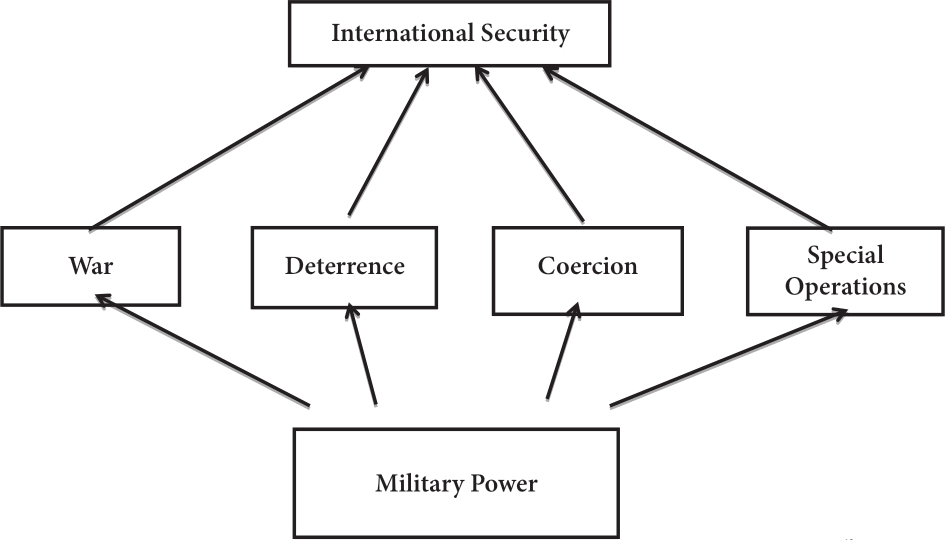
Figure 1: Military Power and International Security
Source: Prepared by the Author
There are essentially four ways a state can achieve its international security objectives by employing its military power,5 namely: war, deterrence, coercion, and special operations (see Figure 1). A more elaborate scheme could be considered, but this can lead to a proliferation of the four basic concepts and reduce the general and real-world applicability. These four instruments can be used by themselves or in various combinations to achieve a state’s security objectives. The set of instruments selected to meet the objectives depends on military, geographic, and political considerations.
A state’s ability to achieve its international security objectives using military force is constrained by the size and effectiveness of its military power. A rise in military power would allow a state to more readily employ military instruments –coercion, deterrent, special operations, or war. Contemporary China is an example of a state with rising military power and appears to be more inclined to use it to achieve its security objectives. A state with diminished or diminishing military power is less likely to employ it, as in the cases of post-war Germany and Japan.
The Turkish Cyprus Peace Operation is an example of a state employing its military power and going to war to achieve its international security objectives
However, in recent years, Japan has expanded its military power in response to the rise of China’s military power. The security competition in Western Asia is deepening and widening. The Chinese navy’s deployment of two aircraft carrier groups appears to have forced Japan to convert two attack helicopter carriers into bono-fide carriers potentially armed with F-35Ds, a stealth fifth-generation aircraft. There also appears to be a symbiotic relationship between China’s economic and military power. Higher economic growth leads to higher military power and higher military power results in higher economic power.6
War
War is an extensive and utmost use of military power.7 Because of its expensive nature in terms of resources and loss of life, war is usually a state’s last resort for achieving security objectives. Yet, the expected benefits of war can often be larger than the cost, and in some situations, war may be the most cost-effective instrument of security policy.8 There are various examples proving this. The continental Western expansion of the U.S. in the early 19th century is one. It was achieved with fairly modest military power and facilitated the acquisition of vast and valuable territories. Likewise, victorious Germans utilized forced employment of Eastern European labor in various factories and mines during the Second World War. Also during the Second World War, the occupying Germans confiscated most of the French produce for their own use. However, many wars have proven not cost-effective, as a venture marred with uncertainty. A state can lose a war. For example, despite all the resources and lives lost, the U.S. lost the Vietnam War.
There was an intense security competition between the U.S. and China in the South China Sea and over Taiwan in the early 21st century. This could morph into outright military aggression that may end up with neither side winning the war or achieving their security objectives.
The Turkish Cyprus Peace Operation is an example of a state employing its military power and going to war to achieve its international security objectives. Cyprus is a relatively large island very close to Türkiye. If the island was controlled by a hostile state, it could serve as a very large and threatening military base in the Northeastern Mediterranean across from Anatolia. Cyprus potentially has the utmost geopolitical significance that could easily allow an enemy to launch a variety of forces against and into Türkiye.
Cyprus was conquered by Ottomans in 1571 and was ruled by them until 1878. In 1878, Cyprus was taken over and controlled by the British. Demographically speaking, the island’s population is made up of a Greek majority but also hosts a significant Turkish Cypriot minority.
In 1974, the Cypriot National Guard ousted the civilian administration of Cyprus. The military government in Greece supported the coup, intending to annex Cyprus to Greece. Türkiye responded and deployed military force to the island. During the operation, British forces on the island remained in their bases and did not get involved with the operation.
Ankara’s Cyprus Peace Operation was complicated not only because it was overseas but also because it was a military operation involving the coordination of Türkiye’s naval, air, and land forces. During the operation, Türkiye had complete air supremacy. The Turkish Air Force employed primarily F-100 Super Sabers. Turkish forces included the deployment of paratroopers, the transportation and deployment of troops by Bell UH-1 Iroquois (Huey) helicopters, as well as armored personnel carriers, tanks, and howitzers. The Turkish Navy and landing craft played a significant role in deploying the Turkish force.
The Turkish military intervention turned out to be a two-stage military operation. Initially, Turkish forces were able to control about 3 percent of the island and established a beachhead on the North shore of the island. In the second stage, after the failure of negotiations between opposing forces, Turkish forces enlarged their control of the Northern part of the island to about 36 percent. Türkiye achieved its security objectives and the island did not become a part of Greece, unlike in Crete, where Turkish residents were forced to leave.
It was a costly war, but since the operation in 1974, there has been peace and stability on the island between the Greek and Turkish people. This should remain the case as long as Türkiye maintains its substantial deterrent military force.
The use of force by Türkiye during the Cyprus Peace Operation had a beneficial effect in addition to Ankara achieving its security objectives. In response to the Turkish military action, the U.S. placed an extensive and prolonged arms embargo on Türkiye. The arms embargo was crippling for Turkish military power since most of the arms employed by Türkiye in 1974 were made by the U.S. This experience made Turkish policy-makers recognize the need for domestic arms production. With the efforts of various Turkish administrations, Türkiye was able to develop a technologically advanced, competitive, and thriving defense industry.
Since this embargo, Türkiye has been working on self-sufficiency in arms production and defense industry. In recent years, the country has been noticeably successful in relying largely on Turkish-made resources and know-how.
A short list of innovative and modern weapons includes Kızılelma, an unmanned fighter aircraft; the Akıncı unmanned long-range, high-altitude drone; the Anka-3 unmanned deep strike and recon aircraft; the TB3 carrier-based unmanned strike aircraft; Kaan, a stealth fifth-generation fighter; Piri Reis, a long duration submersible submarine; İstanbul, a technologically advanced frigate, and Anadolu, a large strike ship and aircraft carrier. In addition, a very effective weapon is the Akya heavy torpedo. Reportedly this torpedo is being deployed in Turkish submarines. These state-of-the-art modern weapons are a strong deterrent to potential enemies of Türkiye. The deterrent effect is not only due to the availability of these modern weapons but also the Turkish-made supply of additional weapons and parts.
Deterrence
Deterrence is a military policy a state can employ to avoid an attack from an enemy by demonstrating deployment and readiness for the use of military force. An operational and effective military force ready for action is a deterrent simply by its existence. Deterrent military forces don’t require active management against a potential enemy. However, there are times when the effectiveness of the deterrence is enhanced by a state explicitly demonstrating its force existence and readiness to go to war. The majority of international security specialists believe that during the Cold War deployment of nuclear weapons with second-strike capability helped to keep peace and deter sides from starting a war. It remains to be seen if the possession of nuclear weapons by both China and the U.S. will have a similar effect to deter a war between the two states in the South China Sea and Taiwan.
A recent example of deterrence is Turkish Navy warships escorting a Turkish seismic drilling vessel in the Eastern Mediterranean. The ship was escorted by five naval ships. The presence of Turkish naval warships demonstrated the readiness to defend the seismic/drilling ship by force. This deterrent action by the Turkish Navy took place several times starting in 2019 in the Mediterranean Sea. On one occasion, the Turkish armada was saluted by an F-16 flyby –suggesting that air support was not far away if needed. Although not visible or announced, there was likely a Turkish submarine escorting the ship under the sea’s surface. The Turkish naval deterrence was effective and protected the activities of the seismic drilling ship.
Another example of deterrence is the annual large-scale Efes military exercise by Turkish military forces and guest military elements from other states. The Efes exercise reveals Turkish forces’ ability to carry out several amphibious landing operations while coordinating air, naval, and land forces.9 The most recent exercise was conducted in 2022. This is an active deterrence demonstration. During the Efes exercise, Türkiye employed several weapons, including domestically produced attack helicopters, landing ships and landing crafts, infantry and naval infantry, F-4Es and F-16s, Chinook helicopters, and main battle tanks. The Efes exercise is a vivid example of Turkish forces’ potential capability for projecting several combined forces of air, naval, and land forces anywhere in the Eastern Mediterranean and Aegean.
In the 21st century, frequently occurring conflicts are asymmetric and hybrid rather than large armies facing each other as it was in the First and Second World Wars
In June 2020 during the war in Libya, the Turkish Navy and Air Forces conducted a major exercise close to the coast of Libya. In addition to Turkish Navy warships deployed to the coast of Libya, the Turkish Air Force demonstrated its ability to project force and reach Libya, about 2,000 kilometers from Türkiye. This complicated operation involved aerial tankers and AWACS in addition to air force fighters/bombers and revealed the capability of the Turkish Air Force to project force to Libya in cooperation with the Turkish Navy. This exercise was a clear deterrent demonstration against potential enemies of Türkiye and the Tripoli government.10
Coercion
Coercion is the policy of a state that threatens to use its military to force an opponent to accept its demands. For years, Ankara had been asking Syria to stop separatist Kurds from attacking Türkiye. In the end, the Turkish capital issued a clear military threat to Syria in September 1998 and reportedly deployed military reinforcements to the Syrian border.11 In response, the Syrian government decided to accommodate the security requests of Türkiye, recognizing the superiority of Ankara’s military power. In October 1998, an encompassing agreement was signed in Adana between the two states. With the military coercion of Syria, Türkiye was able to achieve its international security objectives. A significant outcome was that the Syrian government expelled a militant Kurdish separatist leader. After being forced to leave Syria, he was captured by Turkish officials in Kenya in 1999.
As long as the international political system lacks an effective and powerful central authority there will be security competition and states will accumulate military power and employ their military power to attain their international security objectives
There is a naval version of coercion, called gunboat diplomacy,12 which involves a threat to use naval assets to coerce an opponent to accommodate demands. A recent example in 2023 is the U.S. deployment of two aircraft carriers to the Eastern Mediterranean to contain the Hamas and Israel conflict in Gaza by keeping other interested states away. It appears that the U.S. move has so far been effective and kept other states essentially out of the war. The military power of each U.S. carrier group is very large and their deployment to a certain region can alter the balance of power and polarity of that region.
A more subtle example of coercion is the Turkish Parliament’s declaration of a casus belli in 1995 against Greece if Athens declared changes in the status quo of the Aegean Sea. Though there are various issues concerning the Aegean Sea, territorial waters are well-known. As a result, the Turkish Parliament made it explicitly clear that if Greece expanded its territory from 6 to 12 miles, it would be a reason for war. Despite ongoing tension, the declaration of a casus belli has so far prevented Greece from officially executing its expansion plans.
Special Operations
Special operations are a military policy of a limited use of force. There are a variety of special operations a state’s military force can employ to achieve its security objectives. These actions involve covert operations in addition to operations carried out by conventional forces.
During the recent Libyan conflict, in the war for Tripoli 2019-2020, Türkiye militarily and actively supported the elected Libyan government in several ways. These operations can be considered special operations, which also included Türkiye’s military training the Libyan government’s forces.13
Reportedly during the conflict armed Turkish drones, KORAL electronic systems, and FIRTINA self-propelled howitzers were used against the enemies of the Libyan government, and Turkish naval frigates were deployed off the shores of Tripoli.14
Effective Turkish military support for the elected Libyan government allowed the government forces to succeed against the invading forces. Türkiye was able to maintain its political and economic interests in Tripoli.
In 2023, Türkiye deployed a battalion of special forces (commandos) to Kosovo requested by NATO to help the alliance-led Kosovo Force (KFOR) maintain peace and stability among ethnic Serbs and ethnic Albanians. The special forces returned to Türkiye after successfully serving a few months in Kosovo. This peacekeeping mission within the framework of NATO is an example of a special operation conducted by Türkiye.
In the 21st century, frequently occurring conflicts are asymmetric and hybrid rather than large armies facing each other as it was in the First and Second World Wars. In this conflict environment, special operations are increasingly employed by regional and global powers. Türkiye has a large endowment of special forces specially trained to cope with the asymmetric and hybrid war environment.
Conclusion
Liberal scholars may find the attainment of international security objectives by military force discussed in this paper immoral. But the reality we live in entails security competition in a multipolar world and states in such a world are likely to resolve conflicts with military force. All large and major states have standing armies ready to solve international issues by force if necessary.
Furthermore, except for Japan and Germany, all major states have weapons of mass destruction that serve as deterrents and can potentially be used as offensive weapons. Germany and Japan are latent nuclear powers. They have the know-how and resources to go nuclear rapidly. There is a possibility that nuclear weapons may be employed between China and the U.S. if there is a war in the South China Sea and Taiwan.15 It is conceivable that such a nuclear war can take place since it will primarily be fought on sea rather than on land.
As long as the international political system lacks an effective and powerful central authority –considering the shortfalls of the United Nations– there will be security competition and states will accumulate military power and employ their military power to attain their international security objectives. Türkiye has been calling for a re-organization of the UN to make it more effective and more representative of the current world order.16
Endnotes
* I would like to thank Nurşin G. Ateşoğlu, Raymond E. Franck, Cem Gürdeniz, and Subidey Togan, and the referee of this journal for their comments, however, all remaining errors are my responsibility.
1. “Munich Agreement,” Britannica, retrieved February 3, 2024, from https://www.britannica.com/event/Munich-Agreement.
2. See: David A. Lake, Hierarchy in International Relations, (New York: Cornell University Press, 2011). In this book, the hierarchy of states is analyzed. Likewise, relations between dominant and subordinate members are established, and affect policy is discussed.
3. See: John J. Mearsheimer, The Tragedy of Great Power Politics, (New York: W. W. Norton & Company, 2001).
4. Sönmez Ateşoğlu, “Economic Power and International Security,” Insight Turkey, Vol. 21, No. 3 (2019) pp. 69-89.
5. For an alternative detailed discussion of the concepts discussed, see: John F. Troxell, “Military Power and the Use of Force,” in J. Boone Bartholomees (ed.), Guide to National Security Policy and Strategy, (U.S. Army War College, 2004), pp. 187-210.
6. Sönmez Ateşoğlu, “Economic Growth and Military Spending in China,” International Journal of Political Economy, Vol. 42, No. 2 (2013), pp. 88-100.
7. There are several definitions of war, the above simple definition is preferred in this paper.
8. See: Mearsheimer, The Tragedy of Great Power Politics, pp. 147-152; Edward N. Luttwak, “Give War a Chance,” Foreign Affairs, Vol. 78, No. 4 (1999), pp. 36-44.
9. “Efes-2022: Turkey’s Combined Joint Live Fire Exercise,” Key Aero, (August 12, 2022), retrieved January 4, 2024, from https://www.key.aero/article/efes-2022-turkeys-combined-joint-live-fire-exercise.
10. Dorian Archus, “Turkish Navy and Air Force Hold Coordinated Drills off the Coast of Libya,” Naval Post, (June 13, 2020), retrieved from https://navalpost.com/turkish-navy-and-air-force-hold-coordinated-drills-off-the-coast-of-libya/.
11. Alan Makovsky, “Defusing the Turkish-Syrian Crisis: Whose Triumph?” The Washington Institute for Near East Policy, (February 1, 1999), retrieved from https://www.washingtoninstitute.org/policy-analysis/defusing-turkish-syrian-crisis-whose-triumph.
12. For a further discussion, see: James Cable, Gunboat Diplomacy 1919-1991, 3rd, (London: Palgrave Macmillan, 1994). In this book, gunboat diplomacy is defined as a limited and purposeful engagement.
13. “Turkish Soldiers Continue to Provide Military Training, Consultancy for Libyan Army,” Daily Sabah, (November 29, 2020), retrieved from https://www.dailysabah.com/politics/diplomacy/turkish-soldiers-continue-to-provide-military-training-consultancy-for-libyan-army.
14. Jason Pack and Wolfgang Pusztai, “Turning the Tide: How Turkey Won the War for Tripoli,” Middle East Institute, (November 10, 2020), retrieved from https://www.mei.edu/publications/turning-tide-how-turkey-won-war-tripoli.
15. Gabriel Honrada, “China Intensifies Nuclear Strike Threat in South China Sea,” Asia Times, (April 5, 2023), retrieved February 3, 2024, from https://asiatimes.com/2023/04/china-intensifies-nuclear-strike-threat-in-south-china-sea/.
16. See: “Turkey’s Erdoğan: The UN Security Council Needs to Be Reformed,” Reuters, (December 9, 2023), retrieved February 6, 2024, from https://www.reuters.com/world/middle-east/turkeys-erdogan-un-security-council-needs-be-reformed-2023-12-09/.