

Introduction
Humanitarian assistance is deeply ingrained in human nature, characterized by spontaneous response to aid those in need. Throughout history, philanthropy has evolved alongside spiritual teachings, fostering acts of benevolence toward others. However, the seemingly altruistic act of providing aid can sometimes be perceived by conflicting parties as taking sides in the struggle.1 For instance, in a scenario where conflict arises between two communities, aid provided to one community may be interpreted as favoritism, thereby placing the aid provider in the crossfire. This underscores the necessity of adhering to fundamental principles such as humanity, impartiality, neutrality, and independence, established by the International Red Cross and Red Crescent Movement in Vienna in 1965. These principles serve as the cornerstone of humanitarian action, aiming to shield humanitarian efforts from becoming embroiled in conflicts and ensuring the safety of aid providers. Humanitarian organizations must operate by these principles throughout all stages of aid provision, including fundraising activities. Funding must align with the humanitarian imperative, as such donations can not aim at favoring one party over another.
States also play a pivotal role in relief efforts, extending aid to foreign countries during natural disasters and conflicts.2 International aid can take various forms, including financial assistance, technical expertise, and deployment of military personnel and equipment.3 The commitment to international cooperation in addressing humanitarian crises is enshrined in the United Nations Charter, guiding humanitarian donors to uphold core principles such as neutrality.
The European Union, for instance, has embraced the Good Humanitarian Donorship (GHD)4 principles for humanitarian aid, emphasizing the importance of allocating funds based on needs assessments and in proportion to the severity of the crisis. However, tensions often arise between humanitarian actors and foreign policy actors due to differing priorities and objectives. On the one hand, humanitarian actors, such as non-governmental organizations (NGOs) and international aid agencies, focus on the neutral and impartial delivery of aid; on the other hand, foreign policy actors, including government agencies and diplomats, may view aid provision as a tool to advance national interests.5 As a compromise, the concept of “principled aid” has been proposed, seeking to balance humanitarian objectives with national interests.
Humanitarian actors, such as non-governmental organizations (NGOs) and international aid agencies, focus on the neutral and impartial delivery of aid; on the other hand, foreign policy actors, including government agencies and diplomats, may view aid provision as a tool to advance national interests
This debate raises pertinent research questions regarding the extent to which donors adhere to principled aid practices and how they navigate competing considerations in funding decisions. Moreover, it underscores the need for best practices among humanitarian practitioners to ensure the ethical nature of their actions. To address these questions, this research employs the Syrian crisis as a case study, spanning from 2012 to 2020, to examine real-life instances of humanitarian aid delivery and the complexities inherent in balancing humanitarian imperatives with political interests.
This study aims to explore the role of foreign aid as a soft power tool by examining the interrelation between foreign policy and foreign aid. Through interviews6 with aid experts and the firsthand experiences of both international and local actors, the study reveals that aid and foreign policy are deeply intertwined, as foreign aid is often managed by foreign ministries. Beyond the humanitarian imperative, geopolitical considerations significantly influence decision-making processes, aligning with broader foreign policy agendas. The strategic interests of donor countries, such as national security, counter-terrorism, immigration control, and economic objectives, play a crucial role in shaping aid policies. Furthermore, the study highlights the politicization of aid, with extreme examples including Russian vetoes in the UN Security Council and the Syrian government’s use of aid as a weapon. These findings underscore the complexity and dual-purpose nature of foreign aid in the contemporary geopolitical landscape.
Conceptual Framework and the Research Question
This study endeavors to elucidate the intricate dynamics and interconnectedness between humanitarian aid and foreign policy, as well as the measures implemented to ensure their coexistence within mutually acceptable boundaries. To achieve this aim, the study initiates a succinct exploration of the historical evolution of aid in its diverse forms, including humanitarian and developmental aid, delineating the emergence and structuring of these distinct trajectories. Subsequently, the inquiry delves into the concept of foreign policy and endeavors to reconcile the perceived gap between these two realms.
Aid dynamics have evolved according to the shifts in world order. For instance, the humanitarian assistance provided to Syria has garnered attention from major donors, yet owing to the protracted nature of the crisis, aid programs have endured for over a decade
The study is doing so by focusing on the specific case of the Syrian crisis and investigating pertinent variables shaping this relationship.7 Drawing from theoretical conceptualizations outlined in the literature review and supplemented by insights gleaned from field experts, key research variables are identified, including the principled approach to needs assessment, fund allocation mechanisms, equitable distribution of aid across geographic areas of control, and the influence of external factors on access limitations. Moreover, the study examines the role of institutional structures and decision-making processes, as well as the impact of individual agency on system dynamics and outcomes. Additionally, it considers the role of United Nations agencies in upholding humanitarian neutrality and advocating with donor states.
Beyond its scholarly contribution, the study seeks to furnish humanitarian practitioners with an enhanced comprehension of the underlying drivers, mechanisms, and trends associated with funding in conflict contexts. It illuminates how humanitarian aid, in its fundamental lifesaving capacity, may become ensnared in intense geopolitical rivalries among international actors. A nuanced understanding of these dynamics enables relevant stakeholders to assess the benefits and pitfalls associated with institutional funding, thereby empowering local actors to strategize interventions in a manner most advantageous to the served population.
Foreign aid constitutes a broad spectrum of transfers from one nation to another, encompassing diverse forms including military assistance.8 Since its inception as a subject of scholarly inquiry, academics have underscored the intrinsic connection between aid and foreign policy. In his seminal work, Hans Morgenthau characterizes foreign aid as one of the genuine innovations introduced by the modern era into the realm of foreign policy, positing its capacity to achieve objectives beyond the reach of military coercion or conventional diplomacy.9 Morgenthau proceeds to delineate various categories of foreign aid, comprising humanitarian assistance, subsistence aid, military support, coercive aid, prestige-driven aid, and aid for economic development.10 Central to Morgenthau’s argument is the contention that solely humanitarian aid remains apolitical, while subsistence aid holds the potential to avert developmental crises.
The genesis of humanitarianism is commonly traced back to the experiences of Swiss businessman Henry Dunant amid the Battle of Solferino in 1859.11 Dunant found himself in the Italian village of Solferino for commercial endeavors when he fortuitously bore witness to the aftermath of a fierce conflict between the Austro-Hungarian and French armies, resulting in significant casualties on both sides. Motivated by the suffering he witnessed, Dunant joined forces with local residents to provide aid to the victims. This pivotal event profoundly impacted Dunant, prompting him to spearhead a campaign that ultimately led to the establishment of a humanitarian relief agency dedicated to assisting victims of war. To ensure the effective operation of this agency in conflict zones, an intergovernmental treaty was enacted to guarantee its neutrality.12
Following Henry Dunant’s initiatives, the humanitarian system began taking shape, leading to the establishment of the International Committee of the Red Cross in 1863 and the Geneva Convention in 1864. As conflicts intensified in the late 19th century, humanitarian aid activities expanded, with early examples of fundraising and disaster response. This period also saw the inception of international cooperation in healthcare.13 The spread of humanitarianism paralleled European colonial expansion into Africa and Asia, where core aid strategies were tested.14
Post-Second World War, the United Nations played a central role in humanitarian efforts, resulting in a significant increase in the scale and scope of aid operations, shifting focus from European recovery to Third-World development.15 Following decolonization, aid agencies faced challenges in newly independent nations, exacerbated by Cold War rivalries.16 The end of the Cold War brought new challenges, such as complex emergencies and identity-based conflicts, prompting reforms in the humanitarian system, including the establishment of key coordination mechanisms like the United Nations Office for the Coordination of Humanitarian Affairs (OCHA) and the Central Emergency Revolving Fund (CERF). While the CERF facilitates timely responses to humanitarian needs, criticism exists regarding its restriction of funds to UN agencies.17
Aid dynamics have evolved according to the shifts in world order. For instance, the humanitarian assistance provided to Syria has garnered attention from major donors, yet owing to the protracted nature of the crisis, aid programs have endured for over a decade.18 This protracted duration facilitates an examination of evolving dynamics over time, including shifts in administration within the U.S. and the phases of the conflict itself. Furthermore, Syria represents a complex geopolitical conundrum, with global and regional powers vying for influence in the region.19 Given the multidimensional nature of the Syrian crisis and the intricacies of decision-making surrounding humanitarian funding, the analysis of this case offers an updated and comprehensive understanding of the research question.
Research Methodology
There are various types of foreign funding, such as humanitarian funding, stabilization funding, and military support coming from different states to Syria.20 The research focuses only on humanitarian funding, which is ideally needs-based funding independent from any external factors, and limits the study within the time frame from 2012 to 2020 to ensure the availability of data. The research also focuses on four major donors to Syria: The U.S., the United Kingdom, the European Union, and Germany. The research adopts a mixed approach combining critical analysis of the secondary data about the funding details.21 The results are conjugated with primary qualitative data collected from semi-structured interviews with the subject-matter experts.
As the Syrian crisis enters its 13th year, its status as an emergency has somewhat diminished. Additionally, the dynamic shifts within the political landscape have dampened levels of compassion
To achieve the research objectives, the research starts with a literature review. The review aims to identify the principles of humanitarian aid within the international community framework, as stated in international charters and conventions. Then the research covers foreign policy and humanitarian action by investigating the timeline of the development of humanitarian principles and their adoption by the United Nations. After that, it looks into the structures of the foreign aid department, and the balance between values and interest in the decision-making. With the theoretical review covered, the research works on the case study of Syria. First, the context of the Syria crisis is analyzed utilizing the chronological analysis methodology, highlighting the geological entanglements and the key events that influenced the humanitarian situation in Syria within the timeframe of the study. As this is done, the research moves into the case study of humanitarian funding to Syria. This selection of those four donors is an attempt to review different donors with different characteristics. The research looks into the secondary data and analyses the funding trends and motivations in light of the chronicle order of the events with correlation to the funding amounts and priorities.
As the literature review lays down the foundations to answer the research question, individual reviews are also included to complement the findings. For that purpose, semi-structured interviews were conducted with key informants.22 The interviews can be grouped into the following domains: practical experience from the point of view of donor organizations; experience in the field from international actors’ perspective and experience in the field from local actors’ perspective. Ten interviews were conducted for this purpose. The selection of experts was made to cover the full spectrum of the funding process. The experts’ positions, during the interview period in 2021, vary as follows: five state donor agencies, two UN agencies, three international NGOs, one coordination body, and one local NGO. Finding experts was not easy. Even more challenging was to get frank answers. For that, and due to the topic’s sensitivity, a full anonymization policy was adopted. The interviews aim to fill the gaps in the data through a mix of open-ended and close-ended questions. The recommendations to the aid organizations are an important outcome of the interviews. The qualitative data analysis aims to find answers to the main and sub-questions of the research. The transcripts were analyzed after the interview was completed. The analysis was based on a comprehensive examination of the transcripts. The experts’ reflections are organized into thematic groupings based on the literature review findings. The experts have also discussed issues that are not included in the pre-determined categories. Those concepts were incorporated into the analysis framework. The ideas on each topic were then consolidated. In certain cases, the experts may hold similar ideas, while in others, they may hold opposing viewpoints. All ideas were consolidated to create a comprehensive overview of a topic. The results of the interviews are presented in the following paragraphs, with the structure matching the study questions.
Findings
Key Drivers of Funding to Syria
It is imperative to elucidate that delineating the underlying motivations driving donations are intended to foster a deeper comprehension conducive to humanitarian endeavors. Donor states seek to discern the appropriate rationale for funding, balancing humanitarian imperatives alongside considerations of foreign policy (Interview with Expert 1). Notably, this research does not seek to diminish the altruistic intent of aiding the Syrian populace. Moreover, the study delineates the following drivers, drawn from accessible information, for explanatory purposes, devoid of endorsing, validating, or invalidating any particular motive. The subsequent sections will delve into these drivers, including the human imperative, visibility of the needs, geopolitics, strategic interest, redlines, and decision-making factors.
The Human Imperative
Numerous interview participants concurred that the Syrian crisis has garnered significant international attention, resulting in the sustained flow of funds. The magnitude of needs within Syria remains undeniable, with millions enduring dire conditions despite generous donations. The plight of children and youth, deprived of fundamental rights and education, has been characterized as a “lost generation.”23
As the Syrian crisis enters its 13th year, its status as an emergency has somewhat diminished. Additionally, the dynamic shifts within the political landscape have dampened levels of compassion. Expert 6 described the sequence of events in Syria, transitioning from a “civil movement” to “systematic government attacks and oppression,” culminating in a “proxy war” and ultimately descending into “madness.” This progression has contributed to what is commonly referred to as donor fatigue (Interview with Expert 3).
The allocation of funds to Syria faces competition from other crises such as those in Yemen and Iraq. Expert 2 elucidated the challenging decision-making process within departments responsible for various emergencies. While humanitarian considerations take precedence, they must contend with other factors such as national safety and security, with data often playing a pivotal role in justifying resource allocation.
Expert 4 noted that funding decisions in their current position are minimally influenced by foreign policy although they acknowledged the inevitable impact of political decisions on funding agencies operating under the Ministry of Foreign Affairs (MFA). They underscored the democratic process by which aid money originates from taxpayers and emphasized the hierarchical nature of decision-making, where factors beyond humanitarian principles often hold sway (Interview with Expert 8).
Visibility of the Needs
The consensus among the majority of interviewees underscores the significance of visibility as a determinant factor in the allocation of financial resources. When a country’s events dominate public discourse, it is construed as “critical” and “visible” (Interview with Expert 3).
Visibility, as expounded upon in interviews, manifests in two distinct layers. Firstly, there is the visibility of immediate needs, accentuated by continuous media coverage that galvanizes public opinion within donor states and exerts pressure on politicians to muster the requisite “political will” for funding allocation (Interview with Expert 5). During the nascent stages of the crisis, prominent media outlets extensively covered atrocities such as mass killings perpetrated through barrel bombs and chemical attacks, alongside showcasing the plight of the “moderate” opposition. Consequently, funding for Syria surged. However, as media attention waned and areas under Assad’s control expanded, diminishing the prospects of the moderate opposition’s ascendancy, Syria’s visibility diminished, concomitantly reducing funding (Interview with Expert 2). The sporadic appearance of Syria in headlines in 2021 suggests a shift away from its status as an emergency, though some contest the assertion of relative stability as unrealistic (Interview with Expert 1).
While humanitarian considerations take precedence, they must contend with other factors such as national safety and security, with data often playing a pivotal role in justifying resource allocation.
The second layer of visibility pertains to the portrayal of intervention responses in the media, wherein emotive depictions of populations enduring harsh conditions or receiving aid evoke empathy and encourage resource mobilization towards tangible necessities like medicine, food, and shelter. Conversely, addressing less visible needs such as education, gender-based violence prevention, and trauma management for children presents a formidable challenge due to their nuanced nature and delayed impact assessment (Interview with Expert 5).
Foreign humanitarian aid serves as a component of soft power, strategically deployed to align with and bolster national interests, particularly in instances where these interests diverge from those of other states.
Geopolitics
Foreign governments formulate their policies with the primary objective of advancing their national interests. Within this framework, foreign humanitarian aid serves as a component of soft power, strategically deployed to align with and bolster national interests, particularly in instances where these interests diverge from those of other states. For instance, while Italy does not feature prominently as a donor to Syria, it emerges as a major contributor to humanitarian efforts in Libya and Lebanon (Interview with Expert 9).
The complex geopolitical landscape surrounding Syria involves numerous stakeholders, including the U.S., the EU and its member states, Russia, Iran, Gulf countries, and an array of armed groups. This intricate milieu is mirrored in the allocation of financial resources to Syria, underscoring its significance as a focal point of interest for major actors (Interview with Expert 9). Syria’s strategic geographic position, situated at the crossroads of the Middle East and Europe, further accentuates its geopolitical relevance, ensuring continued engagement from entities such as the EU, keen on maintaining visibility and influence within the region (Interview with Expert 3). Notably, funding directed toward areas controlled by moderate opposition factions often correlates with the supportive political stance adopted by these groups (Interview with Expert 2). Conversely, crises in other regions, such as Yemen, may not elicit the same level of urgency in European perceptions despite comparable levels of need (Interview with Expert 9). In the case of Libya, relief activities have been utilized by certain donors to assert influence and secure control over specific geographic territories (Interview with Expert 9).
The Syrian regime has been pro-active in politicizing relief efforts, impeding the delivery of aid to areas beyond its control. Instances of aid manipulation, such as conditioning aid delivery to certain regions in exchange for concessions elsewhere, underscore the regime’s strategic exploitation of humanitarian assistance for political gain (Interview with Expert 7).
Additionally, donors often emulate the actions of influential actors like the U.S., as evidenced by the withdrawal of certain donors following the U.S.’ disengagement from Afghanistan. This interplay between political decisions and humanitarian programs highlights the complex dynamics underlying aid allocation and underscores the imperative of considering the ongoing needs of affected populations (Interview with Expert 6).
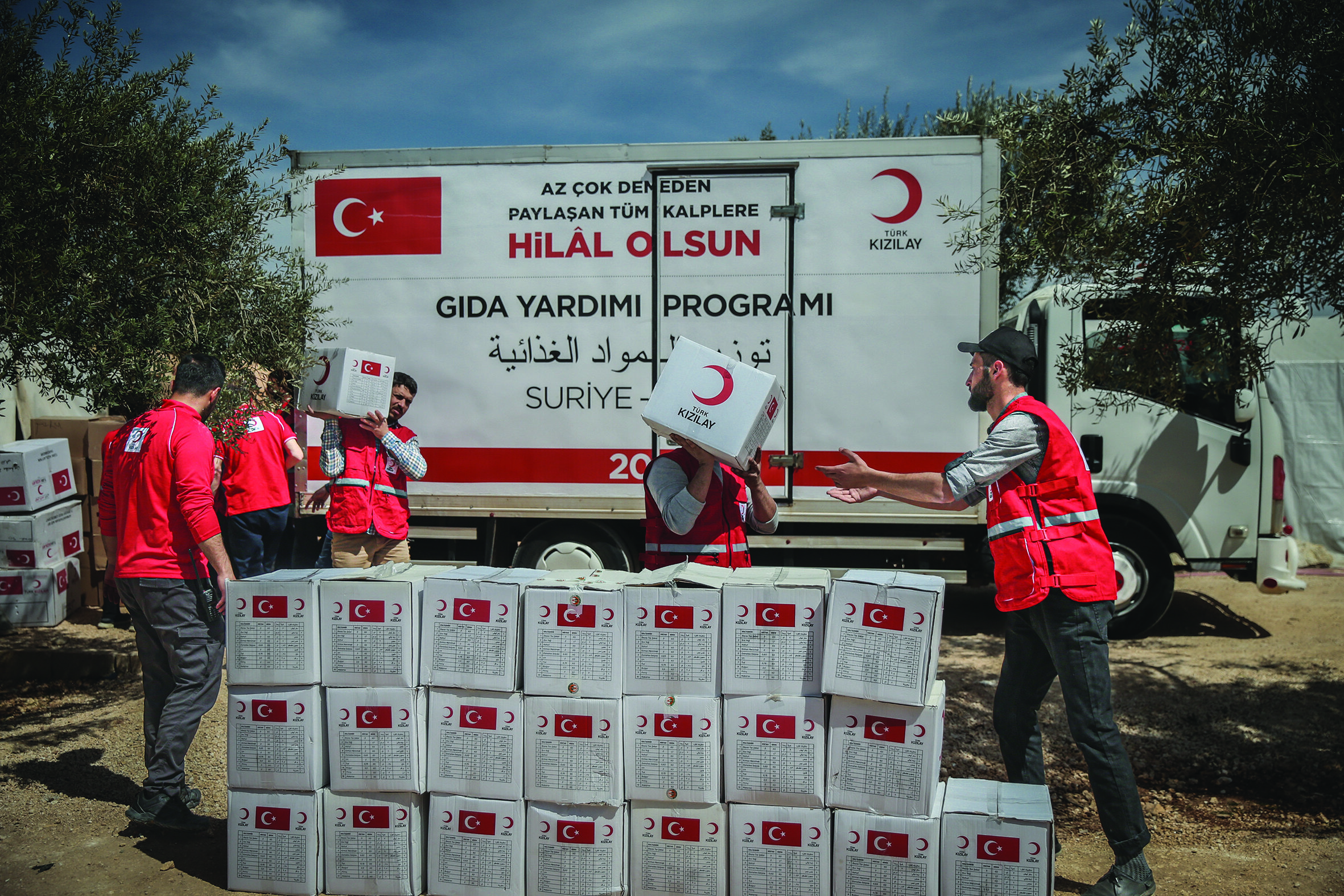
Turkish Red Crescent distributes humanitarian assistance to Syrian refugees in Idlib, Syria on April 16, 2022. MUHAMMED SAID / AA
Strategic Interest
Interviewees used strategic interests to suggest a variety of themes, including immigration, counter-terrorism, and economic interests. Aid programs can be motivated by the national security interest of the donor country. The aid that improves the quality of life of the population helps, directly or indirectly, in hampering the extremist currents. It can also be intended to reduce the influx of migration (Interview with Expert 1). There does not appear to be a formalized system to govern those factors. They are better described as “pivots” and “strategic shifts” on the global level, and by the time they reflect on the funds’ allocation (Interview with the Expert 1). It is also related to the objectives of the current administration. The change of the administration can change the course of action. For example, one administration can be in favor of giving money to a state because it is considered a good ally or to allow the exploitation of natural resources in that country. Once the administration is altered, the new one will focus on another state. These changes can be dramatic. Yet, from a humanitarian perspective, whether the government is left or right, their priority will be to care about the people in their country. For example, if gas does not reach each residence over the winter, it will undoubtedly impact them more than the Syrians who are dying (Interview with Expert 8).
Migration can be dominant in European discussions, especially when waves of migration increase from time to time. For that, any crisis in a neighboring country ignites fear in the public that their countries will be invaded by migrants and foreigners looking for a new life. This attracts the attention of policymakers, who start pumping funds to reduce this influx (Interview with Expert 9). This is relevant in Syria as it is the largest source of refugees now. Some of the funds were channeled to Syria, in humanitarian and development formats, related to the emergence and collapse of the ISIS. The living conditions of the people in areas that used to be under ISIS control need to be improved to eliminate any factors that would further destabilize the situation (Interview with Expert 8).
Redlines
The assumption that decisions on humanitarian aid are only linked to the location and size of the needs is an oversimplification of the process. Funding institutions are accountable to their governments, parliaments, auditing entities, and public opinion. Hence comes the concept of redlines, as can be understood from the discussions during the interviews. Many concerns are related to the provision of financial assistance. The money can fall into the wrong hands, delivered at the wrong time, misspent, or delivered at an inappropriate location. Any mistake as such will place the decision maker under the heat from the home front. The rule seems to be: better safe than sorry. The active actors in Syria decide when and how such restrictions can be imposed. They may change over time in responding to the dynamic changes on the ground (Interview with Expert 7). The counter-terrorism regulations are the toughest (Interview with Expert 5). Red flags can be triggered due to the nature of controlling powers in certain areas. For instance, the control of the Hayat Tahrir al-Sham (HTS) in Idlib raised concerns about the diversion of aid. First, funds were prohibited to actors cooperating with the HTS, and then the whole area was considered a red zone (Interview with Expert 7). Several donors had governance programs with funds channeled directly to the local directorates, such as health directorates and education directorates. With the shift in de facto authorities, the programs were redesigned to be implemented by local NGOs (Interview with Expert 7). The United States Agency for International Development (USAID) and the Deutsche Gesellschaft für Internationale Zusammenarbeit (GIZ) have also, reportedly, suspended the flour distribution program because of the “toxic jihadis” as it has been said (Interview with Expert 6). Another case is the early recovery funding to the areas outside government control. Given that fund managers aim to avoid counter-terrorism or sanction restrictions, they prefer to spend all the early recovery money in governmentally controlled areas that can easily be covered legally (Interview with Expert 5).
Another aspect is the existence of solid control and accountability mechanisms overseeing the way money is being spent. The Office of Inspector General (OIG) launched a series of investigations in Syria that targeted notable International Non-governmental Organizations (INGOs) on their work in Syria over allegations of misuse and poor control of funds. The result was less access to funding by local actors as major INGOs opposed more restricted policies for funds (Interview with Expert 6). The fluidity of the situation in Syria has also restricted humanitarian programs in a certain geographic area. As the military operations were active in 2019, donors became reluctant to fund activities below the M4 line (highway in Northwest Syria), based on the perception that the government forces may advance to the area and all efforts would be wasted.
Again, the political considerations can cause earmarking of the funds to a certain geographic area with a specific type of controlling power. One evident example is the area between Ras al-Ain and Tal Abyad, also referred to as the area of “Spring Peace.” The needs in the area are clear. The area, that used to be under ISIS, suffers from a severe drought, poor health infrastructure, lack of functional schools, and food insecurity. However, the majority of donors, including the UN, have not directed funds to the area, therefore, an INGO indicated this when being approached by local actors, that they avoid sending a wrong political message that they are legitimizing the nature of controlling power on the ground. Other actors might not be this blunt, but they may tend to delay the funds until things get cleared from the political point of view (Interview with Expert 10). As a result, the people in need are being deprived of funding merely on political considerations.
Decision-Making Factors
The key drivers discussed in the previous paragraph set the overarching policy. These policies are being put into place via operational tactics and a set of procedures. The following are the factors affecting the decision-making process, as discussed with the experts.
Structure and Process
The interviews conducted unveiled a spectrum of structures and procedures among various states and humanitarian aid entities. To preserve anonymity, the term “person in charge” denotes individuals occupying roles such as minister or commissioner. Expert 2 delineated the processes within their institute, which entail strategic planning cycles spanning one to five years. These strategies delineate objectives, whether centered on peacebuilding or providing humanitarian assistance across different nations. Each region is overseen by a designated person in charge tasked with formulating plans to address three fundamental inquiries: identifying needs, determining requisite funding, and aligning responses with broader objectives. During emergencies, decision-making may prioritize humanitarian imperatives, emphasizing the critical need to avert loss of life.
Typically, humanitarian aid entities allocate funds on a per-country basis, commencing with needs assessments conducted between July and August. These assessments encompass diverse factors, including the nature of needs and responses by other organizations. Decision-making, steered by senior officials, factors into consideration such as the severity of need and the availability of resources. Organizations like the European Civil Protection and Humanitarian Aid Operations (ECHO) employ objective tools such as the Forgotten Crisis Assessment and Index for Risk Management (INFORM) risk assessment to inform decision-making. Expert 3 underscored the significance of “making the case” for funding allocation, aligning proposals with the state’s political stance, and rallying support from allies. Intense competition for resources among response plans for nations like Yemen and Syria underscores the necessity for compelling justifications and evidence.
Some agencies adopt less rigid decision-making mechanisms, relying more on individual judgment and shorter chains of command. In essence, decision-making within humanitarian aid entails navigating a myriad of complex considerations, ranging from strategic planning to political alliances, with diverse approaches evident across organizations.
Estimation of the Needs
The needs-based approach in humanitarian action aims to establish aid independence from political and military influences, prioritizing access to assistance for vulnerable populations regardless of the controlling powers in their location. However, accurately assessing needs presents significant challenges.
The needs-based approach in humanitarian action aims to establish aid independence from political and military influences, prioritizing access to assistance for vulnerable populations regardless of the controlling powers in their location.
Quantifying human needs proves challenging, particularly in evaluating shelter requirements or water security. Aggregating needs at a national level face additional obstacles due to overlaps and potential double counting across sectors. Comparing needs between regions, such as Yemen and Syria, becomes complicated due to the consideration of different types of needs and conditions (Interview with Expert 2).
Moreover, interpreting numerical data can be misleading. For example, assuming that the Syrian government controls 75 percent of the country does not accurately reflect the diverse needs across regions (Interview with Expert 5). Non-state-controlled areas often lack infrastructure and essential services, skewing assessments based solely on control percentages (Interview with Expert 6). During conflicts like Syria’s, information bias and a lack of solid data often lead to erroneous decisions. To tackle these challenges, major donors support organizations such as the OCHA, which produces essential documents like the Multi-Sector Needs Assessment (MSNA), the Humanitarian Needs Overview (HNO), and the Humanitarian Response Plan (HRP). However, the limited capacity of donors to analyze these documents significantly impacts fund allocation decisions (Interview with Expert 1).
Furthermore, understanding the implemented response is crucial for donors to assess progress and identify gaps. Yet, response data often lacks geographic detail, impeding informed allocation decisions. Additionally, while response data may indicate the services provided, it may not fully elucidate remaining needs or the interventions’ impact on hunger or malnutrition. Given these complexities, the “needs-based” approach may be susceptible to manipulation to align with desired interests, underscoring the ongoing challenge of maintaining principled aid in humanitarian action (Interview with Expert 7).
Individual Influence
The agency-structure problem, as outlined by Carlsnaes,24 underscores the interaction between individuals and systems in decision-making processes. While structures and processes play crucial roles, individual agency also significantly influences outcomes, particularly in humanitarian aid contexts where flexibility and rapid response are essential.
Not all decisions are dictated solely by established systems or policies, especially in dynamic emergencies where gaps and grey areas abound. Individuals in positions of authority often challenge the system’s constraints and leverage existing flexibility to address pressing needs. Those personally touched by tragedies or possessing field experience may advocate fiercely for allocating funds to the most vulnerable, even if it means clashing with superiors. Conversely, some personnel may adhere strictly to the protocol without considering alternative interpretations, highlighting the role of personal attitude in decision-making (Interview with Expert 5).
Moreover, individual influence stems from factors such as technical expertise, objectivity, and personal preferences. In the Syrian context, a UN official’s advocacy for engaging local actors in cluster leadership exemplifies how personal convictions can shape decision-making. Similarly, a decision-maker’s passion for girls’ education may sway funding decisions in favor of education programs (Interview with Expert 2).
However, decision-making processes also rely on broader networks of influence. Rotating staff periodically ensures a diversity of perspectives and prevents biases from developing toward specific crises. Donors recognize the importance of assigning personnel based on crisis phase and national significance, opting for dynamic and strong individuals for high-profile crises and more conservative staff for less sensitive situations (Interview with Expert 3). In essence, while structures and processes provide frameworks for decision-making, individual agency significantly impacts outcomes, underscoring the complex interplay between people and systems in humanitarian action.
Balance Parameters
The funding decisions in humanitarian aid are complex and multifaceted, influenced by various factors that intersect between self-interest, cooperation, impact assessment, and emergent circumstances:
i. Consideration of Others’ Actions: Donors must not only assess what they can contribute but also consider the activities of other donors. This can lead to either cooperative efforts, where donors coordinate to avoid duplication and optimize resource allocation, or competitive dynamics where donors vie for influence or visibility in strategic areas. For example, Italy may focus its activities in government-controlled areas in Syria, relying on other European donors to cover other regions (Interview with Expert 2).
ii. Level of Impact: With increasing humanitarian needs globally, donor representatives face tough decisions regarding resource allocation. They must weigh the impact of funding various initiatives, such as hospitals, schools, or resilience programs, against each other. Limited resources mean prioritizing projects with clear justification and measurable impact. For instance, funding proposals for projects worth more than available resources require careful selection based on feasibility and expected outcomes (Interview with Expert 4).
iii. Response to Emergencies: Emergencies, such as the COVID-19 pandemic or sudden outbreaks of diseases like polio, can significantly impact funding decisions. Donors may need to reallocate resources to address immediate crises, impacting funding availability for other ongoing programs. Similarly, emergencies in other regions may divert attention and resources away from existing humanitarian efforts, affecting funding for ongoing crises like Syria (Interview with Expert 5).
Structural Changes
In mid-2020, the new USAID Bureau for Humanitarian Assistance (BHA) was created as a result of restricting the USAID humanitarian assistance department.25 Almost at the same time, Boris Johnson announced the birth of the Foreign, Commonwealth and Development Office (FCDO), replacing the former UK aid agency titled the Department for International Development known as DFID.26 During the interviews, a question was asked on the impact of the recent changes in the structures. The common answer was that it was too soon to judge. Besides the reason the changes are yet to be judged, they have coincided with economic backlash due to the COVID-19 pandemic, which affected the government spending on foreign aid in general, as well as, the global reduction of funding to Syria as well (Interview with Expert 2).
The Role of the UN Aid Agencies in Syria
The UN has well-established aid agencies that oversee humanitarian response globally, benefiting from its position as an international body working for world peace and prosperity. Government agencies and the UN are vital in coordinating efforts across different sectors to meet policy goals. However, their actions can occasionally produce unintended consequences that necessitate thorough evaluation and careful management.
Coordination Role
Institutional humanitarian donors typically use two funding channels: through UN agencies like the World Food Programme (WFP), the World Health Program (WHO), and the United Nations International Children’s Emergency Fund (UNICEF), or via direct bilateral funding to international NGOs, with less support for local organizations. Many donors prefer direct supervision of their funds due to concerns that UN-led mechanisms, influenced by authorities in Damascus, may compromise operational neutrality (Interview with Expert 7).
The UN funding strategy follows the humanitarian program cycle (HPC) and utilizes a sectoral approach, organizing the response into clusters such as shelter, health, and nutrition. The process begins with identifying needs, compiling data into a Humanitarian Needs Overview (HNO), and designing a response strategy, culminating in the Humanitarian Response Plan (HRP), which outlines required donations.
However, the HRP’s credibility is undermined by government attempts to exploit funds for political gain, leading to delays in approval and concerns about data accuracy. Negotiations between the UN, donors, implementing partners, and Damascus authorities further politicize the process. Despite efforts to maintain neutrality, the UN faces political pressures from member states, affecting aid delivery to besieged areas and modality decisions. For instance, crossline convoys are influenced by political actors, hindering aid access where it’s most needed (Interview with Expert 5).
Despite efforts to maintain neutrality, the UN faces political pressures from member states, affecting aid delivery to besieged areas and modality decisions
The Unintended Consequences
The reliance on traditional relief programs in humanitarian crises like Syria has led to unintended consequences, including aid dependency and perpetuation of the crisis:
i. Aid Distribution: Traditional relief programs often focus solely on providing immediate assistance without empowering the affected population. This approach can create a cycle of dependency, where people become reliant on aid without developing sustainable solutions to address their needs. As a result, aid recipients may feel dissatisfied with the aid provided, as it may not fully address their long-term needs or contribute to their self-sufficiency (Interview with Expert 9).
ii. Aid Dependency: The aid-dependency phenomenon extends beyond the affected population to NGOs and the economy. NGOs may prioritize maintaining their operations and salaries over fostering local resilience or pursuing long-term development initiatives. Consequently, aid programs may become stuck in a cycle of repeating the same activities without making significant progress toward sustainable solutions (Interview with Expert 8).
iii. Lack of Development Programs: In Syria, the absence of effective UN development initiatives due to geopolitical tensions has further exacerbated the crisis. The focus on humanitarian aid alone, without accompanying development programs, has led to an imbalance in the economic situation and limited progress toward addressing underlying issues contributing to the crisis (Interview with Expert 7).
iv. Need for Resilience Funding: To break the cycle of aid dependency and promote sustainable solutions, there is a pressing need for development programs to complement humanitarian aid efforts. Resilience funding aimed at building local capacity, promoting economic stability, and fostering self-reliance is crucial in addressing the root causes of humanitarian crises and preventing further deterioration of the situation.
Areas of Improvement
One of the aims of the study is to look into areas of improvement. The following items were identified from both the literature review and the experts’ interviews. Areas of improvement include enhancing the effectiveness of pooled funds and advancing localization efforts to strengthen community resilience and response capabilities. Pooled funds consolidate resources from multiple donors, thereby reducing political interference in humanitarian funding. Additionally, donors should increase investments in localization as it optimizes the effectiveness and impact of their contributions.
Pooled Funds
The pooled funds are a great tool to remove or reduce the political effect on humanitarian funding. The ECHO is a very good example of coordinated funds between different stakeholders. The political will is mellowed down as there is a complex map of states’ interests, leading to the decision to be free from individual donor preference (Interview with the Expert 3). The prioritization of aid in ECHO is being done based on two matrices assessing the situation of the crisis and the index of needs. Another example is the OCHA-led Country-Based Pooled Fund (CBPF). Syria has two separate pooled funds, one operating in Damascus called the Syria Humanitarian Fund (SHF), and the other is the Syria Cross-border Pooled Fund (SCHF) managed by the OCHA based in Gaziantep, Türkiye. The only political influence that can be practiced is via the pressure on the advisory board, but this pressure cannot be fully biased (Interview with Expert 2).
The positive side is less politicized because it has many stakeholders. However, all decisions need to be coordinated with different donors, which can result in restrictions. The Education Cannot Wait (ECW) is a global pooled fund with operations in Syria. Given its rigid roles, it was not able to cover the formal education program in Syria despite being critically needed (Interview with Expert 2).
Localization
Aid is a cycle. Nobody can maintain a span of attention on a crisis for 10 years. The humanitarian practitioners become exhausted, especially when they see no solution on the horizon. Without tangible changes in the lives of people, it is hard to maintain interest. Thus, the funding gradually decreases. Therefore, donors need to invest more in localization because it is the best utilization of their money (Interview with Expert 5). The increase in direct funding to the local actors will increase the efficiency of the donation. First, the local actors are more aware of the needs and are more suited to tailor the response programs to suit their local community, instead of projects designed in far-away capitals. Second, direct funding to the local organization reduces the overhead costs deducted by the international NGOs (Interview with Expert 1). Another form of localization is the incorporation of local actors in the decision-making process. Looking at Syria, many essential decisions were made by excluding the Syrians (Interview with Expert 2).
Recommendations to Humanitarian Actors
The responsibility of principled aid is not only the task of donors, but it is a mandate for humanitarian practitioners. The analysis of the interviews resulted in a set of key recommendations to aid workers, as follows.
Humanitarian organizations must understand that donor governments are political institutions. The more they understand the donors’ motivation, structures, and redlines, the more they can affect them in favor of people in need (Interview with Expert 2). However, the NGOs must avoid talking about any political interest of the donor. They need to be committed to the needs-based appeals. Some people may think that taking the political position of a given donor can lead to an increase in funding but this will probably backfire and compromise their credibility. Donors are more willing to fund organizations that respect their humanitarian mandate (Interview with Expert 10). To that end, the NGOs should never accept any funding if they feel there are strings attached. This has led some NGOs to abstain from receiving any political funding, as in the case of MSF27 and Refugees International.28
In addition, advocacy plays a critical role in increasing awareness about the magnitude of suffering and the urgency of taking action. Humanitarian advocacy needs to be done at different levels. There is visibility in media outlets to alert the public in donor countries to the emergency. The visibility, as discussed before, motivates the donors to increase spending on a specific response. On the other hand, humanitarian experts need to acknowledge that not all politicians have detailed expertise in the technicalities of the situation on the ground. Therefore, they should be prepared with a clear and concise document to explain the problem and why the proposed solutions deserve to be funded. In other words, they should be able to tell the story in a simple form (Interview with Expert 5). Then, they also need to ensure that the outcome of the donor funding can be “visible” to them by creating a visual documentation of the success stories resulting from the donations (Interview with Expert 2).
Humanitarian organizations must understand that donor governments are political institutions. The more they understand the donors’ motivation, structures, and redlines, the more they can affect them in favor of people in need
Using advocacy, humanitarian actors can demand more principled funding from their donors. But to do so, the local actors need to coordinate and speak with one voice. Unfortunately, some NGOs, instead of complementing each other’s efforts, compete negatively to secure more funding (Interview with Expert 1).
Using advocacy, humanitarian actors can demand more principled funding from their donors. But to do so, the local actors need to coordinate and speak with one voice
NGOs in Syria have dedicated more efforts to advocacy efforts in the country, resulting in higher levels of funding. For example, when compared to NGOs in Yemen, fewer advocacy efforts have meant Yemen receives less financing. The advocacy efforts must be needs-based to maintain political neutrality. Nevertheless, NGOs can push donor states to work toward a political solution that, regardless of the type of the solution, must end the suffering and respect human rights (Interview with Expert 9).
On the other hand, donors’ funding decisions are not only related to the existing needs but also to the availability of partners with enough capacity to be accountable for the funds. Therefore, the quality of the partners working in any crisis is always helpful to increase the funding being allocated to it (Interview with Expert 4). The operation capacity of the NGO has a huge impact on the donors’ appetite to allocate funding. The donors need to be sure that funding a specific NGO is not going to lead them into a scandal that will land them in hot water with their legislature (Interview with Expert 10). Aid workers should also be keen to present innovative solutions and learn from success stories in other contexts (Interview with Expert 2). Furthermore, besides meeting needs, NGO projects should prioritize maximizing value for money. This approach ensures efficient use of funds, benefiting both taxpayers and donors alike (Interview with Expert 6).
Conclusion
Today’s world faces numerous global emergencies, with protracted conflicts exacerbated by the COVID-19 pandemic and economic crises, leading to unprecedented humanitarian needs. Despite increasing requirements, global funding remains stagnant or shrinking, creating fierce competition among actors for support. This study focuses on the Syrian crisis, one of the most complex post-Second World War political issues, with escalating violence since 2011.
The conflict drew international attention due to Syria’s strategic importance and unique characteristics, resulting in major powers engaging in military actions, fueling a highly politicized proxy war. The humanitarian toll has been immense, with millions displaced and widespread destruction.
Humanitarian aid, inherently political, faces a tension between principles and foreign policy objectives. Efforts to prioritize humanitarian needs often contend with political interests, leading to debates over aid allocation. Case studies reveal shifts in aid focus from political transition support to addressing humanitarian needs as the conflict evolved. Foreign policy considerations, including security concerns and refugee flows, influenced donor responses. Aid distribution often reflects media attention, geopolitical interests, and donor competition.
Political calculations also affect UN mechanisms, with veto powers hindering humanitarian efforts. Challenges in aid delivery persist due to regime interference and politicization. While efforts aim to balance political and humanitarian imperatives, challenges remain in assessing needs and ensuring aid effectiveness. The influence of individuals within aid systems and geopolitical factors further complicates decision-making. Despite humanitarian efforts, sustainable solutions require political resolutions and development interventions to prevent dependency and address long-term consequences. The UN’s limited political will and focus on humanitarian aid in Syria underscore the need for broader solutions.
Humanitarian action must continue guided by principles while engaging with political realities. Advocacy efforts can influence decision-making without compromising humanitarian integrity, ensuring effective responses to crises.
Humanitarian practitioners advocate for neutrality and increased localization of aid to mitigate political influences. However, navigating political dynamics while upholding humanitarian principles remains a challenge. In conclusion, humanitarian action must continue guided by principles while engaging with political realities. Advocacy efforts can influence decision-making without compromising humanitarian integrity, ensuring effective responses to crises.
Endnotes
1. Brian H. Smith, More than Altruism: The Politics of Private Foreign Aid, (New Jersey: Princeton University Press, 2014), p. 38.
2. Frederick C. Cuny, Disasters and Development, (Washington: Intertect Press, 1994), p. 18; Sara McLaughlin Mitchell and Pizzi Elise, “Natural Disasters, Forced Migration, and Conflict: The Importance of Government Policy Responses,” International Studies Review, 23, No. 3 (2021), pp. 580-604.
3. Thomas Kirsch, Sauer Lauren, and Guha Sapir Debarati, “Analysis of the International and US Response to the Haiti Earthquake: Recommendations for Change,” Disaster Medicine and Public Health Preparedness, 6, No. 3 (2012), pp. 200-208.
4. “24 Principles and Good Practice of Humanitarian Donorship,” The Good Humanitarian Donorship (GHD) Initiative, (2018), retrieved from https://www.ghdinitiative.org/assets/files/GHD%20Principles%20and%20Good%20Practice/GHD%20Principles.pdf.
5. Tim Büthe, Major Solomon, and André de Mello e Souza, “The Politics of Private Foreign Aid: Humanitarian Principles, Economic Development Objectives, and Organizational Interests in NGO Private Aid Allocation,” International Organization, 66, No. 4 (2012), pp. 571-607.
6. Ethical Committee Approval of this study has been taken from the University of Manchester with the reference number of 2018-5750-7914 on December 20, 2018.
7. Dorothea Hilhorst, “Classical Humanitarianism and Resilience Humanitarianism: Making Sense of Two Brands of Humanitarian Action,” Journal of International Humanitarian Action, Vol. 3, No. 1 (2018), pp. 1-12.
8. Emma Mawdsley, “The Changing Geographies of Foreign Aid and Development Cooperation: Contributions from Gift Theory,” Transactions of the Institute of British Geographers, 37, No. 2 (2012), pp. 256-272; Carol Lancaster, Foreign Aid: Diplomacy, Development, Domestic Politics, (Chicago: University of Chicago Press, 2008), p. 11.
9. Hans Morgenthau, “A Political Theory of Foreign Aid,” American Political Science Review, 56, No. 2, (1962), pp. 301-309.
10. Morgenthau, “A Political Theory of Foreign Aid,” pp. 301-309.
11. John Fabian Witt, “Two Conceptions of Suffering in War: Knowing the Suffering of Others,” Yale Law School, Public Law Working Paper, No. 309 (September 27, 2013), p. 37.
12. Eleanor Davey, Borton John, and Foley Matthew, “A History of the Humanitarian System: Western Origins and Foundations,” Humanitarian Policy Group, (June 2013), p. 5.
13. Christina Bennett, Foley Matthew, and Pantuliano Sara, “Time to Let Go: Remaking Humanitarian Action for the Modern Era,” Overseas Development Institute, (2016), p. 13.
14. Jenny H. Peterson, “Humanitarianism and Peace,” in Oliver P. Richmond, Sandra Pogodda, and Jasmin Ramović (eds.), The Palgrave Handbook of Disciplinary and Regional Approaches to Peace, (London: Palgrave Macmillan, 2016), pp. 233-246.
15. Heather Rysaback-Smith, “History and Principles of Humanitarian Action,” Turkish Journal of Emergency Medicine, 15 (2015), pp. 5-7.
16. Matthew Connelly, “Rethinking the Cold War and Decolonization: The Grand Strategy of the Algerian War for Independence,” International Journal of Middle East Studies, 3, No. 2 (2001), pp. 221-245.
17. Peter Walker and Pepper Kevin, “Follow the Money: A Review and Analysis of the State of Humanitarian Funding,” Tufts University, (July 1, 2007), p. 11; Fred Halliday, “The Ends of Cold War,” New Left Review, 180, No. 22 (1990), pp. 5-66.
18. Dalya Mitri, “Challenges of Aid Coordination in a Complex Crisis: An Overview of Funding Policies and Conditions Regarding Aid Provision to Syrian Refugees in Lebanon,” Civil Society, 1, (2015), p. 15; Emrah Atar, Hossain Farhad, and Ahsan Ullah, “Syrian Refugees in Turkey: Exploring the Role of I/NGOs in Refugee Crisis,” Third World Quarterly,Vol. 44, No. 2 (2023), pp. 231-245; Seven Erdoğan, “Türkiye-Avrupa Birliği Göç İş Birliği: Bir Göç Dışsallaştırma Örneği Olarak Türkiye’deki Mülteciler için Mali Yardım Aracı,” İçtimaiyat, Vol. 6, (2022), pp. 358-370.
19. Mazen Alhousseiny and Emrah Atar, “The Evolution of the Syrian Humanitarian NGOs and External Challenges,” The Rest: Journal of Politics and Development, 11, No. 2 (2021), pp. 101-119.
20. Keatinge Tom, “The Importance of Financing in Enabling and Sustaining the Conflict in Syria (and Beyond),” Perspectives on Terrorism, 8, No. 4 (2014), pp. 53-61; Carla E. Humud, Mary Beth Dunham Nikitin, and Christopher M. Blanchard, Armed Conflict in Syria: Overview and US Response, (Washington, DC: Congressional Research Service, 2014), p. 28.
21. Adrian K. Morgan and Vicki B. Drury, “Legitimising the Subjectivity of Human Reality through Qualitative Research Method,” The Qualitative Report, Vol. 8, No. 1 (2003), pp. 70-80.
22. Kate Raworth, Swati Narayan, Caroline Sweetman, Jo Rowlands, and Adrienne Hopkins, Conducting Semi-structured Interviews, (Oxford: Oxfam, 2012), p. 3.
23. Alsharif Aya, Osama Al Habbal, Aram Gabadian, Riwa El Maamoun, Alaa Al Faraj, Taima Kamr Aldin, Ola Haitham Aldammad, Ahmad Alkayakhi, and Aya Al Habbal, “Behavioral Difficulties and Associated Factors Among the ‘Lost Generation’ of Syrian Children and Adolescents,” Scientific Reports, 14, No. 1 (2024), pp. 1-15.
24. Carlsnaes Walter, “The Agency-Structure Problem in Foreign Policy Analysis,” International Studies Quarterly, Vol. 36, No. 3 (1992), pp. 245-270.
25. “Bureau for Humanıtarıan Assıstance (BHA),” USAID, (June 2020), retrieved from https://www.usaid.gov/who-we-are/organization/bureaus/bureau-humanitarianassistance.
26. Honeyman Victoria, “Downgrading DFID – How Will Britain’s Overseas Development Aid Agenda Change Now DFID Is Part of the FCO?” Foreign Policy Centre, (December 2020), retrieved from https://fpc.org.uk/downgrading-dfid-how-will-britains-overseas-development-aidagenda-change-now-dfid-is-part-of-the-fco/.
27. “Commitment to Our Supporters,” MSF, (2020), retrieved from https://www.doctorswithoutborders.org/who-weare/accountability-reporting/commitment-our-supporters.
28. “Our Mission,” Refugees International, (2019), retrieved from https://www.refugeesinternational.org/what/.