

Introduction
Nigeria and Türkiye’s bilateral relationship represents a deep and long-lasting cooperation formed over centuries of trade, diplomacy, and mutual interests. Even though the first known contact between the two populations dates back to the 16th century, formal diplomatic relations were not established until 1960, the year of Nigeria’s independence.1 Despite early commercial interactions between Kano and the Kanem-Bornu Empire with the Ottoman Empire, sustainable relations were limited by Ottoman concerns about Europe and the Middle East, regional political dynamics in Nigeria, colonial influence, and logistical difficulties. The lack of significant relations during the Ottoman period can be attributed to these geopolitical factors. However, with Nigeria’s independence, this relationship was formalized and marked the beginning of a strong alliance that developed through economic cooperation, defense cooperation, and socio-cultural exchange. This historical context highlights the transition from casual contacts to strategic partnerships driven by mutual interests toward regional stability and economic growth.
The strategic positioning of Nigeria as a dominant force in West Africa and Türkiye as a pivotal power connecting Europe, Asia, and the Middle East highlights the importance of relations between the two countries. Because of their distinct geopolitical location, there has been a convergence of interests, especially in addressing common issues, including security concerns, economic growth, and regional stability. Both nations have demonstrated a strong commitment to strengthening their collaboration via a succession of bilateral agreements and high-level visits, producing noticeable results in a variety of areas. This cooperative endeavor not only demonstrates the breadth of their involvement but also their shared commitment to tackling important regional and global concerns.
The ties between the two countries have consistently grown in the economic sphere, with Turkish businesses making a major contribution to Nigeria’s infrastructural development. This partnership highlights Türkiye’s importance as a collaborator in Nigeria’s economic development. The defense alliance has grown in importance as well, especially as Nigeria steps up its efforts to combat insurgency and terrorism.2 Strengthening Nigeria’s security capabilities has been made possible by Türkiye’s assistance, which includes intelligence sharing, training, and sales of military hardware. This indicates a growing strategic partnership. Furthermore, the relationship’s socio-cultural and humanitarian aspects –highlighted by educational and humanitarian aid– have played a crucial role in promoting goodwill and understanding between the parties. The programs not only strengthen ties between individuals but also demonstrate how committed both countries are to promoting the stability and growth of the other.
Nigeria and Türkiye’s bilateral relationship represents a deep and long-lasting cooperation formed over centuries of trade, diplomacy, and mutual interests
For this research, qualitative methodology was used, focusing on document analysis. Various sources are used in the research, including official governmental documents, peer-reviewed academic articles, and press publications. While this provides a comprehensive perspective of Nigeria-Türkiye ties, it has several drawbacks. The reliance on secondary sources may limit access to the most recent data, especially in quickly changing fields like economics. This paper attempts to provide an in-depth analysis of Nigeria-Türkiye relations by considering their historical context, main areas of interaction, and future opportunities and challenges. It aims to cover several dimensions of this relationship to show that within a highly complex and interrelated global environment, collaboration between Nigeria and Türkiye plays a significant strategic role.
The relationship between the two countries reflects major assumptions of interdependence theory. Turkish investments in Nigerian infrastructure, defense, and education and Nigeria’s strategic location and resource potential create a system of mutual dependence. Türkiye needs access to the Nigerian market and resources, while Nigeria, thanks to its Turkish partner, can benefit from advanced defense technology. The relationship meets the prerequisites of interdependence theory assumptions by showing how economic, cultural, and security ties can contribute to sustainable long-term stability.
Turkish investments in Nigerian infrastructure, defense, and education and Nigeria’s strategic location and resource potential create a system of mutual dependence
Existing research on the subject is considerable. Multiple sources investigate various aspects of Nigeria-Türkiye relations, mainly focusing on their economic and security components. A general historical outlook is provided by Hasan Ulusoy, who stresses the long-term economic relations and often-overlooked political-military partnerships of the two countries.3 A broad analysis of bilateral relations is offered by Ali Yılmaz Gündüz and Abubakar Muhhamad Yahya, who examine economic interdependence, education and cultural exchange, and security.4 Hamman Abubakar Bashir investigates the Nigeria-Türkiye relationship from a foreign policy perspective and assesses the impact of major events in the aftermath of the 2016 coup.5 A contemporary assessment is provided by Kenan Toprak, who stresses Nigeria’s importance in Türkiye’s general Africa strategy and opportunities for further expansion.6 Alexander Ugwukah and Oladimeji Depiver analyze the possibilities of creating a strong strategic economic partnership and identify the main aspects of economic and defense sectors where such potentials exist.7 Gökhan Kavak focuses on historical research that would increase understanding of Nigeria’s relations with Ankara even before the creation of modern Türkiye and Nigeria’s independence.8 Based on the studies highlighted above, it should be said that a comprehensive examination of Nigerian-Turkish relations in the 21st century is rare. The current research aims to close this gap by a broad examination of the economic, defense, and socio-cultural sides of their interaction. It also aims to investigate their further implications for the region, thereby contributing to an understanding of the strategic nature of their cooperation.
Theoretical Framework: Interdependence Theory and Nigeria-Türkiye Relations
Interdependence theory is a concept developed by Robert Keohane and Joseph Nye in their 1977 book Power and Interdependence.9 The theory provides a framework for analyzing the developing bilateral relationship between Nigeria and Türkiye. According to the theory, as the costs of destruction increase and two or more countries become more intertwined through economic, security, and cultural relations, they become less likely to be involved in a conflict. Instead, these states are entreated to cooperate in ways that benefit both states.10 This, in turn, reflects a departure from the realistic views of power struggle and competition. The multifaceted relationship that Nigeria has with Türkiye, containment economic relations, defense relations, and educational relations, is closely related to the assumptions of interdependence theory.
As members of both the D-8 and the OIC, Türkiye, and Nigeria have opportunities to collaborate on shared interests, balancing Nigeria’s domestic concerns with its international economic goals
The theory assumes that states are connected through a number of channels, including trade, financial systems, and security systems. Moreover, the theory posits that this interconnection takes precedence over dominating a particular state. This, in turn, reduces the likelihood of conflict. As such, as international relations become more intricate, individual states become increasingly interdependent in their pursuit of national objectives. Moreover, states will pursue policies that achieve the most important common interests and will not eschew temporary advantages gained by unilateral action.11 Nigeria’s interest in investment from Türkiye in its infrastructure, defense areas, and education is evident. Alongside the country’s geopolitical position and vast resource base, the two countries are interdependent. On the other hand, the technological advantage in defense that Nigeria gains appeals to Türkiye but it is also granted access to the Nigerian huge market. It can, therefore, be concluded that the two countries benefit from relationships that comply with interdependence theory. Just like the former Soviet Union and the People’s Republic of China, the two countries derive stability from interdependence encompassing economic relations, security, and culture.
One of the principal advantages of the theory is its ability to describe the non-military aspect of international relations in terms of the interplay that is often omitted in various classic theories, including realism. For instance, Nigeria and Türkiye are connected not only by military alliances and economic contracts; there are complex links between the two countries at the level of culture and education. Turkish scholarships for Nigerian students and the activities of the Turkish Maarif Foundation connected with education facilities give the grounds to claim that ties between the two states at the level of culture are already quite strong. This kind of soft power is often crucial for the realization of the larger strategic interests of the two countries because the interests of both are based on the realities of globalization. It is possible to argue that economic and cultural bonds enhance security and political alliances in terms of interdependence theory.
Turkish businesses have made significant investments in vital industries, including manufacturing, electricity, and construction, which have been crucial to Nigeria’s development
Conversely, there are certain flaws associated with this theory. The principal weakness is its general inability to account for the power imbalances between the partners of the relationship. In other words, states are not considered equal, and unless such a consideration is included in the initial model, the traps of dependency theory will apply. In reality, however, the effects of interdependence are far from equal. In the case of Nigeria and Türkiye, the latter enjoys tremendous benefits from its advanced industrial base, military, and global network of relations. That may imply that Türkiye has leverage over Nigerian imports of military technology and investment in defense and other sophisticated industries. In other words, realists would claim that the impact of power asymmetries is significant even in cooperative relationships.12
Although, according to interdependence theory, interdependence is supposed to reduce the risks of conflict, it does not explain the potential risks of tension in unequal relationships. While their economic and security connections in the interdependence field are obvious, Nigeria and Türkiye are likely to experience tension related to disagreements over trade policies, investment climate, or geopolitical strategies. However, the theory is limited in providing tools to understand why and how exactly such tension emerges and should thus be replaced with a conflict-sensitive approach to relationships. This approach implies that even interdependent relationships might at times be accompanied by friction and provides solutions to reduce tension.
Another limitation of interdependence theory is that it is primarily informed by state-centric approaches to world politics and ignores non-state actors. Yet in the globalizing world of the 21st century, businesses, multinational corporations, NGOs, and diaspora communities are important actors in international relations. In the relations between Nigeria and Türkiye, for example, Turkish businesses play important role in the economic and cultural exchange between the two countries. To make the theory more useful in promoting and testing interdependence, the influence of non-state actors must be integrated into the analysis.
Interdependence theory provides a powerful framework for understanding and explaining Nigeria-Türkiye relations. However, it also has a number of limitations that decrease its practical utilization by both scholars and policymakers. A more comprehensive understanding can be achieved by integrating some realist insights from the understanding of the potential risks linked to interdependence creation, accepting that conflict remains a possibility, and integrating an analysis of non-state actors into the process of promoting interdependence. Thus analyzed, relationships between Nigeria and Türkiye can be understood in a more nuanced way, allowing the tracing of both collaboration and competition and providing deeper insights into the role of interdependence in today’s world.
Overview of Nigerian-Turkish Ties
The relationship between Türkiye and Nigeria dates back to well before the establishment of the two states. In the 16th century, the Kanim-Bornu Empire in Nigeria recognized the Ottoman Caliphate and developed friendly relations focusing on solidarity and mutual assistance, particularly during the expansion of British colonialism in the late 16th and early 17th century. Additionally, the Ottoman Empire had commercial and diplomatic connections with the Northern Nigerian city of Kano, further highlighting the historical ties between the regions.
These early connections were exemplified by Sultan Abdulhamid the Second’s representative attending the inauguration of the first official mosque built by Muhammad Shitta in Lagos in 1894.13 Following Nigeria’s independence in 1960, Türkiye formalized its diplomatic relations by opening a general consulate in Lagos, which was soon elevated to an embassy in 1961.14 This move marked a significant milestone in the long-standing alliance between the two nations, reflecting their deep-rooted historical ties that began centuries earlier.
The highest-level visit between Türkiye and Nigeria after Nigeria’s independence occurred in October 1996 when Prime Minister Necmettin Erbakan led a 25-man delegation to Abuja for talks with General Abacha.15 This visit was pivotal, as it facilitated the formation of the Developing Eight (D-8), an international group announced three months later. The D-8, modeled after the G-7, included Nigeria, Türkiye, Malaysia, Indonesia, Iran, Egypt, Pakistan, and Bangladesh. Erbakan emphasized that the D-8 aimed to promote solidarity in international forums and enhance cooperation in economic fields such as banking, investment, technology, and small and medium-sized enterprises.16
Despite the significance of this visit in advancing Türkiye-Nigeria relations, it faced criticism from Turkish media and political circles, resulting in a motion of censure in parliament.17 In Nigeria, the accession to the D-8 sparked domestic concerns, particularly among its Christian population. Many Christian politicians, opinion leaders, and religious groups feared that joining an organization composed predominantly of Muslim-majority countries could align Nigeria too closely with Islamic political and economic interests, potentially threatening the nation’s secular identity and religious diversity. This sentiment was compounded by historical sensitivities, such as the controversy surrounding Nigeria’s decision in 1986 to join the Organization of Islamic Cooperation (OIC), which had led to significant violence and unrest.18
Despite domestic reservations, particularly from Christian leaders concerned about aligning with predominantly Muslim-majority countries, the Nigerian government has emphasized that its participation in the D-8 is driven primarily by economic objectives. This focus on trade and development cooperation aims to leverage economic benefits while managing domestic sensitivities. Türkiye, recognizing the strategic value of Nigeria’s membership, has used the D-8 to strengthen bilateral ties and foster collaboration across various sectors.
Although economic relations between Türkiye and Nigeria have improved significantly, reflecting deepening interdependence characterized by significant growth in trade and investment, the relationship has not yet reached its full potential
Over the years, the relationship between the two countries has grown stronger, encompassing political, security, and economic dimensions. As members of both the D-8 and the OIC, Türkiye, and Nigeria have opportunities to collaborate on shared interests, balancing Nigeria’s domestic concerns with its international economic goals.
Türkiye has referred to 2005 as the “Year of Africa” within the scope of its African Opening Policy and closely followed developments on the continent since 2010. This increase in interest is indicative of a new Türkiye that has historical and cultural ties with Africa. Türkiye’s and Nigeria’s efforts and mutual visits have significantly affected the growth of relations between the two countries.
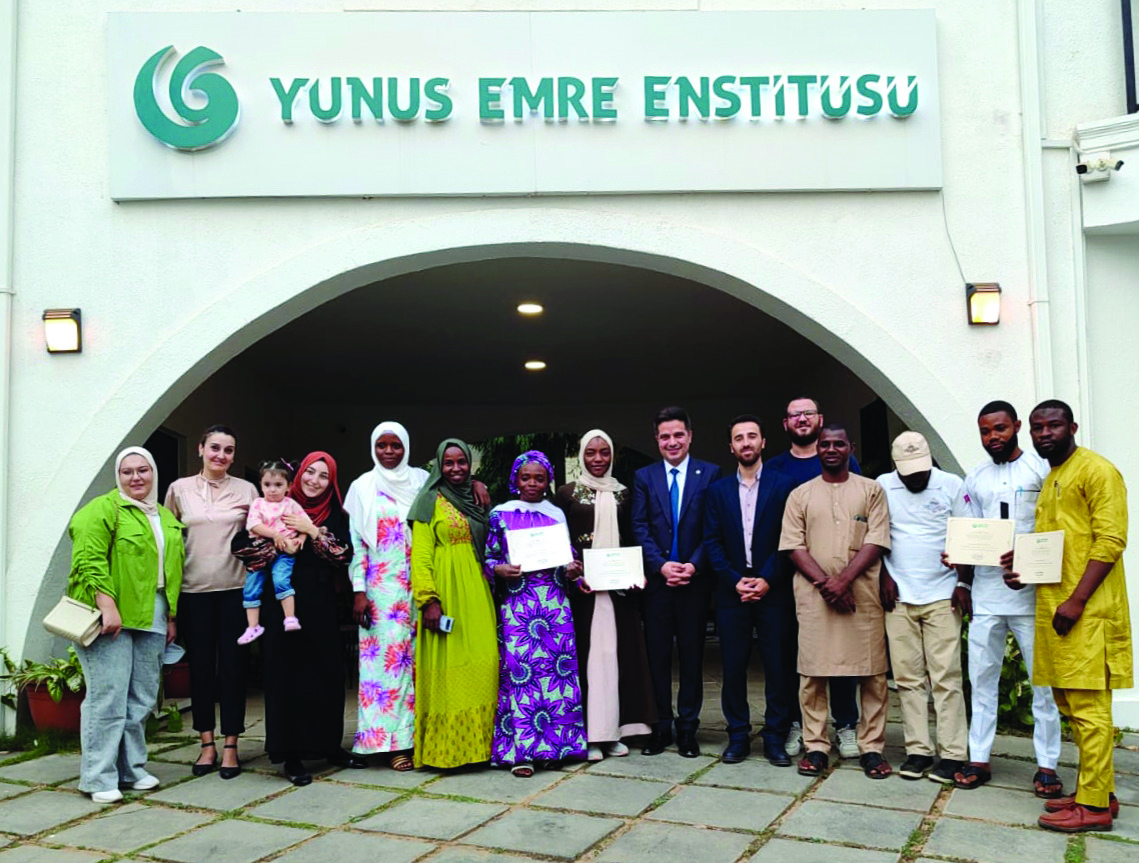
A certificate ceremony for students who were successful in Turkish education and opening program for the 2024 Academic Year were organized by YEE, in Abuja, Nigeria on February 27, 2024. YUNUS EMRE ENSTİTÜSÜ / AA
Turkish businesses have made significant investments in vital industries, including manufacturing, electricity, and construction, which have been crucial to Nigeria’s development. Nigeria’s and Türkiye’s growing economic alliance is indicative of larger patterns in Türkiye’s relationship with Africa.19 By focusing on industries, including manufacturing, energy, and construction, Türkiye is in line with its strategic goal of funding partner nations’ infrastructure and economic growth. Nigeria’s development is aided by this concentration, which also strengthens Türkiye’s sway over the continent. The creation of joint ventures and business forums has strengthened the economic cooperation between the two countries even further, providing a strong foundation for ongoing cooperation and mutual gain.20
The deepening of bilateral ties has been greatly aided by high-level visits. A major turning point in their diplomatic relationship was the formal visit and attendance at the D-8 Summit by then Turkish President Abdullah Gül in 2010. As a reciprocal measure, a high-level group led by former Nigerian President Goodluck Jonathan traveled to Türkiye in 2011.21 These visits have demonstrated both countries’ shared desire to further their collaboration by strengthening diplomatic ties and opening the door for increased cooperation in a number of sectors.
Establishing strong foundations, the official visit of President Recep Tayyip Erdoğan to Nigeria in 2016 with the participation of numerous important ministers resulted in a considerable strengthening of commercial ties between the two countries. Moreover, the Nigeria Business Forum, which promoted fresh chances for investment and trade, served as a catalyst for this visit. In 2017, President Muhammadu Buhari’s travel to Türkiye and participation in the 9th D-8 Summit in İstanbul further strengthened the relationship.22 The relationship has been strengthened by these high-level interactions, opening the door for further cooperation in a variety of fields. Under President Bola Ahmed Tinubu, the present Nigerian government is still committed to strengthening ties with Türkiye. Senator George Akume, the Secretary to the Government of the Federation, and Hidayet Bayraktar, the Ambassador of Türkiye, reaffirmed their pledge in February 2024. Both sides discussed ways to further their current collaboration during this meeting, demonstrating Türkiye’s and Nigeria’s continued strategic significance.23
Furthermore, in the area of defense, the two nations are steadfastly committed to working together. The Turkish Ambassador met with Nigeria’s Minister of Defense, Mohammed Badaru Abubakar, in October 2023 to talk about advancing their current defense cooperation and reviving Nigeria’s Defense Industries Corporation (DICON).24 The strategic interest that both countries have in deepening their defense cooperation to tackle common security issues is demonstrated by this meeting.
Notwithstanding the obstacles presented by the COVID-19 pandemic, Nigeria and Türkiye have persisted in their resolve to fortify their bilateral ties. To ensure the resilience of their cooperation, both countries have mobilized to reduce the economic and social effects of the epidemic. These programs strengthen the long-term strategic alliance between the two nations by addressing pressing issues while also fostering prosperity and sustainable development in the local communities.25
Nigeria-Türkiye Economic Relations
The economic relations between Nigeria and Türkiye have grown dramatically, and the countries have become increasingly interdependent. The evidence is in their peak bilateral trade of $2.76 billion in 2014 as Nigeria became Türkiye’s chief trade partner in Sub-Saharan Africa.26 Although it has experienced some fluctuations caused by global factors like the oil price decline in 2015, there has been an overall upward trend. This cooperation became possible in 1986 when the Agreement on Economic, Scientific, and Technical Cooperation was signed, establishing the relationship between the two countries in this area.
The alliance is characterized by strategic military cooperation and shared counter-terrorism commitments and reflects Türkiye’s broader ambitions as a regional and global player
Another important step in formalizing the increasingly important economic link was the 2011 signing of the Agreement on the Promotion and Protection of Investments.27 This reflects Nigeria’s and Türkiye’s interest in their mutual, and mutually beneficial, economic growth. It is also worth mentioning that the two countries are largely complementary, which is visible in Nigeria’s oil and gas, which constitute a significant portion of its exports to Türkiye. In turn, Türkiye exports increasingly more machinery and equipment, steel, construction materials, and textiles to Nigeria, which also imports food products. This development demonstrates that the two countries’ mutually beneficial relationships are becoming more institutionalized and that the existing framework will likely support the steady growth of their interaction.
Graph 1: Trade Volume between Nigeria and Türkiye (1995-2023, $ Million)
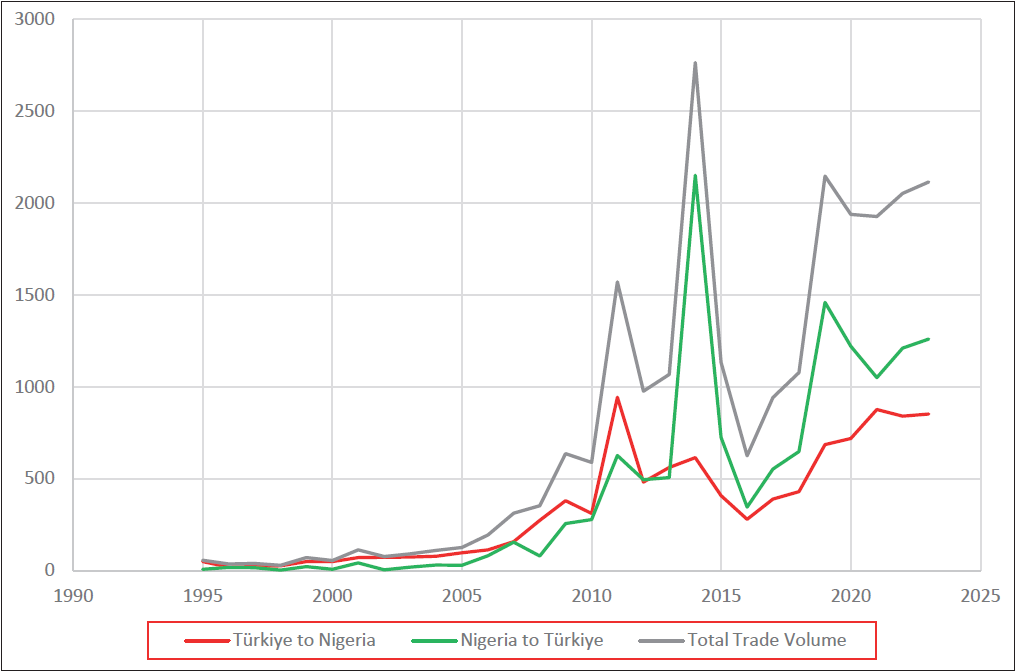
Source: Created by the Author with Data from Observatory of Economic Complexity and the UN’s COMTRADE Database28
Graph 1 illustrates the trend in bilateral trade between Nigeria and Türkiye from 1995 to 2023. The data shows a clear upward trend, indicating a significant increase in trade volume over the years. This growth aligns with the broader trend of increasing economic interdependence between the two countries, as evidenced by the establishment of bilateral agreements and the formation of business councils.29
Although initially, the growth on both sides was modest, by 1995, the volume of trade was $56.17 million in favor of Türkiye’s exports. It continued to steadily grow and by 1999, it reached $71.2 million. It grew nearly 27 percent and formed the foundation for future growth, yet the existing imbalance remained. The next five years marked a considerable expansion, as by 2005, bilateral trade accounted for $125.7 million, which was 126 percent higher than in 1995. The further expansion was between 2006 and 2011, and by the end of the period, trade reached $1.57 billion. It represented a 402 percent expansion since 2005, as both countries’ contribution was balanced and compromised of Turkish investments in Nigeria. It peaked in 2014 to reach $2.76 billion, as Nigeria’s oil exports provided the main boost. Notably, at that point, Nigeria was already Türkiye’s largest trading partner in sub-Saharan Africa,30 and it was the highest point in their economic relationships, which was affected by external shocks.
The 2015 oil price crash was one of such factors, which ultimately resulted in a dramatic decline,31 as by 2015 trade was already $1.13 billion, and by the next year it was merely $625 million, which was a 77.3 percent drop. The recovery, however, was swift, and already by 2017, it had reached $2.15 billion within a couple of years. COVID-19 also created significant pressure. Yet, by 2020, trade was $1.93 billion, and throughout 2023, it was $2.11 billion, pointing to the relatively stable relations.
Active Turkish interest in Nigerian energy is part of a more global strategy to diversify its largest suppliers and consequently reduce Russia’s share. Nigeria exported $253 million worth of liquefied natural gas (LNG) to Türkiye in 2022, representing just 1.44 percent of all the LNG Ankara imported into its domestic market during the year under review.32 It is noteworthy that while Nigeria’s LNG exports to Türkiye in 2022 were just 0.8 bcm, the decline can be attributed to a sharp decline in Nigeria’s gas production that year.33 Although Nigeria’s contribution was small in comparison to the major suppliers, its supply did fit part of Türkiye’s actions to reduce geopolitical risks associated with over-reliance on Russian pipeline gas, which constituted 39 percent of its total import that year.
While LNG is burdened by liquefaction and regasification costs, they provide alternatives to supplies from Russia that are relatively low-cost but make Türkiye more dependent on a single supplier.34 This diversification mirrors the mix of gas imports that Türkiye has, which helps wean it off its dependence on Russia. Ankara is creating substantial energy security by diversifying the sources of its LNG and crude oil imports from Nigeria, as well as other alternative suppliers such as Algeria, Qatar, and the U.S. This not only reduces its geopolitical exposure but also enhances Turkish influence in the regional energy market.
Abuja and Ankara have demonstrated a strong commitment to fostering investment opportunities. Türkiye perceives Nigeria as a strategic gateway to the African continent, as evidenced by its significant FDI flows to the region. Egypt, Algeria, and Morocco have been primary destinations for Turkish investment, constituting a combined 57.4 percent of total outward FDI to Africa between 2015 and 2020. While Nigeria’s position within this investment landscape is relatively modest, with an average of 1.2 percent of total Turkish outward FDI flows during the same period, the country has attracted investments in manufacturing, construction, and services sectors.35
This suggests a growing interest from Turkish investors in Nigeria’s potential, despite the country’s lower ranking in terms of FDI attraction compared to regional peers such as Egypt and Algeria. As Nigeria continues to implement economic reforms and improve its investment climate, it could become a more attractive destination for Turkish investors.
Nigeria’s trade deficit with Türkiye has widened in recent years, exacerbated by an overreliance on oil exports. While the nation exported $1.21 billion to Türkiye in 2022, primarily crude petroleum ($865 million), petroleum gas ($253 million), and other oily seeds ($47.3 million), imports from Türkiye amounted to $841 million, with gypsum, iron structures, and electrical transformers as leading products.36 Despite the growth in both exports and imports, the trade deficit has persisted, indicating a need for Nigeria to diversify its export base beyond oil and address the underlying imbalances in trade relations with Türkiye.
The economic complexity index (ECI) further highlights the trade imbalance. In 2022, Türkiye ranked 41st with an ECI of 0.6, indicating a diversified economy capable of producing a wide range of complex products. In contrast, Nigeria ranked 127 with an ECI of -1.67, revealing a heavy reliance on primary commodities. This disparity in economic complexity contributes to Nigeria’s trade deficit.37 By expanding non-oil exports and enhancing domestic production capabilities, Nigeria can improve its trade balance and strengthen its economic position.
While the overall trajectory of the relationship is positive, it has been influenced by global economic trends and geopolitical events. The decline in global oil prices in the mid-2010s negatively impacted Nigeria’s export earnings and, consequently, bilateral trade. Moreover, the COVID-19 pandemic disrupted global supply chains and reduced economic activity, affecting trade flows between the two countries. On the other hand, the increasing geopolitical importance of Africa and Türkiye’s growing global influence have contributed to the strengthening of the partnership.38
Although economic relations between Türkiye and Nigeria have improved significantly, reflecting deepening interdependence characterized by significant growth in trade and investment, the relationship has not yet reached its full potential. In addition to global factors, ongoing challenges such as security concerns, logistics inefficiencies, and structural deficiencies in the Nigerian economy remain major hurdles. Security challenges ranging from insurgency and terrorism to banditry by groups such as Boko Haram, kidnappers, and the Indigenous People of Biafra have created an unstable investment environment. Logistical challenges resulting from inadequate infrastructure and inefficient trade facilitation further increase trade barriers. Additionally, structural problems such as Nigeria’s over-reliance on oil exports and the complex regulatory environment have led to economic imbalances and hindered the optimization of bilateral economic relations. Addressing these multifaceted issues requires comprehensive analysis and strategic reform to realize the full potential of Türkiye-Nigeria economic cooperation.
Addressing these challenges will require comprehensive reforms to fully capitalize on the potential of Nigeria-Türkiye economic cooperation. Despite these challenges, the two nations have leveraged regional and bilateral trade agreements to enhance market access. Nigeria’s membership in the Economic Community of West African States (ECOWAS) and its recent accession to the African Continental Free Trade Area (AfCFTA) have expanded market opportunities for Turkish goods. Concurrently, Türkiye’s customs union with the European Union has facilitated increased trade with Nigeria by granting Nigerian products preferential access to the European market. These trade arrangements have played a crucial role in deepening economic ties between the two nations.
The Turkish drones have improved Nigeria’s ability to conduct precision strikes and gather critical intelligence, contributing to more effective counter-terrorism operations
Strategic Defense Partnership
Launched in 2018, the defense partnership between Nigeria and Türkiye has become a key component of their bilateral relations.39 The alliance is characterized by strategic military cooperation and shared counter-terrorism commitments and reflects Türkiye’s broader ambitions as a regional and global player. Moreover, the purchase of Turkish-made Bayraktar TB2 drones in 2021 marks a major technological upgrade for the Nigerian military.40 The purchase marked a major technological upgrade for the Nigerian military, which has enhanced its operational capabilities in counter-terrorism and surveillance. The Turkish drones have improved Nigeria’s ability to conduct precision strikes and gather critical intelligence, contributing to more effective counter-terrorism operations.
However, this continued reliance on arms imports and external training raises pertinent questions regarding the development of the indigenous training capacity and long-term dependence and potential vulnerability in Nigeria. Balancing pressing security needs with the strategic goal of developing a strong domestic defense industry is a major challenge facing Nigeria.41
Intelligence sharing is an important part of the Nigeria-Türkiye defense partnership and reflects Türkiye’s broader counter-terrorism strategy. Türkiye’s participation in global counter-terrorism initiatives, such as the International Coalition to Combat ISIS and the Global Counter-Terrorism Forum (GCTF), has enhanced its role as an important partner to Nigeria, particularly in tracking terrorist financing.42 This cooperation has facilitated the exchange of valuable intelligence, which has been crucial in targeting terrorist networks and financing operations.
This partnership underscores Türkiye’s strategic interests in Africa, and its active foreign policy is marked by a combination of heavy investment and soft and hard power, consistent with its goals of regional stability. For Nigeria, cooperation with Türkiye is critical to confronting the serious security challenges posed by Boko Haram and other extremist threats. Nigeria also has major defense contacts with the United States, France, and China. In addition, they offer a myriad of sources of military equipment, training, and strategic support to Nigeria while also supplementing its cooperation with Türkiye.
For example, the U.S. has provided Nigeria with counter-terrorism aid programs and military training along with funds designed to boost maritime security and border control. The aid is intended to help Nigeria increase its operational capacity against jihadist groups such as Boko Haram and ISIS-West Africa.43 The UK traditionally also provides military aid to Nigeria, specifically on counterinsurgency and maritime security. This is an association that transitioned from post-colonial security roles to a partnership in defense.44
In the case of France, its relationship with Nigeria is based on regional security –especially in the Sahel. This encompasses counterterrorism operations enabled through the Multinational Joint Task Force (MNJTF) in checkmating Boko Haram and has subsequently strengthened Franco-Nigerian ties for good.45 China hasplayed a pivotal role in supplying military equipment to Nigeria, accounting for approximately $532 million in arms transfers between 1990 and 2024, making it Nigeria’s largest defense supplier.46 Beyond arms exports, China has also invested heavily in Nigeria’s military infrastructure, significantly shaping the country’s defense landscape. Meanwhile, Türkiye is emerging as an important defense partner for Nigeria, contributing around $55 million in military transfers over the same period.47 Though Türkiye’s contributions are smaller than China’s, its influence is steadily growing through defense cooperation agreements. The involvement of both China, with its substantial exports, and Türkiye, with its rising profile, reflects Nigeria’s strategy to diversify its military partnerships and enhance its strategic autonomy in the region.
In the context of Nigeria, historical information can be used to give depth to its new defense strategy. As relations with the West soured after Nigeria’s role in the Second World War, the Soviet Union stepped up to provide pivotal supplies during its Civil War while major Western powers like America and Britain were skeptical –marking a breakaway from monolithic international diplomacy.48
Moreover, Nigeria and Türkiye have significantly advanced their strategic alliance through a key naval cooperation agreement focused on modernizing Nigeria’s maritime defense capabilities. The collaboration includes the overhaul of Nigeria’s flagship frigate NNS ARADU at Dilsan Shipyard in Türkiye and the addition of a state-of-the-art Turkish-made patrol boat (Tuzla-class patrol boat) to the Nigerian Navy fleet.49
The modernization of the NNS ARADU, equipped with advanced technology, is an important enhancement to Nigeria’s ability to combat piracy and other illegal activities in the Gulf of Guinea. The new patrol boat is designed to perform a variety of missions from surveillance to anti-smuggling operations, further enhancing Nigeria’s maritime security.50 The modernization of Nigeria’s maritime defense and the addition of a Turkish-made patrol boat has strengthened its capacity to combat piracy and safeguard its maritime interests in the Gulf of Guinea. This collaboration highlights the deepening strategic partnership between Nigeria and Türkiye and reflects the two countries’ joint commitment to address common maritime security challenges. The partnership serves as an example of effective regional cooperation in maritime defense as Türkiye continues to expand its influence in West Africa.
Nevertheless, significant challenges remain. For Nigeria to build lasting defense capabilities, effective technology transfer from Türkiye is crucial. Without a well-defined framework, there is a risk that Nigeria might become overly reliant on foreign technology rather than fostering its own innovations. Additionally, as Türkiye’s influence in West Africa grows, Nigeria must carefully navigate this relationship to safeguard its strategic interests without straining ties with other key regional and international partners.51
Against a backdrop of diverse defense cooperation efforts in Nigeria, this problem calls for a holistic response. Nigeria has therefore to combine two vectors of diversification: cooperation with various international partners on the one hand as well as reduced dependence from an over-reliance on any single source. This well-rounded strategy will enable Nigeria to harness an array of capabilities and resources, ultimately bolstering its national security and regional legitimacy. The Nigeria-Türkiye defense partnership holds considerable promise, especially in areas like cybersecurity and the development of Nigeria’s domestic defense industry. The success of initiatives such as the Naval Cooperation Agreement underscores the potential for deeper collaboration. However, the longevity of this partnership will hinge on how effectively both nations address the challenges of technology transfer, geopolitical dynamics, and aligning their security objectives. Achieving this requires sustained commitment, strategic foresight, and a shared vision that advances not just bilateral interests, but broader regional stability and security.
Socio-Cultural and Humanitarian Dimensions of Ties
Education
Education has become a key element in strengthening relations between Nigeria and Türkiye, serving as a bridge to deepen cultural and diplomatic ties. The Turkish Scholarship Program, administered by the YTB, plays a vital role in this effort. By supporting Nigerian students, Türkiye not only provides valuable academic opportunities but also deepens cultural connections. For example, while only eight Nigerian students received scholarships in 2015, this number had increased to 29 by 2016, reflecting Türkiye’s growing commitment to educational exchanges.52 By 2019, over 3,000 Nigerian students were studying in Türkiye, with many benefiting from Turkish government scholarships.53 By 2022, the number of Nigerian students in Turkish universities had reached 3,174, making Nigeria the second-largest source of African students in Türkiye, after Egypt. This growth aligns with Türkiye’s broader trend of increasing international student enrollment, which surged to 260,000 in 2022, up from just 32,000 in 2012.54
The Fetullah Gülen Movement, later designated as the Gülenist Terror Group (FETÖ), which sought to overthrow the Turkish government in July 2016, gained significant influence in Nigeria throughout the 2000s. This influence was achieved primarily through building its education and healthcare institutions in the country, which became a foundation for establishing contact with local leaders. At first, this influence was used to establish and expand the power of these institutions; later, it was used to subvert the Turkish government after the July 15 coup attempt. Responding to such a shift, the Turkish Maarif Foundation started working on taking over FETÖ-run schools, which would ensure the continuity of the educational process and counteract the influence of the organization.55 This measure is vital for maintaining educational stability and displaying the commitment of the Turkish government to the further development of Nigeria.
Education has become a key element in strengthening relations between Nigeria and Türkiye, serving as a bridge to deepen cultural and diplomatic ties
Former Turkish Ambassador to Nigeria Melih Ulueren also stressed the importance of scholarships, noting that more than 3,000 Nigerian students are studying in Türkiye.56 This significant growth highlights Türkiye’s commitment to fostering stronger bilateral relations through education. The participation of the Turkish Directorate of Religious Affairs in offering scholarships for religious studies further expands this collaboration and supports interreligious dialogue. By addressing the educational gap left by FETÖ and enhancing its role through the Turkish Maarif Foundation, Türkiye aims to reinforce its relationship with Nigeria and contribute positively to its development.
Other Turkish government-owned organizations such as the Turkish Cooperation and Coordination Agency (TİKA) have made significant contributions by renovating and equipping laboratories in Abuja. The renovations, which were officially opened in the presence of Türkiye’s Ambassador to Abuja, Hidayet Bayraktar, have significantly improved the learning environment for students. Ambassador Bayraktar emphasized that education is an important component of Africa’s development and Türkiye is committed to supporting educational measures that unleash human potential.57 Turkish Maarif Foundation further underscores Türkiye’s dedication to education in Africa, educating more than 17,000 students in 175 institutions in 25 African countries as of 2021. Turkish NGOs recently opened two new schools in Abuja, underscoring this commitment.58
Türkiye’s educational initiatives are pivotal to its strategic objectives in the region. By providing scholarships and forming partnerships with Nigerian institutions, Türkiye fosters a network of alumni who become cultural ambassadors. These individuals play a key role in strengthening the ties between Nigeria and Türkiye, enhancing diplomatic and economic relations in a meaningful way. Expanding this influence, Türkiye’s educational programs fit into a broader strategy aimed at increasing its footprint across Africa. By investing in the continent’s educational sector, Türkiye not only amplifies its soft power but also positions itself as a crucial developmentally. This strategic investment supports Africa’s progress while solidifying Türkiye’s role as a prominent and trusted partner in the region.
Over the years, significant benefits have been realized through these educational efforts. Nigerians who graduated from Turkish universities and have ventured into different professional fields often emphasize the positive influence of their Turkish education. Not only does the alumni network provide particular support for the further development of Türkiye’s influence in Africa and facilitate its expansion, but also it promotes a stable and prosperous regional environment, reinforcing the position of Türkiye in the international arena. Nonetheless, while the rates of the educational program seem encouraging, a few issues concerning the cooperation between Türkiye and Nigeria are worth mentioning. First of all, it should be mentioned that issues related to security in Nigerian regions have affected the scale of the development of Turkish programs in the realm of education. Secondly, it should be noted that limited facilities in local Nigerian educational settings might present further impediments to the development of a rigorous program of student exchange.
By providing scholarships and forming partnerships with Nigerian institutions, Türkiye fosters a network of alumni who become cultural ambassadors
Humanitarian Assistance
Türkiye has provided substantial humanitarian assistance to Nigeria, focusing on education, disaster relief, and support for vulnerable groups. TİKA has been at the forefront of these efforts, playing a key role in the implementation of various programs across the country. Unfortunately, there is no TİKA office or representation in Nigeria, one of the countries where investment in humanitarian aid is required. There is no arguing about the success of Turkish NGOs in Africa, including Nigeria. Since 2002, Turkish NGOs have significantly increased their presence on this continent through their humanitarian and development aid of which Nigeria is a beneficiary. Driven by altruism, as well as a range of strategic interests, NGOs offer essential assistance in various fields, including healthcare, education, and emergency relief.59 By the 2010s, their activities had spread to major Nigerian towns. Since there is no TİKA representation in Nigeria, the role of NGOs, in this case, can hardly be overestimated as they offer useful and reliable pools of local intelligence while directly engaging with local communities.60 Thus, coordinated actions between diplomatic missions and NGOs in Nigeria are essential for the systematic functioning of the state mechanism and for delivering accurate and timely information to decision-makers.
A significant moment in Türkiye’s humanitarian engagement with Nigeria occurred during President Recep Tayyip Erdoğan’s official visit in 2016. Accompanying him, First Lady Emine Erdoğan attended the opening ceremony of an orphanage in Abuja, built by TİKA.61 This orphanage stands as a powerful symbol of Türkiye’s long-term commitment to humanitarian assistance in Nigeria. By addressing the needs of the most vulnerable, such as orphans and internally displaced people, Türkiye is not only offering immediate support but also investing in the future of Nigeria’s most affected communities. These humanitarian initiatives are emblematic of Türkiye’s broader approach to foreign policy in Africa, where it seeks to build strong, multifaceted partnerships that extend beyond diplomacy and trade.62 By prioritizing humanitarian assistance, Türkiye reinforces its role as a compassionate and reliable ally, dedicated to contributing to Nigeria’s stability and development.
While the role of Turkish NGOs is emphasized, there is a notable issue with Turkish NGOs as their focus is mainly on Muslim-majority consensus. As noted by Yunus Turhan and Şerif Onur Bahçecik, Turkish NGOs operate within the Islamic solidarity framework, focusing on socio-economic issues, mainly in the Northern regions of Nigeria.63 This emphasis is known to be beneficial for the national foreign policy of Türkiye, helping it maintain and reinforce its influence in the Muslim-majority regions and affirming its commitment to the development policy centered on Islamic values.
At the same time, it can backfire dramatically with the population of other denominations, especially in the Southern regions, where Christians dominate. Focusing on areas with a Muslim majority can alienate Christian towns, not to mention that an emphasis on a particular side can provoke numerous adverse effects, as a partial approach always draws criticism. The most dangerous consequence is that such an approach could harm the relations of Türkiye and Nigerian towns with a Christian majority, thus, making them less loyal to their broader strategic partnership.
The foundation of Türkiye’s expanding relationship with Nigeria is cultural diplomacy; it is via these interpersonal exchanges that a significant link is created
Another significant dimension of Türkiye’s humanitarian assistance is its provision of official development assistance (ODA). Between 2005 and 2015, Türkiye allocated $183.44 million in ODA to Africa, with Nigeria among the key beneficiaries. Although the overall financial contribution might seem modest, the impact of Türkiye’s aid to Nigeria has been profound, particularly in critical sectors such as education and humanitarian relief. This underscores an important principle in international aid: the effectiveness of assistance is not solely determined by its monetary value but also by how strategically it is allocated and implemented. Türkiye’s approach to ODA highlights the importance of targeted interventions that address specific needs, ensuring that even limited resources can create significant and lasting change.
A more detailed breakdown of Türkiye’s official development assistance to Nigeria from 2015 to 2021 is seen in Table 1.
Table 1: Türkiye’s Official Development Assistance to Nigeria
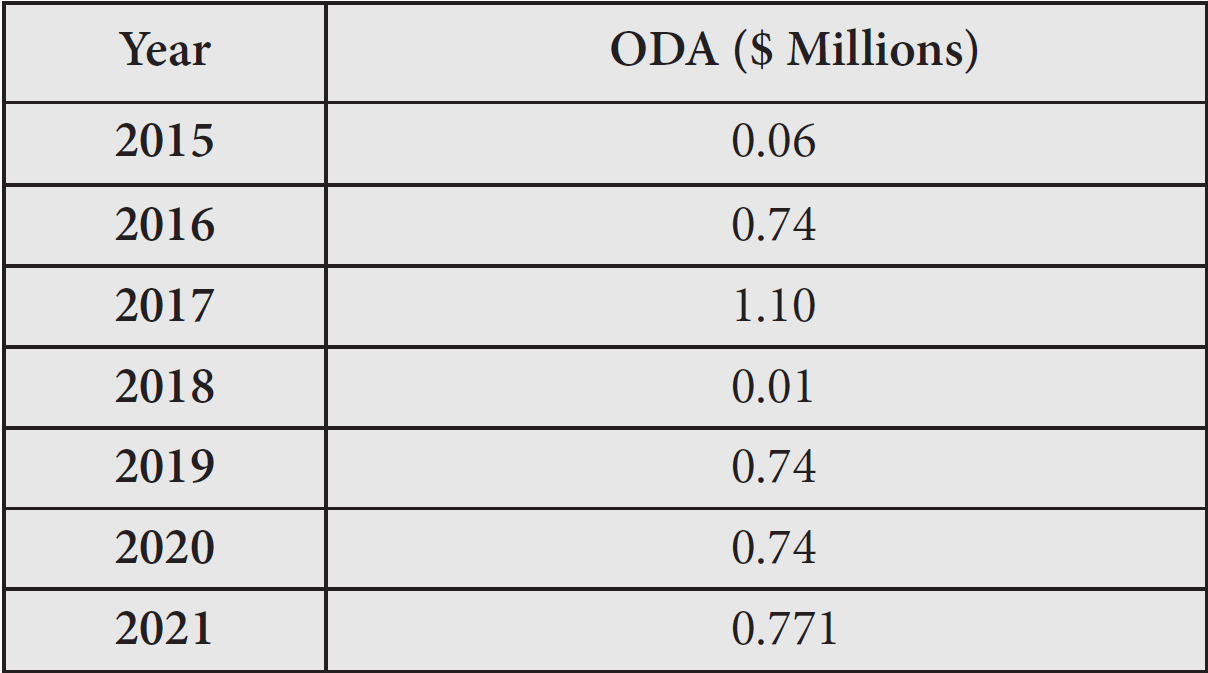
Source: Turkish Development Assistance Reports 2015-202364
As can be seen from Table 1, Nigeria’s share of Türkiye’s official development assistance to Africa has fluctuated over the years. This shows Türkiye’s increasing emphasis on Nigeria as a strategic partner in its African engagement.
These efforts not only offer immediate relief and support to those in need but also deepen socio-cultural ties between Nigeria and Türkiye, fostering a relationship grounded in mutual understanding and cooperation. By addressing urgent needs while simultaneously building long-term connections, Türkiye’s humanitarian initiatives contribute to a more resilient and interconnected partnership. As relations between the two countries continue to evolve, Türkiye’s role as a key humanitarian partner for Nigeria is likely to grow in significance, further solidifying the foundation for sustained collaboration and shared progress.
Health
Türkiye’s engagement in Nigeria’s health sector through strategic health diplomacy has significantly bolstered bilateral relations. During the COVID-19 pandemic, Türkiye demonstrated its commitment by providing essential medical supplies and technical assistance to Nigeria. This swift and coordinated response, executed in collaboration with the Africa Centers for Disease Control and Prevention (Africa CDC), was crucial in addressing healthcare gaps and reducing Nigeria’s reliance on Western donors.65 Türkiye’s timely intervention not only reinforced diplomatic ties but also solidified its reputation as a dependable partner in times of crisis, further enhancing its role in Nigeria’s health sector and broader development efforts.
Building on this collaboration, Türkiye and Nigeria signed a memorandum of understanding (MoU) on health and medicine in March 2022, formalizing their collaboration. The MoU, signed by Türkiye’s Minister of Health Fahrettin Koca and Nigeria’s Minister of Health Osagie Ehanire, outlines enhanced cooperation in various health-related areas. The agreement is complemented by a treatment agreement signed between the Embassy of Nigeria in Ankara and the International Health Services Agency of the Turkish Ministry of Health to provide advanced medical services to Nigerian patients in Türkiye.66
The health agreements between Nigeria and Türkiye are very likely to benefit Nigeria’s healthcare system and the relationships between the two countries. By providing Nigerian patients with high-class medical services, the agreement fills the gaps in the current system of healthcare, especially in terms of such gravely needed but complex and costly procedures like organ transplants. Besides, the opportunity for Nigeria’s health workforce to gain invaluable experience in Türkiye may enhance the country’s medical professionals’ knowledge and skills. Their utilization in the organization of Nigeria’s healthcare system may have a positive effect on the quality of medical services in the country. Therefore, the demand for outbound medical tourism will be reduced. Nigerians spend from $1.5 billion to $2 billion annually on outbound services, a considerable part of which is heart disease, kidney disorders, or cancer treatment.67 As a result, the strengthening of local experts and medical facilities will help in stopping financial outflows. Additionally, the country will no longer be dependent on other states in the fight against crucial health problems.
Furthermore, joint efforts in public health and disease control empower Nigeria to respond more effectively to health threats, while the agreements broaden bilateral cooperation beyond economics and defense. In other words, Türkiye will show that it is not only interested in Nigeria as an economic partner but is also fully equipped and motivated to work on improving the country’s health system. The pursued strategy will help reach mutual benefits and a symbiosis of health diplomacy.
Cultural Diplomacy and People-to-People Exchanges
The foundation of Türkiye’s expanding relationship with Nigeria is cultural diplomacy; it is via these interpersonal exchanges that a significant link is created. The October 2021 launch of the Yunus Emre Institute in Abuja marked an important milestone in this journey. President Erdoğan’s wife, Emine Erdoğan, greeted the event with pride, stressing the institute as a crucial link between Nigeria and Türkiye. More than simply a structure, this new cultural center represents the rich exchanges and improved understanding that Nigeria and Türkiye are fostering.68 This project is an obvious manifestation of Türkiye’s larger strategy to increase its authority throughout Africa, which is consistent with its soft power and strategic aims.
Türkiye has rapidly realigned its foreign policy toward Africa with a multifaceted strategy combining humanitarian aid, security cooperation, and infrastructure development
Türkiye has exhibited its sincere desire to fortify its relations with African countries by expanding the number of its embassies and Turkish Airlines routes across the continent, as well as by founding the Yunus Emre Institute in Nigeria, the continent’s most populous nation. Through cultural and diplomatic initiatives, Türkiye has demonstrated its ability to leverage soft power to forge lasting partnerships and expand its influence throughout the continent. Türkiye’s emphasis on globalizing the Turkish language has gained impetus, propelled by the attraction of Turkish television shows and calculated public diplomacy. The Yunus Emre Institute is Türkiye’s principal project in this domain, committed to promoting the Turkish language and culture on a global scale. The institute is essential to the academic journeys of African students who are increasingly enrolling in Turkish universities. It also provides Turkish language courses to a broad audience, which includes Nigerian housewives and children, promoting greater cultural engagement and appreciation.69
Cultural diplomacy presents immense opportunities for the two countries. It enhances the soft power of Türkiye not just in Nigeria but in the continent, allowing its ties to explore different domains, while giving Ankara a possible edge over other powers, like China and the U.S. For, Nigeria, the country will benefit from educational opportunities, and enhance diplomatic and economic partnerships with Ankara. However cultural diplomacy is accompanied by threats ranging from resistance, geopolitical rivalries, and resource fatigue for Türkiye while Nigeria could risk the slippage into cultural dependency and overreliance on external education. Both Ankara and Abuja need to manage these factors successfully in a way that remains mutually beneficial.
Implications of Nigerian-Turkish Relations
Türkiye has rapidly realigned its foreign policy toward Africa with a multifaceted strategy combining humanitarian aid, security cooperation, and infrastructure development. This strategic shift reflects Türkiye’s overarching goal of expanding its international influence, focusing especially on Nigeria due to its critical geopolitical and economic significance. Türkiye’s involvement in Nigeria highlights both its far-reaching ambitions and the challenges it faces, notably competing with global powers like China and France for influence on the continent.
Türkiye’s approach integrates humanitarian relief with security efforts, spurred by the continent’s escalating instability.70 Acts of benevolence led by organizations like TİKA and the Turkish Red Crescent, such as aid for communities in Nigeria affected by Boko Haram, aim to alleviate suffering while strengthening bilateral bonds.71 Complementing these humanitarian initiatives, Türkiye’s security assistance, including training and military equipment to counter-terrorism, aligns with its broader ambition of establishing itself as a key security ally in Africa, as exemplified through its involvement in Somalia.72 Balancing these dual tracks is pivotal for achieving lasting outcomes.
Developing infrastructure, a core component of Türkiye’s Africa strategy since 1998, underscores its pledge to equitable partnerships. Türkiye’s infrastructure initiatives in Nigeria contrast with China’s debt-heavy model and France’s contested neo-colonial practices, positioning Türkiye as a development ally offering a more stable alternative.73 This emphasis aligns with Türkiye’s narrative of mutual benefit and long-term cooperation.
Soft power, through cultural diplomacy and academic exchanges, further strengthens Türkiye’s ties across Africa. Programs by institutions like the Yunus Emre Institute and the Turkish Maarif Foundation promote cultural connections and educational opportunities, reflecting Türkiye’s historical links to the continent.74 However, Türkiye must handle potential political sensitivities, particularly regarding associations with FETÖ, which could impact the potency of these initiatives.75
Türkiye’s strategic involvement in Africa contrasts with China’s dominance in trade and infrastructure building, often criticized for fostering debt dependence, and France’s contested neo-colonial influence.76 Türkiye presents itself as an impartial, mutually beneficial partner, but its competitive edge is constrained by its financial resources relative to China and its influence compared to France.
In summary, Türkiye’s burgeoning impact on Nigeria, and Africa in general, underscores its potential to reshape the continent’s international alliances through a balanced strategy integrating humanitarian aid, security cooperation, infrastructure development, and soft power. Nigeria’s partnership with Türkiye must navigate global power dynamics to ensure it contributes to sustainable growth and autonomy. This evolving dynamic reflects the more extensive shift in global influence, with non-Western actors like Türkiye increasingly shaping Africa’s future.
Conclusion
The bilateral relationship between Nigeria and Türkiye exemplifies how strategic alliances can foster growth and development for both nations. Over the decades, this partnership has evolved from historical trading ties into a multifaceted collaboration that encompasses economic, defense, and socio-cultural dimensions. The breadth and depth of this relationship continue to expand, reflecting the shifting needs and aspirations of both countries.
In particular, economic cooperation remains a cornerstone of Nigeria-Türkiye relations, with substantial trade volumes and Turkish investment playing a key role in Nigeria’s development. Opportunities lie in diversifying trade beyond oil, tapping into Nigeria’s vast market potential, and utilizing Türkiye’s industrial capabilities. Moreover, Nigeria’s memberships in ECOWAS and AfCFTA present avenues for expanding market access for Turkish products. However, challenges persist, including trade imbalances that favor Türkiye, Nigeria’s overreliance on oil exports, and competition from other global powers investing in Nigeria’s economy.
Nigeria and Türkiye’s growing collaboration illustrates how strategic partnerships can drive mutual prosperity and regional stability
Similarly, the defense alliance has bolstered Nigeria’s security capabilities through technology transfer, training, and counter-terrorism support from Türkiye. Enhanced cooperation in maritime security and joint defense industry initiatives further strengthens this partnership. Nevertheless, Nigeria must carefully manage the risks of overdependence on Turkish military technology and balance its defense relations with Türkiye against existing alliances with Western powers. Additionally, Türkiye’s expanding influence in West Africa introduces potential geopolitical complications.
Furthermore, humanitarian aid projects and educational exchanges between Nigeria and Türkiye are creating prospects for future collaboration and deepening sociocultural ties. Increased people-to-people connections through cultural programs and healthcare partnerships contribute to the soft power influence of both nations. However, challenges remain, particularly in navigating religious sensitivities in Nigeria, addressing the legacy of Turkish institutions linked to FETÖ, and ensuring the equitable distribution of humanitarian aid.
In essence, Nigeria and Türkiye’s growing collaboration illustrates how strategic partnerships can drive mutual prosperity and regional stability. The relationship’s success will depend on both nations’ ability to address existing challenges, particularly in rectifying trade disparities, ensuring effective technology transfer in defense collaboration, and managing geopolitical rivalries. As long as both nations continue to harness their unique strengths and adapt to shifting global conditions, the potential for further growth in Nigeria-Türkiye ties remains substantial.
For Nigeria, this partnership presents an opportunity to diversify its international relations, enhance its defense capabilities, and tap into Turkish expertise and investment to advance its development goals. However, Nigeria must strategically leverage this alliance to strengthen its autonomy and avoid new dependencies. For Türkiye, Nigeria serves as a critical element in its broader Africa strategy, offering economic opportunities and strategic depth. Yet, Türkiye must navigate the complexities of West African geopolitics while balancing its ambitions with those of other global and regional powers.
Ultimately, the Nigeria-Türkiye partnership is a promising model for South-South cooperation. By expanding collaboration in economic diversification, defense, and cultural exchanges, and by addressing shared challenges, both nations can fortify their strategic relations and contribute to regional and international stability. The future of this relationship hinges on the capacity of both countries to uphold their commitment to common goals and adapt to an increasingly multipolar world.
Endnotes
1. Hamman Abubakar Bashir, “Nigeria-Turkey Relations: An Overview,” European Scientific Journal, Vol. 14, No. 35 (December 2018), pp. 247-253; Hasan Ulusoy, “Turkish-Nigerian Relations with a View to Turkey’s Policy Towards Black Africa for the Next Millennium,” PERCEPTIONS: Journal of International Affairs, Vol. 3, No. 3 (September 1998); “Relations between Türkiye and Nigeria,” Republic of Türkiye Ministry of Foreign Affairs, (2023), retrieved from https://www.mfa.gov.tr/relations-between-turkiye-and-nigeria.en.mfa.
2. Nebahat Tanrıverdi Yaşar, “Unpacking Turkey’s Security Footprint in Africa: Trends and Implications for the EU,” SWP Comment, No. 42 (2022).
3. Ulusoy, “Turkish-Nigerian Relations.”
4. Ali Yılmaz Gündüz and Abubakar Muhammad Yahaya, “The Socio-Economic and Business Relationships between Turkish and Nigeria,” Journal of Economic Studies and Research, Vol. 4, No. 4 (2018), pp. 50-68.
5. Bashir, “Nigeria-Turkey Relations.”
6. Kenan Toprak, “Nijerya-Türkiye İlişkileri ve Afrika Açılımı,” INSAMER, (September 2019), retrieved from https://www.insamer.com/tr/nijerya-turkiye-iliskileri-ve-afrika-acilimi_2366.html.
7. Alexander C. Ugwukah and Oladimeji Depiver, “Nigerian-Turkey Relations: An Examination of Challenges and Prospects for Viable Strategic Economic Partnership,” Journal of Namibian Studies: History Politics Culture, Vol. 33, (2023), pp. 6439-6468.
8. Gökhan Kavak, “Sömürgecilikten Bağımsızlığa Nijerya ve Türkiye ile İlişkileri,” PhD Thesis, İstanbul University, 2022.
9. Robert Keohane and Joseph Nye, Power and Interdependence: World Politics in Transition, (Little, Brown & Co, 1977).
10. Keohane and Nye, Power and Interdependence.
11. Keohane and Nye, Power and Interdependence.
12. Kenneth Waltz, Theory of International Politics, (New York: McGraw-Hill Inc., 1979).
13. Toprak, “Nijerya-Türkiye İlişkileri ve Afrika Açılımı.”
14. Ulusoy, “Turkish-Nigerian Relations”; Bashir, “Nigeria-Turkey Relations”; Ugwukah and Depiver, “Nigerian-Turkey Relations”; “Relations between Türkiye and Nigeria,” Republic of Türkiye Ministry of Foreign Affairs.
15. Abdulrasheed Adamu, “Abacha’s Foreign Policy and Domestic Polity,” Lapai International Journal of Administration, (July 2019).
16. Adamu, “Abacha’s Foreign Policy and Domestic Polity.”
17. Kavak, “Sömürgecilikten Bağımsızlığa Nijerya ve Türkiye ile İlişkileri.”
18. “Nigeria and the D8 Group,” BusinessDay, (July 19, 2010), retrieved from https://businessday.ng/analysis/article/nigeria-and-the-d8-group/.
19. Bashir, “Nigeria-Turkey Relations”; Winnie Rugutt, Maria Nzomo, and Pontian G. Okoth, “Examining Foreign Development Assistance in Africa through Emerging Power Dynamics: A Focus on Turkey’s Engagement in the Horn of Africa,” European Journal of Development Studies, Vol. 3, No. 6 (2023), pp. 79-87; Michael Isaac Opusunju, E. Victor Inim, and Murat Akyuz, “Assessment of Turkey-Nigeria Trade Relations from 2000-2018,” International Journal of Managerial Studies and Research (IJMSR), Vol. 8, No. 3 (March 2020), pp. 27-33; Elem Eyrice Tepeciklioğlu, “Economic Relations between Turkey and Africa: Challenges and Prospects,” Journal of Sustainable Development Law and Policy, Vol. 8, No. 1 (2017); Elem Eyrice Tepeciklioğlu, Francois Vreÿ, and Bahar Baser, “Introduction Turkey and Africa: Motivations, Challenges and Future Prospects,” Journal of Balkan and Near Eastern Studies, Vol. 26, No. 3 (2023), pp. 289-294.
20. “The Nigeria Türkiye Business Council,” The Nigeria Türkiye Business Council, (2024), retrieved from https://nigeriaturkeybizcouncil.com/about/.
21. “Relations between Türkiye and Nigeria,” Republic of Türkiye Ministry of Foreign Affairs.
22. “Relations between Türkiye and Nigeria,” Republic of Türkiye Ministry of Foreign Affairs.
23. “FG Strengthens Bilateral Relations with Türkiye on Key Infrastructure,” Office of the Secretary to the Government of the Federation, (2024), retrieved from https://www.osgf.gov.ng/fg-strengthens-bilateral-relations-with-turkiye-on-key-infrastructure/#:~:text=The%20Federal%20Government%20has%20indicated,Turkish%20Ambassador%20to%20Nigeria%20H.E.
24. “Nigeria to Deepen Bilateral Relations with Turkey,” Nigerian Ministry of Defence, (October 2023), retrieved from https://defence.gov.ng/2023/10/05/nigeria-to-deepen-bilateral-relations-with-turkey/.
25. “Relations between Türkiye and Nigeria,” Republic of Türkiye Ministry of Foreign Affairs.
26. Akin George, “Nigeria Is Turkey’s 5th Largest Trade Partner in Africa,” Independent Newspapers Nigeria, (2013), retrieved from http://independent.ng/nigeria-is-turkeys-5th-largest-trade-partner-in-africa/.
27. “Nijerya Federal Cumhuriyeti Ülke Raporu,” Konya Ticaret Odası Etüd-Araştırma Servisi, (2008).
28. “Turkey-Nigeria,” Observatory of Economic Complexity, retrieved from https://oec.world/en/profile/bilateral-country/tur/partner/nga?dynamicBilateralTradeSelector=year1995.
29. “Nijerya Federal Cumhuriyeti Ülke Raporu,” Konya Ticaret Odası.
30. George, “Nigeria Is Turkey’s 5th Largest Trade Partner in Africa.”
31. “Why Nigeria, Turkey Trade Declined in 2016: Envoy,” Premium Times, (2016), retrieved from http://www.premiumtimesng.com/news/morenews/214018nigeriaturkeytradedeclined2016envoy.html.
32. “Turkey/Nigeria Bilateral Trade,” The Observatory of Economic Complexity, (2023), retrieved from https:
//world/en/profile/bilateral-country/tur/partner/nga?dynamicBilateralTradeSelector=year1995.
33. Omono Okonkwo, “Nigeria’s Natural Gas Production and LNG Export Decline in 2022 – Report,” Nairametrics, (2023), retrieved from https://nairametrics.com/2023/06/30/nigerias-natural-gas-production-and-lng-export-decline-in-2022-report/.
34. Agata Łoskot-Strachota and Adam Michalsk, “Turkey’s Dream of a Hub: Ankara’s Wartime Gas Policy,” OSW, (March 10, 2023), retrieved from https://www.osw.waw.pl/en/publikacje/osw-commentary/2023-03-10/turkeys-dream-a-hub-ankaras-wartime-gas-policy.
35. Emel Parlar Dal and Samiratou Dipama, “Assessing Turkey-Africa Engagements,” Africa Policy Research Private Institute, (April 27, 2023), retrieved from https://afripoli.org/assessing-turkey-africa-engagements.
36. “Turkey/Nigeria Bilateral Trade,” The Observatory of Economic Complexity.
37. “Turkey/Nigeria Bilateral Trade,” The Observatory of Economic Complexity.
38. Rugutt, Nzomo, and Okoth, “Examining Foreign Development Assistance in Africa through Emerging Power Dynamics”; Kate Hairsine and Burak Unveren, “Turkey Deepens Its Defense Diplomacy in Africa,” DW, (2022), retrieved from https://www.dw.com/en/turkey-deepens-its-defense-diplomacy-in-africa/a-63586344.
39. “Nigeria and Turkey Sign Military Training Agreement,” DefenceWeb, (2018), retrieved from https://www.defenceweb.co.za/joint/diplomacy-a-peace/nigeria-and-turkey-sign-military-training-agreement/.
40. “Nigeria to Acquire Turkish Bayraktar TB2 Unmanned Aerial Vehicles,” ArmyRecognition, (2023), retrieved from https://www.armyrecognition.com/news/aerospace-news/2023/nigeria-to-acquire-turkish-bayraktar-tb2-unmanned-aerial-vehicles.
41. Ekene Lionel, “Nigeria and Turkey Strengthen Relations in Counter-Terrorism,” Military Africa, (2021), retrieved from https://www.military.africa/2021/08/nigeria-and-turkey-strengthens-relations-in-counter-terrorism/#google_vignette.
42. Yaşar, “Unpacking Turkey’s Security Footprint in Africa.”
43. Adeola Precious Odeyemi, “United States-Nigeria Diplomatic Ties and Control of Insecurity in Nigeria,” International Journal of International Relations, Media and Mass Communication Studies, (2022).
44. Marco Wyss, “The United States, Britain, and Military Assistance to Nigeria,” The Historical Journal, Vol. 61 (2018), pp. 1065-1087.
45. Sunday Omotuyi, “Franco-Nigerian Détente? Nigeria, France and the Francophone States of the Lake Chad Region in the Era of the Boko Haram Terrorism,” African Identities, Vol. 20, (2020), pp. 26-41.
46. “Volume of Transfers of Major Arms to Nigeria, 1990-2024,” Stockholm International Peace Research Institute, (2024), retrieved from https://www.sipri.org/databases/armstransfers/sources-and-methods.
47. “Volume of Transfers of Major Arms to Nigeria,” Stockholm International Peace Research Institute.
48. Ediagbonya Michael, “A Critical Assessment of Union of the Soviet Socialist Republics and Nigeria Relations during the Period of Nigerian Civil War, 1967-1970,” Polit Journal: Scientific Journal of Politics, (2022).
49. Godsgift Onyedinefu, “Nigerian Navy, Turkey Sign Deal to Boost Frigate’s Capacity, Maritime Security,” Business Day, (2023), retrieved from https://businessday.ng/news/article/nigerian-navy-turkey-sign-deal-to-boost-frigates-capacity-maritime-security/.
50. Onyedinefu, “Nigerian Navy, Turkey Sign Deal to Boost Frigate’s Capacity, Maritime Security.”
51. Hairsine and Unveren, “Turkey Deepens Its Defense Diplomacy in Africa.”
52. John M. Yakubu, “Amb. Cakil: Making Turkey, Nigeria Relationship Work,” Daily Trust, (2016), retrieved from https://dailytrust.com/amb-cakil-making-turkey-nigeria-relationship-work/.
53. Victoria Ojeme, “Over 3,000 Nigerian Students Benefit from Turkish Government Scholarships-Envoy,” Vanguard, (2019), retrieved from https://www.vanguardngr.com/2019/11/over-3000-nigerian-students-benefit-from-turkish-government-scholarships-envoy/.
54. Maina Waruru, “Scholarships Attracting African Students to Turkey,” The Pie News, (January 16, 2023), retrieved from https://thepienews.com/turkey-african-student-numbers-grow/.
55. Alex Enumah, “Turkey Explains Establishment of Maarif Foundation in Nigeria,” This Day Live, (2018), retrieved from https://www.thisdaylive.com/index.php/2018/07/14/turkey-explains-establishment-of-maarif-foundation-in-nigeria/.
56. Ojeme, “Over 3,000 Nigerian Students Benefit from Turkish Government Scholarships-Envoy.”
57. “TİKA Renovated the Laboratories of the Secondary School in Nigeria,” TİKA, (2021), retrieved from https://tika.gov.tr/en/detail-tika_renovated_the_laboratories_of_the_secondary_school_in_nigeria/.
58. “TİKA Renovated the Laboratories of the Secondary School in Nigeria,” TİKA.
59. Abdurrahim Sıradağ, “Benevolence or Selfishness: Understanding the Increasing Role of Turkish NGOs and Civil Society in Africa,” Insight on Africa, Vol. 7, No. 2 (2015), pp. 145-163.
60. Kavak, “Sömürgecilikten Bağımsızlığa Nijerya ve Türkiye ile İlişkileri.”
61. “First Lady Erdoğan Attends Orphanage Inauguration in Nigeria,” Presidency of the Republic of Türkiye, (2016), retrieved from https://www.tccb.gov.tr/en/news/542/40023/emine-erdogan-nijeryada-yetimhane-acilisina-katildi.
62. Sıradağ, “Benevolence or Selfishness.”
63. Yunus Turhan and Şerif Onur Bahçecik, “The Agency of Faith-Based NGOs in Turkish Humanitarian Aid Policy and Practice,” Turkish Studies, Vol. 21, No. 1 (2020), pp. 1-24.
64. “Turkish Development Assistance Report,” TİKA, retrieved from https://tika.gov.tr/en/press-room/publications/turkish-development-assistance-reports/.
65. Zainul Abideen Jibril, “Türkiye’nin Kovid-19 Yardımlarının Afrika’ya Yönelik Sağlık Diplomasisindeki Rolü ve Önemi Nedir?” in Efe Sıvış and Hasan Aydın (eds.), 50 Soruda Türkiye-Afrika İlişkileri, (Altınbaş Üniversitesi Yayınları, 2024).
66. Burak Dağ, “Turkiye, Nigeria Agree to Enhance Cooperation on Health,” Anadolu Agency, (2022), retrieved from https://www.aa.com.tr/en/africa/turkiye-nigeria-agree-to-enhance-cooperation-on-
health/2519315.
67. Ahmad Sorondinki, “Study Reveals Nigerians Spend over $1.5bn on Medical Tourism Annually,” This Day Live, (2023), retrieved from https://www.thisdaylive.com/index.php/2023/06/14/study-reveals-nigerians-spend-over-1-5bn-on-medical-tourism-annually.
68. “Abuja Yunus Emre Institute Opened with Ceremony,” Yunus Emre Enstitüsü, (2021), retrieved from https://www.yee.org.tr/en/news/abuja-yunus-emre-institute-opened-ceremony.
69. “Turkish Institute to Open Culture Center in Nigeria,” Daily Sabah, (2021), retrieved from https://www.dailysabah.com/turkey/turkish-institute-to-open-culture-center-in-nigeria/news.
70. Dolapo Fakuade, “Türkiye-Africa Relations: A Rigid Dichotomy between Humanitarian and Security?” Insight Turkey, Vol. 25, No. 3 (2023).
71. Gökhan Tekir, “Türkiye: Afrika İçin İyi Niyetli Altyapı Tedarikçisi,” İletişim ve Diplomasi, (2022).
72. Şükrü Cicioğlu and Ryan Hafiz Ahmed İbrahim, “Analysis of Foreign Trade between Türkiye and Africa,” Turkish Journal of Middle Eastern Studies, Vol. 10, No. 2 (2023), pp. 75-102.
73. Imam Hissein Alio, “Türkiye’s Foreign Aid to Africa under the AK Party: A Constructivist Analysis,” Journal of Mediterranean Basin and African Civilizations, Vol. 5, No. 1 (2023).
74. Kavak, “Sömürgecilikten Bağımsızlığa Nijerya ve Türkiye ile İlişkileri.”
75. Tekir, “Türkiye: Afrika için İyi Niyetli Altyapı Tedarikçisi”; Bashir, “Nigeria-Turkey Relations.”
76. Cicioğlu and İbrahim, “Analysis of Foreign Trade between Türkiye and Africa”; Tekir, “Türkiye: Afrika için İyi Niyetli Altyapı Tedarikçisi.”