
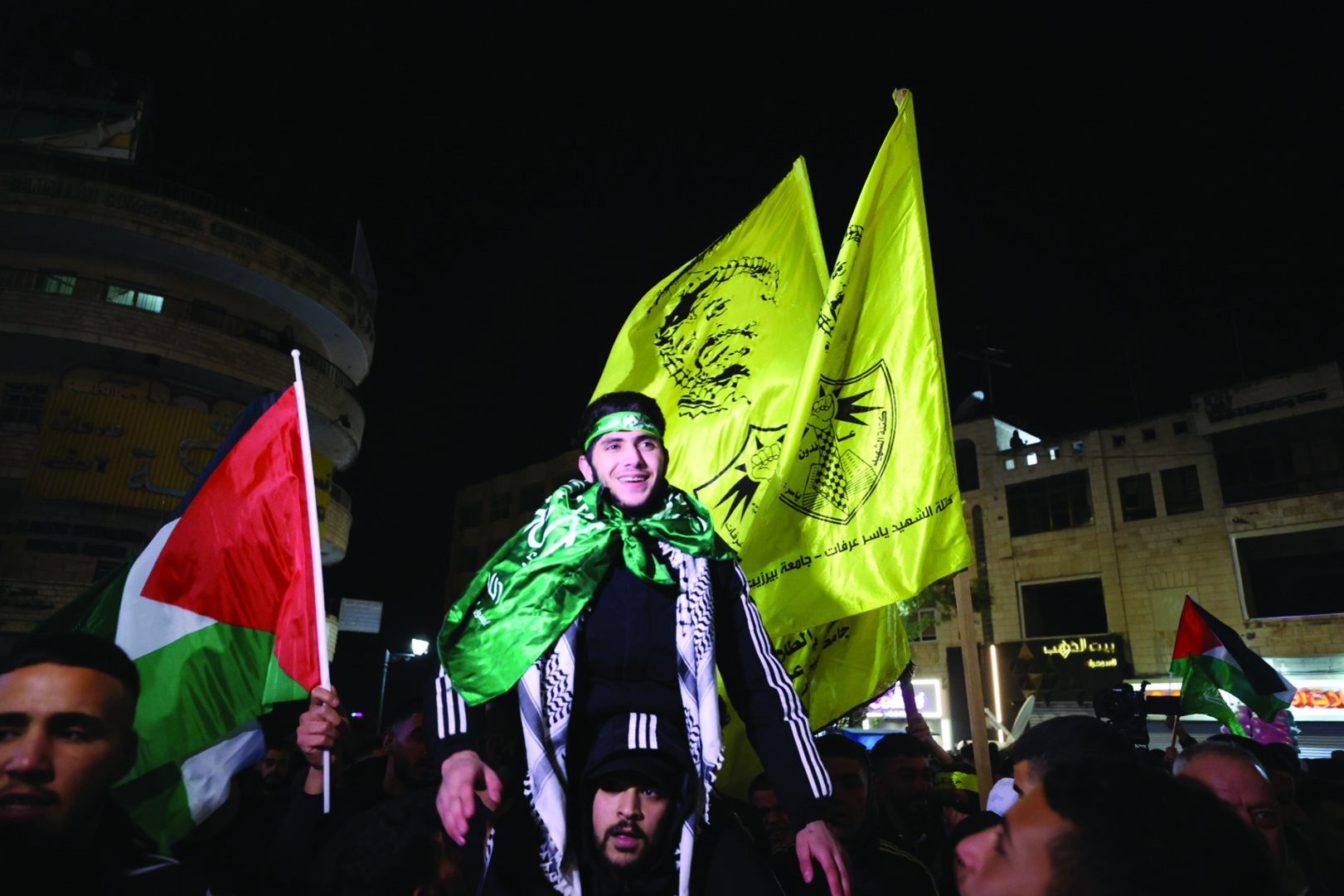
At the heart of the Gaza genocide, a human tragedy is unfolding behind the walls of Israeli prisons, where thousands of Palestinian prisoners are held. Held in conditions that violate the boundaries of international law, each Palestinian detainee is living a story of resilience, desperation, and an unyielding hope for freedom. Their narratives, etched into the pages of books and newspapers, offer a poignant insight into their lives and struggles, giving us a glimpse of what they really go through. Delving into these stories allows us to bring to the fore the voices that echo from within these prison walls, exploring not only their current circumstances but also their past experiences and future aspirations.
The occupation of Palestine and the subsequent creation of Israel has given rise to numerous human rights issues. One of the most pressing is the plight of Palestinian prisoners in Israeli jails. The number of Palestinian prisoners in Israeli jails has been a matter of international concern for decades. According to the Palestinian non-governmental organization, Addameer Prisoner Support and Human Rights Association, as of September 19, 2023, the Israeli Prison Service (IPS) held 5,200 Palestinians on what it defines as “security” grounds.1 Out of this number, 170 were children under the age of 18 awaiting trial. By February 5, 2024 the total number of Palestinian prisoners had risen to 9,000 in line with reports of a rise in arrests, military raids, and violent attacks on Palestinians by the Israeli army following the October 7 operation by Hamas.
Palestinian prisoners in Israeli jails are subjected to conditions that have been widely criticized by human rights organizations. Reports suggest that these prisoners are subjected to torture, ill-treatment, and inhumane conditions. Testimonies from released detainees and human rights lawyers, as well as video footage and images, illustrate some of the forms of torture and other ill-treatment to which detainees have been subjected by Israeli forces. These include severe beatings and humiliation of detainees.2
The impact of imprisonment on children is particularly worrying. An estimated 10,000 Palestinian children have been held in military detention over the past 20 years. These children are subjected to the same harsh conditions as adults, including torture and ill-treatment.3 The case of Palestinian child prisoner Ahmad al-Manasra is an example. Ahmad was only 13 when he was accused of taking part in an “attempted stabbing” of an Israeli settler. He was attacked by a group of settlers and thrown onto railway tracks, then left to bleed on the ground for a long time as Israeli settlers hurled insults at him. His cousin Hassan al-Manasra was killed by the settlers and Ahmad was detained and sentenced to 12 years in jail. Ahmad had not reached the legal age of conviction when he was illegally detained, and the Israeli authorities delayed their judicial procedures for almost a year during which he was detained in an institution away from his family and denied the bare necessities of care. Ahmad was placed in solitary confinement for 13 days before being convicted under the so-called “Counter-Terrorism Law,” which legally should not apply to minors.4 Although he suffers from serious mental deterioration, Israeli authorities have placed him under solitary confinement for over a year now.5
By February 5, 2024 the total number of Palestinian prisoners had risen to 9,000 in line with reports of a rise in arrests, military raids and violent attacks on Palestinians by the Israeli army following the October 7 operation by Hamas
Personal narratives from detainees provide a poignant insight into their experiences. For example, a former detainee, Nour al-Qadi, who was released after October 7, described in an interview the increasingly harsh treatment, torture, and abuse that detainees were subjected to, especially since the genocide in Gaza began.6 Another prisoner, Ahmad Salayme, a 14-year-old boy, was arrested for throwing stones in a Jewish settlement in occupied East Jerusalem. He was released in a prisoner swap between Israel and Hamas during the current genocide of Gaza. However, his family was ordered by Israeli forces not to hold any public celebrations or speak to the media.7
The situation of Palestinian prisoners in Israeli jails is a complex and disturbing issue. It is a stark reminder of the human cost of the ongoing occupation of Palestine by Israel. While statistics provide a quantitative understanding of the issue, the personal narratives of prisoners bring to light the qualitative aspects of their suffering. It is vital that the international community addresses this issue and works to ensure the rights and dignity of these prisoners.
The Prisoners’ Diaries
As the editor of The Prisoners’ Diaries: Palestinian Voices from the Israeli Gulag, I have had the privilege of bringing to light the narratives of 22 Palestinian political prisoners who were part of the 2011 prisoner exchange where 1,027 Palestinian prisoners were freed from Israeli jails in return for the release of the Israeli soldier Gilad Shalit who was captured by Hamas in 2006. This book is a compilation of their first-hand experiences, and their diaries, translated into English by Yousef Aljamal and Raed Qaddoura. Dr. Raed was killed along with 53 members of his family in November 2023 in an Israeli airstrike during the current genocide in Gaza.
The book is a testament to the resilience of the human spirit in the face of adversity. It is a collection of stories that reveal the harsh realities of life in Israeli prisons and the strength and determination of those who endure it. Richard Falk, Albert G. Milbank Professor of International Law Emeritus at Princeton University and former UN Special Rapporteur for the Occupied Palestinian Territories, said that the book is extremely helpful because it gives the reader a real sense of this most agonizing aspect of the Palestinian struggle, combining the testimony of the prisoners with just enough information about the size of the Israeli prison system.8
The Palestinians have lived with the specter of Israeli prisons for decades but people in the free world were unaware of this dimension of the Zionist occupation
Each story in the book is a personal journey, a testament to the indomitable spirit of the Palestinian people. When the interview transcripts were sent to me via email, in 2012, by a journalist in Gaza, they came with a message that the prisoners’ stories needed to be told to the outside world. The Palestinians have lived with the specter of Israeli prisons for decades but people in the free world were unaware of this dimension of the Zionist occupation. These are stories of hope and despair, of courage and fear, of resistance and surrender as prisoner Abdulrahman Shihab, who was also killed by Israel in Gaza in October 2023, mentioned that he was torn between wanting to show the jailer how much he loved life and wanting to die -not because he liked death, but because he wanted to end the pain his loved ones had to go through to see him. He lived between strength and weakness, love, and hate, peace, and fear. His heart and mind struggled against conflicting emotions in that terrible prison.9
Na’el Barghouti, the longest-serving prisoner who was released after 33 years, recollects how when his cellmates informed him they were cooking kounafa Nabulsi (a special dessert from his hometown) in prison he requested that his portion be cooked with salt, as he had ‘lost the joyfulness of freedom’ and loathed the prison. His long imprisonment had caused him to lose precious time with his beloved mother who passed away before he was released.
Sana’a Shihada, a female prisoner, narrates a poignant and deeply moving account of her experiences. The vivid descriptions and emotional depth draw the reader into her world, making us feel her pain, fear, and longing. Her story begins with a powerful statement of her determination not to relive the past, setting the tone for the harrowing story that follows. The use of sensory detail, such as the smell of old streets and dusty stones, and the sounds of the call to prayer and church bells, effectively contrasts her memories of Jerusalem with the harsh reality of her imprisonment. Her longing for the familiar comforts of home and the spiritual solace she found in the al-Aqsa Mosque are poignantly portrayed. The metaphor of the winds lifting the edge of her veil and blowing away her exhaustion is particularly evocative.10
The narrative takes a darker turn when she describes the brutal treatment she endured during her detention. The stark contrast between her daydreams and the reality of her situation is deeply disturbing. The disturbing yellow glow of the tiny light bulb in her cell symbolizes her isolation and despair. The phone call to her mother is a heartbreaking moment that underlines the cruelty of her captors. Their threat to destroy her family’s home is a devastating blow, shattering any remaining illusions she may have had about their intentions. The story ends on a note of uncertainty and dread, leaving the reader with a deep sense of empathy for Sana’a and a deeper understanding of the human cost of conflict.
Dreaming of Freedom
As the editor of Dreaming of Freedom: Palestinian Child Prisoners Speak, I felt that the voices of Palestinian child prisoners should be brought to the world. The book is a collection of the reflections of these young prisoners in their own words. It is a follow-up to my earlier volume of Palestinian prisoners’ memories. Dreaming of Freedom is a collection of interviews conducted in 2015 with the help of a West Bank journalist, Fayhaa Shalash. The interviews reveal the experiences of Palestinian children during their military detention by the Israeli occupation forces.11
The book places Israel’s military detention of Palestinian children in its full context -not only of the Israeli occupation itself, but also of Palestinian resistance to it. It provides an invaluable insight into the lives of children whose forays against heavily armed soldiers, walls, and tanks have inspired millions. The stories in the book are a testament to the resilience of these children. Despite being subjected to prison cells, beatings, torture, and humiliation, their powerful stories reflect a reality that is often overlooked. These are first-hand accounts of children whose rights have been violated without any accountability.
One of the most striking aspects of the book is the raw emotion and honesty that these children bring to their narratives. Their stories are not only about their experiences in prison, but also about their dreams of freedom and their determination to resist the occupation. Yazan al-Shrbati’s story is a heartbreaking account of a child’s life under occupation. His story is a stark reminder of the harsh realities faced by children in conflict zones. The narrative is filled with vivid descriptions and raw emotion, allowing the reader to feel Yazan’s fear, frustration, and determination. The story begins with a powerful statement about the uniqueness of Yazan’s life compared to other children around the world. His daily life is described as a struggle to exist with dignity, a poignant reflection of the struggles of children living under occupation.12
The description of Shuhada Street, with its soldiers, settlers, checkpoints, and barbed wires, paints a vivid picture of the oppressive environment in which Yazan lives. His attachment to the street, despite its hardships, helps us understand why decades of oppression have still not succeeded in driving the Palestinians out of their land. Yazan’s encounter with the settlers is a disturbing portrayal of the violence and injustice he faces. The incident is described in such a way that the reader feels Yazan’s shock, pain, and disbelief. His subsequent arrest and interrogation further highlight the injustices he suffers. The narrative ends on a defiant note, with Yazan vowing to continue to exist in his neighborhood despite the challenges.13
Another story that struck me was that of Ayman Abbasi, who was interviewed for the book but did not live long enough to see it published. Ayman was shot dead by occupation forces during a demonstration in Jerusalem in September 2015. Soldiers broke into the hospital where his body was taken to and tried to kidnap it, but Palestinians rushed his body to the cemetery for burial, leaving his mother unable to say a final goodbye to him. Ayman’s death speaks to the multiple layers of oppression Palestinians face; from imprisonment to house arrest to death, and the attempt to keep their bodies after their deaths to cause their families more pain and deny the martyr a proper burial.
A Shared Struggle
A Shared Struggle: Stories of Palestinian and Irish Hunger Strikers is an anthology that is a testament to the enduring spirit of resistance and the common struggle for freedom that transcends geographical boundaries. The book is a collection of personal accounts of Palestinian and Irish hunger strikers who have used their bodies as a form of protest against oppressive regimes. Hunger strikes are the last desperate weapon for political prisoners denied justice and these stories highlight the lengths to which individuals will go to achieve it.14
The hunger strike is the ultimate form of non-violent resistance, causing injury and sometimes death only to the person on hunger strike, yet it is a powerful symbol of resistance, used in Ireland as well as in Palestine today, and a form of protest that requires immense courage and determination to put one’s life at risk for a cause. Despite geographical distance and cultural differences, their stories reveal a common struggle for freedom and justice.
These stories are a powerful reminder of the human cost of the Israeli-Palestinian conflict and the resilience of those who endure it
The book also highlights the importance of storytelling in illuminating the realities of political conflict. The personal narratives of the hunger strikers put a human face on the statistics and news reports. They allow us to see the people behind the headlines, to understand their motivations, and to empathize with their struggles. As Gerry Adams, ex-political prisoner, and former President of Sinn Fein, aptly puts it, “In this joint Palestinian/Irish Republican initiative we witness the parallels between heroic struggles for freedom and the commonality of resistance against seemingly overwhelming military might, particularly by those imprisoned in the cause of freedom for their homeland.”15
Hasan Safadi’s narrative is a harrowing account of his experiences as a prisoner of the occupation. His story is a testament to the resilience of the human spirit and the lengths to which one will go to preserve one’s dignity and freedom. Hasan had been held in administrative detention for over four years, without charge or trial. Despite numerous letters to legal and human rights organizations, he remained behind bars until he decided to fight for his dignity by going on a hunger strike. He held out for one hundred and sixty-six days, taking nothing but water and salt. Despite his weakness, he was thrown from his wheelchair to the ground, but for him, it was either freedom or martyrdom, and when the prison authorities finally capitulated and released him, Hasan said: “The walls of the prison are witness to how I smashed the arrogance of the occupier and obtained my liberty.”
Another story that resonates with me as a woman is that of Hana Shalabi. Hana had been sentenced to administrative detention without any charge against her. At that point, she said that she had to make a decision whether to die or live in dignity. She decided to go on a hunger strike until she obtained her freedom from the occupier. After suffering blackouts and her body wasting away, she was finally released. The story ends on a note of cautious victory as Hana was exiled to Gaza away from her family home in the West Bank. However, we are left with a sense of Hana’s indomitable spirit and unwavering commitment to her cause.16
Despite Israel’s attempts to downplay allegations of abuse, the reality remains: Palestinian prisoners continue to use hunger strikes as a potent weapon, asserting their dignity and demanding better treatment
The narratives presented in these books shed light on the harsh realities faced by Palestinian prisoners, including children and women, in Israeli jails. They highlight the ongoing human rights violations and the urgent need for international attention and action. These stories are a powerful reminder of the human cost of the Israeli-Palestinian conflict and the resilience of those who endure it. Publishing these stories in many languages has been a collective act of global solidarity with these courageous people.
Conclusion
Palestinian prisoners have long been at the forefront of the struggle for liberation. These individuals, including political leaders like Marwan al-Barghouti and Ahmed Sa’adat, have endured decades of incarceration in Israeli jails. Among them are university professors, influential figures, and grassroots activists. Their significance lies not only in their personal sacrifice but also in their ability to mobilize and galvanize the Palestinian population. Israel recognizes this impact, which is why it continues to imprison them.
The issue of Palestinian political prisoners resonates deeply within Palestinian society. In the past, mass protests erupted in the West Bank to condemn Israel’s mistreatment of these detainees, particularly during hunger strikes. These strikes serve as powerful acts of resistance, drawing attention to the plight of those held without charge or trial. For Palestinians, this issue is not just political; it is deeply emotional. Families, friends, and communities rally behind hunger strikers, viewing their sacrifice as emblematic of the broader struggle for justice and freedom.
Israel faces a dilemma when dealing with hunger strikes by Palestinian prisoners. While it portrays itself as fighting against militants, it finds itself challenged when prisoners choose to battle with their stomachs. The images of emaciated strikers circulate globally, drawing condemnation from international bodies like the United Nations. Despite Israel’s attempts to downplay allegations of abuse, the reality remains: Palestinian prisoners continue to use hunger strikes as a potent weapon, asserting their dignity and demanding better treatment. The ongoing struggle of these prisoners serves as a compass guiding the broader Palestinian liberation movement.
Endnotes
1. “Statistics,” Addameer, (September 19, 2023), retrieved February 17, 2024, from addameer.org/statistics/2023/09.
2. Şule Özkan and Enes Taha Ersen, “Palestinian Prisoners Subjected to Inhumane Treatment in Israeli Prisons: Activists,” Anadolu Agency, (February 8, 2024), retrieved February 8, 2024, from aa.com.tr/en/middle-east/palestinian-prisoners-subjected-to-inhumane-treatment-in-israeli-prisons-activists/3131587; “Israel/OPT: Horrifying Cases of Torture and Degrading Treatment of Palestinian Detainees amid Spike in Arbitrary Arrests,” Amnesty International, (November 8, 2023), retrieved from www.amnesty.org/en/latest/news/2023/11/israel-opt-horrifying-cases-of-torture-and-degrading-treatment-of-palestinian-detainees-amid-spike-in-arbitrary-arrests/.
3. Armani Syed, “What Palestinian Children Face in Israeli Prisons,” TIME, (December 15, 2023), retrieved from time.com/6548068/palestinian-children-israeli-prison-arrested/.
4. “Freedom for Ahmad Manasra,” Palestine-Global Mental Health Network, (March 6, 2022), retrieved February 14, 2024, from www.pgmhn.org/statements/freedom-for-ahmad-manasra.
5. Yousef M. Aljamal, “Ahmad Al-Manasra: A Palestinian Child Who Grew up Behind Israeli Bars,” Politics Today, (April 12, 2024), retrieved from https://politicstoday.org/ahmad-al-manasra-a-palestinian-child-who-grew-up-behind-israeli-bars/.
6. Qais Abo Samra, “Released Palestinian Prisoner Describes Torture, Neglect in Israeli Jails,” Anadolu Agency, (February 1, 2024), retrieved February 8, 2024, from www.aa.com.tr/en/middle-east/released-palestinian-prisoner-describes-torture-neglect-in-israeli-jails/3125177.
7. Syed, “What Palestinian Children Face in Israeli Prisons.”
8. Norma Hashim, The Prisoners’ Diaries: Palestinian Voices from the Israeli Gulag, (London: Islamic Human Rights Commission, 2013).
9. Hashim, The Prisoners’ Diaries.
10. Hashim, The Prisoners’ Diaries.
11. Yousef M. Aljamal, “Book Review: Dreaming of Freedom: Palestinian Child Prisoners Speak,” Turkish Journal of Middle Eastern Studies, Vol. 4, No. 1 (June 2017), pp. 187-190.
12. Norma Hashim and Yousef M. Aljamal, Dreaming of Freedom: Palestinian Child Prisoners Speak, (Shah Alam: Saba Islamic Media, 2016), p. 177.
13. Hashim and Aljamal, Dreaming of Freedom.
14. Norma Hashim, Danny Morrison, Asad Abu Sharkh, and Yousef M. Aljamal, A Shared Struggle: Stories of Palestinian and Irish Hunger Strikers, (An Fhuiseog, 2022), pp. 228-230.
15. Hashim, Morrison, Abu Sharkh, and Aljamal, A Shared Struggle.
16. Hashim, Morrison, Abu Sharkh, and Aljamal, A Shared Struggle, p. 108.