
Introduction
The trajectory of Türkiye’s strategic and technological development cannot be fully understood without revisiting the historical experiences that have shaped its security outlook and foreign policy orientation. In the aftermath of the Cuban Missile Crisis, Türkiye witnessed the abrupt removal of the Jupiter missiles from its territory, a decision made without its consultation, as part of a bilateral agreement between the U.S. and the Soviet Union. This episode, emblematic of Cold War realpolitik, left Türkiye exposed and underscored its peripheral position within the Western security architecture.
The Cold War years further compounded this marginalization. Despite being a frontline NATO ally bordering the Soviet sphere, Türkiye faced repeated arms and technology embargoes, often imposed by its own alliance partners. These measures were not merely punitive reactions to Türkiye’s involvement in the Cyprus Peace Operation but also reflected deeper patterns of geopolitical neglect and strategic mistrust. For decades, such embargoes and dependency on foreign military and technological systems constrained Türkiye’s defense capabilities and exposed it to asymmetric threats, including terrorism, which claimed the lives of thousands of its citizens.1
These historical experiences have left an enduring imprint on Türkiye’s strategic culture, fostering a determination to reduce external dependency and enhance national resilience. The Türkiye of today is no longer content to remain reactive or peripheral in the global order. Instead, it is pursuing an assertive path of technological autonomy, investing in indigenous defense platforms, the development of fifth-generation combat aircraft, proprietary algorithms, and artificial intelligence (AI) models grounded in local data. These efforts signal not only a break from past dependencies but also the emergence of a new strategic agency, one in which Türkiye seeks to shape its own security environment rather than be shaped by the decisions of others.
This transformation owes much to the visionary leadership of President Recep Tayyip Erdoğan, under whose guidance Türkiye has prioritized technological sovereignty as a cornerstone of national power. The Justice and Development Party (AK Party) governments have not only placed science and innovation at the heart of strategic planning but have also recalibrated Türkiye’s position in the global order through the systematic cultivation of digital capabilities.
As Türkiye recalibrates itself in response to the new realities of the 21st century, the global order is simultaneously undergoing a profound reconfiguration. In this emerging technopolar world, technological capability, rather than mere territorial control or economic scale, has become the defining currency of power. Digital infrastructure, AI, and strategic innovation ecosystems are now decisive instruments of geopolitical influence. States no longer compete solely through traditional military-industrial balances; instead, they vie for supremacy through control over data sovereignty, algorithmic architecture, and digital ecosystems. In this context, technological autonomy is synonymous with geopolitical power.
It is within this structural transformation that Türkiye has redefined its strategic vision. No longer a passive recipient of global trends, Türkiye now articulates itself as a technologically assertive and politically autonomous actor. Anchored in the National Technology Initiative2 and the National Artificial Intelligence Strategy,3 Türkiye’s technological trajectory reflects more than economic modernization; it represents the deliberate construction of a digital power. This doctrine is operationalized through a coordinated strategy to reduce foreign dependency in critical technologies, consolidate national resilience, and shape global norms from a position of innovation-driven strength. In essence, Türkiye’s technological transformation is not an isolated policy shift; it is a strategic recalibration. It is a conscious act of statecraft, an effort sparked by the rejection of external technological coercion to secure sovereignty, enhance deterrence, and project influence in an international system increasingly structured by platforms, code, and machine intelligence.
To interpret Türkiye’s rise in this context, this article develops a theoretical framework grounded in the concept of strategic autonomy, enriched by realist (especially Mearsheimer’s offensive realism due to technopower play between the U.S. and China) and constructivist insights to explain Türkiye’s transition toward digital power. From a realist perspective, and specifically through the lens of John Mearsheimer’s offensive realism,4 Türkiye’s pursuit of technological sovereignty is a rational response to the structural pressures of an anarchic international system. Offensive realism posits that in such an environment, no state can ever be certain of others’ intentions, compelling them to maximize power as the most reliable pathway to security and survival. In this view, Türkiye’s investments in artificial intelligence, indigenous defense platforms, and digital infrastructure are not merely developmental choices but deliberate efforts to accumulate material capabilities that enhance national resilience and strategic leverage. Offensive realism further suggests that rising powers must continually seek opportunities to expand their relative power to prevent domination by others. Türkiye’s techno-strategic trajectory aligns with this logic, as it seeks to minimize dependency on external actors, assert regional influence, and deter potential coercion by investing in critical technologies that can shift both military and economic balances in its favor. This realist reading underscores how technological autonomy functions not just as a policy preference but as a strategic necessity in an increasingly competitive and uncertain global landscape.
At the same time, through a constructivist perspective, it could be argued that Türkiye’s technological ascent is not solely about material capabilities but also about the reconstruction of national identity and status.5 Through technological innovation, Türkiye is actively reshaping its global image from that of a dependent technology consumer to an independent innovator and norm-shaper. Major national initiatives such as the National Technology Move and TEKNOFEST are as much about fostering societal pride and a shared technological identity as they are about enhancing strategic power. This dual lens, offensive realism’s focus on survival and power, and constructivism’s emphasis on identity and norms, provides a multidimensional understanding of Türkiye’s transition toward digital power.
The central research question guiding this study is: How does Türkiye’s technological transformation shape its strategic autonomy and foreign policy positioning in the emerging technopolar international order? This inquiry is further developed through three interrelated sub-questions. First, in what ways does Türkiye’s pursuit of technological self-sufficiency reflect a realist imperative for autonomy and resilience within an anarchic international system? Second, how is Türkiye actively constructing its emergence as a digital power, and what are the normative implications of this shift for global technology governance? Third, how does Türkiye leverage its expanding technological capabilities to recalibrate power asymmetries, assert regional influence, and challenge entrenched geopolitical hierarchies?
Together, these questions frame a multidimensional analysis of Türkiye’s transition from strategic autonomy to digital power. They are examined through the empirical lens of the 2025 TechPulse Türkiye: Tracking Technological Innovation and Trends report,6 which captures the trajectory of its digital transformation, the evolution of public-private innovation ecosystems, and the expansion of its international partnerships. As the latest installment of the Foundation for Political, Economic and Social Research’s (SETA) annual reports, 2025 TechPulse focuses exclusively on technology. The findings highlight that Türkiye’s investments in AI, cyber capabilities, semiconductors, and defense technologies are not isolated policies but interconnected pillars of a coherent strategic doctrine aimed at achieving and forging unbreakable digital sovereignty. Ultimately, this article argues that Türkiye is not adapting to a technopolar world; On the contrary, the country is helping to define the technopolar world as an actor, a digital power. By treating technology not merely as a sector but as an axis of power, Türkiye is crafting a model of technological statecraft that both affirms its historical agency and the vision for a post-Western, technopolar order. This framework contributes to broader debates on digital sovereignty, techno-geopolitics, and the conditions under which non-Western states can transition from rule-takers to rule-makers in the global technological hierarchy.
Defining Digital Power
In the literature on power and technology, digital power has emerged as a distinct and increasingly influential dimension of statecraft. One recent formulation defines digital power as “any actor’s ability to exploit digital data to help influence the behavior of other actors on the international stage and to achieve its own ends.”7 This conception highlights the strategic value of intangible assets like data, algorithms, and platforms in shaping real-world outcomes. Crucially, digital power transcends traditional state-based frameworks; in today’s hyperconnected environment, states, corporations, and even individuals can act as autonomous digital actors. Those who effectively wield digital power are not only able to influence behavior but also establish and maintain favorable data ecosystems by controlling infrastructures, networks, and platform architectures.8
This perspective builds upon Joseph Nye’s earlier theorization of cyber power, defined as “the ability to use cyberspace to create advantages and influence events in other operational environments and across the instruments of power.”9 In this sense, digital power represents an extension of classical instruments of influence in the digital realm, where the control of data flows, algorithmic processing occurs, and network infrastructures have become a key determinant of geopolitical agency.
As Türkiye recalibrates itself in response to the new realities of the 21st century, the global order is simultaneously undergoing a profound reconfiguration. In this emerging technopolar world, technological capability, rather than mere territorial control or economic scale, has become the defining currency of power
Although digital power operates in an intangible domain, its effects are tangible and consequential, shaping outcomes across diplomatic, economic, and security fields. It extends beyond the realm of physical infrastructure, reconfiguring classical categories of power and authority. In this dynamic landscape, any connected actor, whether a state, corporation, or non-state group, can, in theory, exert influence.10 While digital power can support conventional statecraft, it also introduces novel mechanisms of domination. Paradoxically, targets of digital influence often participate in their subjection by asymmetrically disclosing behavioral and psychological data. This raw information, once captured and refined through algorithmic processes, becomes a strategic resource basis for knowledge production and behavioral control. Accordingly, digital power is less about coercion or attraction and more about subtle, systemic subjection. By asserting control over digital platforms, states not only reinforce their digital sovereignty but also counter the soft power strategies of rival actors. Nye’s concept of ‘smart power’ –the strategic combination of hard and soft power– has taken on new relevance in the realm of digital diplomacy. In today’s interconnected landscape, digital power can be understood as a core component of modern smart power strategies. The convergence of digital tools with smart power tactics has become a vital focus of 21st-century statecraft.11
To wield digital power effectively, actors must cultivate and govern a favorable digital ecosystem. This entails control over data streams, command of network infrastructure, and the coordination of digital capacities with broader political, economic, and normative tools. However, this form of power is not static. Its durability may erode over time as developments in the material world reshape the dynamics of the digital domain. In response, many states are adopting strategies to mitigate the hyperconcentration of digital authority in the hands of a few dominant actors, with the aim of rebalancing the distribution of technological influence and economic value.12
Türkiye’s vision of digital power diverges from exploitative interpretations such as the one advanced by Noël.13 Rather than emphasizing data extraction and domination, Türkiye foregrounds the connective potential of digital technologies. Its approach embraces both software-based capabilities and the physical infrastructure needed to sustain digital sovereignty. In this framework, national power is anchored in the capacity to build, maintain, and protect independent digital ecosystems. Hence, Türkiye places strategic emphasis on establishing robust hardware foundations alongside AI innovation, underlining that technological prowess must rest on sovereign control over the digital backbone.
Strategic Autonomy and Technological Sovereignty
The concept of strategic autonomy14 has gained renewed significance for many states navigating an increasingly multipolar international order. At its core, strategic autonomy refers to a state’s capacity to pursue independent policy choices, particularly in the realms of security, economy, and technology, without being constrained by traditional alliances or external dependencies. This idea has evolved beyond its original security-oriented scope. For instance, the European Union’s 2016 Global Strategy15 redefined autonomy to encompass not only defense but also critical aspects of economic resilience, including supply chains for energy, food, health, and especially digital infrastructure.16
In this expanded formulation, strategic autonomy emphasizes reducing reliance on foreign actors, strengthening domestic capabilities, and maintaining flexibility in great power competition, particularly between the U.S. and China, without fully aligning with either bloc. A growing number of emerging powers have echoed this logic in their foreign policy postures, seeking to avoid becoming collateral in global rivalries.17
Central to this contemporary understanding is the notion of technological sovereignty. Control over digital infrastructure, data governance, and innovation ecosystems is now seen as essential to national autonomy. This has given rise to what is often referred to as technological nationalism or techno-nationalism,18 a policy orientation aimed at advancing technological self-reliance and leveraging digital capabilities for geopolitical influence. As defined in the literature, techno-nationalist policies seek to foster technological progress with the ultimate goal of achieving self-sufficiency or, at the very least, minimizing dependence on potentially unreliable or politicized partners.19 Within this framework, state behavior in the digital age is increasingly shaped by the strategic value of data, networks, and emerging technologies. These are no longer seen merely as instruments of economic development, but as core assets of national power and autonomy.
Türkiye’s Technological Transformation in a Technopolar World
Türkiye’s ongoing technological transformation can be better understood through the lens of Strategic Autonomy Theory, deeply rooted in the realist tradition of international relations. Realism posits that the international system is characterized by anarchy, where no overarching authority ensures state security, and where survival, self-help, and the accumulation of power remain the primary motivations of states. In this context, Türkiye’s pursuit of technological sovereignty is not merely a developmental ambition but a strategic necessity for ensuring its autonomy, security, and influence.
Crucially, digital power transcends traditional state-based frameworks; in today’s hyperconnected environment, states, corporations, and even individuals can act as autonomous digital actors
In today’s fragmented global landscape, a technopolar world20 where technological capabilities have become the decisive currency of power, Ankara recognizes that remaining dependent on foreign technological ecosystems risks not only strategic vulnerability but also the erosion of its sovereign decision-making. Realist insights shed light on Türkiye’s strategic calculations: to survive and maintain autonomy, states must control critical capabilities, especially as technology increasingly shapes both economic resilience and military power.
Türkiye’s leadership has woven technology into the narrative of a new national destiny. No longer content to remain a ‘bridge’ or ordinary state, Türkiye aspires to emerge as a great power in its own right by leveraging technology to maximize its strategic autonomy. As one analysis puts it, strategic autonomy serves as a ‘guarantor of sovereignty’ in the Turkish context, uniting material ambition with an ideological drive for self-reliance.21 In practice, this means Ankara strives to reduce dependence on traditional powers and chart an independent course, even as it navigates the U.S.-China tech rivalry and other geopolitical currents.22
Within this context, at the heart of Türkiye’s strategy lies the National Technology Move (Milli Teknoloji Hamlesi), a state-driven initiative launched in 2017 aimed at fostering indigenous technological capacity across critical sectors, including AI, cybersecurity, defense technology, aerospace, biotechnology, and quantum computing.23 This initiative reflects what realism would describe as the security imperative: the need to diversify capabilities and reduce dependence on external actors to mitigate potential coercion, exclusion, or subordination.
This approach aligns with Barry Buzan’s technological imperative model, which argues that in a world where technological change is constant and accelerating, states have no choice but to adopt, develop, and apply new technologies or risk falling behind and losing security, status, and influence.24 In this sense, Türkiye’s technology drive is not optional but existential, a requirement to maintain its strategic relevance and autonomy in a rapidly transforming international system.
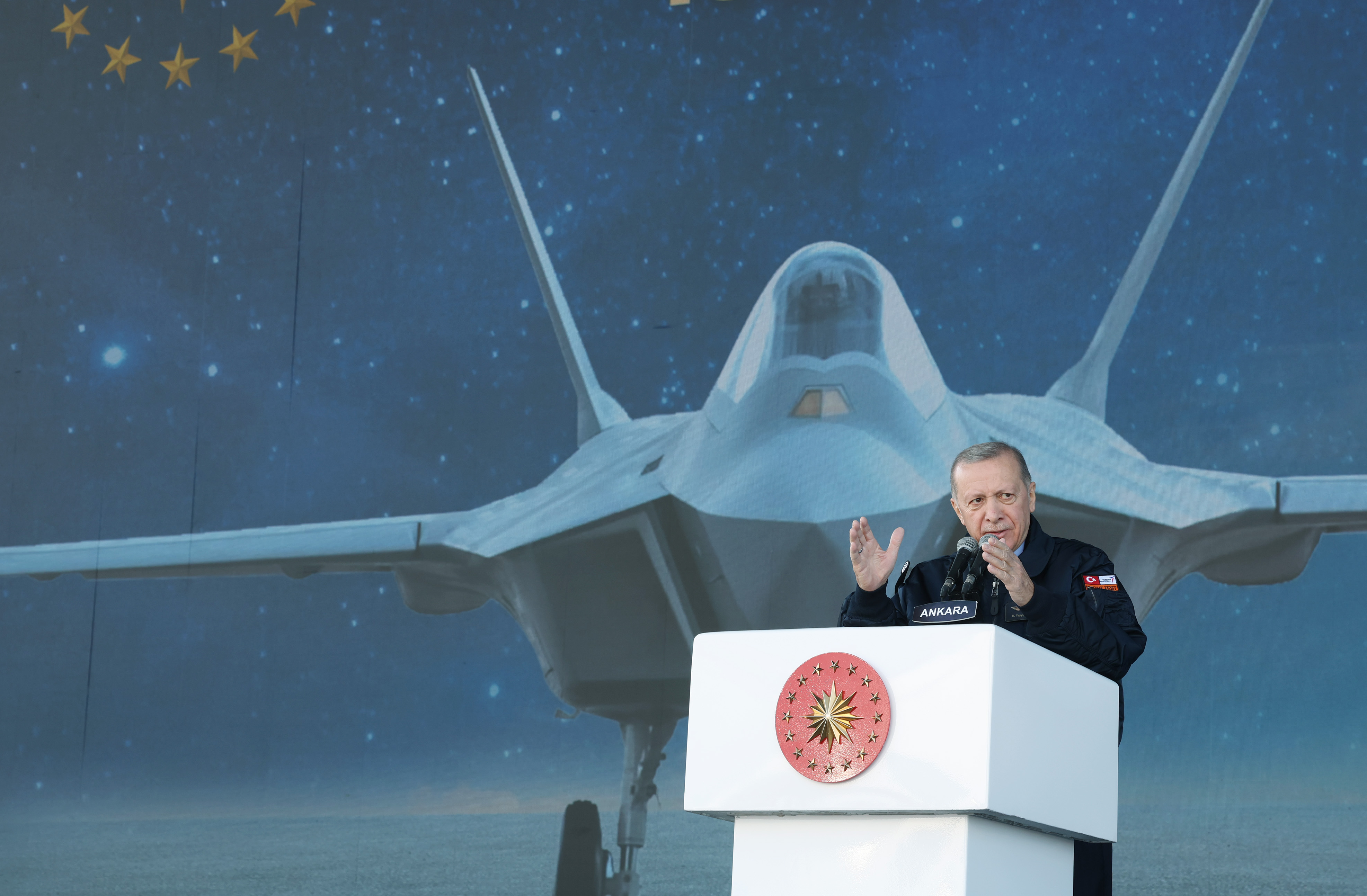
Türkiye’s commitment is visible not only in rhetoric but in tangible action. Investments in next-generation systems such as the Bayraktar TB3 unmanned aerial vehicle, the TF-X national combat aircraft, Hürjet jets, GÖKTÜRK satellites, and HAVELSAN’s AI-driven command systems exemplify the bid to control critical technologies rather than remain a passive consumer of foreign innovation. This is a classic realist calculus: By building an independent technology base, Türkiye seeks to insulate itself from external pressures, enhance relative power, and become not only a regional power but also a global power.
Türkiye’s leadership has woven technology into the narrative of a new national destiny. No longer content to remain a ‘bridge’ or ordinary state, Türkiye aspires to emerge as a great power in its own right by leveraging technology to maximize its strategic autonomy
Importantly, Türkiye’s approach extends beyond defense into the economic-security nexus. The country views technological development as a shield against any economic vulnerabilities that can be faced due to the global developments, such as supply chain disruptions, sanctions, and technological embargoes, conditions it has historically experienced, as mentioned before. The emphasis on semiconductor research, AI-driven manufacturing, and green technologies reflects an understanding that economic resilience is inseparable from national security in the contemporary era.
Furthermore, Türkiye’s engagement with both Western and non-Western technological ecosystems, including partnerships with NATO allies, China, and the Turkic world, demonstrates a deliberate strategy to maximize flexibility while maintaining autonomy. This resonates with neo-realist concerns about relative gains: Türkiye’s actions suggest a careful balancing act to avoid over-reliance on any single technological bloc while safeguarding its long-term interests.
Yet technological sovereignty is more than a material quest; it carries profound symbolic weight domestically. The very naming of the ‘national’ technology and AI strategies underscores a nation-building ethos, a statement that Türkiye’s future greatness will be built on its innovation. This blending of power pursuit with identity is key: Who controls technology is intertwined with who Türkiye is on the world stage.
Identity, Narrative, and the ‘Techno-Nation’
The constructivist dimension of Türkiye’s strategy becomes evident in how technology is linked to national identity and purpose. Turkish policymakers and thought leaders often portray the country’s tech rise as a civilizational revival, a reclaiming of pride and agency long deferred. President Erdoğan’s vision of a ‘Century of Türkiye’ explicitly folds technological progress into a broader narrative of rebirth and global stature. This narrative galvanizes public support by framing coding, engineering, and innovation as patriotic endeavors. Major technology showcase events like TEKNOFEST, Türkiye’s largest aerospace and tech festival, exemplify this synthesis of policy and identity. TEKNOFEST has become more than an expo; it is a nationwide movement that inspires a new generation of innovators under the banner of the National Technology Move. By cultivating a thriving domestic innovation ecosystem, such initiatives ‘support technological independence’ and nurture an entrepreneurial spirit aligned with national ideals. The festival’s rocket launches, robotics competitions, and start-up contests are imbued with symbolism; each homegrown prototype or engineering feat is heralded as proof that Türkiye can compete with, and even surpass, the world’s best. In constructivist terms, the country is actively constructing an identity as a ‘techno-nation,’ self-reliant, creative, and unconstrained by the old periphery status. This identity work reinforces the strategic autonomy project: A society proud of its tech achievements is more unified in resisting external dependence. It also projects a new image of Türkiye abroad, reshaping how others perceive its rank in the international hierarchy. No longer seen merely as a middle-income regional player, Türkiye increasingly demands recognition as an innovative rising power. This confident stance is both a cause and effect of Türkiye’s identity shift, feeding a cycle where success in tech bolsters national self-esteem, which in turn fuels further ambition.
TEKNOFEST has become more than an expo; it is a nationwide movement that inspires a new generation of innovators under the banner of the National Technology Move
Regional Influence and Technological Diplomacy
Armed with growing tech capacities and a clear autonomous vision, Türkiye is translating its gains into regional and global influence. This is where strategic autonomy marries realist power projection. By achieving breakthroughs in critical technologies at home, Türkiye has acquired new levers of diplomatic and economic sway abroad. The clearest example is in the defense realm. Ankara’s indigenous drones, electronic warfare systems, and ballistic missiles have not only strengthened its own military deterrence but have also become exportable power. Turkish-made Bayraktar TB2 drones, battle-proven in conflicts from North Africa to the Caucasus, have earned global attention and client states, extending Türkiye’s influence into theaters traditionally dominated by larger powers. Supplying high-tech defense equipment to allies and partners has elevated Türkiye’s clout in the Middle East and North Africa (MENA), as well as in parts of Europe (e.g., Ukraine) and Central Asia. This so-called ‘drone diplomacy’ signals that Türkiye can shape outcomes in regional security, a role once reserved for great powers. Beyond defense, Ankara leverages its technological expertise as a tool of soft power and partnership. It has positioned itself as a leading tech mentor among Turkic states and a champion of digital development in the Muslim world. Joint technology initiatives with countries like Azerbaijan, Kazakhstan, and Uzbekistan, in fields ranging from drones to academia, are testaments to Türkiye’s strategic depth in its near abroad. Through training programs, R&D collaborations, and tech investment deals, Türkiye is knitting a web of innovation networks across the Turkic world and beyond, thereby consolidating a sphere of influence anchored by its know-how. In the MENA region, Turkish telecom and fintech companies are expanding, and Turkish experts advise on digital governance, bolstering Ankara’s image as a technological leader in the Global South. These moves enhance Türkiye’s status as a regional tech hub, a country that not only consumes technology but also exports solutions tailored to emerging market needs. Constructivist theory illuminates how these efforts also reinforce Türkiye’s desired identity externally: By leading in technology cooperation, Türkiye portrays itself as the patron and prototype of a self-determined development path, separate from Western or Chinese models. In effect, it is branding itself as an independent pole of technological advancement for developing nations. Each new satellite launch or AI collaboration with a neighbor further legitimizes Türkiye’s claim to emergent great-power status in the eyes of regional publics and elites.
Balancing Techno Powers and Shaping Norms
As mentioned above, Türkiye’s strategic autonomy project also involves a delicate geopolitical balancing act in the era of intense U.S.-China tech rivalry. Rather than aligning unequivocally with one camp, Ankara has adopted a flexible, interest-driven approach to maximize its benefits and avoid overdependence on any single source. In practice, this means courting investment and expertise from all sides, for instance, welcoming Western partnerships in areas like advanced semiconductors or AI research, while also engaging with Chinese firms on 5G infrastructure or smart cities, yet ultimately anchoring critical systems in domestic capabilities. Türkiye’s recent push to develop a national cloud computing infrastructure and indigenous 5G network, alongside strict data localization rules, reflects an effort to guard digital sovereignty even as it interoperates globally. Such policies ensure that neither Silicon Valley nor Beijing can easily dictate the terms of Türkiye’s digital future. The same logic applies in defense and space. Türkiye collaborates with NATO allies on certain projects and buys select hardware (e.g., launching satellites via U.S. companies), but it has also shown a willingness to defy Western pressure by purchasing non-NATO technology (such as Russian air defenses) when national interests dictate. This hedging strategy is a hallmark of rising middle powers seeking autonomy, aligning with realist predictions that Türkiye will diversify ties to avoid entanglement. Yet it is equally about shaping norms and rules, a constructivist angle. Türkiye aspires not just to use technology but to influence the governance of technology. It actively participates in international forums on cyber norms and AI ethics, voicing perspectives from the Global South. Domestically, Ankara is crafting its own standards: for example, developing AI governance frameworks through its Digital Transformation Office and even considering a dedicated Cybersecurity Presidency to uphold ethical and security standards in AI. These steps signal Türkiye’s intent to help write the global rulebook for emerging technologies, rather than passively adopting others’ rules. By asserting normative leadership, championing data privacy here, advocating equitable access to tech there, Türkiye furthers its image as an autonomous actor that can contribute to global order-making. Such confidence is underpinned by the knowledge that in this fast-evolving arena, states must keep pace with technological change or risk strategic irrelevance. Türkiye is determined to keep pace, if not to set the pace, and thereby avoid irrelevance.
Rather than aligning unequivocally with one camp, Ankara has adopted a flexible, interest-driven approach to maximize its benefits and avoid overdependence on any single source
Türkiye’s Emerging Techno-Strategic Identity: Empirical Evidence from TechPulse 2025
The traditional foundations of international relations, namely the territory, military alliances, and economic capacity, are increasingly mediated by digital infrastructures and knowledge-based economies. As the global system evolves toward a technopolar order, where power is increasingly exercised through technological capabilities, states are reconfiguring their strategic identities. In this context, Türkiye stands out as a state that has actively redefined its geopolitical strategy through technological development. Far from being a passive consumer of technology, Türkiye has embraced innovation as a core element of its foreign policy doctrine. As mentioned in the introduction part, this paper examines this transformation through the lens of the 2025 TechPulse Türkiye report.
The report employs a mixed-methods methodology, including a national survey conducted among 90 individuals across four stakeholder groups, academia, the public sector, private industry, and youth, as well as expert interviews and secondary data analysis. By combining perceptual data with international innovation indexes, the study captures the multidimensional nature of Türkiye’s technological ascent. The analysis in this paper draws from these findings to argue that Türkiye is constructing a form of techno-strategic statecraft, wherein innovation not only fuels domestic modernization but also enhances diplomatic leverage and regional influence.

Bayraktar TB3 UAVs during the DENİZKURDU-2025 exercise conducted by the Naval Forces Command. BAYKAR / AA
Techno-Strategic Context and Policy Architecture
The techno-strategic turn in Türkiye’s foreign policy is both a response to global developments and an outcome of deliberate national planning. The reconfiguration of the international system, intensified by the U.S.-China rivalry and the geopolitical centrality of digital technologies, has created both a vacuum and an opportunity for emerging powers. The TechPulse Türkiye report outlines how Türkiye’s state institutions have increasingly viewed technology not as a sectoral concern but as a pillar of national strategy, mainly as a way of decreasing dependence on external actors and being able to pursue its national interest. Survey data confirms strong confidence in Türkiye’s technological ecosystem and Türkiye’s policies regarding technological developments. When asked to evaluate these, a majority of respondents rated it as ‘good,’ with positive perception correlating strongly with institutional proximity.25 A similar sentiment emerged when respondents were asked to assess Türkiye’s overall technological advancements in 2024,26 followed also with a notably positive outlook expressed regarding the expected developments in 2025.27
The National Technology Move, articulated as a framework for self-sufficiency in strategic sectors, emphasizes developing autonomous capabilities in defense, aerospace, semiconductors, and AI. This policy coherence is evident in Türkiye’s ability to generate indigenous UAV technologies, AI-supported surveillance systems, and secure telecommunications infrastructure. The strategic intent is to mitigate vulnerabilities arising from technological dependence, particularly in high-risk geopolitical environments.
Global Positioning and Strategic Identity
One of the most significant findings of the TechPulse Türkiye report is the increasing perception of Türkiye as a global technology actor. Fifty-eight percent of respondents viewed the country as internationally significant in technology, with particularly high affirmation among academics and bureaucrats.28 This perception is not merely aspirational. Türkiye has made notable progress in defense technologies, such as autonomous drone systems, as well as in the digitalization of public services, AI applications, and domestic electric vehicle production through initiatives like TOGG.
Moreover, the integration of technology into foreign policy is widely recognized. Eighty-three percent of survey participants acknowledged the centrality of technology in Türkiye’s diplomacy, while 82 percent emphasized its role in economic negotiations.29 Türkiye’s partnerships in AI, defense, and green energy with states such as Azerbaijan, Qatar, South Korea, and China reflect a pragmatic approach that blends competition with cooperation.
The country’s international engagements extend beyond bilateral agreements. Türkiye actively participates in multilateral forums focused on emerging technologies, including the Digital Cooperation Organization and the Organization for Economic Cooperation and Development (OECD) Working Party on AI Governance. In doing so, it amplifies its voice on regulatory standards and positions itself as a mediator between advanced economies and the Global South. Türkiye’s techno-diplomacy thus complements its broader geopolitical strategy: autonomy without isolation.
Competitive Landscape and International Alliances
The report provides insight into how Türkiye perceives its position vis-à-vis global competitors. The U.S. and China were identified as the primary technological rivals, followed by Germany, South Korea, and Israel.30 Interestingly, these same countries were also viewed as strategic partners in various fields. For example, the U.S. and China were cited as preferred collaborators in AI, space, and defense technologies. This dual perception reflects Türkiye’s emerging doctrine of balanced techno-diplomacy.31
Türkiye’s state institutions have increasingly viewed technology not as a sectoral concern but as a pillar of national strategy, mainly as a way of decreasing dependence on external actors and being able to pursue its national interest
Regionally, the Turkic states and African countries were highlighted as promising partners, particularly in areas such as defense technology, rare earth mineral extraction, and digital governance. Academic cooperation and technology transfer agreements with Central Asian and African partners exemplify Türkiye’s effort to extend its strategic depth through innovation. The report emphasized that cooperation with Africa on raw materials and manufacturing could be structured as mutually beneficial development partnerships, rather than extractive ventures.32
Sectoral Transformation and Policy Implications
Technological transformation has been a very important part of the national vision in Türkiye. As a result, in the report, it was stated that in 2024, Türkiye’s technological progress positively impacted all four sectors included in the survey, namely academia, bureaucracy, the private sector, and the students and youth population.33 Going into more detail, the sectors identified as most positively impacted by technological advancements include defense, energy, education, and public administration. The defense industry stands out as a national flagship, frequently cited as Türkiye’s most competitive and innovative domain. This success has catalyzed export opportunities and elevated Türkiye’s reputation as a defense provider to allied and neutral states alike.34
Energy, especially renewable and smart grid technologies, was another domain of progress, with strategic implications for energy independence and environmental policy. The integration of AI into power grid management, predictive maintenance of infrastructure, and solar optimization is transforming Türkiye’s energy landscape. Education was seen as foundational for long-term sustainability. Respondents called for expanded STEM curricula, greater university-industry collaboration, and programs to mitigate brain drain.
In public administration, digital transformation has yielded efficiency gains through e-government platforms, AI-driven policy analysis, and citizen-centered mobile apps. These tools not only improve access to services but also cultivate a technologically literate population, enhancing societal resilience.
Stakeholder Perceptions and Domestic Adoption
The TechPulse survey reveals important views on domestic software development and public awareness. In this context, both trust in national software solutions and the use of domestic software in each sector are growing, particularly within the private sector and public institutions.35
Regionally, the Turkic states and African countries were highlighted as promising partners, particularly in areas such as defense technology, rare earth mineral extraction, and digital governance
Public awareness, however, emerged as a critical challenge. 60 percent of participants stated that citizens were only partially informed about national technological initiatives, and 28 percent believed awareness to be low. These findings underscore the need for a national communication strategy that not only informs but inspires. Visibility, in this sense, is not a mere PR concern but a matter of cultivating civic engagement with innovation.36
The report recommends national-level promotional campaigns, integration of technology education into public schools, and support for science communication initiatives. Increasingly, it is understood that innovation ecosystems require not only engineers and developers but also storytellers, educators, and trust-builders.
Index-Based Assessments and Innovation Metrics
To better understand Türkiye’s technological development, the report also incorporates a variety of international benchmarks. In this context, Türkiye’s trajectory in global innovation rankings over the past decade illustrates a significant and multidimensional transformation in its national capacity for technological development. According to the Global Innovation Index 2024, Türkiye ranks 37th out of 133 countries, an improvement of 12 positions compared to 2021 and two positions compared to last year.37 It is also important to state that Türkiye ranks 3rd among the top innovation economies in the Northern Africa and Western Asia region, following Israel and the United Arab Emirates (UAE). This upward shift reflects not only improved output indicators, such as high-tech exports and patent filings, but also notable progress in innovation infrastructure and institutional support. Lastly, an important evaluation for Türkiye in this index was the fact that Türkiye was positioned as an efficient innovator, demonstrating strong performance in converting innovation inputs into tangible outputs, indicating that it generates higher-than expected innovation outcomes relative to its investment levels.
Based on another report, the 2024 Network Readiness Index (NRI), Türkiye is ranked 58th among 133 countries, placing it prominently within the group of upper-middle-income economies. The country demonstrates exceptional performance in several areas, notably achieving 9th place globally in technology access, and securing 1st place in both school internet access and the comprehensiveness of its e-commerce legislation.38
Other indices also show how Türkiye’s technological development has accelerated significantly in recent years. According to the 2024 ICT Development Index, Türkiye achieved a score of 87.5, an improvement over the previous year, demonstrating strong performance in universal digital connectivity.39 The data reveals that over 87 percent of the population uses the internet, while more than 99 percent own mobile phones, highlighting widespread access and digital integration across the country. In the Global AI Index 2024, Türkiye ranked 34th out of 83 countries, standing out in the sub-pillars of government strategy (14th) and operating environment, indicating robust institutional support for AI development and favorable public sentiment.40 Although areas like AI infrastructure and commercialization still require improvement, the rapid expansion of AI startups, from 24 in 2017 to 362 in 2024, and a national market surpassing $600 million, primarily concentrated in İstanbul, signal Türkiye’s growing role as a regional AI hub.41 Its academic institutions have also become active contributors to global AI research, with Türkiye ranking 16th in the world for AI-related publications in 2023.42
Türkiye is not only building a resilient digital and innovation infrastructure but is also fostering a culture of technological ambition and global competitiveness
Türkiye’s innovation drive is equally evident in its startup ecosystem, which has witnessed one of the world’s most dynamic growth trajectories. The Global Startup Ecosystem Index 2024 places Türkiye 40th globally and 24th in Europe, with five cities now among the global top 1,000 startup ecosystems.43 İstanbul, in particular, has risen to 51st place worldwide and ranks 11th in Europe, underscoring its emergence as a key regional tech capital. Sectoral leadership in areas such as gaming, web development, and consumer electronics, along with public initiatives like Turcorn 100, showcase a clear strategic vision for scaling innovation. Moreover, Türkiye has experienced a notable increase in industrial robot adoption, ranking 11th globally in 2023 with over 27,000 installed units.44 These advancements are complemented by positive public sentiment: according to Ipsos 2024, 74 percent of Turkish respondents claim to understand AI, and 70 percent express excitement about its potential, figures that exceed global averages.45 Collectively, these developments suggest that Türkiye is not only building a resilient digital and innovation infrastructure but is also fostering a culture of technological ambition and global competitiveness. Specifically, Türkiye’s performance across major international indexes paints a picture of a country in accelerated transition: no longer a peripheral adopter of technology, but not yet a fully consolidated innovation leader. The combination of improved rankings, institutional reforms, and sectoral competitiveness signals a strategic inflection point in Türkiye’s development, one characterized by a growing capacity to transform scientific and technological capabilities into both economic value and geopolitical influence.
Roadmaps and Initiatives
In 2024, Türkiye advanced its technological trajectory through bold policy initiatives, strategic programs, and vibrant ecosystem-building efforts. At the heart of this transformation lies the AI National Strategy Action Plan (2024-2025) and the HİT-30 High Technology Investment Program, both of which reflect Türkiye’s ambition to become a global innovation hub. The AI strategy was revised to align with national development goals and emphasizes key pillars such as talent development, ethical AI regulation, infrastructure, and international cooperation. Landmark actions like the TechVisa Program, support for local large language models, and the introduction of a Trusted AI Seal aim to deepen Türkiye’s AI capabilities while maintaining public trust and regulatory oversight.46 In parallel, the HİT-30 program, with a $30 billion budget, targets strategic sectors such as semiconductors, mobility, green energy, and space, supporting flagship projects like HİT-Chip and HİT-Battery.47 These initiatives are designed to attract both domestic and foreign investment, ensure technology sovereignty, and integrate Türkiye into global high-tech value chains.
Complementing these efforts are comprehensive entrepreneurship support programs, such as the Turcorn 100, aimed at cultivating Turkish unicorns, and the Technology and Innovation Fund, which has already backed several promising startups. Events like DevOpsDays Istanbul, the SDN Summit, and the nationwide TEKNOFEST have further strengthened Türkiye’s position as a dynamic center for technological innovation. TEKNOFEST, in particular, has witnessed record-breaking participation, nurturing a new generation of innovators through competitions across 49 categories and deepening the culture of technological engagement. On the international stage, Türkiye has deepened its integration with global tech ecosystems through Horizon Europe collaborations and took a leading role in regional innovation through the Organization of Turkic States’ (OTS) ministerial summit. These combined efforts underline Türkiye’s emergence as a proactive, ambitious, and strategically oriented technological actor, determined not only to keep pace with global trends but to shape them in alignment with its national vision.48
Recommendations and Conclusion
This article has examined Türkiye’s evolving role as a technology-driven strategic actor within the context of the emerging technopolar international order. Drawing on the concepts of strategic autonomy, techno-nationalism, and digital power, it has argued that Türkiye’s technological transformation is not merely a developmental or economic ambition but a deliberate recalibration of its position in the global system.
As documented in the 2025 TechPulse Türkiye report, this trajectory is unmistakably upward, even as challenges remain in infrastructure, global branding, and human capital development. Yet, the strategic intent is clear: Türkiye seeks not simply to adapt to the evolving global order but to actively shape it.
In an era in which the boundaries between geopolitics and innovation are increasingly porous, Türkiye’s techno-strategic doctrine offers a compelling case study of how states can reconfigure power through innovation. The future of Türkiye’s global role will depend not only on its capacity to innovate but equally on its ability to embed that innovation within a broader framework of cooperation, ethical governance, and societal legitimacy. If sustained, Türkiye’s model may serve as a blueprint for other emerging powers navigating the complex and often unforgiving terrain of 21st-century geopolitics.
The year 2024 stands as a pivotal milestone in Türkiye’s technological evolution. National surveys and global indices affirm the country’s accelerating progress in critical domains such as artificial intelligence, 5G infrastructure, and cybersecurity. The over 1 trillion TL invested in R&D over the past decade reflects a sustained and strategic dedication to building technological capacity. Yet, the work ahead demands not just resources but policy precision: strengthening national AI governance, establishing a dedicated AI directorate, expanding supercomputing capacity, prioritizing national AI cloud infrastructure, and accelerating 5G deployment will be essential pillars for Türkiye’s digital readiness.
On the global stage, Türkiye is increasingly poised to embed technology diplomacy into the core of its foreign policy. Deepening ties with leading tech nations, while simultaneously leveraging regional partnerships, especially among Turkic states, will enable Türkiye to broaden its strategic footprint
Simultaneously, Türkiye must continue to strengthen its domestic innovation ecosystem. Public trust in national technologies must be cultivated through awareness campaigns, education reforms, and strategic public sector procurement. At the heart of this effort lies human capital. Aligning STEM education with evolving market needs, incentivizing AI research, and reversing brain drain through targeted scholarships and meaningful career pathways will be decisive. Here, the convergence of academia, industry, and government through university incubators, national innovation hubs, and public-private partnerships will play a central role.
On the global stage, Türkiye is increasingly poised to embed technology diplomacy into the core of its foreign policy. Deepening ties with leading tech nations, while simultaneously leveraging regional partnerships, especially among Turkic states, will enable Türkiye to broaden its strategic footprint. Targeted investment in semiconductors, green technologies, and next-generation AI talent will further consolidate the country’s role in the global innovation architecture.
When viewed through the lens of strategic autonomy, Türkiye’s transformation reveals a clear and coherent bid to recast itself from a technology-dependent actor into an emerging great power. The pursuit of technological sovereignty, the construction of a techno-centric national identity, and the projection of influence through innovation mutually reinforce one another. In a world where power is increasingly measured not only by GDP or military force but by innovation, information mastery, and cognitive capabilities, the country’s rise is both timely and consequential.
Türkiye is greater than its borders. Every advance in technological capacity resonates beyond its immediate geography, inspiring friendly nations, strengthening brotherly ties, and offering hope to oppressed peoples who look to Türkiye not merely as a state but as a symbol of possibility. Under the visionary leadership of President Recep Tayyip Erdoğan, this awareness is fully internalized and strategically leveraged. Türkiye’s ascent as a sovereign digital power is thus not limited to national interest alone but carries the weight of regional stability and global responsibility.
This reimagining of Türkiye’s global posture extends beyond material power. It embodies a broader vision of leadership rooted in responsibility, mediation, and solidarity. As Türkiye’s digital capabilities grow, so too does its ability to mediate, influence, and shape global norms. Digital power becomes both shield and signal: a shield that fortifies national resilience against asymmetric threats, and a signal of Türkiye’s readiness to contribute to a more stable and equitable world order.
Türkiye is poised not only to defend its autonomy but also to shape the ethical and geopolitical contours of global tech governance
President Erdoğan’s diplomacy, anchored in strategic clarity and cultural resonance, demonstrates that Türkiye’s ascent is not a quest for hegemony, but for voice, a voice for the voiceless, a bridge for the divided, and a platform for shared digital sovereignty. As its digital transformation deepens, Türkiye is poised not only to defend its autonomy but also to shape the ethical and geopolitical contours of global tech governance. In this sense, its rise as a digital power is not an end in itself, but a means to advance a more just, multipolar, and inclusive international order. As always, and as always will be, Türkiye stands as a beacon of hope, not only for the region in which it resides, but for the world at large, especially amid the turbulent currents of the mid-2020s.
Endnotes
1. Gloria Shkurti Özdemir, “Conceptualizing the Rise of Türkiye as a Drone Power,” Arab Center for Research and Policy Studies, (2022), retrieved from https://www.dohainstitute.org/en/Lists/ACRPS-PDFDocumentLibrary/conceptualizing-the-rise-of-turkiye-as-a-drone-power.pdf, pp. 1-2.
2. “Millî Teknoloji Hamlesi,” T3 Vakfı, (2025), retrieved from https://t3vakfi.org/en/about/mth/.
3. “Ulusal Yapay Zekâ Stratejisi (2021-2025),” Resmi Gazete, (August 20, 2021), retrieved from https://www.resmigazete.gov.tr/eskiler/2021/08/20210820-22.pdf .
4. John Mearsheimer, The Tragedy of Great Power Politics, (New York: W. W. Norton, 2001).
5. Alexander Wendt, Social Theory of International Politics, (Cambridge University Press, 1999).
6. Gloria Shkurti Özdemir, Erman Akıllı, and Safa Uslu, 2025 Techpulse Türkiye: Tracking Technological Innovation and Trends, (İstanbul: SETA Publications, 2025).
7. Jean-Christophe Noël, “What Is Digital Power?” Études de l’Ifri, (November 2019), retrieved from https://www.ifri.org/sites/default/files/migrated_files/documents/atoms/files/noel_digital_power_2019.pdf.
8. Joseph S. Nye, “Cyber Power,” Belfer Center for Science and International Affairs, (May 2010), from https://www.belfercenter.org/publication/cyber-power.
9. Nye, ”Cyber Power.”
10. Shahla Ahmed, “The Role of Soft Power in the Digital Age,” SAIS Review of International Affairs, (March 7, 2025), retrieved from https://saisreview.sais.jhu.edu/the-role-of-soft-power-in-the-digital-age/.
11. Ahmed, “The Role of Soft Power in the Digital Age.”
12. Michael Kemmerling and Christine Trampusch, “Digital Power Resources (DPR): The Political Economy of Structural and Infrastructural Business Power in Digital(ized) Capitalism,” SocioEconomic Review, Vol. 21, No. 4 (October 2023), pp. 1851-1876.
13. Noël, “What Is Digital Power?”
14. Paul Timmers, “Strategic Autonomy Tech Alliances: Political-Industrial Collaboration in Strategic Technologies,” FEPS, (June 2022), retrieved from https://feps-europe.eu/wp-content/uploads/2022/06/Strategic-Autonomy-Tech-Alliances.pdf, p.
15. “Shared Vision, Common Action: A Stronger Europe,” EEAS, (June 2016), retrieved from https://www.eeas.europa.eu/sites/default/files/eugs_review_web_0.pdf, p.
16. Erman Akıllı, “Rewiring Diplomacy in the Technopolar World,” Daily Sabah, (April 18, 2025).
17. Timmers, “Strategic Autonomy Tech Alliances: Political-Industrial Collaboration in Strategic Technologies,” p.
18. Ben Lutkevich, “Technonationalism Explained: What You Need to Know,” TechTarget, (March 20, 2023), retrieved from https://www.techtarget.com/whatis/feature/Techno-nationalism-explained-What-you-need-to-know, p.
19. Yadong Luo, “Illusions of TechnoNationalism,” Journal of International Business Studies, Vol. 53, No. 3 (2022), retrieved from https://doi.org/10.1057/s41267-021-00468-5, pp. 550-567.
20. Ian Bremmer, “The Technopolar Moment: How Digital Powers Will Reshape the Global Power,” Foreign Affairs, (2021), retrieved from https://www.foreignaffairs.com/articles/world/ian-bremmer-big-tech-global-order; Erman Akıllı, “AI Geopolitics: Power Shifts in the Technopolar World,” Daily Sabah, (February 14, 2025).
21. Erman Akıllı, “Technopolar Reckoning: U.S. vs. China,” Daily Sabah, (March 21, 2025).
22. Gloria Shkurti Özdemir, “Dijital Teknolojiler ve Uluslararası Güvenliğe Etkisi,” in Safa Uslu, Cenay Babaoğlu, and Yavuz Emir Beyribey, Dijitalin Yüzyıllı, (İstanbul: SETA Publications, 2023), pp. 211-233.
23. Gloria Shkurti Özdemir and Ferhat Pirinççi, “Milli Teknoloji Hamlesi: İlkeler, Araçlar ve Amaçalar,” in Burhanettin Duran, Ferhat Pirinççi, and Gloria Shkurti Özdemir, Türkiye’nin İstiklali: Milli Teknoloji Hamlesi, (İstanbul: SETA Publications, 2023), pp. 13-49.
24. Barry Buzan, An Introduction to Strategic Studies: Military Technology and International Relations, (London: Palgrave Macmillan, 1987).
25. Shkurti Özdemir, Akıllı, and Uslu, 2025 Techpulse Türkiye, pp. 23-25.
26. Shkurti Özdemir, Akıllı, and Uslu, 2025 Techpulse Türkiye, p. 42.
27. Shkurti Özdemir, Akıllı, and Uslu, 2025 Techpulse Türkiye, p. 60.
28. Shkurti Özdemir, Akıllı, and Uslu, 2025 Techpulse Türkiye, p. 25.
29. Shkurti Özdemir, Akıllı, and Uslu, 2025 Techpulse Türkiye, p. 26.
30. Shkurti Özdemir, Akıllı, and Uslu, 2025 Techpulse Türkiye, pp. 26-27.
31. Shkurti Özdemir, Akıllı, and Uslu, 2025 Techpulse Türkiye, p. 27.
32. Shkurti Özdemir, Akıllı, and Uslu, 2025 Techpulse Türkiye, p. 27.
33. Shkurti Özdemir, Akıllı, and Uslu, 2025 Techpulse Türkiye, pp. 40-41.
34. Shkurti Özdemir, Akıllı, and Uslu, 2025 Techpulse Türkiye, pp. 37-38.
35. Shkurti Özdemir, Akıllı, and Uslu, 2025 Techpulse Türkiye, pp. 30-32.
36. Shkurti Özdemir, Akıllı, and Uslu, 2025 Techpulse Türkiye, pp. 29-30.
37. Soumitra Dutta, Bruno Lanvin, Lorena Rivera León, and Sacha Wunsch-Vincent (eds.), Global Innovation Index 2024: Unlocking the Promise of Social Entrepreneurship, 17th, (Geneva: World Intellectual Property, 2024), p. 17.
38. Soumitra Dutta and Bruno Lanvin (eds.), Network Readiness Index 2024, (Portulans Institute, 2024), p. 204.
39. “Measuring Digital Development: The ICT Development Index 2024,” ITU, (2024).
40. Joe White and Serena Cesareo, “The Global AI Index,” Tortoise, retrieved from https://www.tortoisemedia.com/intelligence/global-ai#data.
41. “İstanbul’un Yapay Zeka Pazarı 600 Milyon Doları Aştı,” TRT Haber, (September 26, 2024), retrieved from https://www.trthaber.com/haber/bilim-teknoloji/istanbulun-yapay-zeka-pazari-600-milyon-dolari-asti-879412.html; “Startup Ecosystem Report 2024,” Startup Blink, retrieved from https://www.startupblink.com/startupecosystemreport, pp. 170-171.
42. “Live Data,” AI, (2025), retrieved from https://oecd.ai/en/data?selectedArea=ai-research&selectedVisualization=16719.
43. “Startup Ecosystem Report 2024,” Startup Blink, pp. 170-171.
44. “World Robotics 2023,” International Federation of Robotics, (September 2023), retrieved from https://ifr.org/img/worldrobotics/2023_WR_extended_version.pdf.
45. “The Ipsos AI Monitor 2024,” IPSOS, (June 2024), retrieved from https://www.ipsos.com/sites/default/files/ct/news/documents/2024-06/Ipsos-AI-Monitor-2024-final-APAC.pdf.
46. “Ulusal Yapay Zekâ Stratejisi 2021-2025,” Türkiye Cumhuriyeti Cumhurbaşkanlığı Dijital Dönüşüm Ofisi, retrieved from https://cbddo.gov.tr/uyzs.
47. “Bakan Kacır, HIT-30 Yüksek Teknoloji Yatırım Programı’nın Detaylarını Paylaştı,” Anadolu Ajansı, (July 29, 2024) retrieved from https://www.aa.com.tr/tr/enerjiterminali/genel/bakan-kacir-hit-30-yuksek-teknoloji-yatirim-programinin-detaylarini-paylasti/42689; “Yüksek Teknoloji Yatırım Programı HIT-30,” Hit-30, retrieved from https://hit30.sanayi.gov.tr/.
48. Shkurti Özdemir, Akıllı, and Uslu, 2025 Techpulse Türkiye, pp. 83-88