
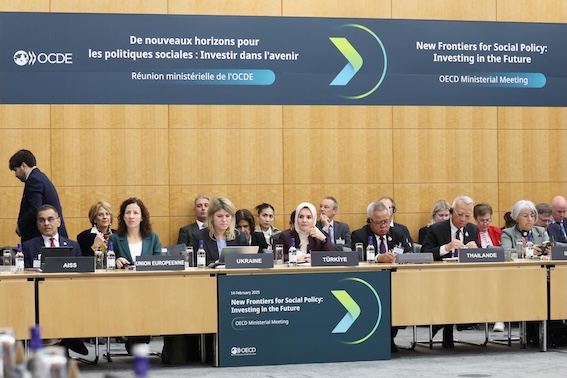
Introduction: The OECD in Global Economic-Politics
After the Second World War, as the countries of the Atlantic Alliance established a new global order, two strategic organizations were designed to enhance and deepen cooperation: the North Atlantic Treaty Organization (NATO) for political and military collaboration, and the Organization for Economic Cooperation and Development (OECD) for economic and trade cooperation. The Organization for European Economic Cooperation (OEEC) established in 1948 to manage the Marshall Plan, which aimed to rebuild war-torn Europe, completed its mission, leading to the formation of the OECD in 1961. Initially consisting of 15 members and later expanding to 18, the OEEC was transformed into the OECD with the inclusion of the United States and Canada, bringing the total number of founding members to 20. Since then, the OECD has grown to 38 member countries, primarily composed of the Atlantic Alliance nations and their close allies, working to establish international standards and norms that are intended to be embraced globally.