
Introduction
Since its establishment in 1945, the United Nations (UN) system has played a significant role in shaping the global order through its laws, norms and institutions. As a founding member of the UN, Türkiye has consistently aligned its foreign policy with the principles and mechanisms of the world organization, emphasizing the legitimacy of international norms and multilateral decision-making processes. This commitment to multilateralism through the UN, however, is not a post-World War II development, but rather a continuation of Türkiye’s historical engagement with international organizations, beginning with the idea of a League of Nations. Despite many criticisms of the structure, functioning, resolutions, and effectiveness of the UN in global governance, Ankara continues its quest for peace and a just world order through the UN, an enduring commitment to the founding principles of the Turkish Republic and Mustafa Kemal Atatürk, “Peace at Home, Peace in the World.”
This commentary evaluates Türkiye’s role within the UN system from a historical perspective, examining it through the lens of its evolving status as an emerging power and its ongoing quest for status, legitimacy, and international recognition in the changing international order. Türkiye’s approach to the UN has evolved due to systemic, regional, and domestic political transformations since its foundation, while a fundamental continuity exists in its commitment to the ideal of peace and multilateralism to achieve it, balanced with national interests and changing priorities for 80 years.
Türkiye attributes special importance and role to the UN as a symbol of legitimacy and the quest for peace through multilateralism. Ankara’s unique regional identity, encompassing many interconnected regions,1 together with the absence of a leadership in a regional organization that could effectively represent Türkiye’s interests, has also been a driving force for Turkish policy makers’ pursuit of an enhanced role in the UN. Türkiye also faces structural challenges within the world organization, especially regarding issues and crises related to its surrounding region, such as Syria, Ukraine, and Palestine. Thus, its approach to the UN System has been shaped by a balance between enduring principles and ideals on the one hand and changing priorities and national interests on the other, reflecting both continuity and adaptation in its multilateral diplomacy.
Türkiye’s approach to the UN has evolved due to systemic, regional, and domestic political transformations since its foundation, while a fundamental continuity exists in its commitment to the ideal of peace and multilateralism to achieve it, balanced with national interests and changing priorities for 80 years
At a time when the liberal international order and its norms and institutions are in crisis2 and global trust in the UN is waning so rapidly and the organization’s future is unknown, Türkiye’s persistent efforts to push for structural UN reform are reflected in the call of President Erdoğan’s “The World Is Bigger than Five.”3 This reformist stance demonstrates both Türkiye’s belief in the UN’s potential as a crucial platform for the future of global governance, as well as its continuous quest for legitimacy and status in the organization despite many of its shortcomings.
Three UNs in Global Governance
The UN represents a unique “system” composed of three interconnected units, conceptualized widely as “Three UNs.”4 First, the UN is an intergovernmental organization where states interact through mechanisms such as the Security Council and the General Assembly. Second, the UN is a bureaucratic structure comprising its specialized agencies and operational bodies. Third, the UN is an arena where NGOs, academics, experts, and other non-state actors contribute to global governance.5 Established in the aftermath of World War II, the UN was founded on three overarching objectives: to save succeeding generations from the scourge of war, to reaffirm faith in fundamental human rights, and to promote social progress and better standards of life. These core objectives are encapsulated in the UN’s three foundational pillars: peace and security, human rights, and development. The organization’s effectiveness in achieving these goals can be assessed through two primary lenses: its normative role in shaping international principles and its operational capacity in implementing them.6
From a normative perspective, the UN has played a crucial role in shaping global discourse on peace and security, development, and human rights. By disseminating and institutionalizing these principles, the UN has influenced international perceptions and, as Thomas Weiss7 argues, has ‘changed history.’ Conceptualized as the “Second UN,” the organization’s specialized agencies and programs have introduced significant innovations in global governance, including frameworks for global commons, gender equality, sustainable development, and the Responsibility to Protect (R2P). The legitimacy of these specialized bodies largely stems from their technical expertise, rational-legal authority, and perceived impartiality in addressing global challenges. Furthermore, contributions from individual experts, NGOs, activists, and academics —collectively forming the “Third UN”— have enriched the organization’s intellectual and policy development by advocating, analyzing, and operationalizing key global initiatives since its inception in 1945.8 Not only big powers but also small and medium-size states, both developed and developing, have utilized the UN platform for advocating norms such as a New International Economic Order (NIEO) and decolonization during the 1960’s.
While the UN’s specialized agencies have played a vital role in shaping global norms, their bureaucratic inefficiencies have also been a source of dysfunction, as noted by Barnett and Finnemore.9 Structural challenges such as slow decision-making, lack of professionalism, lack of resources, and operational failures remain widespread in two UNs.10 As Falk11 argues, the UN’s legitimacy crisis stems not only from political inefficacy but also from the weakening authority of human rights norms and declining belief in international law. Although small and medium-size states have been active on various UN platforms, their ability to initiate change is limited by the frozen structures and mechanisms such as the UN Security Council (UNSC) permanent membership and veto mechanisms. Addressing these crises requires rethinking fundamental questions in a changing global order: whose interests do UN rules serve, and who benefits or loses under its global governance?12
Türkiye’s Role in UN Peace and Security Mechanisms
Within this complex UN system, since its establishment, Türkiye has played multiple roles within both its normative and operational dimensions and across the three UNs. As a non-permanent member of the UN Security Council (UNSC) in the 1950s and 1960s, most recently in the 2010s, Türkiye’s contributions to the UN have evolved under the influence of shifting domestic political conditions, regional developments, and structural transformations. Türkiye has expanded its engagement beyond state-level diplomacy, actively contributing through new ideas on conflict prevention and mediation as well as partnerships with NGOs and other international actors, demonstrating its strong ideational commitment and contribution to multilateralism through the UN in the last decades.13 The following section will examine Türkiye’s role within the UN System with a particular focus on the continuities and changes in its engagement, especially in the post-2000 period.
Historical Roots of Türkiye’s Engagement with the UN General Assembly and UN Security Council
Türkiye’s early relationship with the UN was shaped by the immediate post-World War II order and the formation of international legal structures that prioritized collective security and sovereignty. Joining the UN as a founding member was seen as a crucial step for Türkiye to integrate into the Western bloc with “peace-loving” states and affirm its commitment to international norms. During the late 1940s and 1950s, Türkiye aligned itself closely with UN principles, viewing them as extensions of the legal and political commitments it had made through its Western-oriented foreign policy. The 1950 Korean War marked Türkiye’s first direct engagement in a UN-led military operation, where it sent combat forces under the UN flag following a UNSC resolution.
The Cyprus conflict, which began escalating in the 1960s, tested Türkiye’s relationship with the UN and exposed the limitations of relying solely on Western states for international legitimacy
Türkiye’s behavior in the UN General Assembly (UNGA) has been an important indicator of its evolving foreign policy preferences. Aral provides a detailed account of Türkiye’s voting orientation in the UNGA between 1948 and 1997, highlighting its strategic alignments largely with Western powers, particularly on issues related to decolonization and self-determination.14 This reflected Türkiye’s broader Cold War strategy of maintaining alignment with its Western allies, even at the expense of distancing itself from newly independent nations.15 The Cyprus conflict, which began escalating in the 1960s, tested Türkiye’s relationship with the UN and exposed the limitations of relying solely on Western states for international legitimacy. In a UNGA resolution on Cyprus initiated by the non-aligned countries and adopted on December 18, 1965, Türkiye found itself isolated both by its Western allies and many other states, as the resolution passed with 47 votes in favor, 6 against, and 54 abstentions. The 1963-1964 Cyprus crisis marked a turning point as Türkiye faced broad international criticism and isolation despite citing self-defense and the protection of the Turkish Cypriots. As a result, from the 1965s onwards, Türkiye reassessed its exclusively Western-oriented foreign policy and began engaging more closely with non-Western states at the UN.16
Türkiye’s engagement in the UNSC also dates to the early years of the organization. Türkiye served as a non-permanent member of the UNSC in the 1951-1952, 1954-1955, and 1961 periods, aligning its voting behavior mostly with the Western bloc during the Cold War. This trend reflected Türkiye’s strategic decision to strengthen its ties with NATO allies and secure political legitimacy through UN mechanisms. An important development during this period was Türkiye’s shift in its regional representation within the UN Security Council. Initially contesting seats as a Middle Eastern country, Türkiye repositioned itself in 1953 to represent the Eastern European region, reflecting U.S. support aimed at countering Soviet influence by blocking Poland, a Soviet ally.17 The 1959 election continued this pattern, with Türkiye again being selected as a key player in maintaining Western influence in the Council. These elections demonstrated Türkiye’s geopolitical leverage during the Cold War, although they also highlighted its tendency to prioritize Western bloc interests over independent or regional considerations.18
Türkiye has begun to adopt pluralist elements in its discourse in recent years, especially as it critiques the selective enforcement of R2P by Western states while simultaneously calling for reform in global governance mechanisms
The end of the Cold War brought significant changes to the international system, with the expectation that the UN would play an increasingly active role in managing regional and humanitarian conflicts. Türkiye’s approach to humanitarian intervention evolved through its engagement with the UN, reinforcing its commitment to multilateral peace efforts. During the Gulf War, Türkiye aligned with UN-backed humanitarian actions but witnessed the unintended regional consequences of intervention, particularly in Northern Iraq. Ankara was part of the UN mission in Somalia, and during the tragic Bosnian War, Türkiye initiated intense diplomacy towards the Organization of Islamic Cooperation (IOC) and the UN, actively pushing for a Uniting for Peace resolution from the early phases of the war, advocating for a UN military intervention against the aggressor. Similarly, in the 1999 Kosovo crisis, Türkiye backed NATO humanitarian intervention on moral grounds, despite the absence of a UN mandate, emphasizing the urgency of humanitarian protection. These experiences shaped Türkiye’s approach to UN-led humanitarian interventions, demonstrating both its support for humanitarian action and its recognition of intervention-related regional challenges.
Türkiye’s Engagement in the UN Security Council and Beyond
Türkiye’s engagement with the UN continued into the 2000s with a more assertive foreign policy agenda towards active engagement with issues related to global governance. In 2009-2010, Türkiye was once again elected as a non-permanent member of the UNSC, securing substantial support from African nations, demonstrating the results of its increasing regional engagement in global governance.19 During this period, Türkiye sought to enhance its role as a regional power, specifically in the Middle East, while also positioning itself as an emerging middle power on the global stage.20 However, Türkiye’s efforts at both mediation efforts, such as the Iranian nuclear program and the Palestinian issue, were limited to creating tangible outcomes due to the UNSC voting patterns.21 While Türkiye’s foreign policy rhetoric under the AK Party became more dynamic, multilateral, and justice-oriented, its actual voting behavior in the UNGA often reflected a more status quo-oriented posture. This paradox is particularly evident in Türkiye’s positioning on nuclear disarmament, self-determination, and economic justice, where its votes are frequently aligned with EU and NATO allies rather than rising powers or developing nations.22 Ultimately, Türkiye’s UNGA voting behavior in the 2000s reflects a hybrid foreign policy, characterized by its continued ties to Western alliances, selective support for developing world priorities, and strategic engagement in UN reform efforts. This voting pattern illustrates the tensions between Türkiye’s identity as an emerging middle power, its aspirations for global influence, and the structural constraints of the international system.23
Türkiye’s Expanding Normative Role in the UN through Mediation Efforts
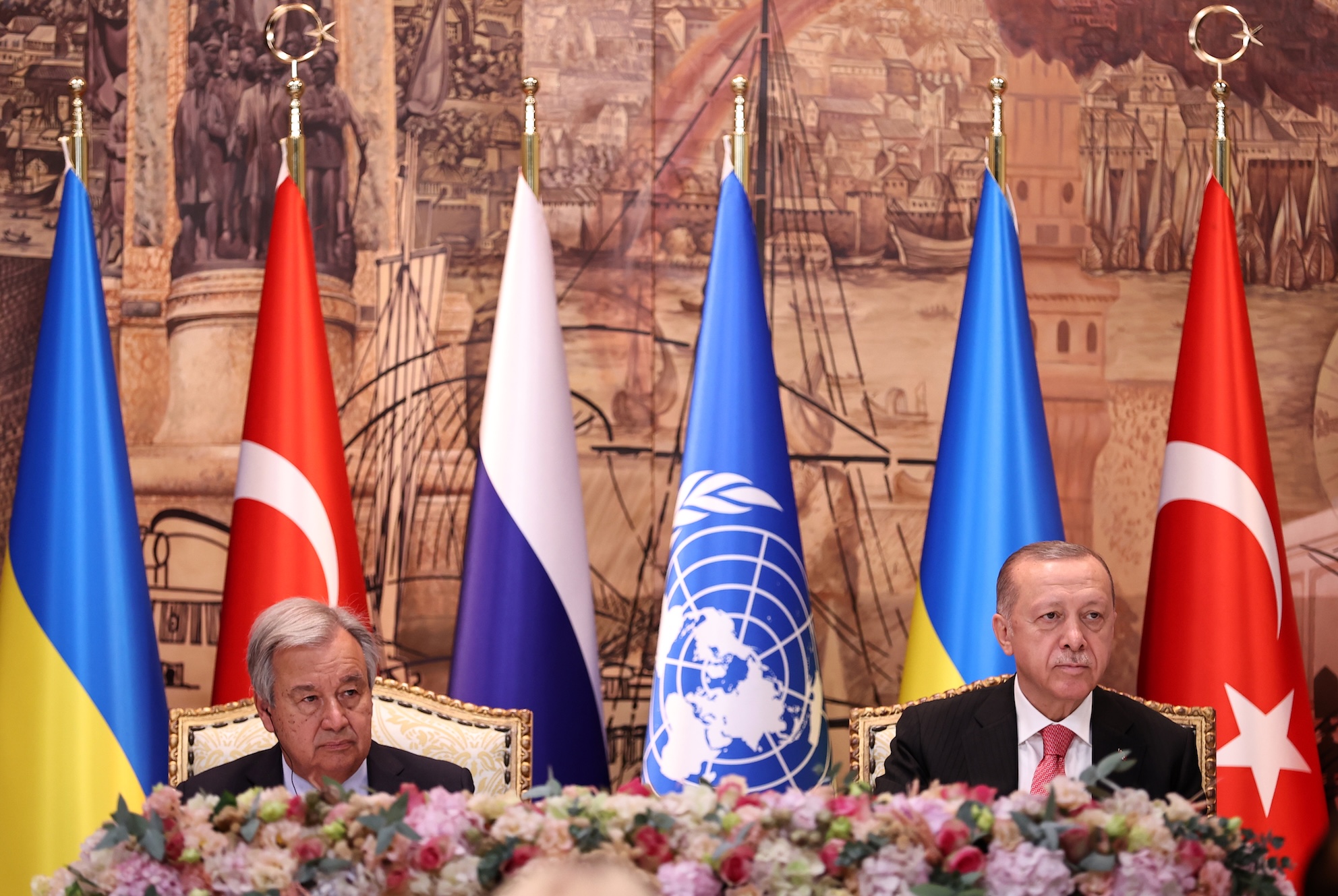
Türkiye’s engagement with global governance has gone beyond traditional diplomacy and has become more visible in certain niche areas, such as mediation efforts and initiatives related to the norm of R2P in the UN. Türkiye’s involvement in the Friends of Mediation Initiative and its promotion of the Mediation for Peace Initiative reflect its efforts to strengthen the UN’s conflict resolution mechanisms and normative frameworks. Starting in 2010, Türkiye and Finland co-chaired the Mediation for Peace Initiative (MPI), which aimed to develop mediation norms, procedures, and capacities within the UN framework. Türkiye was the first country to introduce a Mediation Booklet, outlining the principles and best practices for mediation at the international level.24 The initiative has significantly contributed to mediation diplomacy by institutionalizing mediation as a primary tool for conflict resolution within the UN and regional organizations such as the Organization for Security and Cooperation in Europe (OSCE) and the OIC. Türkiye’s mediator role between Russia and Ukraine helped to achieve the Black Sea Grain Initiative in İstanbul on July 22, 2022, which was welcomed by the UN.25 Türkiye has also supported the R2P norm, especially its first and second pillars, within the UN through diplomatic engagement. While not directly intervening in all R2P-related missions, Ankara has emphasized the importance of preventive diplomacy and mediation as a means of conflict resolution before crises escalate.
Türkiye’s Voting Behavior and Norm Implementation
Türkiye’s voting behavior regarding R2P-related resolutions in the UN reflects a solidarist norm-implementing approach.26 Unlike BRICS countries, which often challenge the R2P norm due to sovereignty concerns, Türkiye has consistently supported R2P resolutions, particularly those related to Syria. Türkiye’s alignment with Western states in UNGA voting patterns contrasts with other emerging powers like India and China, which frequently abstain or oppose such resolutions.27 However, Türkiye has begun to adopt pluralist elements in its discourse in recent years, especially as it critiques the selective enforcement of R2P by Western states while simultaneously calling for reform in global governance mechanisms. The interplay between Türkiye’s humanitarian rhetoric and its policies regarding humanitarian intervention, such as those in Syria, showcases the duality in its approach —balancing between solidarist norm adherence and pragmatic sovereignty-based critiques.28
UN Reform and the Uniting for Consensus Group
Türkiye has been an active proponent of UN reform, particularly in reshaping the structure of the UNSC to enhance its representativeness and effectiveness. As a member of the Uniting for Consensus (UfC) group, Türkiye opposes the expansion of permanent seats in the Security Council, advocating instead for an increase in non-permanent, elected members to ensure a more equitable distribution of power within the UN system.29 This position aligns with its broader middle power diplomacy, emphasizing inclusivity, multilateralism, and regional representation in global governance.
Beyond Security Council reform, Türkiye has contributed to the UN’s institutional development through its leadership in mediation and humanitarian diplomacy efforts. Türkiye’s contributions to the UN system have proved to be limited in terms of personal and financial pillars, while ideational contributions towards NGO engagement have been noteworthy and need further exploration.30 Türkiye’s push for UN reform is also tied to its status-seeking, aiming to enhance its visibility as a responsible, entrepreneur, and influential actor in global governance. Its campaigns for non-permanent membership on the UNSC in 2009-2010 and 2015-2016, which have not materialized, reflect this ambition, as Türkiye leveraged its diplomatic networks, economic partnerships, and humanitarian initiatives to garner broad international support.31 However, challenges remain, particularly in areas where Türkiye’s regional priorities clash with global consensus. Moreover, structural limitations within the UN system, including the dominance of permanent members of the UNSC, continue to constrain Türkiye’s ability to achieve tangible reforms.
Should transformative change occur, it may well emerge from the UN, as Türkiye remains one of the few states that steadfastly upholds its faith in the organization, asserting that multilateralism is indispensable for sustainable peace
Conclusion
Founded by the victors of World War II, the United Nations underwent significant modifications to its Charter amid intense formative debates that witnessed diverse actors, including NGOs, contesting its language and legitimacy in the San Francisco Conference. Almost deadlocked during the Cold War, since the 1990s, its operational framework has increasingly been tied to extending the liberal international order and has not been well-performed in terms of integrating the Global South’s critiques and voices and curtailing comprehensive discourse on pivotal issues such as peace, security, development, and human rights.
Therefore, Türkiye’s call for “more voices” to the silenced is a continuation of the ongoing peace appeals for multilateralism. It does not merely seek to instrumentalize the UN as a tool for legitimization; rather, it endeavors to foster critical debate over the organization’s structural paradigms to preserve its central role in multilateralism. Should transformative change occur, it may well emerge from the UN, as Türkiye remains one of the few states that steadfastly upholds its faith in the organization, asserting that multilateralism is indispensable for sustainable peace.
Endnotes
1. Marc Herzog and Philip Robins, The Role, Position and Agency of Cusp States in International Relations, 1st, (New York: Routledge, 2014).
2. Gilford John Ikenberry, “The End of Liberal International Order?” International Affairs, Vol. 94, No. 1 (January 2018), pp. 7-23.
3. Berdal Aral, “Turkey’s Voting Preferences in the UN General Assembly During the AK Party Era as a Counterchallenge to Its ‘New’ Foreign Policy,” Journal of Balkan and Near Eastern Studies, Vol. 25, No. 3 (June 2022), pp. 399-439
4. Thomas G. Weiss, “How United Nations Ideas Change History,” Review of International Studies, Vol. 36, No. 1 (January 2010), pp. 3-23.
5. Weiss, “How United Nations Ideas Change History,” pp. 3-23; Tatiana Carayannis and Thomas G. Weiss, The Third United Nations: How a Knowledge Ecology Helps the UN Think, (Oxford: Oxford University Press, 2010).
6. Gonca Oğuz Gök, “(UN) Finished Journey? Future of the World Organization in a World of Crises,” in Richard A. Falk and Hans von Sponeck (eds.), Liberating the United Nations, (Stanford: Stanford University Press, 2023).
7. Weiss, “How United Nations Ideas Change History,” pp. 3-23.
8. Tatiana Carayannis and Thomas G. Weiss, “The ‘Third’ UN: Imagining Post-COVID-19 Multilateralism,” Global Policy, Vol. 12, No. 1 (February 2021), pp. 5-14.
9. Michael N. Barnett and Martha Finnemore, “The Politics, Power, and Pathologies of International Organizations,” International Organization, Vol. 53, No. 4 (Autumn 1999), pp. 699-732.
10. Carayannis and Weiss, “The ‘Third’ UN: Imagining Post-COVID-19 Multilateralism,” pp. 5-14.
11. Gonca Oğuz Gök, “(UN) Finished Journey? Future of the World Organization in a World of Crises.”
12. Ian Hurd, “Legitimacy and Contestation in Global Governance: Revisiting the Folk Theory of International Institutions,” The Review of International Organizations, Vol. 14, No. 4 (December 2019), pp. 717-729; Gilford John Ikenberry,
“The End of Liberal International Order?” International Affairs, Vol. 94, No. 1 (January 2018), pp. 7-23.
13. Emel Parlar Dal and Ali Murat Kurşun, “Turkey’s Global Governance Strategies at the UN Compared to the BRICS (2008-2014): Clarifying the Motivation-Contribution Nexus,” Third World Quarterly, Vol. 39, No. 9 (2018), pp. 1634-1650.
14. Aral, “Fifty Years On: Türkiye’s Voting Orientation at the UN General Assembly, 1948-97,” pp. 137-160.
15. Aral, “Fifty Years On: Türkiye’s Voting Orientation at the UN General Assembly, 1948-97,” pp. 137-160.
16. Gonca Oğuz Gök, “International Legitimacy Problematic in Turkish Foreign Policy, Regional Crises and the United Nations,” PhD thesis, Marmara University, 2012.
17. Ali Balcı and Emel Akçalı, “Enjoy Your New Region! The US Strategy of Shifting Turkey’s Caucus in the UN Security Council in 1953,” Geopolitics, Vol. 28, No. 2 (April 2021), pp. 718-738.
18. Ali Balcı and Ayşenur Hazar, “Türkiye in the UN Security Council during the Cold War: Elections, Voting Motivations and Alliance Commitments,” Middle Eastern Studies, Vol. 57, No. 2 (2020), pp. 279-290.
19. Ayşegül Sever and Gonca Oğuz Gök, “The UN Factor in the ‘Regional Power Role’ and the Turkish Case in the 2000s,” Cambridge Review of International Affairs, Vol. 29, No. 3 (September 2016).
20. Parlar Dal and Kurşun, “Turkey’s Global Governance Strategies at the UN Compared to the BRICS (2008–2014): Clarifying the Motivation–Contribution Nexus,” pp. 1634-1650.
21. Sever and Gök, “The UN Factor in the ‘Regional Power Role’ and the Turkish Case in the 2000s.”
22. Berdal Aral, “Turkey’s Voting Preferences in the UN General Assembly During the AK Party Era as a Counterchallenge to Its ‘New’ Foreign Policy,” Journal of Balkan and Near Eastern Studies, Vol. 25, No. 3 (June 2022), pp. 399-439.
23. Aral, “Turkey’s Voting Preferences in the UN General Assembly during the AK Party Era as a Counterchallenge to Its ‘New’ Foreign Policy,” pp. 399-439.
24. Radiye Funda Karadeniz and Gonca Oğuz Gök, “Searching for a Place in Global IR Through Exceptionalism: Türkiye and the Mediation for Peace Initiative,” All Azimuth, Vol. 13, No. 2 (2024), pp. 260-284.
25. Karadeniz and Gök, “Searching for a Place in Global IR through Exceptionalism: Türkiye and the Mediation for Peace Initiative,” pp. 260-284.
26. Nilay Tüzgan and Gonca Oğuz Gök, “Norm Shaper, Norm Implementer, or Norm Antipreneur? Assessing Turkish Foreign Policy Towards R2P,” Third World Quarterly, Vol. 45, No. 12 (December 2024); Lerna Yanık, “Constructing Turkish ‘Exceptionalism’: Discourses of Liminality and Hybridity in Post-Cold War Turkish Foreign Policy,” Political Geography, Vol. 30, No. 2 (March 2011), pp. 59-114.
27. Tüzgan and Gök, “Norm Shaper, Norm Implementer, or Norm Antipreneur? Assessing Turkish Foreign Policy Towards R2P.”
28. Tüzgan and Gök, “Norm Shaper, Norm Implementer, or Norm Antipreneur? Assessing Turkish Foreign Policy Towards R2P.”
29. İbrahim Kumek, “Türk Dış Politikasında Statü Arayışı: Birleşmiş Milletler Güvenlik Konseyi Geçici Üyeliği (1951-52, 1954-55, 1961, 2009-2010),” Ankara Üniversitesi SBF Dergisi, Vol. 77, No. 3 (2022), pp. 559-582.
30. Parlar Dal and Kurşun, “Turkey’s Global Governance Strategies at the UN Compared to the BRICS (2008-2014): Clarifying the Motivation-Contribution Nexus,” pp. 1634-1650.
31. Kumek, “Türk Dış Politikasında Statü Arayışı: Birleşmiş Milletler Güvenlik Konseyi Geçici Üyeliği (1951-52, 1954-55, 1961, 2009-2010),” pp. 559-582.