
Introduction
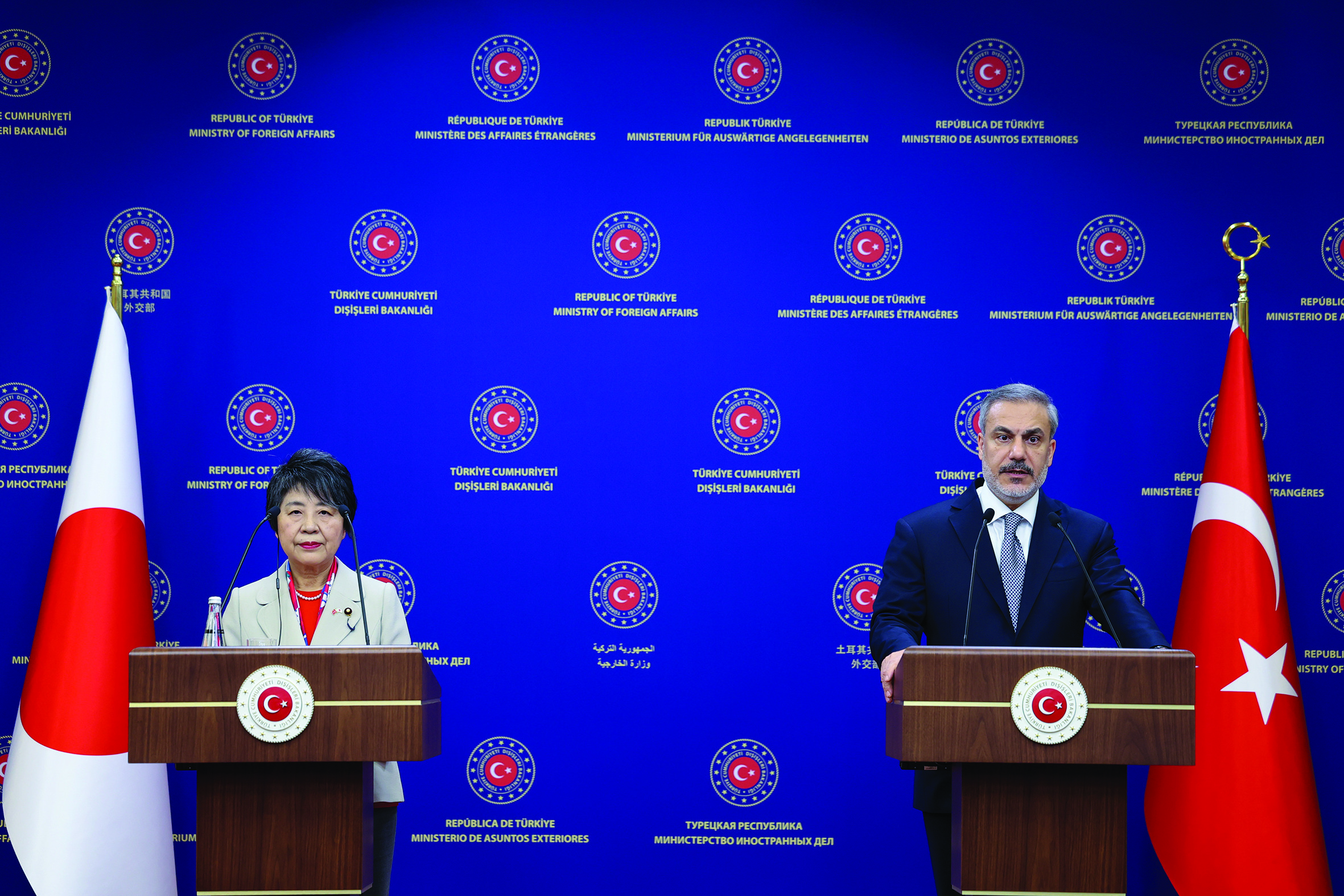
The year 2024 marks the 100th anniversary of the establishment of diplomatic relations between the Republic of Türkiye and Japan. The Republic of Türkiye and Japan established diplomatic relations on August 6, 1924. The following year, in March 1925, the Japanese Embassy in Türkiye was opened in İstanbul (the Japanese Embassy was moved to Ankara in October 1937). In November of the same year, Saikichi Obata was appointed as the first Ambassador Extraordinary and Plenipotentiary and dispatched to İstanbul. Around the same time, Hitoshi Ashida, who served as Prime Minister after the Second World War, took up his post as first secretary, and after Obata returned to Japan, he served as temporary chargé d’affaires for a period. Furthermore, during this period, historian Chishu Naito was also working in İstanbul as a first-class interpreter. In 1931, Naito wrote the first book on the relationship between Türkiye and Japan, titled History of Japan-Turkish Negotiations, and also published Turkish language textbooks and a dictionary. He was a pioneer in Turkish studies in Japan.
Also, when we think of relations between Türkiye and Japan, the first thing that comes to mind is the ship Ertuğrul, which was dispatched by the then Sultan Abdulhamid the Second on September 16, 1890, and was shipwrecked near Kushimoto town, Higashimuro district, Wakayama prefecture. The number of victims in this accident reached 600. Meanwhile, the local people of Kushimoto town desperately carried out relief efforts, which saved many lives. The spirit of mutual aid that has continued since this incident strongly defines the relationship between the two countries. Another example is that, on March 17, 1985, during the Iran-Iraq War that began in 1980.1 Iraqi President Saddam Hussein announced that, Iraqi government would shoot all aircraft including civilian airplane flying over Iranian airspace down from March 19 onwards. Immediately after this declaration, foreigners staying in Iran at the time rushed to the airport to leave the country, trying to fly home before the promised date of the 19th. However, because Japan did not have direct flights to Iran, Japanese residents in Iran were unable to board a plane. Naturally, airlines from other countries prioritized rescuing their own citizens, but in this case, Turkish Airlines was the first to allow Japanese residents to leave the country before their own citizens. The legacy of the Ertuğrul incident was firmly entrenched between the two countries.
In the wake of the Marmara earthquake, then-Foreign Minister Masahiko Komura visited Türkiye on August 18, the day after the earthquake, and was the first foreign official to enter İstanbul
On the other hand, although there is no conflict between Türkiye and Japan due to their geographical distance, it is also difficult to foster a concrete cooperative relationship. For this reason, the relationship between the two countries was often referred to as “romanticism.”2 Furthermore, to take a deeper look at the relationship between Türkiye and Japan, it is essential to better understand the issues that each other faces. For example, Japan, which has a pacifist constitution, is unlikely to be able to hope for a cooperative relationship in the defense industry, which Türkiye is focusing on. This article looks back on the relationship between the two countries, in which it was difficult to see a concrete cooperative relationship despite the good relationship, and examines in what areas the two countries can cooperate in more concrete ways in the future, mainly from Japan’s perspective. In undertaking this analysis, the relationship between the two countries will not merely be considered; attention will also be given to the diplomatic constraints and public opinion that each country confronts. Today, with the proliferation of social media and the rise of populist politicians, public opinion has become more important than ever, and it has become extremely difficult to advance policies without the consent of public opinion. Only by understanding these constraints can we begin to have fruitful discussions about bilateral relations.
Characteristics of Bilateral Relations: Imperial and Economic Diplomacy
Looking back at the exchanges between Japan and Türkiye, it can be noticed that the Japanese imperial family had a large presence.3 In June 1926, the Japan-Türkiye Society was established to strengthen relations with Türkiye, and Prince Nobuhito was appointed as the association’s first President. The current President of the association as of February 2024 is Princess Akiko of Mikasa. Prince Takahito of Mikasa, the younger brother of Emperor Showa and a researcher of the history of the ancient Orient, had a strong interest in Türkiye and visited Türkiye in the early 1960s. He met with President Cemal Gürsel, Prime Minister İsmet İnönü, and others. Furthermore, the Middle East Cultural Center was completed in 1979 in Tokyo at the initiative of Prince Mikasa, and in 1998, the Japanese Institute of Anatolian Archeology was completed as an affiliated institution in Kaman District, Kırşehir, in central Anatolia. In this way, the imperial family has supported cultural activities between Japan and Türkiye.
The Constitution of Japan, which was concluded after the defeat in the Second World War, was a pacifist constitution represented by Article 9, which says, “Aspiring sincerely to an international peace based on justice and order, the Japanese people forever renounce war as a sovereign right of the nation and the threat or use of force as means of settling international disputes. To accomplish the aim of the preceding paragraph, land, sea, and air forces, as well as other war potential, will never be maintained. The right of belligerency of the state will not be recognized.”4 It pursued a non-military stance. Naturally, this had an impact on Japan’s post-war foreign policy. The two Prime Ministers of the 1950s and 1960s, Shigeru Yoshida and Hayato Ikeda, are the most emblematic of this attitude. Shigeru Yoshida (1946-1947, 1948-1954: Prime Minister) is often regarded as a “realist” due to the long-lasting achievements of Japanese economic prosperity under U.S. security.5 The Yoshida Doctrine, which (i) emphasizes alliances with the U.S., (ii) focuses on economics to reconstruct the domestic economy, and (iii) keeps lightly armed forces (the Japan Self-Defense Forces), became the pillar of post-war Japanese diplomacy and successfully matched the U.S. containment policy vis-à-vis the communist bloc after the 1950 Korean War. In 1960, Japan enacted an “Income Doubling Plan” and prepared a tariff rule for realizing import liberalization with exceptions made in the case of several protected goods.6
Historically, the relationship between the two countries has centered on cultural diplomacy and economic diplomacy, with the imperial family, certain powerful politicians, and the business community supporting the relationship
Japan’s diplomatic stance was also reflected in its relationship with Türkiye. The relationship between the two countries was limited to the economic and development fields. Japan, which was ahead in technological capabilities, contributed to Türkiye’s development.7 In October 1968, when a coalition of parliamentarians led by former Prime Minister Nobusuke Kishi visited Türkiye, there was a talk between the parliamentarians of both countries about Japan’s participation in the construction of the Second Bosphorus Bridge, which would later become a reality. The visiting delegation also included Shintaro Abe,8 Kishi’s son-in-law and the father of Shinzo Abe, who ruled for a long time in the 2010s. Bidding for the Second Bosphorus Bridge (currently Fatih Sultan Mehmet Bridge) was held in April 1985, and the results were as follows: Ishikawajima-Harima Heavy Industries (currently IHI), Mitsubishi Heavy Industries, Nippon Kokan, Italy’s Impregio, and Türkiye’s STFA consortium. Three years later, in July 1988, the Second Bosphorus Bridge was successfully completed. This bridge is now one of İstanbul’s main transportation arteries. In addition, Taisei Corporation won the order for the cross-strait underground tunnel (commonly known as Marmaray) in İstanbul, which was planned in 1860 (it is a consortium with Türkiye’s Gama and Nurol, but Taisei has a 75 percent share). Construction began in 2004 and was completed on October 29, 2013, Türkiye’s National Day, with Prime Minister Abe and then-Prime Minister Recep Tayyip Erdoğan attending the ceremony.
In Japan, the person who symbolizes the relationship between the two countries is Shinzo Abe, and in Türkiye, the symbolizing figure is Turgut Özal. In September 1970, Özal, who was then Director General of National Planning, visited Japan for the first time as head of a 17-member delegation to promote economic relations between the two countries. At the end of January 1971, after visiting the U.S., Özal stopped by Japan and worked hard to explain the economic situation of Türkiye, which was suffering from inflation at the time. Özal also visited Japan in February 1981, when he was serving as deputy prime minister under the military government, and explained the status of the “January 24” economic stabilization plan, which was launched with the help of the IMF. From May 19 to 22, 1985, while he was serving as Prime Minister, Özal visited Japan again, meeting with then-Prime Minister Yasuhiro Nakasone and having an audience with the emperor. Özal spent time meeting with members of Congress or businessmen who were knowledgeable about the economy. Both the construction of the Second Bosphorus Bridge and the transport of Japanese by Turkish Airlines during the Iran-Iraq War, which I mentioned earlier, took place under the Özal regime.
In 1987, after the visit to Özal, Japan established the Japan-Türkiye Economic Committee centered on Keidanren (Japan Business Federation), and Türkiye established the Türkiye-Japan Economic Committee centered on the Council for External Economic Relations (DEİK), aimed at strengthening bilateral economic relations. A joint committee has been in place since 1987, and as of February 2024, 26 meetings have been held so far.
The Japanese government has sought to sign the Economic Partnership Agreement (EPA) with Türkiye. On July 19, 2012, Foreign Minister Koichiro Gemba and Minister of Economy, Trade, and Industry Yukio Edano held talks with Turkish Economy Minister Zafer Çağlayan, who was visiting Japan, and agreed to launch joint research on an EPA.9 Although Japan was negotiating the multilateral Trans-Pacific Partnership (TPP) and Türkiye intended to participate in the Transatlantic Trade and Investment Partnership (TTIP), both countries were genuinely interested in finalizing the bilateral Free Trade Agreement (FTA) and EPA. Japan and Türkiye have negotiated with the EPA seventeen times prior to February 2024 (the last negotiation was held in September and October 2019). Nonetheless, Japan and Türkiye have not signed the EPA yet, and the negotiations are still underway.
Also, on May 3, 2013, Abe and Erdoğan signed a $22 billion deal for the project of building the nuclear power plant in Sinop. A joint venture of Japanese companies, Mitsubishi Heavy Industries and Itochu Holding, and French company Areva took an order for the construction of a nuclear power plant in Sinop. On January 7, 2014, both Abe and Erdoğan agreed on several points, including establishing Turkish-Japanese Science and Technology (Türk-Japon Bilim ve Teknoloji Üniversitesi, TJU) in İstanbul and promoting faster approvals for the construction of a nuclear power plant at Sinop. As an initial step, both countries aimed to establish an investigative commission to build a nuclear power plant. However, the plan to construct a nuclear power plant in Sinop led by Japanese companies was formally scrapped in 2020 due to unexpectedly high project costs. On the other hand, TJU was established in 2017 and plans to open in 2024.
Historically, the relationship between the two countries has centered on cultural diplomacy and economic diplomacy, with the imperial family, certain powerful politicians, and the business community supporting the relationship.
Cooperation during Natural Disasters
Japan’s pacifist constitution limited the policies it could implement as a security policy, and its role in contributing to world peace was also limited. The activities of the United Nations have been considered the only way Japan could contribute to the field of international security since the country joined the United Nations in December 1956.10 However, until the end of the Cold War, the Japanese government continued to hesitate about whether to deploy self-defense forces in UN operations. Ever since it participated in the United Nations Transition Assistance Group (UNTAG) in Namibia in 1989, Japan has expanded its contributions, which now include not only civilian personnel, but also self-defense forces. That became possible after passing the International Peace Cooperation Law in June 1992.11 Following UNTAG, the Japanese government has supported UN peacekeeping operations in Angora, Cambodia, Mozambique, El Salvador, Timor-Leste, Nepal, Sudan, Haiti, and the Republic of South Sudan.
What Japan and Türkiye have in common is that they are earthquake-prone countries. In this field, the two countries have established cooperative relations for a quarter of a century
For Japan, human security was an attractive concept that emerged in the post-Cold War period. According to the UN Development Program’s (UNDP) Human Development Report published in 1994,12 the notion of human security is defined by emphasizing the protection of people from external and internal threats and difficult situations and also by referring to people’s empowerment for sustainable human development. As outlined by then UN Secretary-General Kofi Annan’s call at the UN’s Millennium Summit in September 2000, the concept of human security is composed of three distinct dimensions: freedom from fear, freedom from want, and freedom from future generations to sustain their lives on the planet.13 While freedom from fear highlights the containment of risks against peace and security, freedom of want points out the importance of sustainable economic development in countries, which would rely on the contribution and involvement of various stakeholders, including civil society and the private sector. Freedom for future generations to sustain their lives on the planet mainly focuses on environmental issues. Among these are freedom from want and freedom for future generations to sustain their lives on the planet according to the policies of Japanese diplomacy.
The Japanese government has placed human security at the center of its foreign policy since the Keizo Obuchi Administration. The then-Prime Minister Yoshiro Mori announced the importance of human security at the UN Millennium Summit and made efforts to establish a “Commission on Human Security.” Specifically, the Japanese government has worked on promoting the human security concept, supporting the Commission on Human Security and Advisory Board on Human Security, and investing in Official Development Assistance (ODA) to realize human security. The utmost aim of Japanese humanitarian diplomacy is to contribute to UN operations and place importance on the concept of human security. The Japan International Cooperation Agency (JICA) and other governmental organizations and NGOs provide additional support for governmental humanitarian diplomacy. The Japanese government and agencies have generally worked on the issues of freedom from want. In recent years, it has been pointed out that the perspective of human security is important even when dealing with natural disasters. Response to natural disasters is related to both freedom of fear and freedom of want.
What Japan and Türkiye have in common is that they are earthquake-prone countries. In this field, the two countries have established cooperative relations for a quarter of a century. The cooperative relationship can be broadly divided into two areas: assistance in the event of an earthquake and the provision of earthquake response know-how by the Japanese government and JICA. First, I would like to give an overview of assistance during disasters. During the Marmara earthquake with its epicenter in İzmit near İstanbul on August 17, 1999, the Düzce earthquake (Bolu earthquake) on November 12 of the same year, the Great East Japan Earthquake on March 11, 2011, the Van earthquakes on October 23 and November 9, 2011, and the Southeast Türkiye earthquakes in February 2023, both countries demonstrated the spirit of friendship.
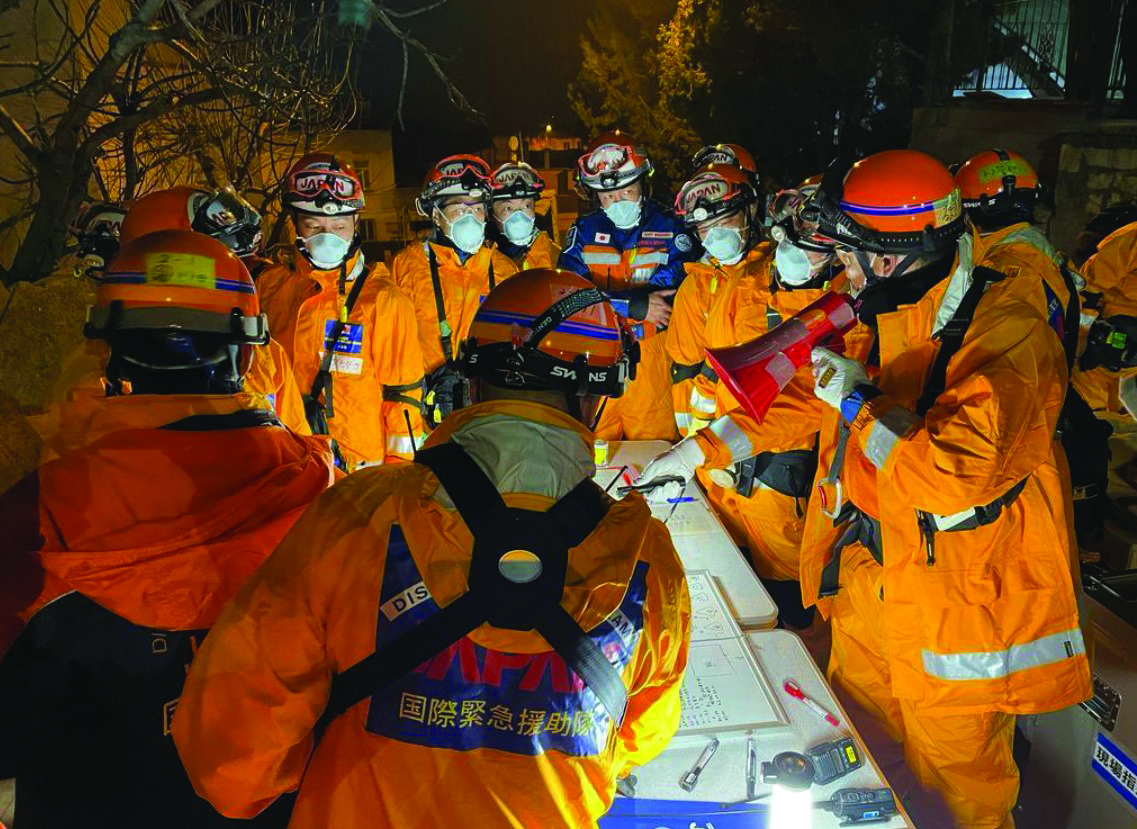 The Japan Disaster Aid Response team taking part in the rescue and health services operations carried out in Türkiye, following the 7.7 and 7.6 magnitude earthquakes on February 6 2023, whose epicenter was Kahramanmaraş in Türkiye, but affected 10 provinces in total. JAPONYA AFET YARDIM EKİBİ / AA
In the wake of the Marmara earthquake, then-Foreign Minister Masahiko Komura visited Türkiye on August 18, the day after the earthquake, and was the first foreign official to enter İstanbul. Japan dispatched emergency relief teams, provided emergency supplies, and sent a total of approximately $600,000 in emergency grant aid. Next, the Japanese government provided active support, including dispatching experts to conduct seismic surveys, announcing an emergency yen loan of $200 million, and providing additional emergency grant aid. The Düzce earthquake, which occurred about three months after the Marmara earthquake, also killed more than 800 people and injured about 5,000. At the time of the Düzce earthquake, the Japanese government also provided support through emergency supplies and emergency grant aid. In the wake of the Great East Japan Earthquake on March 11, 2011, Türkiye extended a helping hand to Japan. According to the Ministry of Foreign Affairs of Japan, the Turkish support team, consisting of 22 rescue workers and 5 medical personnel, is based in Rifu Town, Miyagi Prefecture, and mainly searches for missing people in Ishinomaki City, Tagajo City, and Shichigahama Town.14 The search for missing persons continued over a period of three weeks. On October 23 and November 9, 2011, earthquakes of magnitude 7.1 and magnitude 5.6 occurred in the eastern province of Van, resulting in the loss of 644 precious lives. The Japanese government responded quickly after the October 23 earthquake, providing emergency relief supplies through JICA, emergency grant aid for the establishment of temporary housing, and 500 tents. In addition, non-governmental organizations such as the Association for Aid and Relief Japan (AAR Japan) were also operating in Van. Among them, Jun Miyazaki of AAR Japan was affected by the collapse of the hotel due to the second earthquake on November 9, and he lost his life. A guard of honor ceremony was held for Miyazaki by the Turkish government. In October 2021, the Miyazaki Forest Park, named after Miyazaki, was completed in Van.
On February 6, 2023, two major earthquakes struck southeast Türkiye, killing more than 52,000 people in Türkiye and across the border in Syria. Then-Foreign Minister Mevlüt Çavuşoğlu announced at a press conference on February 10 that requests for assistance had been received from 95 countries and 16 international organizations.15 Of these, 88 countries actually dispatched relief forces and carried out rescue operations. Japan was among these countries. Japan dispatched a rescue team, a medical team, a team of experts in areas such as architecture, seismic isolation technology, earthquake resistance technology, and a Self-Defense Force unit.16 Rescue and medical teams were dispatched immediately after the earthquake occurred, and self-defense forces units transported supplies necessary for both teams’ operations, as well as contributing to international aid in response to requests from the Turkish government and NATO. A team of experts visited Türkiye on March 6, about a month after the earthquake, and conducted building surveys and infrastructure improvements. Additionally, the Japanese government provided Türkiye with $8.5 million in emergency grant aid.
Türkiye has the potential to become an important partner for Japan, which has difficulty developing dynamic diplomacy, especially when considering diplomacy with Russia and Middle Eastern countries
JICA’s disaster prevention-related projects are currently being implemented: a seismic Reinforcement Project for Large-Scale Bridges in İstanbul, a School-based Disaster Education Project, and a Capacity Improvement Project on Seismic Observation.17 There is talk of the possibility of a major earthquake occurring near İstanbul in the near future, and it is thought that cooperations between the two countries in the field of disaster prevention will further expand.
Pacifist State Is a Key Identity of Japan
As we have seen so far, relations between Japan and Türkiye have been basically friendly for the past 100 years. However, there are occasional instances where the intentions of the leaders of the two countries do not match. For example, Türkiye is currently focusing on the military industry. Among Türkiye’s industries, where economic growth has been sluggish since the late 2010s, exports are increasing and the defense industry is showing steady growth.18 In particular, drone weapons, which attracted attention during the Second Nagorno-Karabakh War, the Libyan civil war, and Russia’s invasion of Ukraine, are a symbol of this. According to research by the Oslo Peace Research Institute, as of 2023, 24 to 27 countries have purchased Bayraktar TB2 drones, developed by Türkiye’s Baykar company, and five countries have purchased Akıncı.19 For Türkiye, Japan is considered to be one of the potential export destinations for its defense industry. This is because Japan is surrounded by potential adversaries such as China, North Korea, and Russia, and it is considered essential to strengthen its defense capabilities. Although Japan is a country without an army, it is the 7th largest military power in the world.20 However, many people in Japan oppose Japan’s import of weapons from other countries. In other words, this is the flip side of the fact that the pacifist constitution has become widespread in Japan.
Rather than a bilateral relationship between Japan and Türkiye, it may be possible to balance Türkiye and Japan through a triangular relationship that includes the U.S.
Although it cannot be simplified, there is no doubt that the military has a strong influence on the national identity of the Republic of Türkiye.21 Mustafa Kemal, the country’s first president and founding father, and İsmet İnönü, its first prime minister and second president, were both military personnel. In addition, during the collapse of the Ottoman Empire after the First World War, there was a sense of pride that Kemal and others were able to protect the country on their own, and the awareness that the country was something to be protected by one’s own hands was continuously cultivated through education and military service. The army has been the main organization for the regeneration of official nationalism, or Atatürk nationalism.22 The war on terror plays an important role in maintaining a military impact on Turkish national identity.
As a result of Japan’s defeat in the Second World War, it rejects the policies of the Empire of Japan before the war and has strong negative views regarding the use of force. In recent years, the Liberal Democratic Party, especially the Abe Administration, has attempted to change the Japanese way of thinking about security in the post-war period. In other words, the Abe Administration has tried to revise Japanese passive behavior and contributions limited to non-military matters overseas, as represented by Article 9 of the Constitution.23 This was an attempt to amend the Constitution and create an environment in which Japan’s self-defense forces could make even broader international contributions overseas. However, there was persistent criticism that attempts to revise the Constitution would lead to Japan becoming involved in war. Abe’s strengthening of Japan-U.S. relations and further international contributions by the Self-Defense Forces were called “positive pacifism.”24
Looking at the results of public opinion polls in 2022 or 2023 conducted by Japanese major newspapers (Mainichi Shinbun, Yomiuri Shinbun, Asahi Shinbun, Kyodo News) and the Japan Broadcasting Corporation (NHK), there is considerable variation in the revision of Article 9.25 On average, 45.2 percent were in favor of amending Article 9, and 41 percent were against it. Although there are more people in favor of the idea than against it, the numbers are quite even. Kyodo News also asked respondents why they support or oppose the constitutional amendment.26 The result of the most common support for a constitutional amendment was “changes in the security environment,” at 75 percent. This was followed by “The Self-Defense Forces have been pointed out to be unconstitutional,” at 14 percent, “Restricting the Self-Defense Forces’ activities to exclusively defense” at 5 percent, and “The Self-Defense Forces being able to actively operate overseas” at 4 percent. On the other hand, 45 percent of the opposing opinions were “fear of pacifism collapsing,” 30 percent were “fear of being drawn into the war,” 14 percent said “the Self-Defense Forces can be interpreted as an agreement,” and 4 percent said “the current Constitution will further strengthen the Japan-U.S. alliance,” and 2 percent said, “Other countries are concerned about Japan becoming a military power.” In addition, when the Yomiuri Shinbun conducted a survey on whether Russia’s invasion of Ukraine, which broke out in February 2022, had an impact on the revision of Article 9 of the Constitution, 40 percent said, “I have become more aware that the Constitution should be revised,” which exceeded the 21 percent who said, “I am more aware that the current Constitution should be protected.” And 32 percent said there was no change.27
Discussions about constitutional revision are not new in Japan. NHK, among the media that conducts public opinion polls on constitutional amendments, has been discussing the progress of this debate in depth. According to NHK, since public opinion polls began in 1962, three trends have been observed among the public regarding constitutional amendments, including Article 9.28 These are (i) a period of low interest toward constitutional revision from the 1960s to the 1980s, (ii) a period of increased momentum for constitutional revision from the 1990s to the 2000s, and (iii) a period of caution regarding constitutional revision from the 2010s onward. The first period was relatively close to the end of the Second World War, so there were many people who had experienced the Second World War, and the government was also aiming to become an economic power, so there was no interest in constitutional revision. These are the reasons why the ratio was low. From the 1960s to the 1990s, the percentage of people who supported or opposed the idea was around 20 percent to 30 percent. In 1992, opposition to the amendment peaked at 42 percent. During the second period, memories of the Second World War were beginning to fade, and public interest in Article 9 of the Constitution was increasing with the enactment of the Peacekeeping Cooperation Law in 1992. In 2005, the percentage in favor of constitutional amendments reached a record high of 62 percent. During the third period, Shinzo Abe, who advocated constitutional amendment, was the Prime Minister, but on the contrary, the momentum for constitutional amendment weakened. As mentioned in NHK’s explanation, the Abe Administration prepared for a referendum in 2006 during its first administration, and the right to collective self-defense was established in September 2015.29 Security-related laws that include such laws may have increased the fear of being drawn into war among the public, and the detention of Japanese nationals by ISIL from 2014 to 2015 may also have had an impact. If we focus on Article 9 of the Constitution in surveys of NHK, “There is no need to amend” has always been more popular, except in 2005, when “It is necessary to amend” and “There is no need to amend” were the same at 39 percent.
There are two additional points regarding the amendment to Article 9. First, NHK’s public opinion polls have always shown that there is no need to revise Article 9, but when it comes to whether the Self-Defense Forces are constitutional or unconstitutional, the number of people who think it is constitutional has steadily increased since the 2000s. The point is that since 1954, when the Self-Defense Forces were established, the percentage of people who believe that the Self-Defense Forces violate Article 9 of the Constitution has been gradually decreasing.30 The second point is the high level of threat awareness among Japanese people. According to a Nikkei newspaper’s opinion poll,31 when asked whether they felt threatened by China, North Korea, or Russia, 87 percent, 83 percent, and 88 percent said “threatened,” respectively, and 7 percent, 11 percent, and 7 percent said “not feel threatened,” respectively. In addition, in the same survey, when asked whether they felt worried about being attacked by other countries, 77 percent answered “yes,” and 17 percent said “no.” In the question about Japanese military power, 50 percent said “weak,” 10 percent said “strong,” and 33 percent said, “undecided.”
Japan, whose diplomacy tends to be static due to its relationship with the U.S., and Türkiye, whose relationship with the U.S. can become strained depending on the issue, need to utilize not only bilateral relations but also trilateral relations, including the U.S.
In this way, it has been found that many Japanese people perceive the surrounding countries as a threat and feel that their own country’s military power is insufficient. Up until now, the Japan-U.S. alliance has been the best answer for Japan, which has been aware of the threat but respects the pacifist constitution stipulated in Article 9 of the Constitution. However, President Donald Trump, unlike previous administrations, suggested that the U.S. might not guarantee Japanese security in the event of an emergency. This change in U.S. attitude may have an impact on the Japanese government and public opinion. Also, the Japanese government has tried to expand its security role in recent years. The most notable examples are the revised National Security Strategy (NSS) of Japan, released on December 16, 2022, and strengthening relations with NATO.32
However, Article 96 of the Constitution requires that amendments to the Japanese Constitution be approved by both two-thirds of the Diet members and a majority in a referendum.33 Objectively, obtaining a majority in a referendum remains difficult.
Triangular Relationship that Complements Diplomatic Issues between Japan and Türkiye
Türkiye and Japan have the potential to complement what each other lacks. First, compared to Japan, Türkiye requires high diplomatic skills to survive and prosper, given its geopolitical location. As mentioned earlier, Japan has relied on the U.S. for its own defense since the Second World War, and its relationship with the U.S. is an absolute pillar and indispensable. Because of its excessive dependence on the U.S., the Japanese people feel that Japan’s foreign policy is static and not good at responding to unexpected situations. In the aforementioned Nihon Keizai Shinbun opinion poll, 6 percent, 29 percent, and 58 percent, respectively, said that Japan’s diplomatic power was “strong,” “neutral,” and “weak.”34
Türkiye is choosing a dynamic and pragmatic diplomacy. The Japan-U.S. relationship is an absolute pillar of diplomacy, but on the other hand, it limits Japan’s diplomacy. Under these circumstances, Türkiye has the potential to become an important partner for Japan, which has difficulty developing dynamic diplomacy, especially when considering diplomacy with Russia and Middle Eastern countries.
It will be possible for Türkiye and Japan to further deepen their relationship by building diplomatic relations based on a thorough understanding of each other’s national identities and public opinion, rather than romanticism or rationalism
There are areas where Japan can complement Türkiye’s diplomacy. In particular, Türkiye has several problems in its relationship with the U.S., even though it is an ally. Japan can be expected to play a role in bridging the relationship between Türkiye and the U.S., where relations tend to deteriorate at times. In other words, rather than a bilateral relationship between Japan and Türkiye, it may be possible to balance Türkiye and Japan through a triangular relationship that includes the U.S.
Conclusion
This article looks back at the past relationship between the two countries, in which it was difficult to see a concrete cooperative relationship despite the good relationship, and examines the diplomatic constraints and public opinion that Japan faces and what areas the two countries will pursue in more concrete ways in the future. We have been considering whether such cooperation is possible, mainly from Japan’s perspective.
The Ertuğrul incident established friendly relations between the two countries. However, what is often forgotten is that the sailors of the Ertuğrul were soldiers, and the Japanese who rescued them were civilians. This paper would like to point out that Türkiye and Japan have different identities as military and civilian states, as symbolized by the forgotten side of the Ertuğrul. Türkiye’s identity as a military state has continued even after the 2000s, when the military’s influence in politics declined. The Erdoğan government’s emphasis on the defense industry is one of the proofs of this.
Additionally, while both countries are allies of the U.S., for Japan, the U.S. is the only ally on which it depends for security. Japan, whose diplomacy tends to be static due to its relationship with the U.S., and Türkiye, whose relationship with the U.S. can become strained depending on the issue, need to utilize not only bilateral relations but also trilateral relations, including the U.S. This will allow us to build a relationship that is more than just a bilateral one.
In addition, earthquake countermeasures match the human security diplomacy advocated by Japan and are the area in which future bilateral relations are most likely to make progress. It is said that there is a high possibility that Türkiye’s İstanbul earthquake, Japan’s capital inland earthquake, and the Nankai Trough earthquake will occur within the next 30 years. It is extremely important for security to establish a cooperative relationship to determine how to prepare for such disasters and what kind of assistance can be provided quickly when an earthquake actually occurs.
It will be possible for Türkiye and Japan to further deepen their relationship by building diplomatic relations based on a thorough understanding of each other’s national identities and public opinion, rather than romanticism or rationalism.
Endnotes
1. Takashi Morinaga, Toruko: Sekaiichi no Shinnichikoku [Türkiye: The Most Pro-Japanese Country in the World], (Japan: Myojosha, 2010).
2. Bahadır Pehlivantürk, “Turkish-Japanese Relations Turning Romanticism into Rationality,” International Journal, Vol. 67, No. 1 (March 2012), pp. 101-117.
3. Yuko Omagari, “The Relations between Japan and Turkey: Three-Dimensional Diplomacy −Roles of the Imperial Family, the Government, and Citizens,” in Satoru Nakamura and Steven Wright (eds.), Japan and the Middle East: Foreign Policies and Interdependence, (Singapore: Palgrave, 2023), pp. 109-138.
4. “The Constitution of Japan,” Prime Minister of Japan and His Cabinet, retrieved February 20, 2024, from https://japan.kantei.go.jp/constitution_and_government_of_japan/constitution_e.html.
5. Masataka Kosaka, Saisho Yoshida Sigeru [Prime Minister Shigeru Yoshida], (Tokyo: Chuo Koron Shinsha, 2006), pp. 68-75. Several authors including Heginbotham and Samuels called Japanese foreign policy as “merchant realism.” Within Japan, the “Yoshida Doctrine” or “merchant realism” appears to be developing and taking root as a collective identity at both the government and individual levels. See: Eric Heginbotham and Richard J. Samuels, “Mercantile Realism and Japanese Foreign Policy,” International Security, Vol. 22, No. 4 (1998), pp. 171-203.
6. Shujiro Urata, “Dainiji Taisengo Niokeru Nihon no Tsusho Seisaku [Japanese Commercial Policy after the Second World War],” in Nihon no Gaiko 2: Gaikoshi Sengohen [Japanese Diplomacy: Diplomatic History in Postwar Period], (Tokyo: Iwanami Shoten, 2013), pp. 278-279.
7. Relationships between Japan and Türkiye based on economy since the beginning. Japan and Türkiye held the Near East Trade Conference in 1926. See: Masaru Ikei, “The Near East Trade Conference of 1926,” in Selçuk Esenbel and Chiharu Inaba (eds.), The Rising Sun and the Turkish Crescent: New Perspectives on the History of Japanese Turkish Relations, (İstanbul: Boğaziçi University Press, 2003), pp. 145-165.
8. Shintaro Abe then visited Türkiye again in August 1983 as Foreign Minister.
9. “Nichi Toruko Keizairenkei Kyotei [Japan-Türkiye Economic Partnership Agreement],” Ministry of Foreign Affairs Japan, retrieved February 20, 2024, from https://www.mofa.go.jp/mofaj/gaiko/fta/j_turkey/ index.html.
10. Yoshihide Soeya, “Yoshida Rosen to Yoshida Dokutorin: Zyo ni Kaete [The Yoshida Line and Yoshida Doctrine],” Kokusaiseiji, Vol. 151, (March 2008), p. 1.
11. “Japan’s Contribution to UN Peacekeeping Operations,” Ministry of Foreign Affairs of Japan, retrieved February 20, 2024, from http://www.mofa.go.jp/policy/un/pko/pamph2005.html. The Japanese government sent 27 civilian personnel as electoral observers to Namibia.
12. “Human Development Report 1994,” United Nations Development Programme, (1994).
13. “We the Peoples: The Role of United Nations in the 21st Century,” United Nations, retrieved March 10, 2024, from https://press.un.org/en/2000/ 20000403.ga9704.doc.html.
14. “Wakaru! Kokusaijosei [Understanding Foreign Affairs],” Ministry of Foreign Affairs of Japan, retrieved February 22, 2024, from https://www.mofa.go.jp/mofaj/press/pr/wakaru/topics/vol73/index.html.
15. “Countries Pour Assistance, Aid to Türkiye following Twin Earthquakes that Shakes Region,” Anadolu Agency, (February 12, 2023), retrieved February 22, 2024, from https://www.aa.com.tr/en/turkiye/countries-pour-assistance-aid-to-turkiye-following-twin-earthquakes-that-shakes-region/2813904#:~:text=Many%20nations%20have%20dispatched%20search,tech%20equipment%2C%20heaters%20and%20generators.
16. “Japan-Turkey Relations (Archives),” Ministry of Foreign Affairs of Japan, retrieved February 22, 2024, from https://www.mofa.go.jp/region/middle_e/turkey/archives.html.
17. “Activities in Turkey,” JICA, retrieved February 22, 2024, from https://www.jica.go.jp/english/overseas/ turkey/activities/index.html.
18. Rıfat Öncel and Ahmet Alemdar, “2002 Sonrasında Türk Savunma Sanayiindeki Değişim ve Dönüşüm,” in Nebi Miş, Burhanettin Duran, and Abdurrahman Babacan (eds.), AK Parti ve Türkiye’nin Dönüşümü Cilt I, (SETA Yayınları, 2022), p. 294.
19. Bruno Oliveira Martins, Pinar Tank, and Beste İşleyen, “Turkish Drones as a Foreign Policy Tool,” Mideast Policy Brief, No. 1 (2023), retrieved February 22, 2024, from https://www.prio.org/publications/13435, p. 2. The names of the following 24 countries have been made public: Qatar, Libya, Ukraine, Azerbaijan, Turkmenistan, Morocco, Ethiopia, Kyrgyzstan, Somalia, Pakistan, Djibouti, Burkina Faso, Rwanda, Togo, Niger, Nigeria, Poland, Romania, Algeria, Iraq, UAE, Bangladesh, Tajikistan, and Senegal. Mustafa Enes Esen, “The Proliferation of Bayraktar TB2 Drones and Their Risk,” Institute DE, (April 7, 2023), retrieved February 23, 2024, from https://www.institude.org/analysis/the-proliferation-of-bayraktar-tb2-drones-and-their-risks.
20. According to 2024 Military Strength Ranking of Global Firepower, Japanese military strength is 7th in the world. Türkiye is 8th in the world. See: “2024 Military Strength Ranking,” Global Firepower, retrieved February 23, 2024, from https://www.globalfirepower.com/countries-listing.php.
21. As a counter-argument to the point that Türkiye is a military state, see: Ayşe Gül Altınay, The Myth of the Military-Nation: Militarism, Gender, and Education in Turkey, (New York: Palgrave, 2004).
22. Tanıl Bora, “Nationalist Discourses in Turkey,” The South Atlantic Quarterly, Vol. 102, No. 2/3 (2003), pp. 437-438.
23. “The Constitution of Japan,” Prime Minister of Japan and His Cabinet.
24. Tatsuro Debroux, “The Abe Administration and the Japan Conference: An Unfulfilled Promise to Make Japan Great Again,” Journal of Political Administrative and Local Studies, Vol. 4, No. 1 (2021), p. 1; For details of positive pacifism, see: Gavan McCormack “Japan’s “Positive Pacifism”: Issues of Historical Memory in Contemporary Foreign Policy,” The Brown Journal of World Affairs, Vol. 20, No. 2 (2014), pp. 73-91.
25. “47% Oppose Constitutional Amendment under Current Administration; Approval and Disapproval Reverse in One Year Mainichi Shimbun Poll,” Mainichi Shinbun, (May 2, 2023), retrieved February 23, 2024, from https://mainichi.jp/articles/20230502/k00/00m/040/130000c; “60% Support Constitutional Amendment, 45% Support Maintaining Military for Self-Defense...Yomiuri Public Opinion Poll,” Yomiuri Shinbun, (May 3, 2022), retrieved February 23, 2024, from https://www.yomiuri.co.jp/election/yoron-chosa/20220502-OYT1T50225/; “Article 9 “It’s Better to Change” 37%, Second Highest ever, Asahi Mail Poll,” Asahi Shinbun, (May 2, 2023), retrieved February 23, 2024, from https://www.asahi.com/articles/ASR525JLHR46UZPS004.html#:~:text=; “Joint Opinion Poll on 75th Anniversary of Article 9 Amendment, Evenly Divided Support and Disapproval,” Kyodo News, (May 2, 2022), retrieved February 23, 2024, from https://www.sankei.com/article/20220502-LKXOU6TSRZLWHGHNJVE4VYU23Q/. The reason why articles about the results of public opinion polls regarding the Constitution are concentrated on May 2 and 3 is because May 3 is Constitution Day in Japan.
26. “75% of Respondents Cited “Changes in the Security Environment” as the Reason Why It Is “Necessary” to Revise Article 9 of the Constitution, While Those Who “Agree” with the Emergency Clause Decreased By 12 Points Kyodo News Poll,” 47 News, (May 3, 2023), retrieved February 23, 2024, from https://www.47news.jp/9281144.html.
27. “61% Support Constitutional Amendment, High Level due to Coronavirus Pandemic and Invasion of Ukraine: Yomiuri Poll,” Yomiuri Shinbun, (May 3, 2023), retrieved February 23, 2024, from https://www.yomiuri.co.jp/election/yoron-chosa/20230502-OYT1T50232/.
28. “‘Changes in Consciousness’ of the Constitution as Seen from Half a Century of NHK Opinion Polls,” NHK, retrieved February 23, 2024, from https://www3.nhk.or.jp/news/special/minnanokenpou/column/001.html.
29. “‘Changes in Consciousness’ of the Constitution as Seen from Half a Century of NHK Opinion Polls,” NHK.
30. “‘Changes in Consciousness’ of the Constitution as Seen from Half a Century of NHK Opinion Polls,” NHK.
31. “Suji de Miru Yoron [Real Public Opinion in Number],” Nihon Keizai Shinbun, (February 19, 2024), retrieved February 23, 2024, from https://vdata.nikkei.com/newsgraphics/postal-mail-research-2023/
#/?current=section-5.
32. Mürsel Doğrul, “Pasifizmin Normalleştirilmesi, Japonya’nın Karşı Saldırı Yeteneği ve NATO İlişkileri,” Türkiye Yazarlar Birliği, (June 2, 2023), retrieved March 11, 2024, from https://www.tyb.org.tr/mursel-dogrul-pasifizmin-normallestirilmesi-japonyanin-karsi-saldiri-yetenegi-ve-nato-60995h.htm.
33. “The Constitution of Japan,” Prime Minister Japan and His Cabinet, retrieved February 23, 2024, from https://japan.kantei.go.jp/constitution_and_government_of_japan/constitution_e.html.
34. “Suji de Miru Yoron [Real Public Opinion in Number],” Nihon Keizai Shinbun.