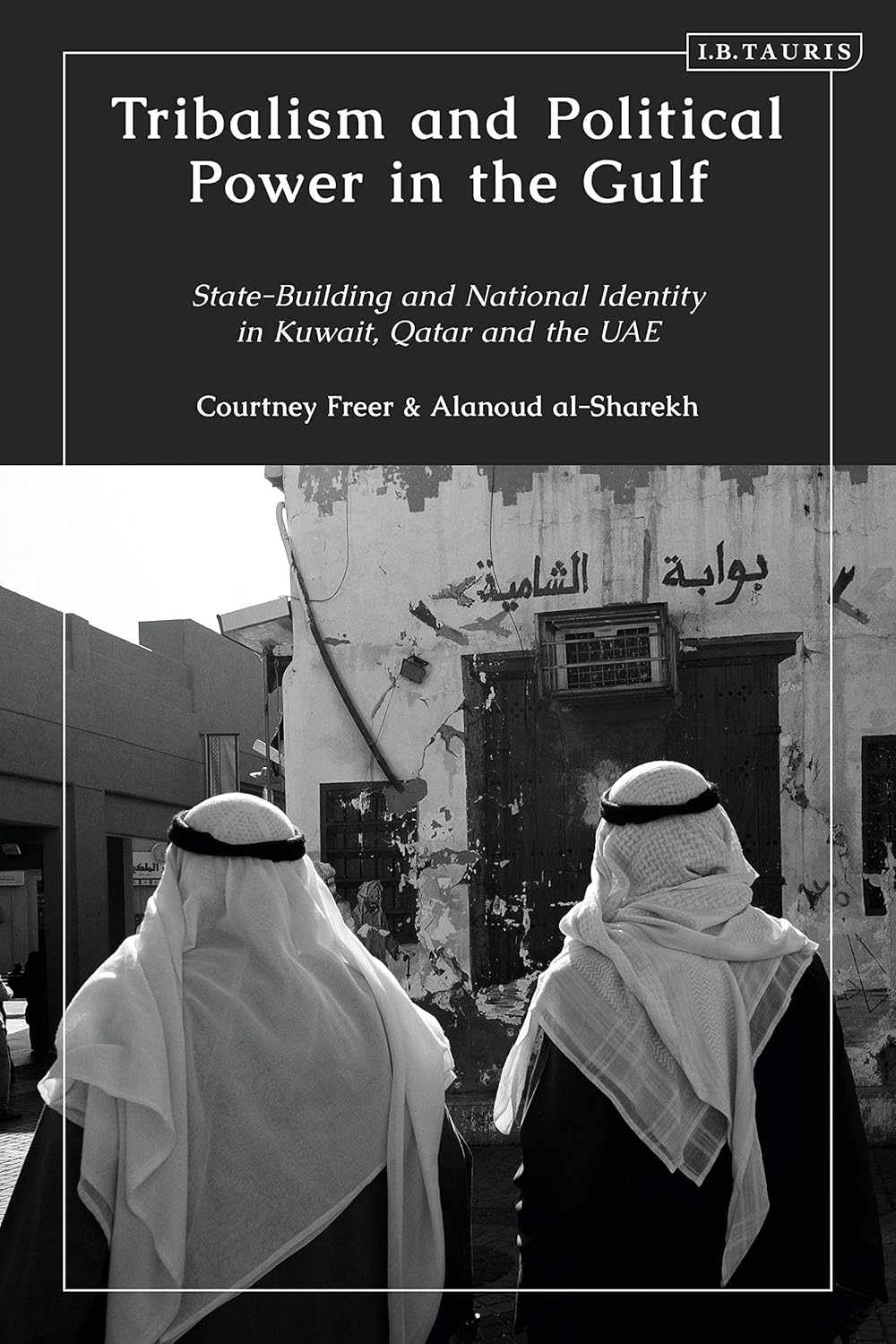
Tribalism, bedouinism, and tribal politics are constantly a topic of interest in Gulf Studies. The persistence of publications revolving around the relationship between tribes and the state proves that such notions remain relevant and valid in the Gulf Cooperation Council (GCC) political context. In their book, Tribalism and Political Power in the Gulf: State Building and National Identity in Kuwait, Qatar, and the UAE, Courtney Freer and Alanoud al-Sharekh deal with tribes as modern and political units and explore how such terms are used, pointing to different meanings attached depending on the context. Therefore, they successfully highlight the dynamic and changing nature of the tribe, along with tribal values and customs, as adjusting and evolving elements in a political and social environment rather than having a single, stable definition. They selected Kuwait, Qatar, and the UAE —GCC’s ‘super-rentier states’— as their case studies for a comparative approach, believing them to be the best examples of rentier state theory in the Gulf, given their similar circumstances.
The book has eight chapters, including an introductory and a conclusive chapter. The second chapter discusses the relationship between the badu, a term used to describe tribal populations but has become more a mark of identity, and the ruling families from a historical perspective. It seeks to explain how different components mutually influence the roles and powers assumed by tribal chiefs and how tribal actors impact the state before and after the state formation process. What applies to all three rentier states is the change of way of life through urbanization and modernization, the consolidation of state power, especially after the discovery of oil (in each respective country), and the great oil wealth controlled by the ruling elite. These developments replaced the tribal authorities with the state, i.e., the ruling family, as the main material needs supplier, forcing tribes to adjust to a new political reality. However, tribal identity and structures have persisted, with tribes remaining active as they “still grant members a powerful social affiliation akin to class in other political settings, proving their resilience even in super-rentier environments” (p. 45).
The next chapter focuses on the social evolution of the tribe in response to fundamental changes, such as coastal migration and postoil economic dynamics, with a similar historical approach. Integration and interaction increased as inland desert tribes began migrating to coastal cities and new urban settings for trade or other seasonal work options. Over time, small settlements became city-states, and the division between “inner city tribes and other urbanites (hadar)” and the “exterior desert tribes (badu)” started to emerge, despite a history of interdependence (p. 50). Colonial intervention, or more precisely, British Imperial Gulf politics, further shaped the political structures of the GCC states, creating alliances within the colonial framework between the ruling families, merchants, and tribal chiefs. This ensured the survival of some tribes while removing others. Additionally, “the discovery of oil” (p. 54) and “rapid post-oil urbanization” (p. 55) limited tribal members’ flexibility and freedom of movement, confining them geographically within the borders of a national state, despite the transnational nature of these historical tribes.
Chapter 4 considers how badu identity and heritage are reproduced and branded, particularly by the state. The authors provide examples from museums, leaders’ speeches, national symbols, official holidays, and national day celebrations to argue that the history of these countries has been homogenized to promote national cohesion and unity, portraying the state’s leader as a unifying figure above tribal affiliation. Simultaneously, rulers tend to lean on their tribal backgrounds, asserting tribal characteristics and affirming the significance of tribalism as a source of legitimacy and pride even within ruler families.
Chapter 5 stresses the flexible nature of tribes that have coexisted with empires and states throughout history. The fact that tribes are still important political and social in the new modern political system shows their durability and adaptability as an entity. Tribal reaffirmation and the evaluation of tribal values have been used to establish the ideal citizen model by adjusting certain customs and values, placing loyalty to the nation and its leader above loyalty to the tribe and its leader. However, they argue that this “selective retention and homogenization have arguably led to the failure of national identity to displace ethno-tribal identity” (p. 98). As confidence in state-provided social justice declined, tribal links, like the informal majlis or dīwāniyya system —a regular gathering space prevalent in the Arabian Peninsula for community discussions— offered easier access to the ruling elite, a benefit unavailable to non-tribal citizens, leading families who had embraced a national identity to re-tribalize.
The sixth and seventh chapters turn to relatively contemporary and recent phenomena, such as elections and social media use. Both aspects further demonstrate the ways tribes can adapt to challenges and changes and still maintain their steadfast stance as a tribe, as the most organized and unified group within the GCC countries, despite some level of disagreement within them. The electoral context in Kuwait illustrates how tribal membership determines electoral behavior by informing voting preferences based on tribal belonging. This is one example of how and when tribes impact policymaking. The emergence of new technologies, including social media, has created new, borderless platforms for tribal voices, including tribal women, who have been deprived of such political and social rights under strict rules of the patriarchal tribal order.
The book clearly emphasizes the politicization of the tribe by examining the evolution of kinship models in both the preand post-oil discovery periods, instead of a social anthropological study. Another important nuance is the focus on tribes as under-institutionalized units based on informal institutions in an under-institutionalized political system. In the absence of political parties (except in Kuwait) or official institutions, tribes have become the foremost independent, non-governmental actors able to organize, mobilize, and express political and social demands. The book attempts to explain the extent of the political role of tribes that have historically existed in the Arabian Peninsula. The authors argue that the existing literature about tribes does not address the post-state period regarding tribal transformation but only concentrates on the process of state formation. Thus, the book aims to analyze tribal behavior after state formation as well.
The authors encourage a careful examination of the usage of many different concepts such as qabila (tribe), badu (bedouin), tribalism, and hadar (settled merchants). They “hope to look into the modern usage” of these terms “as a set of socio-political behaviors, which exist, (..) in the framework of super-rentier states” (p. 17). Hence, they point to modern interpretations of these terms with continuously developing meanings that are interchangeable, depending on other variables like political structures, distribution of power, and perceived interests, instead of fixated clear-cut descriptions. It is also worthwhile mentioning that having a local scholar like Alanoud al-Sharekh as a co-author enriches the work, helping to distinguish it from Western sources that carry the risk of producing some level of orientalism or lack the nuance that local perspectives provide. Despite this merit and their initial criticism of reliance on Western documentation of tribal life, the study could have benefited from incorporating more Arabic sources and conducting interviews with tribe members directly, in addition to scholars.
The story of tribes and the state within the GCC is a continuous, ever evolving, and dynamic one. Both parties mutually affect each other in an interdependent manner. The implications of this coexistence can be seen in many areas from identity politics to social life, elections, heritage production, and national branding. The role of tribal political power within modern nation-state structures will continue to be a critical issue as it also affects domestic, regional, and international politics. The future of the GCC citizen, as well as the political structure surrounding it, are closely related to this issue.
The book is worth reading for its meaningful contribution to the literature, offering nuanced arguments on the tensions between tribalism and nationalism, as well as between tribal and national identities, and nationbuilding within the GCC framework. It fills a gap by specifying some features of the political role of tribes. The study is unique in treating tribes primarily as political or politicized units, rather than merely social and cultural groupings. It moves beyond stereotypical and superficial explanations that often tend to disconnect tribes from their political nature, reducing them to a set of behaviors regulating mainly social and cultural life. The case selection -Kuwait, Qatar, and the UAE provide a diverse yet coherent perspective, highlighting differences, such as electoral systems, while sharing key commonalities, like tribal composition. Finally, the book covers a range of relevant and critical topics, offering valuable insights for readers interested in Gulf identity and tribal politics. Its arguments are clear and well-organized, combining academic rigor with accessibility, which makes it suitable for both experts and newcomers to the field.