
Insight Turkey
Insight Turkey
Challenging ideas
On Turkish politics and International affairs

Insight Turkey > Articles |

Türkiye and the Organization of Turkic States: A Strategic Partnership for Regional Integration

This study explores Türkiye’s role in fostering political, economic, and infrastructural integration among Turkic states, particularly within the Organization of Turkic States (OTS) and through the development of the Turan Corridor. Since the 1990s, Türkiye has strategically engaged with Central Asia and the Caucasus, emphasizing non-coercive diplomacy, cultural ties, and economic collaboration. Unlike external powers such as Russia, China, and the European Union (EU) which often pursue dominance through economic leverage or political influence Türkiye has positioned itself as a trusted partner, prioritizing regional cooperation and connectivity. The paper highlights Türkiye’s leadership in key energy and transport projects, including the Baku-Tbilisi-Ceyhan (BTC) oil pipeline, the Trans-Anatolian Natural Gas Pipeline (TANAP), and the Baku-Tbilisi-Kars (BTK) railway, reinforcing the Middle Corridor’s strategic importance. Additionally, the study examines the impact of the Russia-Ukraine war, which has increased EU engagement in Trans-Caspian connectivity. Through bilateral and multilateral platforms, Türkiye has facilitated deeper integration among Turkic states, advancing a vision of regional autonomy while balancing geopolitical competition between China and the West. The research argues that cultural cooperation is gradually transforming into institutionalized political integration, shaping the future of Turkic unification.

Türkiye and the Organization of Turkic States A Strategic Partnership


Introduction


Central Asia, often described as a landlocked region, has historically faced challenges in establishing strong external linkages. However, since the 1990s, Türkiye has played a crucial role in facilitating the region’s integration with the global economy through both physical and cultural connectivity initiatives, despite its relatively limited resources. Türkiye’s efforts to revive the historical Silk Road have significantly contributed to opening Central Asia to the world.

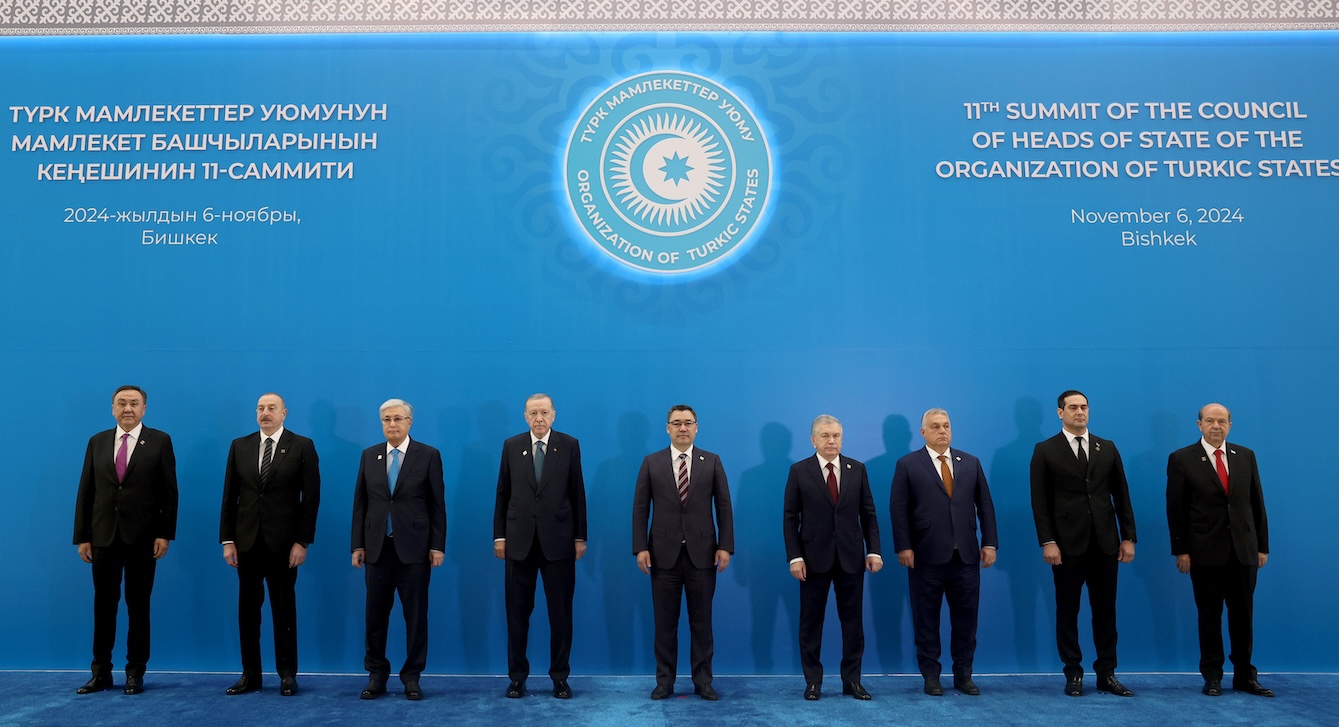
A recent report on Central Asia published by the United Kingdom Parliament in October 2023 directly references an interview with Aijan Sharshenova from the OSCE Academy in Bishkek, emphasizing Türkiye’s increasing influence in the region. The report highlights that, “Türkiye has emerged as the principal beneficiary in the region, primarily due to its respect toward its counterparts.”1 This observation underscores Türkiye’s diplomatic approach, which prioritizes mutual respect and engagement, distinguishing it from other external actors operating in Central Asia.2 In addition to its extensive cultural engagement with the Turkistan republics, Türkiye has adopted a foreign policy approach characterized by a commitment to equality, a rejection of hegemonic ambitions, and a non-interventionist stance. This approach has played a crucial role in fostering strong cooperative ties with the newly independent Turkic states. Beyond bilateral cooperation, Türkiye’s success in the region has been significantly shaped by its effective use of multilateral platforms, such as the International Organization of Turkic Culture (TÜRKSOY), the Parliamentary Assembly of Turkic States (TURKPA), and the Organization of Turkic States (OTS). These institutions have enabled Türkiye to pursue a pluralistic and inclusive regional cooperation strategy, reinforcing its position as a reliable partner for Central Asian nations.

Already have an account? Sign In.
Print Subscription
4 Print Issues
Subscribe
Digital Subscription
4 Digital Issues
Subscribe
Premium Subscription
4 Print Issues
4 Digital Issues
Subscribe

Labels »  

We use cookies in a limited and restricted manner for specific purposes. For more details, you can see "our data policy". More...