
Introduction
The contemporary international system is undergoing profound transformations, shaped by intensifying geopolitical competition, the re-emergence of protectionist tendencies, and a significant recalibration of global economic paradigms. In this dynamic environment, the ability to develop and master frontier technologies—such as AI, quantum computing, space systems, and autonomous technologies—has become indispensable for nations striving to secure sustainable economic growth, strategic resilience, and greater influence on the global stage. At the same time, multilateral frameworks and cooperative mechanisms are facing growing strains, as states place greater emphasis on technological sovereignty. As a result, there is rising trend of re-shoring, friend-shoring, and the formation of selective technology partnerships to mitigate emerging geopolitical risks.
In response to changing landscape, many countries are revisiting and strengthening their national industrial strategies. Initiatives targeting advanced manufacturing, next-generation mobility, green technologies, and digital innovation continue to reshape the global technology map. Countries that fail to read these global dynamics in time risk falling behind in their development journeys. One of the most striking examples of this is the European Union.
As highlighted in Mario Draghi’s report on the future of European competitiveness, Europe’s relative lag in driving innovation over the past two decades has left tangible marks on its economic trajectory. Despite having strong industrial heritage and high-quality workforce, Europe has not led the development of the most transformative technologies of the past two decades. The region fell behind in the digital revolution, and today has limited representation among the world’s top technology firms.
Similar to the EU, many countries are only now beginning to fully grasp the scale of this global transformation. Unlike those countries, Türkiye’s own experience has long demonstrated that sustainable growth and enduring competitiveness rely on developing original national technologies and building strong, high-value, innovation-driven production capacity. In the 1970s, Türkiye launched its Heavy Industry Initiative with the aim of establishing an independent industrial base, but this effort ultimately fell short of its ambitious goals. During the 1980s, export-oriented strategies enabled deeper integration into global value chains; however, the capacity to generate high-value, technology-intensive production remained limited. In the 1990s, just as the global expansion of the internet and platform-based business models was transforming the world economy, domestic political and economic instability constrained Türkiye’s ability to invest adequately in research, innovation, and critical infrastructure. It was not until the restoration of political and macroeconomic stability in the early 2000s that the country was able to lay the foundations for coherent long-term policy planning and create an environment conducive to private sector dynamism and entrepreneurship.
Türkiye’s own experience has long demonstrated that sustainable growth and enduring competitiveness rely on developing original national technologies and building strong, high-value, innovation-driven production capacity
Over the last two decades, Türkiye recorded significant progress across all industrial and technology indicators. The number of firms operating in the manufacturing sector and the expansion of organized industrial zones increased sharply. National institutions like TÜBİTAK (The Scientific and Technological Research Council of Türkiye) and KOSGEB (SME Industry Development Organization) expanded their programs and budgets, while newly established Development Agencies took on a catalytic role in supporting regionally balanced growth. In parallel, the growth of the production and R&D workforce contributed to a measurable rise in the country’s intellectual property capacity.
Türkiye’s National Technology Move has been designed as a comprehensive framework to further strengthen the country’s technological capabilities and global competitiveness. By deepening its critical technological competencies, investing strategically in research, innovation, and human capital, and addressing structural barriers to entrepreneurship, Türkiye seeks not only to keep pace with global technological trends but also to contribute actively to the generation and dissemination of new technologies worldwide.
Research, Development, and Innovation: Building the Foundations of the National Technology Move
Türkiye has consistently prioritized research and development as a cornerstone of its national development agenda. Supported by one of the world’s most effective incentive frameworks for R&D, the country has successfully built a dynamic innovation ecosystem virtually from scratch.
An important policy shift in the early 2000s focused on expanding private-sector R&D capacity and building a collaborative ecosystem based on robust university-industry cooperation. In this context, Technology Development Zones—known as technoparks—alongside dedicated R&D Centers and Design Centers, were established to drive innovation-led growth. Firms conducting R&D activities benefit from generous tax and social security premium incentives, as well as wage support for personnel trained in core scientific disciplines. Today, more than 1,600 private-sector R&D and Design Centers employ skilled engineers and technicians who develop high value-added, innovative solutions. In addition, 106 technoparks across the country host over 11,500 firms actively conducting research, development, and technology commercialization projects.
Achieving technological sovereignty and sustaining high value-added production fundamentally depends on a dynamic, highly skilled, and adaptable workforce
Thanks to supportive regulations and a clear national vision, Türkiye has steadily expanded both its R&D human capital and its overall investment in innovation. In 2002, the country counted only 29,000 full-time equivalent (FTE) R&D personnel; by 2023, this figure had reached nearly 291,000. With this rapid growth, Türkiye has become the second-fastest-growing OECD country in terms of expanding its R&D workforce. In parallel, annual R&D expenditure has increased dramatically—from just $1.2 billion to over $16 billion—two-thirds of which now comes directly from the private sector, demonstrating the strength of industry’s role in driving innovation-led growth.
The country’s commitment to R&D and innovation has already delivered concrete results. Over the past two decades, Türkiye’s portfolio of registered industrial property rights has expanded from just 93,000 to more than 2 million. exports of medium-high and high-technology products have increased nearly tenfold—from $10.3 billion in 2002 to $101.2 billion. Backed by this expanding R&D-driven production capacity, Türkiye now plays a stronger role in global supply chains. It serves as a trusted source for high-value manufacturing, technology-intensive components, and advanced engineering solutions that meet the demands of today’s rapidly changing world economy.
Human Capital: Empowering the Next Generation of Innovators
Achieving technological sovereignty and sustaining high value-added production fundamentally depends on a dynamic, highly skilled, and adaptable workforce. With a median age of 34, Türkiye benefits from a demographic profile that is not only younger but also more energetic and entrepreneurial than many advanced economies. To fully harness this demographic advantage, the country has prioritized comprehensive talent development strategies to equip its young population with the skills and opportunities needed to shape the technologies of the future and contribute actively to national and global innovation.
A flagship example of this vision in action is TEKNOFEST, which since 2018 has provided millions of young people with a unique platform to experiment, learn, and bring ideas to life. More than just the world’s largest aerospace and technology festival, TEKNOFEST has grown into a nationwide movement that nurtures a culture of curiosity, experimentation, and teamwork. By connecting students, engineers, startups, and industry leaders under a shared vision, it plays a critical role in cultivating new generations of innovators and entrepreneurs who will drive Türkiye’s technological transformation forward. This strong social foundation ensures that the country’s innovation capacity is not limited to institutions alone, but deeply rooted in the talent, creativity, and ambition of its people.
Türkiye’s national defense systems and platforms are now increasingly recognized as factors that not only address the country’s own security requirements but also shape contemporary security paradigms and influence broader geopolitical dynamics
The Deneyap Technology Workshops offer comprehensive three-year programs in cutting-edge fields ranging from robotics and coding to IoT applications, design, aerospace, and advanced programming — all provided free of charge to talented young students across Türkiye. Alongside Deneyap, new flagship initiatives such as Sector On Campus and the National Technology Academy have been launched to expand the country’s talent pipeline even further. These programs bring industry directly into universities and training centers, provide hands-on experience in real-world production environments, and equip participants with advanced technical and managerial skills tailored to the needs of strategic sectors.
In addition, TÜBİTAK plays an increasingly active role in developing human capital through nationwide science festivals, science centers, project competitions, and scholarship programs that inspire young people to explore, experiment, and transform ideas into practical solutions. Together, these complementary efforts ensure that Türkiye’s innovation ecosystem is continuously supplied with a diverse, skilled, and forward-looking generation — ready to drive high-value technological production and sustain the momentum of the National Technology Move.
Entrepreneurship as a Pillar of Türkiye’s Technology Leap
Türkiye has positioned technology entrepreneurship as a cornerstone of its vision for the Century of Türkiye. A comprehensive and adaptive policy framework has been established to ensure that successful tech ventures can emerge, grow, and compete internationally. Flagship initiatives such as the Technology and Innovation Fund, Regional Development Fund, Bilişim Vadisi Venture Capital Investment Fund, and the Tech-InvesTR Program channel public resources to high-potential ventures, amplifying their capacity to scale and compete globally. The TÜBİTAK BIGG Program has supported the launch of more than 2,200 technology startups so far. More than 60 accelerator programs and over 80 incubation centers provide early-stage companies with the tailored guidance and resources they need to thrive. Platforms like TEKNOFEST continue to inspire a new generation ready to lead technological progress and entrepreneurial transformation.
For decades, the aspiration to design and produce a truly national automobile has symbolized Türkiye’s broader ambition for technological independence
Today, Türkiye ranks second in Europe for pre-seed investment deals. In the past four years alone, over $5.1 billion has been invested in domestic startups, and seven ventures have already reached unicorn status.
Building on this strong foundation, new large-scale initiatives are being launched to consolidate Türkiye’s position as a global center for technology-driven entrepreneurship. The Terminal İstanbul project will transform the terminals of Atatürk Airport into the world’s largest dedicated technology and entrepreneurship hub, combining modern offices, incubation and acceleration centers, co-working spaces, shared prototyping and production facilities, and advanced R&D labs. The Türkiye Tech Visa Program, launched in 2023, reinforces the country’s appeal as a destination for world-class technology professionals and founders.
Defense Industry
The strategic vision embodied in Türkiye’s National Technology Move has found one of its earliest and most remarkable successes in the defense industry — a sector that has not only catalyzed but also showcased the country’s capacity for breakthrough innovation and technological self-reliance.
Positioned at the intersection of some of the world’s most complex security dynamics, Türkiye has long faced multi-dimensional threats and has endured overt and covert embargoes designed to restrict its defense autonomy and weaken its national security leverage. These constraints have made clear that dependence on external suppliers for critical defense technologies carries significant risks that can undermine operational readiness and strategic sovereignty.
Under the leadership of His Excellency President Recep Tayyip Erdogan, the robust political resolve and consistent state policies implemented over the past two decades have provided the institutional and financial foundations required for this transformation. Long-term R&D strategies, coordinated investment and procurement frameworks prioritizing national solutions, and sustained commitments to human capital development have enabled the emergence of a dynamic and competitive defense ecosystem.
One of the first milestones was the preparation of the National Space Program—officially launched by the President—as a comprehensive roadmap to position the country as an independent and competitive space power
As a result of comprehensive localization efforts at the product, system, and sub-system levels, the domestic content ratio has increased from approximately 20 percent to over 80 percent in just over two decades. Moreover, the scale and complexity of defense programs have expanded markedly: whereas only 62 defense projects were underway in 2002, this figure now exceeds 1,000. Türkiye’s national defense systems and platforms are now increasingly recognized as factors that not only address the country’s own security requirements but also shape contemporary security paradigms and influence broader geopolitical dynamics.
One of the most illustrative outcomes of this technological capacity-building has been Türkiye’s emergence as a competitive developer, producer, and exporter of tactical unmanned aerial vehicles (UAVs). Türkiye has successfully developed indigenous UAV platforms capable of sophisticated reconnaissance, surveillance, real-time imagery, and precision strike operations under diverse conditions. Systems such as Baykar’s Bayraktar TB2 and Akıncı have demonstrated operational effectiveness in various conflict and crisis contexts. As a result of their proven performance and cost-effectiveness, Turkish UAVs have rapidly gained a strong foothold in the global market. Today, Türkiye commands an estimated 70 percent share of the global market for military tactical UAVs. Alongside UAVs, the development of other strategic defense platforms—ranging from the Atak and Gökbey helicopters, the next-generation KAAN fifth-generation fighter jet, and advanced training aircraft such as HÜRKUŞ and HÜRJET, to national naval platforms like the MİLGEM corvettes and TCG Anadolu, as well as precision-guided munitions including SOM, ATMACA, GÖKDOĞAN, BOZDOĞAN, and KUZGUN—demonstrates Türkiye’s capacity to design and produce unique, competitive defense systems.
Turkish defense products not only offer distinct capability advantages compared to many existing systems worldwide, but their competitive acquisition costs also make them attractive solutions for partner and allied countries. As a result, Türkiye’s defense exports reached a record $7.1 billion in 2024. Preliminary data for 2025 indicate that export volumes have continued to rise strongly, with a reported 67 percent year-on-year increase during the first four months alone. In parallel, leading Turkish defense companies have secured strategic partnerships, joint production agreements, and co-development projects with several NATO member states. These collaborations help modernize and enhance the interoperability of allied defense capabilities. They also reinforce Türkiye’s position as a trusted and capable partner in supporting collective security within the Euro-Atlantic region.
Focus on Paradigm Shifts
Achieving true strategic autonomy and sustainable growth requires Türkiye’s technological transformation to extend well beyond the defense sector. Drawing on the capabilities, institutional know-how, and collaborative culture fostered within its defense industry, Türkiye has channeled the same determination and spirit of innovation into several other critical domains.
Mobility
As one of the world’s largest labor- and capital-intensive industries—and Türkiye’s leading export segment within manufacturing—mobility has always been central to the country’s industrial policy. In recent years, the sector has faced unprecedented disruption driven by the growing urgency of climate action, major declines in battery production costs, and breakthrough advances in communication and smart technologies. These forces have triggered a rapid transformation across all modes of mobility, with the automotive industry at the forefront of this change.
For decades, the aspiration to design and produce a truly national automobile has symbolized Türkiye’s broader ambition for technological independence. Recognizing the global shift towards electric and smart vehicles early on, Türkiye redefined this historic goal by aligning it with next-generation mobility demands.
TOGG, Türkiye’s first fully electric and smart vehicle brand, is the most tangible outcome of this vision. Backed by strong leadership and clear policy direction, it demonstrates that Türkiye can not only design and manufacture an indigenous electric vehicle but also compete globally in terms of quality, design, and technological capability. Today, TOGG acts as a catalyst for local suppliers, startups, and technology partners—strengthening the country’s position as a reliable production base for the evolving global automotive industry. This bold leap has reinforced Türkiye’s reputation as an attractive hub for international automotive investments. Global players have expanded their next-generation vehicle production in Türkiye, while new brands increasingly choose Türkiye as a trusted base for future-oriented mobility production.
Space
Over the past two decades, a significant decline in launch costs has opened a new era for global space exploration and industry. Once limited to only a handful of nations, access to space has now become a strategic priority for more than 80 countries seeking to leverage space science and technologies across diverse sectors ranging from agriculture and health to communications and advanced information technologies.
Türkiye has made remarkable progress in space science and technology. In particular, the country has focused its capabilities on the satellite domain—establishing design, testing, and engineering infrastructures that only a handful of countries possess worldwide.
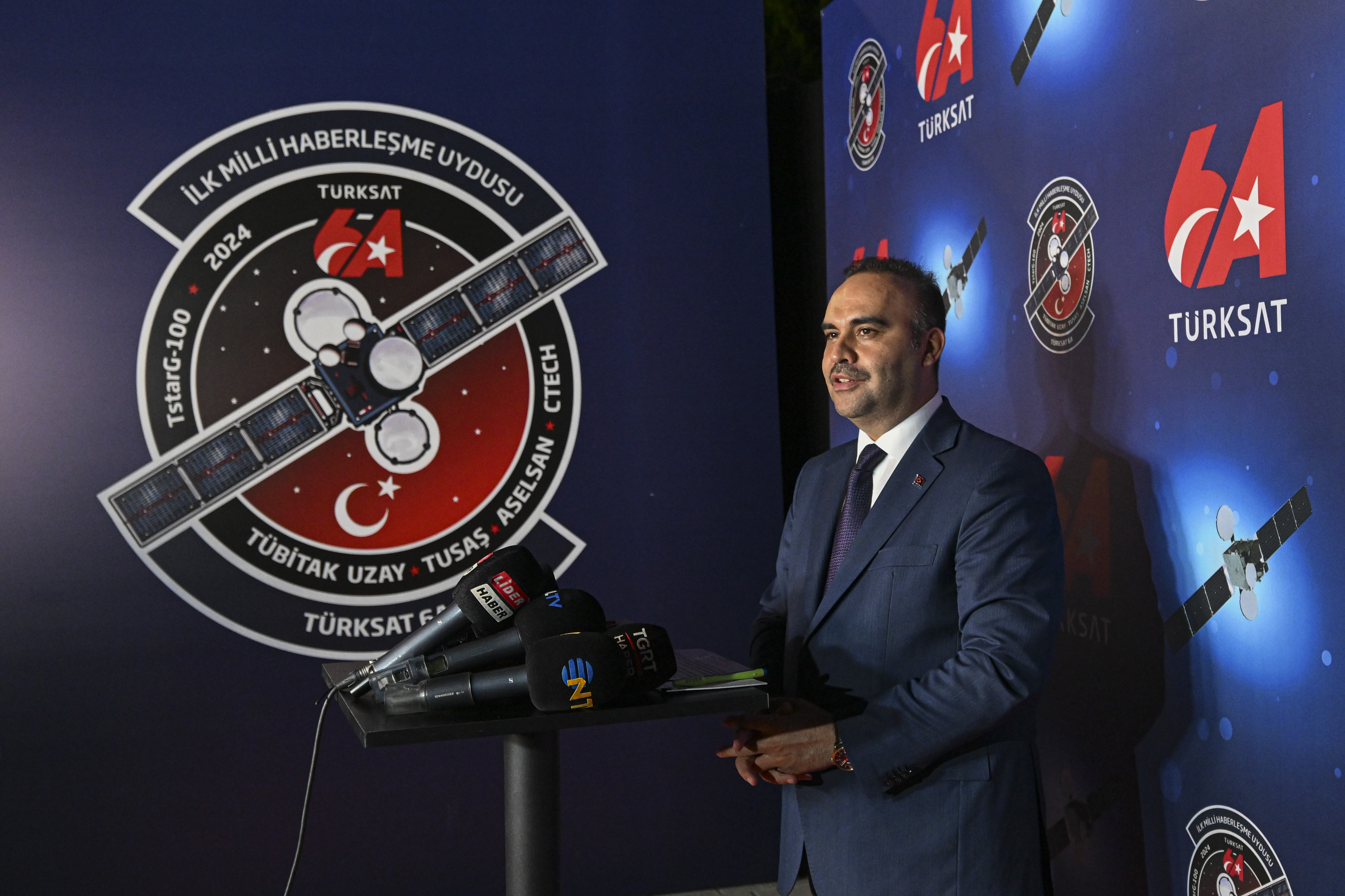
Türkiye’s journey in satellite technology localization and indigenization began with the Bilsat and Rasat satellites and reached a new level with the launch of the GÖKTÜRK-2 earth observation satellite. The versatile capabilities gained through GÖKTÜRK-2 enabled the development of İMECE—now rebranded as GÖKTÜRK 2B—a sub-meter resolution national observation satellite. The satellite provides unrestricted, high-resolution imagery from anywhere in the world. Following its progress in low-Earth orbit observation missions, Türkiye advanced to the next level with TÜRKSAT 6A—the country’s first domestically developed geostationary communication satellite. Successfully launched in July 2024 and commissioned by TÜRKSAT, TÜRKSAT 6A marked a historic milestone by placing Türkiye among only eleven countries worldwide capable of producing and operating their own communication satellites. This achievement not only expands Türkiye’s independent satellite communication capacity but also enhances its strategic autonomy in secure data transmission, broadcasting, and broadband services for both domestic and international users.
Türkiye has now launched development of TÜRKSAT 7A, which will feature high-speed data transmission, flexible coverage, and additional mission payloads to support disaster communications, public services, and secure government connectivity. In parallel, Türkiye is expanding its high-resolution earth observation capabilities with its new-generation satellite constellations İMECE-2 and İMECE-3. Türkiye is also finalizing the establishment of its National Satellite Company, which will consolidate existing public sector capacity under a single framework.
Türkiye’s National Technology Move is more than a policy agenda — it is a bold commitment to redefine the nation’s place in the global economy through technological self-reliance and collective ambition
Given the high costs, technical complexity, and interdisciplinary nature of space activities, strong institutional coordination and strategic oversight are essential. To meet these demands, the Turkish Space Agency was established in 2018 as the central authority for shaping space policy, safeguarding national interests, and coordinating programs across public institutions, industry, and academia. One of the first milestones was the preparation of the National Space Program—officially launched by the President—as a comprehensive roadmap to position the country as an independent and competitive space power.
The Program outlines ten strategic goals, including the Turkish Astronaut and Science Mission, which has already delivered historic milestones. The nation’s first astronaut, Alper Gezeravcı, conducted thirteen scientific experiments aboard the International Space Station, while a second astronaut, Tuva Cihangir Atasever, completed seven experiments during a suborbital research flight. These pioneering achievements have strengthened national capabilities and inspired a new generation of scientists and engineers.
After the mission, efforts are intensifying to achieve other priority goals under the National Space Program. Preparations are underway for a dedicated Space Technopark in Ankara to accelerate domestic innovation and foster high-tech entrepreneurship. Plans are also advancing for the construction of a national spaceport to enable independent access to orbit, while work continues on developing a domestic Regional Positioning and Timing System to enhance capabilities in navigation and timing. The ambitious Lunar Mission, supported by a domestically developed propulsion system, aims to land a national spacecraft on the Moon—demonstrating a lasting commitment to technological self-reliance and a place among the next generation of space-faring nations.
Artificial Intelligence
Eighty years ago, humanity first asked the question, “Can machines think?” Today, it would not be an exaggeration to say that artificial intelligence (AI) has become a true cognitive partner. With ever-growing data processing power and increasingly sophisticated algorithms, AI now drives innovation, productivity, and competitiveness in diverse fields, from smart manufacturing and precision agriculture to climate action and education technologies. Global studies indicate that AI, as a catalyst for high-value and sustainable growth, could contribute up to $4.4 trillion annually to the global economy in the years ahead.
To fully harness this potential, Türkiye has undertaken decisive, multi-dimensional initiatives in recent years. Guided by its National Artificial Intelligence Strategy, the country has articulated a clear vision to play an active role in the global AI transformation. Public institutions, the private sector, and universities have been aligned around shared priorities and goals. Through TÜBİTAK’s dedicated AI Ecosystem Calls, companies needing AI solutions, technology-developing SMEs, and research centers receive direct support for their projects.
A robust and secure data processing infrastructure remains an indispensable strategic pillar for sustainable AI success. In 2024, the ARF supercomputer—ranking among the world’s top 500—was commissioned, providing computing capacity equivalent to 40,000 laptops. Alongside strengthening domestic capacity, Türkiye also ensures that its private sector, universities, and public institutions can access the world’s most advanced computing facilities. As a member of the European High-Performance Computing Consortium (EuroHPC), the country’s researchers now benefit from MareNostrum 5—one of Europe’s most powerful systems.
Türkiye is accelerating its efforts in artificial intelligence through ambitious investments and pioneering projects. In the coming years, the total capacity of domestic data centers will increase from 250 MW to 1 GW, supported by a $10 billion plan to establish secure and uninterrupted national data center hubs. In parallel, the country is developing its own large language model, enriched with high-quality Turkish datasets to strengthen digital sovereignty and address local needs. A dedicated National Artificial Intelligence Fund will also be launched to back original research, deep-tech startups, and entrepreneurial initiatives, ensuring that Türkiye remains an active and trusted contributor to global AI innovation.
Twin Transformation
Humanity is witnessing the dawn of a new industrial era driven by disruptive technologies such as artificial intelligence, the Internet of Things, big data, and robotics. These advances are fundamentally reshaping business models and industrial processes worldwide. While this transformation creates significant new opportunities for innovation and growth, it also alters the balance of economic power among countries. Advanced economies are striving to safeguard their production capabilities and technological leadership through continuous innovation, while emerging economies seek to harness these disruptive technologies to capture a greater share of the global economy.
The green transition has become inseparable from this technological shift. For centuries, industrial progress relied on the assumption of unlimited resource availability, leading to over-extraction and widespread environmental degradation. Today, the consequences of this unsustainable model are clearly visible worldwide, underscoring that the move toward sustainable production methods is no longer merely a moral imperative but an economic necessity.
As global efforts to combat climate change accelerate, the link between climate policies and industrial and technology strategies is growing ever stronger. The European Union—Türkiye’s largest trading partner—has set ambitious emission reduction targets under the European Green Deal and has introduced the Carbon Border Adjustment Mechanism, which directly affects industries that lag behind in adopting clean production practices.
Türkiye recognizes that this twin transformation—digital and green—offers a strategic opportunity to drive sustainable growth and strengthen its technological competitiveness. To fully unlock this potential, policy tools are being continuously refined and expanded to address the evolving needs of industry. The Ministry of Industry and Technology has launched comprehensive Digital and Green Transformation Support Programs to help industrial facilities implement sustainability-focused and efficiency-enhancing practices. Facilities that develop approved green and digital roadmaps are designated as “Green and Digital Transformation Centers” and receive tailored incentives to accelerate their transition.
To ensure this transformation is both effective and sustainable, the Ministry is combining strong national policy instruments with robust partnerships at the international level. Cooperation with leading international financial institutions further strengthens these national efforts by providing essential funding, technical expertise, and project management support. Collaboration with the World Bank alone has mobilized over $1 billion for industrial enterprises, SMEs, and green technology entrepreneurs. In addition, Türkiye’s partnership with the European Bank for Reconstruction and Development has enabled the Türkiye Industrial Decarbonization Investment Platform, which aims to mobilize up to €5 billion for green industry investments by 2030. An additional €300 million in funding has also been allocated specifically to support digital transformation projects for SMEs—ensuring that businesses of all sizes are equipped to meet the demands of a greener, smarter industrial future.
High-Tech Production in Other Key Areas
Türkiye has taken bold, multi-dimensional steps to build advanced production and R&D capabilities not only in defense, mobility, space, and artificial intelligence, but also in strategically critical fields such as semiconductors, biotechnology, and renewable energy. This broad technological base has strengthened industrial competitiveness, diversified production. However, staying ahead in an era of rapid global technological change demands that these capabilities be continually expanded and aligned with frontier sectors. To this end, Türkiye is updating its policy toolkit and launching new-generation incentive frameworks designed to match the evolving needs of high-tech investors.
The Investment Commitment Advance Credit Program provide long-term, competitive financing for the domestic production of 284 strategically critical products—products that account for 85 percent of the current foreign trade deficit.
Through the HIT-30 Program, Türkiye aims to unlock more than USD 30 billion in advanced technology investments by 2030. The program focuses on priority sectors such as semiconductors, mobility, green energy, advanced manufacturing, healthy living technologies, digital technologies, communications, and space systems. Within this scope, the first calls have already been opened for investments in electric vehicles, batteries, chips, solar and wind energy, and R&D-focused initiatives.
These comprehensive efforts are now reinforced by a new, integrated incentive system. The new program offers an end-to-end support mechanism covering the entire process from R&D to mass production for 1,058 high-tech and high value-added priority products—ensuring that investments align with the national technology vision and regional development goals.
The determination and dynamism of the TEKNOFEST Generation drive this momentum — a new cohort that embodies the skills and mindset needed to translate national aspirations into real-world outcomes
Towards Technological Sovereignty: The 2030 Industry and Technology Strategy
Ensuring long-term economic and technological sovereignty demands a clear strategic vision, robust institutional capacity, and close cooperation among the public sector, private industry, and academia. Anchored in this understanding, the 2030 Industry and Technology Strategy serves as a concrete roadmap to strengthen the domestic production base and secure sustainable competitive advantage in critical and frontier technologies.
The strategy sets out targeted measures to expand production capabilities, achieve strategic autonomy in key sectors, and position the country as a regional and global leader in high-value, innovation-driven industries. Its overarching goal is to transform the industrial and technological landscape into an ecosystem that consistently generates higher added value, accelerates digital and green transformation, and fully aligns with global trends shaping the 21st-century economy.
In this context, priority will be given to consolidating technological capacity in areas such as nuclear energy, quantum computing, semiconductor manufacturing, and artificial intelligence. Major investments in advanced digital infrastructure — including widespread fiber optic networks, next-generation telecommunications (5G and beyond), scalable cloud computing solutions, strengthened national cybersecurity, and advanced automation and robotics — will boost industrial productivity, support new competitive value chains, and enable businesses to compete more effectively on a global scale.
Aligned with international sustainability commitments, the strategy prioritizes the transition to low-carbon, resource-efficient industrial production models. Renewable and nuclear energy, will form the backbone of a resilient and environmentally sound industrial base, ensuring continued contribution to the global green transition.
Greater integration into global value chains will be supported through new trade corridors, development partnerships, and strategic cooperation frameworks grounded in mutual benefit and trust. Programs for small and medium-sized enterprises (SMEs) will tackle barriers to productivity and scale, empowering more firms to compete successfully in international markets.
The strategy outlines measures to expand financing channels for high-tech ventures, strengthen the entrepreneurial ecosystem, and attract domestic and international investment. Under the National Industrial Zones Master Plan, production facilities in high-risk seismic areas will be relocated to safer, modern industrial sites — enhancing operational continuity and long-term resilience.
Education remains a central pillar of this transformation. New Industry and Technology Colleges to be established across Anatolia will complement the Türkiye Century Education Model by equipping future generations with the skills and competencies needed to thrive in an era defined by rapid technological change.
Through this ambitious, integrated, and forward-looking roadmap, the 2030 Industry and Technology Strategy reaffirms the determination to secure technological sovereignty, advance sustainable industrial development, and build a resilient, competitive economy ready to lead in the emerging global order.
Conclusion
Türkiye’s National Technology Move is more than a policy agenda — it is a bold commitment to redefine the nation’s place in the global economy through technological self-reliance and collective ambition. Conceived as an integrated national vision from the outset, it has grown into a broad social consensus that unites institutions, industry, and citizens behind shared goals. This transformation is reflected in tangible achievements — from the development of indigenous UAVs and smart electric vehicles to new milestones in space technologies and high-tech manufacturing. These concrete advances show how strategic investment, homegrown talent, and coordinated national effort are laying the groundwork for lasting technological leadership in an era of rapid change and global competition.
The determination and dynamism of the TEKNOFEST Generation drive this momentum — a new cohort that embodies the skills and mindset needed to translate national aspirations into real-world outcomes. Their expanding presence in research, production, and entrepreneurship demonstrates growing societal confidence in the country’s capacity to chart its own course. At the same time, the National Technology Move contributes to the global conversation on the fair and inclusive diffusion of advanced technologies. By challenging entrenched monopolies and encouraging wider participation in innovation, Türkiye shows that emerging economies can overcome structural barriers and create new opportunities for broader segments of society.
Today, the nation stands at one of the most determined moments in its history — backed by modern infrastructure, robust scientific and production capacity, and a society increasingly aligned with the vision of technological sovereignty. This momentum forms a strong foundation to position Türkiye not only as a competitive producer and trusted partner, but also as a role model for nations seeking resilient and inclusive pathways to industrial transformation.
Sustaining this trajectory will require preserving the collective spirit that drives it. Should this national consensus endure, the National Technology Move will continue to generate economic, social, and cultural gains — securing Türkiye’s rightful place in the global technology landscape and proving that shared ambition and national capacity can transform vision into enduring, generational progress.