

Introduction
Türkiye’s approach to Africa, particularly through its humanitarian diplomacy, distinguishes it from other regional and global actors. This approach has a unique narrative that Türkiye utilizes to enhance its relations with African countries. The country’s humanitarian diplomacy strategy has been shaped by both its historical ties and contemporary foreign policy paradigms. Its humanitarian diplomacy activities have accelerated significantly, especially since the early 2000s. During this period, the strengthening and restructuring of institutions such as the Turkish Cooperation and Coordination Agency (TİKA) allowed Türkiye to conduct its humanitarian aid and development cooperation policies more systematically and effectively. The activities in Somalia, in particular, stand out as one of the most notable examples of Türkiye’s humanitarian diplomacy.1
Türkiye’s humanitarian diplomacy approach is not limited to economic aid alone but also includes the development of cultural, educational, and political relations. The country has been active in many sectors of Africa, such as building schools, hospitals, and infrastructure projects. Additionally, its humanitarian aid efforts in these regions have caught the attention of other global actors, creating a significant impact on Ankara’s presence in the region.2 In Türkiye’s humanitarian diplomacy strategy, direct communication and interaction between societies is of primary importance. In this context, its approach to Africa is based on mutual benefit and sustainable development goals rather than a one-sided aid relationship.3 Consequently, Türkiye’s humanitarian diplomacy approach consolidates into a comprehensive strategy that integrates historical ties, cultural interactions, and development cooperation efforts, setting it apart from other actors. This approach strengthens Türkiye’s relations with African countries and positions it as a regional and global humanitarian actor.
Türkiye’s foreign policy toward Africa in recent years has been shaped around humanitarian diplomacy and development cooperation strategies, significantly enhancing its presence on the continent. Since 2005, Türkiye-Africa relations have gained momentum, evolving into a comprehensive cooperation process in political, economic, security, and socio-cultural fields. In this context, it is evident that the role Türkiye plays as a humanitarian diplomacy actor is fundamental to its relationships with Africa. This study aims to examine Türkiye’s humanitarian diplomacy and development cooperation strategies toward the continent within a theoretical and conceptual framework and to evaluate their reflections and impacts on African countries.
The significance of this research stems from Türkiye’s adoption of an approach that centers on human security and welfare, differentiating its policies from the traditional foreign policy perspectives. This humanitarian diplomacy strategy offers a unique model that distinguishes Türkiye from other regional and global actors. In this context, the research aims to analyze the contributions of Türkiye’s humanitarian diplomacy and development cooperation activities to sustainable development goals in Africa. Additionally, understanding how these strategies affect Türkiye’s image and influence on the continent is also a key objective of the study.
Türkiye’s humanitarian diplomacy approach is not limited to economic aid alone but also includes the development of cultural, educational, and political relations
This research aims to understand the fundamental elements of Türkiye’s humanitarian diplomacy and development cooperation strategies toward Africa, the impact of these strategies across the continent, and their contribution to sustainable development goals (SDGs). Furthermore, the study will explore how Türkiye’s strategies differ from those of other regional and global actors in Africa. The key questions the study aims to answer include: What are the main components of Türkiye’s humanitarian diplomacy and development cooperation strategies towards Africa? How do Türkiye’s humanitarian diplomacy activities impact the African continent? To what extent do development cooperation projects contribute to sustainable development in African countries? Finally, in what ways does Türkiye’s humanitarian diplomacy strategy differ from those of other actors in Africa? The answers to these questions will contribute to assessing the scope and effectiveness of Türkiye’s humanitarian diplomacy and development cooperation efforts in Africa.
This research hypothesizes that Türkiye’s humanitarian diplomacy and development cooperation strategies have strengthened its positive image in Africa and have been effectively utilized as a tool to achieve sustainable development goals. This hypothesis will be tested by examining the scope and impact of Türkiye’s humanitarian diplomacy activities on the continent. The methodology of this research adopts a qualitative approach, including an analysis of Türkiye’s humanitarian diplomacy and development cooperation strategies toward Africa. In this context, the activities of institutions shaping Türkiye’s Africa policies (such as TİKA, the Yunus Emre Institute, the Turkish Maarif Foundation, the Disaster and Emergency Management Authority (AFAD), and the Turkish Red Crescent) and the outcomes of these activities will be examined. Furthermore, a literature review will be conducted to establish a theoretical framework for Türkiye’s strategies toward Africa in the context of humanitarian diplomacy, development cooperation, soft power, public diplomacy, interdependence, and sustainable development theories.
The limitations of this research include restricted access to data on projects conducted by Türkiye in Africa and uncertainties regarding the sustainability of current projects. Additionally, evaluating the long-term impacts of Türkiye’s humanitarian diplomacy activities may be challenging due to data limitations and time constraints.
The framework of the study involves analyzing Türkiye’s humanitarian diplomacy and development cooperation strategies toward Africa while considering their historical, cultural, and political contexts. In this framework, the study plans to evaluate Türkiye’s humanitarian diplomacy strategy in terms of its historical legacy, contributions to sustainable development goals, and in the context of interdependence theory. Moreover, the study will also address the country’s relations and competition with other regional and global actors in Africa. In this regard, the case study of Sudan will be detailed as a concrete example of Türkiye’s humanitarian diplomacy strategy. This analysis will provide a critical perspective to understand the role Türkiye plays in Africa and how this role may evolve in the future.
Theoretical and Conceptual Framework
This study argues that the political, economic, security, and socio-cultural relations that Türkiye has developed with African countries, particularly since 2005, are consolidated based on the role of a “humanitarian diplomacy actor.”4 From this point of view, the study will consider theoretical and conceptual aspects, including theories of humanitarian diplomacy, development cooperation, soft power, public diplomacy, interdependence theory, and sustainable development theory. Thus, these theoretical and conceptual approaches provide a framework to understand and evaluate Türkiye’s humanitarian diplomacy and development cooperation strategy toward Africa.
Through institutions such as the Yunus Emre Institute, the Turkish Maarif Foundation, and others, Türkiye promotes Turkish culture and develops educational collaborations in African countries
Humanitarian diplomacy refers to the diplomatic activities carried out by states and international actors aimed at providing humanitarian aid, conducting development projects, and protecting human rights in situations of conflict, crisis, and natural disasters. This concept differs from the traditional understanding of diplomacy by centering on human security and welfare. Humanitarian diplomacy is a field where non-governmental organizations, international organizations, and individuals play significant roles alongside states.5 In this context, it can be noted that the fundamental elements of humanitarian diplomacy focus on three key areas: humanitarian aid, development projects, and human rights. Humanitarian aid plans short-term solutions for immediate suffering in emergencies, such as food, health, shelter, and water, while development projects and the protection of human rights involve medium and long-term projections.
In the international relations (IR) literature, humanitarian diplomacy is closely related to the concepts of soft power and public diplomacy. Joseph Nye’s concept of soft power refers to a country’s capacity to gain influence internationally through cultural, ideological, and political values.6 Consequently, humanitarian diplomacy, as part of soft power, contributes to creating a positive image and influence on countries through humanitarian values and aid. Public diplomacy involves the strategies through which states influence international relations through information, education, and cultural programs directly targeting foreign publics.7 Humanitarian diplomacy is supported by public diplomacy tools, thereby reaching a broader audience.
In this sense, Türkiye’s humanitarian diplomacy strategy has been shaped by both its historical ties and contemporary foreign policy paradigms. Since the early 2000s, Türkiye has accelerated its humanitarian diplomacy activities and become a significant actor in this field. Institutions such as TİKA, the AFAD, and the Turkish Red Crescent play key roles in executing Türkiye’s humanitarian diplomacy activities.8 From this perspective, Somalia is one of the most prominent examples of Türkiye’s humanitarian diplomacy. During the drought and famine crisis in 2011, Türkiye launched comprehensive humanitarian aid and development projects in Somalia. TİKA carried out projects related to schools, hospitals, and infrastructure in Somalia, while the Turkish Red Crescent and the AFAD provided humanitarian aid.9
On the other hand, Türkiye has strengthened its development cooperation strategy by developing economic and technical cooperation projects with African countries. These projects focus on education, health, agriculture, and infrastructure. Türkiye’s success in this area has been positively received by African countries and has increased its influence in the region.10 Additionally, Türkiye reinforces its humanitarian diplomacy in Africa through cultural and educational activities. Through institutions such as the Yunus Emre Institute, the Turkish Maarif Foundation, and others, Türkiye promotes Turkish culture and develops educational collaborations in African countries. These activities enhance Türkiye’s soft power and enable the establishment of long-term relationships.11 Thus, its humanitarian diplomacy strategy represents a comprehensive approach that integrates historical ties, cultural interactions, and development cooperation efforts. This strategy differentiates Türkiye from other regional and global actors and contributes to the country’s prominence as a humanitarian actor on the international stage. Humanitarian diplomacy is at the center of Türkiye’s Africa policies and serves as a crucial tool in efforts to achieve sustainable development goals.
Interdependence theory emphasizes that states are economically, politically, and socially dependent on one another in international relations. This theory particularly points out that, with the increase of globalization, it has become difficult for states to act alone, and international cooperation has gained importance. Interdependence is seen as a mechanism for encouraging cooperation and maintaining peaceful relations between states.12 The theory of interdependence consists of three main elements: economic interdependence, political interdependence, and socio-cultural interdependence. Economic interdependence develops as a result of reciprocal trade and investment relations among states; political interdependence involves cooperation through joint institutions and alliances, and socio-cultural interdependence refers to the connection of societies through mutual communication, migration, education, and cultural exchange.
From this perspective, interdependence theory plays a significant role in Türkiye’s Africa policy. Türkiye aims to establish mutual interdependence by developing economic, political, and social relations with African countries. For instance, Türkiye is undertaking various initiatives to increase trade volume and strengthen economic cooperation with African countries. Turkish businessmen and companies invest in many sectors in Africa, such as energy, construction, agriculture, and health. Türkiye’s direct foreign investments in Africa contribute to the increase of mutual economic interdependence.13 Diplomatically, Türkiye has strengthened its political relations with African countries by increasing its diplomatic missions and collaborating with regional organizations such as the African Union. Additionally, Türkiye’s initiatives on peace and security in Africa reinforce political interdependence. For example, Türkiye’s efforts to ensure peace and security in Somalia support political stability in the region.14 Socio-culturally, Türkiye strengthens its social ties with African countries through cultural and educational activities. By conducting educational and cultural projects in Africa through the Yunus Emre Institute and the Turkish Maarif Foundation, Türkiye contributes to the development of mutual understanding and friendly relations through cultural interaction and social dependence.15
When analyzing Türkiye’s Africa policy from a humanitarian diplomacy perspective, sustainable development is another theory to be considered. Sustainable development is an approach that advocates for economic growth to be compatible with environmental sustainability and social equity. This theory evaluates the long-term impacts and sustainability of development projects. Sustainable development aims to meet the needs of the present generations without compromising the ability of future generations to meet their own needs.16 The theory of sustainable development consists of three main elements: economic sustainability, environmental sustainability, and social sustainability. These elements aim to make economic growth continuous and balanced, protect natural resources, minimize environmental damage, and ensure social justice by enhancing societal welfare.
Within this framework, Türkiye adopts the principles of sustainable development in its development projects in Africa and carries out various projects in this area. From an economic sustainability perspective, Türkiye implements various projects in Africa to support economic development. These projects aim to strengthen local economies, increase employment, and enhance local capacities. The projects carried out by TİKA contribute to economic sustainability.17 In terms of environmental sustainability, Türkiye’s projects in Africa focus on the use of renewable energy sources, water resource management, and environmental protection. Türkiye’s agricultural projects in Africa are designed in line with the principles of environmental sustainability.18 Finally, from a social sustainability perspective, Türkiye aims to enhance societal welfare through projects that support social sustainability in Africa. Projects conducted in the fields of education, health, and social services increase the capacity of local communities and ensure social justice. Türkiye’s health projects in Africa improve access to healthcare services and enhance public health.
When Türkiye’s policies toward Africa are evaluated within the framework of interdependence and sustainable development theories, it is evident that Türkiye’s efforts are significant in strengthening economic, political, and social relations and achieving long-term development goals. Türkiye has become an important actor in Africa through its humanitarian diplomacy activities and has developed projects based on sustainable development and interdependence principles in this area.
Türkiye has become an important actor in Africa through its humanitarian diplomacy activities and has developed projects based on sustainable development and interdependence principles in this area
The Historical Legacy of Türkiye’s Humanitarian Diplomacy Strategy
The Ottoman Empire had a significant presence in Africa starting from the 15th century. Particularly, North African countries such as Egypt, Sudan, Libya, Tunisia, Algeria, and Morocco remained under Ottoman rule for many years, and relations were also developed with Sahel countries in West Africa.19 Therefore, from the 16th century to the 20th century, the Ottoman Empire established dominance over a geography20 that today includes 13 countries, from the Kingdom of Morocco to Somalia.21 The Ottoman Empire strengthened its presence in North and East Africa, particularly due to the strategic importance of the Mediterranean and the Red Sea. This process continued with the conquest of Egypt by Selim I in 1517, which led to the control of Egypt and, therefore, North and East Africa. From this period onward, the Ottoman Empire left behind numerous structures and works in Africa.
The Ottoman Empire’s presence in Africa left deep marks not only in military and political areas but also in economic, cultural, and religious aspects. The presence of the Ottoman Empire in Africa was of great importance in terms of the spread of Islam and the deepening of Islamic culture. The Ottomans established strong relations with the Bornu Sultanate in the Lake Chad Basin, the Agadez Sultanate in Niger, the Wadai Sultanate in Eastern Chad, and the Zanzibar Sultanate in East and Central Africa, as well as local groups such as Muslim communities in Nigeria and Mozambique and the Tuaregs in the Sahel region, both through the Tripoli Province and directly from İstanbul. These relationships included not only socio-cultural issues but also supporting Muslim Africans’ struggles against British, French, Spanish, German, Belgian, and Portuguese colonialism.22
These relations have left deep marks in socio-cultural terms to this day. The Ottomans made significant contributions to preserving and spreading Islamic culture by constructing mosques, madrasas, and libraries in the African region. For example, the Ottoman influence in the South African region helped spread religious education and deepen Islamic culture through the construction of mosques and madrasas.23 This situation strengthened the cultural and religious ties between African societies and the Ottoman Empire. Through religious and cultural institutions in North Africa, the Ottomans preserved and spread Islamic culture. Institutions such as mosques, madrasas, and libraries not only provided religious education but also enriched Islamic culture. These institutions left a deep impact on Muslim communities in Africa by continuing the Ottomans’ religious and cultural heritage. Moreover, the Ottomans’ comprehensive and multidimensional approach allowed Muslim communities in Africa to feel supported and ensured the continuation of the Islamic presence in the region.
The deep historical and cultural legacy of the Ottoman Empire in Africa provides a significant foundation for Türkiye’s current relations with Africa. The religious and cultural structures built during the Ottoman period contributed to Türkiye’s perception as a “brotherly country” in Africa, and this legacy is also evident in Türkiye’s humanitarian diplomacy strategy. Türkiye reinforces these historical ties inherited from the Ottomans through education, health, and development aid efforts carried out across the continent, thereby strengthening cultural and religious bonds with African peoples. This process deepens Türkiye’s diplomatic relations with Africa and enables the development of a strong partnership on the continent.
Analysis of Türkiye’s Humanitarian Diplomacy and Development Cooperation Activities
Türkiye’s policy toward Africa gained momentum, particularly since the early 2000s, adopting a multidimensional approach. Within this policy framework, Türkiye has played an active role in economic aid, cultural and educational activities, and political cooperation with Africa. Türkiye’s first aid to the African continent was delivered in 1985. Through a program run by the State Planning Organization, $10 million in aid was provided to Gambia, Guinea, Guinea-Bissau, Mauritania, Senegal, and Sudan.24 The process of developing relations between Türkiye and African countries in different fields gained momentum after the launch of Türkiye’s Opening to Africa Policy, which began in 1998, and the declaration of 2005 as the Year of Africa. Türkiye’s development cooperation activities are conducted through state and non-governmental organizations (NGOs) specialized according to the nature of the projects. TİKA, the institution responsible for coordinating Türkiye’s foreign aid, collaborates with different public institutions based on their areas of expertise in development cooperation activities. The General Staff, the Ministry of Economy, the Ministry of National Education, the Undersecretariat of Treasury, the Housing Development Administration, the AFAD, Turkish Sugar Factories Inc., the Turkish Red Crescent, the Higher Education Credit and Dormitories Institution, and the Yunus Emre Foundation are the institutions involved in international development cooperation activities on behalf of Türkiye. This historical and institutional process has contributed to Türkiye’s acceptance as a humanitarian actor in Africa.
The Ottomans made significant contributions to preserving and spreading Islamic culture by constructing mosques, madrasas, and libraries in the African region
Türkiye has gained significant prominence on the continent through its economic aid and development projects in Africa. TİKA is one of the main actors of Türkiye in this area. Having opened its first office in Ethiopia in 2005 to begin its activities in Africa, TİKA, which now has 22 offices across Africa, conducts various projects and programs despite being a relatively new aid organization on the continent. In this context, TİKA is active in many areas, including infrastructure projects, healthcare services, agricultural support, and loans to small enterprises. Türkiye’s development aid in African countries aims to contribute to the continent’s development, enhance local capacity, and promote sustainable development.25 In this context, Türkiye, through TİKA, focuses on poverty reduction, improving basic education, empowering women in social life, improving the health sector, ensuring environmental sustainability, and promoting global partnerships for development.
In the context of poverty reduction, improvements in production sectors are expected to provide broad benefits to society, and progress in agriculture plays a critical role in poverty reduction. Indeed, the fact that a large portion of the world’s and Africa’s poor population lives in rural areas increases the importance of agriculture in this regard.26 Accordingly, TİKA’s African Agricultural Development Program stands out. This program aims to carry out projects in 13 African countries in areas such as land use, agricultural production, livestock, and food technology. It also aims to combat hunger and poverty by activating the continent’s existing potential. Additionally, Türkiye is conducting bilateral agricultural projects with countries such as Sudan, Senegal, and Somalia and shares its experience in this field by providing training to agricultural experts.27
Türkiye’s cultural and educational activities in Africa are carried out through organizations such as the YTB, the Turkish Maarif Foundation, and the Yunus Emre Institute. The Yunus Emre Institute organizes various programs to promote Turkish culture and provide Turkish language education. These activities are significant within the framework of Türkiye’s soft power policy. Scholarships provided to African students under the Türkiye Scholarships program run by the YTB enhance educational cooperation between the two regions and reinforce Türkiye’s influence in Africa. In this context, Sub-Saharan African countries lag significantly behind global standards in basic education, which is a fundamental cause of poverty in the region. Notably, the fact that the majority of out-of-school children are in this region demonstrates that education plays a vital role in reducing poverty in rural areas.28
Considering this situation, Türkiye prioritizes education in its foreign aid and implements comprehensive projects in this area. In recent years, TİKA has built, renovated, and equipped many schools and educational facilities, providing extensive support to students and teachers. Particularly, school projects implemented in Niger and Gabon aim to strengthen the educational infrastructure in the region. The 42-classroom school built in Niger, along with a boarding dormitory and sports complex, provides modern education opportunities to male and female students in Niger, one of the countries with the lowest literacy rates. Such projects not only improve educational infrastructure but also support long-term development in the region and increase the capacity of educated individuals to contribute to society.29 Türkiye’s intense development cooperation toward Africa is also evident in student mobility, with thousands of African students having the opportunity to study in Türkiye each year through Türkiye Scholarships.
The continuity and success of Türkiye’s development cooperation activities in Africa will depend on both its capacity to respond to local needs and the strengthening of its international cooperation strategies
Additionally, according to TİKA’s activity reports, numerous projects, particularly in vocational education and health, are aimed at empowering women. TİKA has contributed to women’s employment and empowerment in social life in countries such as Benin, Djibouti, Chad, Ethiopia, Gabon, Cameroon, Congo, Namibia, Senegal, Tunisia, and Zambia. The Niger Maternal and Child Health Center Project aims to treat women with obstetric fistula and reintegrate them into society, while the “Support for Victims of Violence and Orphans” project in Namibia has provided employment to 560 women. Furthermore, support has been provided to women’s shelters in Cameroon, improving accommodation and vocational training opportunities for victims of violence.30
Türkiye, through public institutions and NGOs, also makes significant contributions to the health sector in Africa, supporting projects with substantial budgets and human resources. For instance, the Nyala Turkish Hospital in Sudan’s Darfur region, and hospitals built in Mogadishu, Somalia, and Misrata, Libya, represent Türkiye’s large-scale investments in this area. The Nyala Turkish Hospital provides free healthcare services to patients in the region and also offers training and experience sharing for Sudanese healthcare workers. TİKA also carries out projects such as hospital repairs, medical equipment support, and training of healthcare workers in Africa.31 Additionally, Turkish NGOs have contributed to improving healthcare conditions in the region by providing cataract surgeries and health screenings.32
The targets set by the UN for ensuring environmental sustainability include integrating sustainable development principles into national policies, protecting environmental resources, increasing access to safe drinking water, and improving living conditions in slum areas.33 In this context, Türkiye, through TİKA and other public institutions, has implemented several significant projects in Africa to promote environmental sustainability. Projects such as the Turkish-Niger Friendship Forest in Niger, the Golden Horn Clean-Up in Equatorial Guinea, and the Cheetah Conservation Center in Namibia stand out in this area, while workshops on combating desertification and erosion held in Senegal are among the notable initiatives addressing Africa’s environmental challenges. Türkiye’s water supply projects in Africa address one of the region’s most significant needs. Institutions like TİKA and the State Hydraulic Works (DSI) have drilled hundreds of water wells in countries such as Niger, Mali, Somalia, Sudan, and others, providing clean water access to millions of people. Hundreds of wells have been drilled in countries like Niger, Somalia, Sudan, and Cameroon, improving the living conditions of thousands of people.34 Türkiye’s efforts in this area make important contributions to ensuring environmental sustainability on the continent, one of the regions most affected by global climate change.
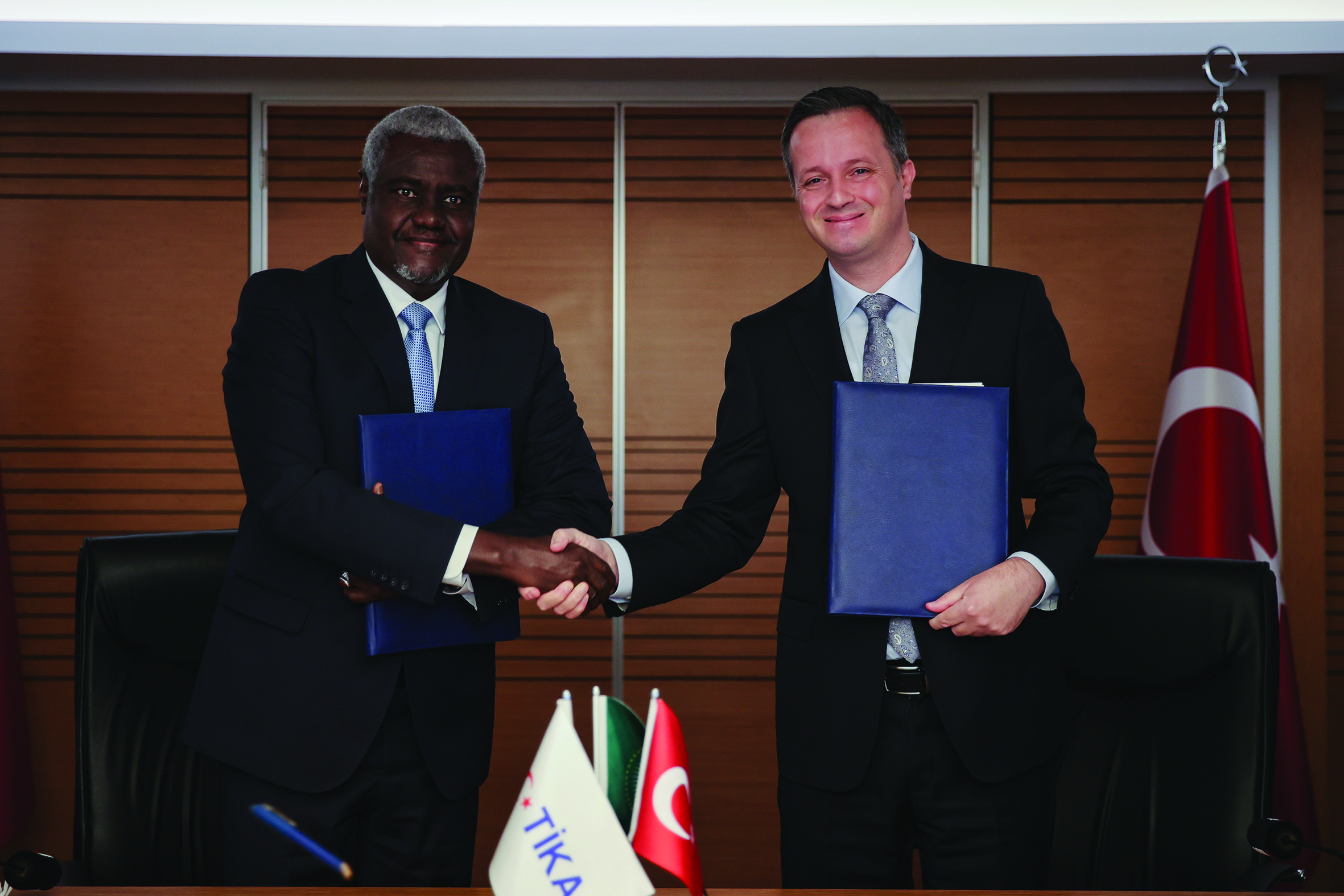
TİKA President Kayalar (R) and African Union Commission President Mahamat (L) signed the Development Cooperation Agreement between the African Union Commission and TİKA, in Ankara, Türkiye, on October 1, 2021. FATİH KURT / AA
Turkish development aid to Africa is largely shaped by Türkiye-Africa summits, and the decisions made during these meetings form the basis of international cooperation. For example, TİKA collaborates more with international organizations such as the UN Development Programme (UNDP), the UN Industrial Development Organization (UNIDO), the UN Food and Agriculture Organization (FAO), UNESCO, the Islamic Development Bank, and the Japan International Cooperation Agency (JICA) to organize educational programs and workshops. However, TİKA generally prefers bilateral cooperation based on its own experience and resources in project implementation.35 From this perspective, focusing more on international cooperation in development could be beneficial, particularly in terms of the sustainability of practices.
Türkiye’s humanitarian diplomacy and development cooperation activities in Africa contribute to promoting sustainable development and supporting regional stability on the continent. Especially in areas such as economic aid, healthcare services, education, and environmental sustainability, the projects conducted have strengthened Türkiye’s presence in Africa and deepened its relations with many countries on the continent. However, TİKA’s and other relevant Turkish institutions’ focus on bilateral cooperation in project implementation has limited the development of broader partnerships with international organizations. This can be considered a limiting factor in the sustainability and long-term impacts of Türkiye’s development aid. Increasing international cooperation by Türkiye and developing deeper partnerships with the UN and other global organizations could enhance the sustainability and effectiveness of projects. Moreover, the experience and knowledge Türkiye would gain from these collaborations could contribute to the development of more effective strategies for future development projects. The continuity and success of Türkiye’s development cooperation activities in Africa will depend on both its capacity to respond to local needs and the strengthening of its international cooperation strategies. In this context, adopting a more comprehensive and integrated development approach could further contribute to achieving the continent’s development goals.
In Türkiye’s humanitarian diplomacy strategy toward Africa, Sudan holds a special position both in terms of historical ties and regional cooperation
Sudan in Türkiye’s Humanitarian Diplomacy Strategy
At the core of Türkiye’s policy toward Africa lies a humanitarian perspective built on a mutual win-win scenario. In this context, Sudan has been identified as one of the pilot countries in Sub-Saharan Africa for Türkiye. With the opening of the TİKA Program Coordination Office in Khartoum in 2006, Türkiye has implemented numerous development aid projects in Sudan. The projects carried out in the field of development cooperation in Sudan reflect a comprehensive approach aimed at strengthening its historical, cultural, economic, and social impact in the region. These projects, conducted through TİKA, span various regions in the country, ranging from the preservation of historical and cultural heritage to education, healthcare, agriculture, livestock, energy sector, and water and sanitation projects. TİKA’s activities there are supported by a series of strategic initiatives aimed at reviving the deep-rooted historical and cultural ties between the two countries and strengthening regional cooperation.
Türkiye has undertaken significant projects in Sudan to preserve historical and cultural heritage. These projects include strengthening Ottoman heritage on Suakin Island, the restoration of Beytü’l Halife, the renovation of the electrical and water installations of the Mescid-i Kebir Mosque, and the restoration of Sultan Ali Dinar’s house, which is used as a museum.36 The works on Suakin Island gained renewed attention during President Erdoğan’s visit to Sudan in 2017, and the restoration efforts accelerated with the allocation of the island to Türkiye.37 Although the restoration project of the Sultan Ali Dinar House and Tomb in Darfur is nearing completion, its opening has been delayed due to the outbreak of civil war in Sudan on April 15, 2023.
Türkiye conducts regular projects in the field of education in Sudan every year. In this context, two Turkish language laboratories were established in 2015, followed by various trainings provided within the Türkiye-Sudan Vocational Training Center. In 2017, a textile workshop was transformed into an international structure with trainees brought in from Djibouti, and capacity-building training was provided to Sudanese women unionists in 2018. Training on 3D design, printer technologies, and war journalism was provided in 2019. Furthermore, vocational training was provided to 5,504 Sudanese at the Khartoum Vocational Educators Training Center in 2020, and capacity development of young Sudanese was supported in 2021 by providing them with travel and accommodation support under the Capacity Building Program for Young Leaders.38 Additionally, in 2022, vocational training was provided to 40 Sudanese through a partnership between the Turkish Red Crescent and TİKA.39
In terms of contributing to Sudan’s development in healthcare, Türkiye provides significant contributions to the country’s health infrastructure through sustainable development projects. One of the prominent projects in this area is the establishment of the Nyala Sudan-Türkiye Training and Research Hospital in Darfur. Opened in 2014, this hospital serves approximately 500 patients daily, with a capacity of 150 beds, intensive care units, and operating rooms. Moreover, material support was provided to the Butane University Faculty of Medicine, a maternity unit was constructed in Umdom Hospital, and 27 surgeries were performed under the Smiling Children Voluntary Health Organization. In 2017, the Midwife Training Center was renovated, and 360 midwife candidates were trained. Patients were brought from Sudan to Türkiye for treatment in 2018. TİKA’s projects in this area made significant contributions to maternal and child health in Sudan, increased emergency medical capacity, and trained local healthcare personnel.40
Türkiye has also made significant contributions to Sudan’s development in the energy sector. In this context, Türkiye collaborates with institutions in Sudan to organize various vocational training and workshops. In 2015, a training program was supported for employees of the Sudan Electricity Distribution Company by TEDAŞ, and in 2016, numerous evaluation meetings and workshops were organized in various African countries through DEİK to enhance energy cooperation. Under the Vocational Cooperation Protocol signed in Khartoum in 2017, vocational training was provided to employees of the Sudan Electricity Holding Company by TEDAŞ in 2018, and the Sudan Um Haraz Training Center was reorganized to align with technological developments. In 2019, TEDAŞ provided training to the staff of the Sudan Republic Electricity Holding Company, sharing its knowledge and experience in electricity distribution.41
As Sudan is a country where agriculture and livestock play an important role,42 Türkiye has implemented several projects to support the country’s development in agriculture. For example, TİKA first provided training to four personnel to develop beekeeping activities and disseminate modern beekeeping knowledge. In the Darfur State, approximately 100 tons of seeds and agricultural tools were provided to farmers in designated villages in collaboration with the Turkish Agricultural Development Support Agency and the African Technology City. These projects were implemented particularly for farmers returning to their villages after conflicts, and cooperation was established with the Sudan Apiculture Development Support Agency and the Sudan Ministry of Science and Communication to develop beekeeping. Additionally, within the framework of the Seed Distribution Project in Darfur in 2015, various seeds and agricultural tools were distributed to assess the agricultural potential of the region. In addition to the Seed Distribution Project, bulls were purchased for the Sudan Artificial Insemination Center, and training was provided to experts. In 2020 and 2021, seed and agricultural tool support was provided to farmers in the five states of Darfur, benefiting nearly 150,000 people in total. Furthermore, equipment and supplies were provided to improve hygiene standards and increase productivity for Gum Arabic producers.43 These projects aim to support rural development, create employment opportunities, and promote the processing and marketing of products.
Türkiye’s humanitarian diplomacy approach not only responds to local needs in countries like Sudan but also has the potential to contribute to establishing stability and peace in the region, forming a global model
In Sudan, Türkiye has implemented development projects in the banking and finance sectors. Under this project, six Sudanese experts were invited to Türkiye and participated in training provided by the Undersecretariat of Treasury between September 8-12, 2014. This training aimed to increase the effectiveness of the accounting system used in tracking, identifying, and processing public revenues and expenditures in Sudan and was conducted to implement the Single Treasury Account System, which is applied in Türkiye, Sudan. The Ministry of Finance and National Economy and the Central Bank of Sudan requested support from TİKA to develop the technical infrastructure for establishing this system. Within this framework, the project aimed to establish a more effective financial management system in Sudan.44 Additionally, in 2020, Türkiye opened its first branch of Ziraat Participation Bank in Africa in Sudan.45 However, this branch suspended its operations following the outbreak of civil war in Sudan in April 2023.
On the other hand, TİKA, in cooperation with the State Hydraulic Works, has made significant contributions to water well drilling projects in regions with limited access to water in Sudan by providing training and experience-sharing programs. This process began in 2014 with the provision of support for 10 Sudanese engineers to inspect facilities in Türkiye, and between 2015 and 2020, a total of 130 water wells were drilled in various states in Sudan. Moreover, TİKA supported the “Third Sudan Responsible Ministers Conference of the Organization of Islamic Cooperation” organized by the Turkish Water Institute in 2016, which was attended at the ministerial level by 17 different countries. In 2021, TİKA planned to modernize a water analysis laboratory with modern equipment under the Nyala Water Sanitation Program in Darfur and continued its efforts to provide clean and healthy water to 2 million Sudanese in South Darfur.46
Moreover, Türkiye, through TİKA, has conducted various projects on social infrastructure and services in Sudan. These include transforming the house of Sultan Ali Dinar in Darfur into a museum in 2014, establishing a textile workshop within the Sudan-Türkiye Vocational Training Center in 2017, and creating the Sudan Cezeri Laboratory in 2020. Furthermore, TİKA established the FABLAB, known as CEZERI-LAB, at the International University of Africa’s Faculty of Engineering in Sudan, providing opportunities for students, academics, and researchers to conduct R&D activities. This laboratory was supported by installing devices brought from Türkiye and training provided by experts.47
In Türkiye’s humanitarian diplomacy strategy toward Africa, Sudan holds a special position both in terms of historical ties and regional cooperation. The projects carried out in Sudan, one of Türkiye’s priority countries in Sub-Saharan Africa, encompass a wide range of activities, from development aid to education and healthcare services, energy and agriculture to social infrastructure. These projects, conducted through TİKA, serve not only Sudan’s economic and social development but also the revival of historical and cultural ties between the two countries. The projects Türkiye implemented in Sudan provide concrete examples of the effective application of the humanitarian diplomacy strategy. Despite the civil war and political turmoil in Sudan, Türkiye’s stable and inclusive development aid to this country is of great importance for re-establishing stability in the region and laying the foundations for sustainable development. In this context, Türkiye’s projects in Sudan will, in the long-run, strengthen regional cooperation and enhance Türkiye’s positive perception across Africa. Indeed, Türkiye’s humanitarian diplomacy approach not only responds to local needs in countries like Sudan but also has the potential to contribute to establishing stability and peace in the region, forming a global model.
Türkiye’s Role within the Framework of Sustainable Development Goals
Based on Türkiye’s humanitarian diplomacy and development aid efforts in Sudan, it can be highlighted that these development projects align with the United Nations Sustainable Development Goals (SDGs), specifically SDG3 (Good Health and Well-being), SDG4 (Quality Education), SDG9 (Industry, Innovation, and Infrastructure), and SDG17 (Partnerships for the Goals). Türkiye’s projects, consistent with these goals, underscore its impact on sustainable development and humanitarian assistance in Sudan, further strengthening its position as a humanitarian actor in Africa.
In this context, Türkiye’s health projects in Sudan are a key component of its humanitarian diplomacy strategy and are directly aligned with the objectives of SDG3. The Nyala Sudan-Türkiye Training and Research Hospital, opened in Darfur in 2014, has significantly increased access to healthcare services in the region and treats approximately 500 patients daily. This hospital not only provides healthcare services but also serves as a center for the training and capacity building of Sudanese healthcare workers. Additionally, Türkiye has undertaken projects to strengthen local healthcare infrastructure across different regions of Sudan, including hospital renovations, medical equipment support, and healthcare worker training. For example, through TİKA’s projects, midwifery training programs and maternal health services have been developed, contributing to SDG3 by improving maternal and child health and enhancing the quality of healthcare services.
Secondly, Türkiye’s education projects in Sudan are aligned with SDG4, which aims to ensure inclusive and equitable quality education. Türkiye has established vocational training centers in Sudan, providing education and skills training to thousands of Sudanese citizens. The Türkiye-Sudan Vocational Training Center, in particular, offers various educational programs aimed at enhancing the vocational qualifications of Sudanese youth. Training in fields such as textile production and 3D design contributes to the development of the local workforce. Furthermore, Türkiye’s establishment of Turkish language laboratories and scholarship opportunities ensures educational equity, allowing Sudanese students to access quality education. School construction and educational material support projects carried out by TİKA strengthen Sudan’s educational infrastructure over the long term and create inclusive education opportunities in alignment with SDG4.
Thirdly, Türkiye’s investments in infrastructure and industrial development in Sudan are aligned with the goals of SDG9, which promotes the building of resilient infrastructure and fostering innovation in industry. Türkiye has organized training programs for employees of the Sudan Electricity Distribution Company to strengthen the country’s energy infrastructure and has contributed to capacity building in the local energy sector. Additionally, Türkiye has implemented various water well projects to improve access to clean water in the country. In collaboration with TİKA and the State Hydraulic Works (DSİ), Türkiye has drilled over 130 water wells in different regions, providing clean water to millions. These projects that enhance access to water can be seen as significant steps toward improving Sudan’s capacity for sustainable infrastructure and resource management, directly supporting SDG9.
Fourthly, Türkiye’s humanitarian diplomacy activities in Sudan contribute to strengthening international cooperation in line with SDG17. Türkiye has developed projects in close collaboration with both local governments and international organizations. Institutions like TİKA and the Turkish Red Crescent have played key roles in implementing development projects while also forging strong partnerships with local communities and the Sudanese government. The infrastructure and development projects that Türkiye has carried out support the country’s economic and social development while also reinforcing Türkiye’s diplomatic and economic relations in the region. Türkiye’s development aid efforts in Sudan deepen regional cooperation and strategic partnerships, further cementing its global role in humanitarian diplomacy.
Overall, Türkiye’s humanitarian diplomacy and development cooperation projects in Sudan have made significant contributions to sustainable development in line with SDG3, SDG4, SDG9, and SDG17. The projects implemented in the fields of health, education, infrastructure, and international partnerships have improved the living conditions of the Sudanese people while strengthening Türkiye’s position as a humanitarian actor in Africa. Türkiye’s comprehensive approach enables the implementation of concrete steps toward achieving long-term sustainable development goals in Sudan.
Türkiye’s humanitarian diplomacy and development cooperation strategies toward Africa have strengthened Türkiye’s positive image on the continent and have been effectively used as tools to achieve sustainable development goals
Conclusion
Türkiye’s humanitarian diplomacy and development cooperation strategies toward Africa have strengthened Türkiye’s positive image on the continent and have been effectively used as tools to achieve sustainable development goals. These strategies adopt an approach centered on human security and welfare, distinguishing them from traditional foreign policy perspectives. Türkiye’s presence on the African continent is consolidated through humanitarian aid, cultural and educational activities, political cooperation, and development projects. This study has thoroughly examined the fundamental components of Türkiye’s humanitarian diplomacy and development cooperation strategies toward Africa, their effects on the continent, and how these strategies differentiate Türkiye from other actors.
Türkiye’s humanitarian diplomacy and development cooperation strategies create a positive image on the continent, increasing its influence in Africa
The findings of the study indicate that Türkiye’s humanitarian diplomacy strategy has created a significant impact on the African continent and has contributed substantially to sustainable development goals. These strategies towards Africa represent a comprehensive approach based on mutual benefit and sustainable development goals, combining historical ties, cultural interactions, and development cooperation efforts. Humanitarian aid and development projects, especially in countries such as Somalia and Sudan, have strengthened Türkiye’s presence on the continent and contributed to its prominence as a humanitarian actor in Africa.
From these findings, four main conclusions can be drawn. The first is the impact of Türkiye’s humanitarian diplomacy and development cooperation strategies. Türkiye’s humanitarian diplomacy activities in Africa provide not only short-term humanitarian aid but also contribute to long-term sustainable development goals. Its healthcare, education, agriculture, and water supply projects in Africa have created a significant impact across the continent and improved the living conditions of local communities. For instance, agricultural projects implemented through TİKA have increased food security in various regions, while healthcare projects have made important steps toward improving public health. These projects provide concrete examples of the effective implementation of Türkiye’s humanitarian diplomacy strategy.
Secondly, there are the differences that distinguish Türkiye’s relations with African countries from those of other global and regional actors. The country’s humanitarian diplomacy approach, unlike the African policies of Western countries, is based on the principles of mutual dependence and mutual benefit. This strategy has strengthened Türkiye’s relations with African countries and positioned it as a reliable partner in Africa. Türkiye’s humanitarian diplomacy and development cooperation strategies create a positive image on the continent, increasing its influence in Africa.
Third is the role of socio-cultural and educational activities in relationships. Türkiye’s cultural and educational activities in Africa, conducted through the Yunus Emre Institute, the Turkish Maarif Foundation, and other cultural institutions, enhance Türkiye’s soft power. These activities have strengthened Türkiye’s long-term presence in Africa and deepened its cultural ties with the continent’s countries. Scholarships and educational projects provided by Türkiye in the education sector have contributed to the education of African youth and positively influenced its image in Africa.
Fourthly, through the humanitarian diplomacy and development-based relationships it establishes with African countries, Türkiye strengthens its position in international politics, particularly in the African sub-region and, more broadly, globally. Projects implemented in countries such as Sudan and Somalia have strengthened Türkiye’s regional cooperation and strategic partnerships. Türkiye’s activities in Sudan have revived the historical and cultural ties between the two countries and deepened regional cooperation. This situation has contributed to Türkiye’s ability to protect its strategic interests in Africa and increase its influence in the region.
Based on these findings, four main policy recommendations can be made regarding Türkiye’s humanitarian diplomacy efforts in Africa. In this context, firstly, the focus should be on strengthening international cooperation. Türkiye’s development aid and humanitarian diplomacy activities in Africa are generally based on bilateral cooperation. This situation can be considered a limiting factor in the sustainability and long-term impacts of projects. Türkiye should develop broader partnerships with international organizations and establish deeper cooperation with the UN and other global organizations. This strategy could increase the sustainability and effectiveness of projects and enhance the long-term impact of the development aid.
Türkiye’s humanitarian diplomacy activities in Africa provide not only short-term humanitarian aid but also contribute to long-term sustainable development goals
Secondly, Türkiye’s development projects, particularly in the fields of education and health, should focus on training and strengthening local human resources, as this would enhance the long-term impact of the projects when local capacity is strengthened. In this context, Türkiye should collaborate with local institutions to develop projects aimed at capacity building and ensure that these projects adhere to the principles of sustainable development.
Thirdly, Türkiye should boost regional cooperation and strategic partnerships with African countries. This strategy will strengthen Türkiye’s presence in Africa and enable it to create a greater impact on the continent. In this context, Türkiye should increase cooperation with the African Union and other regional organizations and focus more on regional cooperation projects.
Fourthly, a larger focus could be placed on strengthening communication strategies. To increase the effectiveness of Türkiye’s humanitarian diplomacy activities in Africa, communication strategies should be strengthened. Media and social media channels should be used effectively to promote Türkiye’s activities in Africa and further strengthen its image on the continent. Additionally, direct communication and interaction channels with local communities should be developed to enhance Türkiye’s presence and influence, reaching broader audiences.
In conclusion, Türkiye’s humanitarian diplomacy and development cooperation strategies toward Africa have created a significant impact on the continent and strengthened Türkiye’s presence. Through these strategies, Türkiye has emerged as a humanitarian actor in Africa and deepened its relations with many countries on the continent. The sustainability and long-term effects of the development aid and humanitarian diplomacy activities will depend on strengthening international cooperation strategies and developing projects aligned with sustainable development goals. In this context, adopting a more comprehensive and integrated development approach toward Africa could further contribute to achieving the continent’s development goals.
Endnotes
1. Cemalettin Haşimi, “Turkey’s Humanitarian Diplomacy and Development Cooperation,” Insight Turkey, Vol. 16, No. 1 (2014), pp. 127-145.
2. Senem Çevik, “The African Frontier in Humanitarian and Development Work,” USC Center on Public Diplomacy, (January 22, 2014), retrieved from https://uscpublicdiplomacy.org/blog/african-frontier-humanitarian-and-development-work.
3. Bruce Gilley, “Turkey, Middle Powers, and the New Humanitarianism,” PERCEPTIONS: Journal of International Affairs, Vol. 20, No. 1 (April 2015), pp. 37-58.
4. See: Mehmet Özkan and Serhat Orakçı, “Turkey as a “Political” Actor in Africa: An Assessment of Turkish Involvement in Somalia,” Journal of Eastern African Studies, Vol. 9, No. 2 (2015), pp. 343-352; Yunus Turhan “Turkey’s Foreign Aid to Africa: An Analysis of the Post-July 15 Era,” Journal of Balkan and Near Eastern Studies, Vol. 23, No. 5 (2021), pp. 795-812; Volkan Şeyşane and Görkem Tanrıverdi, “States as “Humanitarians”: The Turkish Brand of Humanitarian Diplomacy,” Marmara Üniversitesi Siyasal Bilimler Dergisi, Vol. 10, No. 1 (2022), pp. 153-178; Nilufer Karacasulu and İrem Aşkar Karakır, “Humanitarian Foreign Policy as Soft Power: Türkiye as an Emerging Global Actor,” Ulisa: Uluslararası Çalışmalar Dergisi, Vol. 6, No. 2 (2022), pp. 121-135.
5. Michael Barnett and Thomas G. Weiss, (eds.), Humanitarianism in Question: Politics, Power, Ethics, (Cornell University Press, 2018).
6. Joseph S. Nye, Soft Power: The Means to Success in World Politics, (New York: Public Affairs, 2004).
7. Nicholas J. Cull, Public Diplomacy: Lessons from the Past, (Los Angeles: Figueroa Press, 2009).
8. Bülent Aras and Pınar Akpınar, “The Role of Humanitarian Assistance in Turkey’s Foreign Policy,” International Journal, Vol. 66, No. 3 (2011), pp. 489-502.
9. Mehmet Özkan, “Turkey’s Involvement in Somalia: Assessing the Feasibility of Its Diaspora Engagement Policy,” Journal of Ethnic and Migration Studies, Vol. 40, No. 8 (2014), pp. 1318-1335.
10. Meliha B. Altunışık, “Turkey as an ‘Emerging Donor’ and the Arab Uprisings,” Mediterranean Politics, Vol. 19, No. 3 (2014), pp. 333-350.
11. Şaban Kardaş. “Turkey’s Development Assistance Policy: How to Make Sense of the New Guy on the Block,” Turkish Studies, Vol. 14, No. 3 (2013), pp. 614-634.
12. Robert O. Keohane and Joseph S. Nye, Power and Interdependence: World Politics in Transition, (TBS The Book Service Ltd, 1977).
13. Mehmet Özkan. “Turkey’s Rising Role in Africa,” Turkish Policy Quarterly, Vol. 10, No. 4 (2012), pp. 93-105.
14. Meliha B. Altunışık and Lenore Martin. “Making Sense of Turkish Foreign Policy in the Middle East under AKP,” Turkish Studies, Vol. 12, No. 4 (2011), pp. 569-587.
15. Kaan Devecioğlu, “Türk Dış Politikasında İnsani Diplomasi: Afrika Örneği,” in Orhan Karaoğlu (ed.), Uluslararası İlişkiler Tahlilleri 2: Küresel ve Bölgesel Politikalara Akademik Bakış, (Siyasal Kitabevi, 2020). pp. 101-104.
16. Gro Hariem Brundtland, Our Common Future: Report of the World Commission on Environment and Development, (Oxford University Press, 1987).
17. See: “Turkish Development Assistance Reports,” TİKA, retrieved from https://tika.gov.tr/en/press-room/publications/turkish-development-assistance-reports/.
18. “UNDP Türkiye 2021 Yılı Raporu,” United Nations Development Programme, (2021), retrieved from https://www.undp.org/tr/turkiye/publications/undp-turkiye-2021-yillik-raporu.
19. Abdurrahman Çaycı, Büyük Sahra’da Türk - Fransız Rekabeti (1858-1911), (Ankara: Türk Tarih Kurumu, 1995).
20. Cengiz Orhonlu, Osmanlı İmparatorluğu’nun Güney Siyaseti Habeş Eyaleti, (Ankara: Türk Tarih Kurumu, 1996).
21. Ahmet Kavas, Osmanlı-Afrika İlişkileri, (İstanbul: Kitabevi, 2015), p. 33.
22. Kavas, Osmanlı-Afrika İlişkileri, pp. 517-535.
23. Ahmet Kavas, “Ottoman Empire’s Relations with Southern Africa,” Ankara Üniversitesi İlahiyat Fakültesi Dergisi, Vol. 48, No. 2 (2007), pp. 11-20.
24. “Türkiye’nin Kalkınma İşbirliği: Genel Özellikleri ve En Az Gelişmiş Ülkelere Yönelik Yaklaşımı,” Türkiye Cumhuriyeti Dışişleri Bakanlığı, retrieved from http://www.mfa.gov.tr/turkiyenin-kalkinma-isbirligi.tr.mfa.
25. See: “Turkish Development Assistance Reports,” TİKA.
26. Enver Arpa and Murat Bayar, “Türkiye’nin Afrika’ya Yönelik Kalkınma Yardımlarının Yardım Etkinliği Açısından Değerlendirilmesi,” Bilge Strateji, Vol. 11, No. 21 (2019), p. 212.
27. “2015 Annual Report,” TİKA, retrieved from https://tika.gov.tr/wp-content/uploads/2017/YAYINLAR/TKYR%202015%20ENG/KALKINMA%20.pdf, 56.
28. Arpa and Bayar, “Türkiye’nin Afrika’ya Yönelik Kalkınma Yardımlarının Yardım Etkinliği Açısından Değerlendirilmesi,” p. 213.
29. “2017 Turkish Development Assistance Report,” TİKA, retrieved from https://tika.gov.tr/wp-content/uploads/2019/Turkish%20Development%20Assistance%20Report%202017/Kalkinma2017EngWeb.pdf, p. 94.
30. See: “Turkish Development Assistance Reports,” TİKA.
31. See: “Turkish Development Assistance Reports,” TİKA.
32. Devecioğlu, “Türk Dış Politikasında İnsani Diplomasi: Afrika Örneği,” p. 105.
33. See: “The 17 Goals,” United Nation Department of Economic and Social Affairs, retrieved from https://sdgs.un.org/goals#:~:text=Protect%2C%20restore%20and%20promote%20sustainable,degradation%20and%20halt%20biodiversity%20loss.
34. See: “Turkish Development Assistance Reports,” TİKA.
35. Arpa and Bayar, “Türkiye’nin Afrika’ya Yönelik Kalkınma Yardımlarının Yardım Etkinliği Açısından Değerlendirilmesi,” pp. 217-218.
36. See: “Turkish Development Assistance Reports,” TİKA.
37. “Sudan,” TCCB, (December 24, 2017), retrieved from https://www.tccb.gov.tr/yurt-disi-ziyaretler/1708/87917/sudan.
38. See: “Turkish Development Assistance Reports,” TİKA.
39. “TİKA ve Türk Kızılay’ının Sudan’daki Mesleki Eğitim Desteği Sürüyor,” TİKA, (November 4, 2022), retrieved from https://tika.gov.tr/detail-tika_ve_turk_kizilay_inin_sudan_daki_mesleki_egitim_destegi_suruyor/.
40. See: “Turkish Development Assistance Reports,” TİKA.
41. See: “Turkish Development Assistance Reports,” TİKA.
42. Ahmed Abdalla and O. Abdel Nour, “The Agricultural Potential of Sudan,” Executive Intelligence Review, Vol. 28, No. 8 (2001), pp. 37-45.
43. See: “Turkish Development Assistance Reports,” TİKA.
44. See: “Turkish Development Assistance Reports,” TİKA.
45. “Relations between Türkiye and Sudan,” Republic of Türkiye Ministry of Foreign Affairs, retrieved from https://www.mfa.gov.tr/relations-between-turkiye-and-sudan.en.mfa.
46. See: “Turkish Development Assistance Reports,” TİKA.
47. See: “Turkish Development Assistance Reports,” TİKA.