
Insight Turkey
Insight Turkey
Challenging ideas
On Turkish politics and International affairs

Insight Turkey > Commentaries |

Algeria’s Diplomatic Mobility toward New Regional and International Prestige

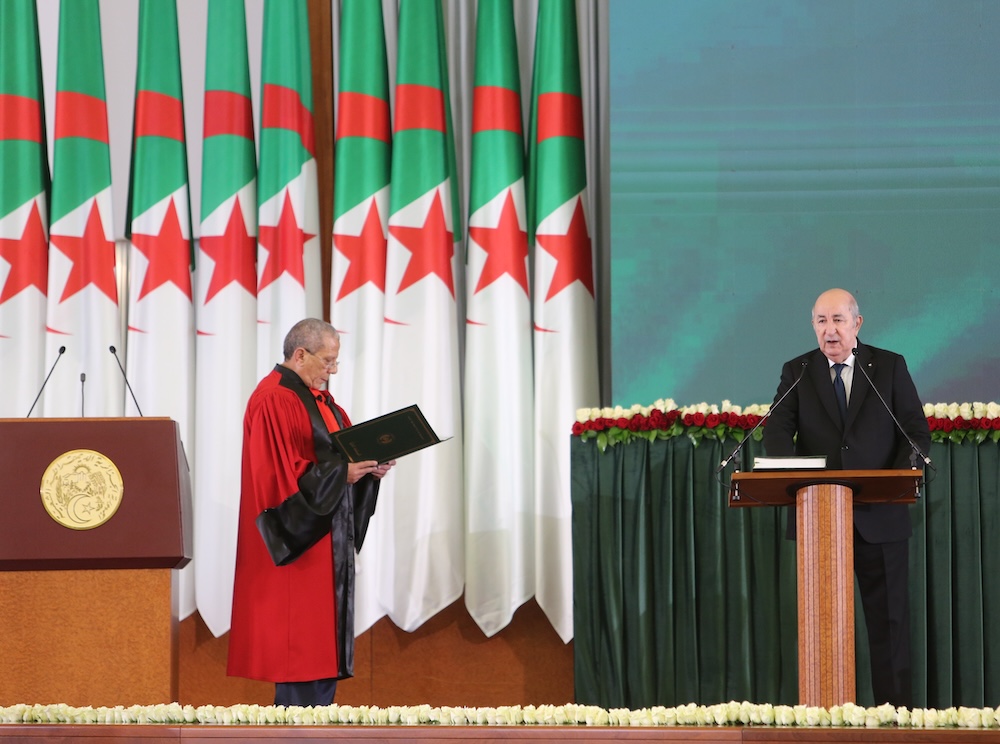
Algeria’s tumultuous geopolitical environment has often pushed its leaders to reshape the country’s foreign policy and military doctrine objectives. Following the fall of the late President Abdelaziz Bouteflika in April 2019, Algeria entered a new phase of political transformation. The country’s growing diplomatic activity, aimed at achieving renewed regional and international prestige, reflects a strengthening of its new foreign policy paradigm, one characterized by active and preemptive diplomacy. President Abdelmadjid Tebboune’s administration seeks development and economic prosperity as a foundation for greater credibility in foreign policy. This ambition is closely linked to the domestic political reforms launched after his election in December 2019. There is no doubt that Algeria’s foreign policy behavior serves as a strategic tool for leadership, as its policymakers pursue a more assertive external posture that embodies the dynamics of peace and stability. This approach contributes to Algeria’s emerging doctrine of multilateral, platform-based diplomacy.

Algeria s Diplomatic Mobility toward New Regional and International Prestige


Introduction


Diplomacy is an art of comportment and actions, without letting accusations swamp the country’s prestige and influence. In light of the first and second waves of the Arab uprisings (2011-2019), and the Operation al-Aqsa Flood on October 7, 2023 that changed the MENA region domestic and geopolitics landscape, Algeria’s regional foreign policy has faced serious allegations, and to some extent a crisis. In 2011, the representative of the Libyan National Council in a press conference accused Algeria explicitly of offering support to the Libyan Muammar al-Gaddafi clan. Algiers immediately denied the allegations and the Algerian Foreign Minister simply responded that Algerians respect people’s choice. It was an ambiguous reaction to these grave accusations; officially, Algiers preferred not to get into the ugliness of politics and its messy ramifications; it applied the same strategy during the diplomatic theater with Cairo in the autumn of 2009 over a qualifier soccer game for the FIFA world cup.

This helps us to better understand what motivated Algeria to cultivate the dichotomy of inactions vs. pro-action in its diplomacy. Nevertheless, those days, Algerian diplomacy seemed to find a new approach and new determinants that are adaptable with the imperatives provided in the region following the Arab uprisings. Unlike the 70’s and 80’s, Algerian diplomacy was globally active and offered the country a solid role on the world stage.

Already have an account? Sign In.
Print Subscription
4 Print Issues
Subscribe
Digital Subscription
4 Digital Issues
Subscribe
Premium Subscription
4 Print Issues
4 Digital Issues
Subscribe

Labels »  

We use cookies in a limited and restricted manner for specific purposes. For more details, you can see "our data policy". More...